
Find where it catches
Notice whether it goes wrong at the collar, the zip, the shoulder strap or when you swing the bag off. Fix that one moment first. Rough ends tell you something is catching, but not what.
Hair stuck in a collar, pinned under a bag strap, snagged in a zipper. If you have long hair, you know the tally. Most of it stops with one small habit, moving the lengths clear before you fasten or lift anything, no tight style needed.

Notice whether it goes wrong at the collar, the zip, the shoulder strap or when you swing the bag off. Fix that one moment first. Rough ends tell you something is catching, but not what.
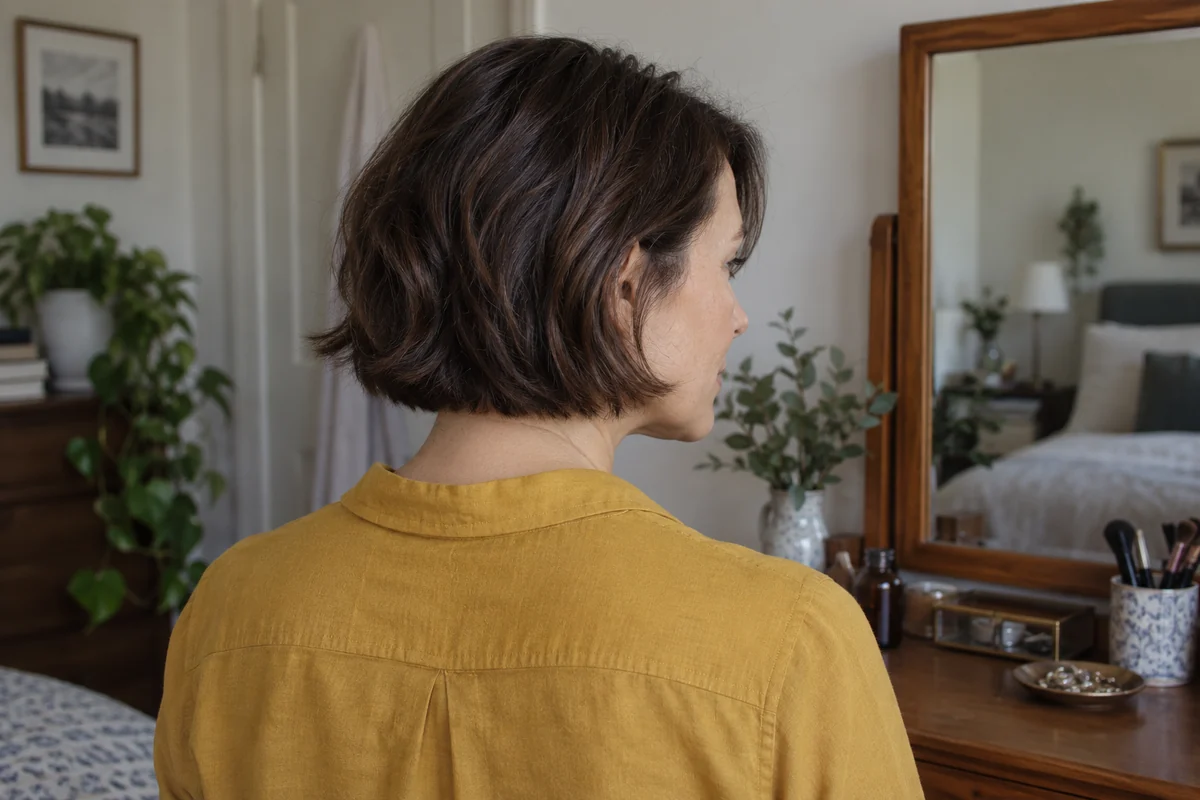
Bring the lengths forward or hold them to one side, put the coat or strap in place, then let the hair fall where it won’t get trapped. Keep the strap where it belongs on your shoulder and move the hair instead.
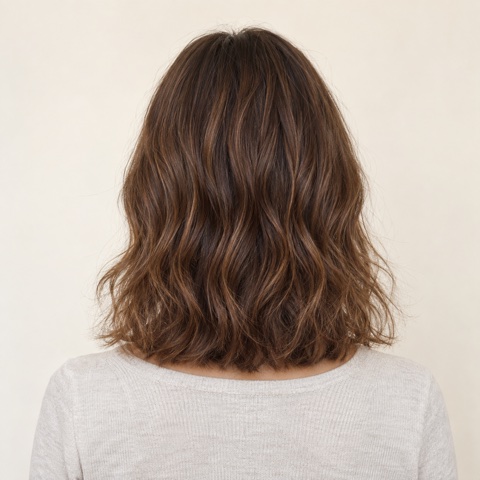

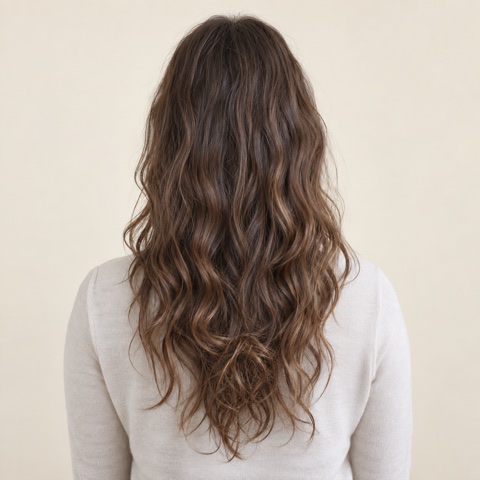
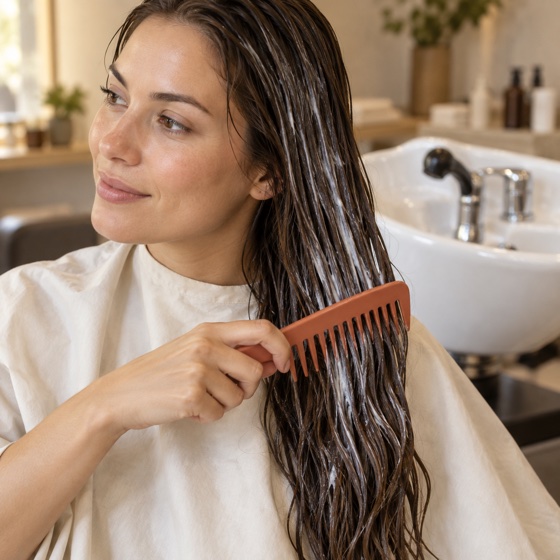
Condition where the knots are and work through in small sections the way you usually do. If hair is still caught in hardware, free it from the zip or strap first. No product helps hair that’s still trapped.
Browse rinse-out conditioners. The consultation uses your hair details and treatment history to compare conditioner options.

A leave-in can make the lengths feel smoother through a day of collars and straps. It won’t make it safe to drag trapped hair through a zip or park a heavy strap on top of it.
Browse leave-in conditioners. The consultation considers your current conditioner and styling products before recommending a leave-in.

Start with dry, combed hair and move the nape lengths out of the collar or strap’s path. If something catches, stop and free it at the catch point instead of brushing over it.
Guide: Prevent nape tangles while wearing long hair down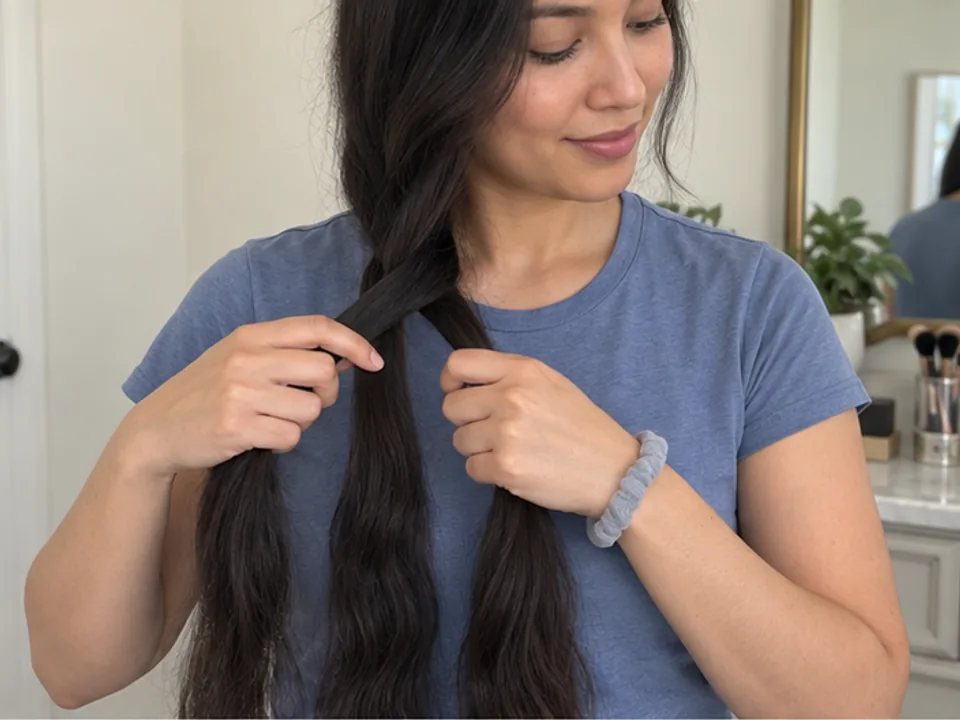
If your hair comfortably reaches over the shoulder, a loose three-strand braid with the ends tied gently keeps it out of zips and straps. Keep the braid itself clear of the hardware. This is a daytime braid, not an overnight or installed-style method.
Guide: Make a loose everyday braid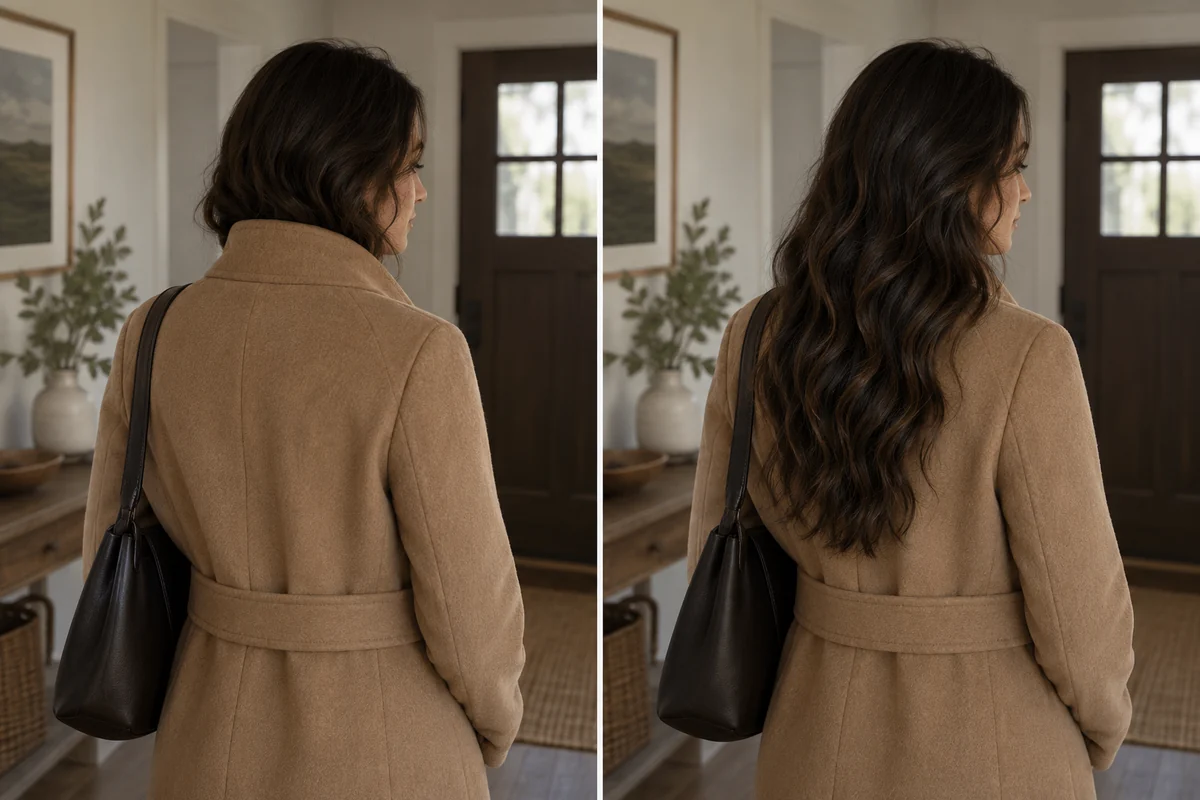


Bring your hair-care questions to the consultation. You can also read gentle handling of breakage-prone lengths.
The plan uses the hair and scalp details you share, past treatments, current products, preferences and the time and budget you have.
The Hair Care Consultation gives you a personal plan with product recommendations, routines and guidance on your hair-care questions.
$49 with 60 days of follow-ups, or $99 with 12 months. Pay once; the year renews only if you choose.