
Kevin Murphy

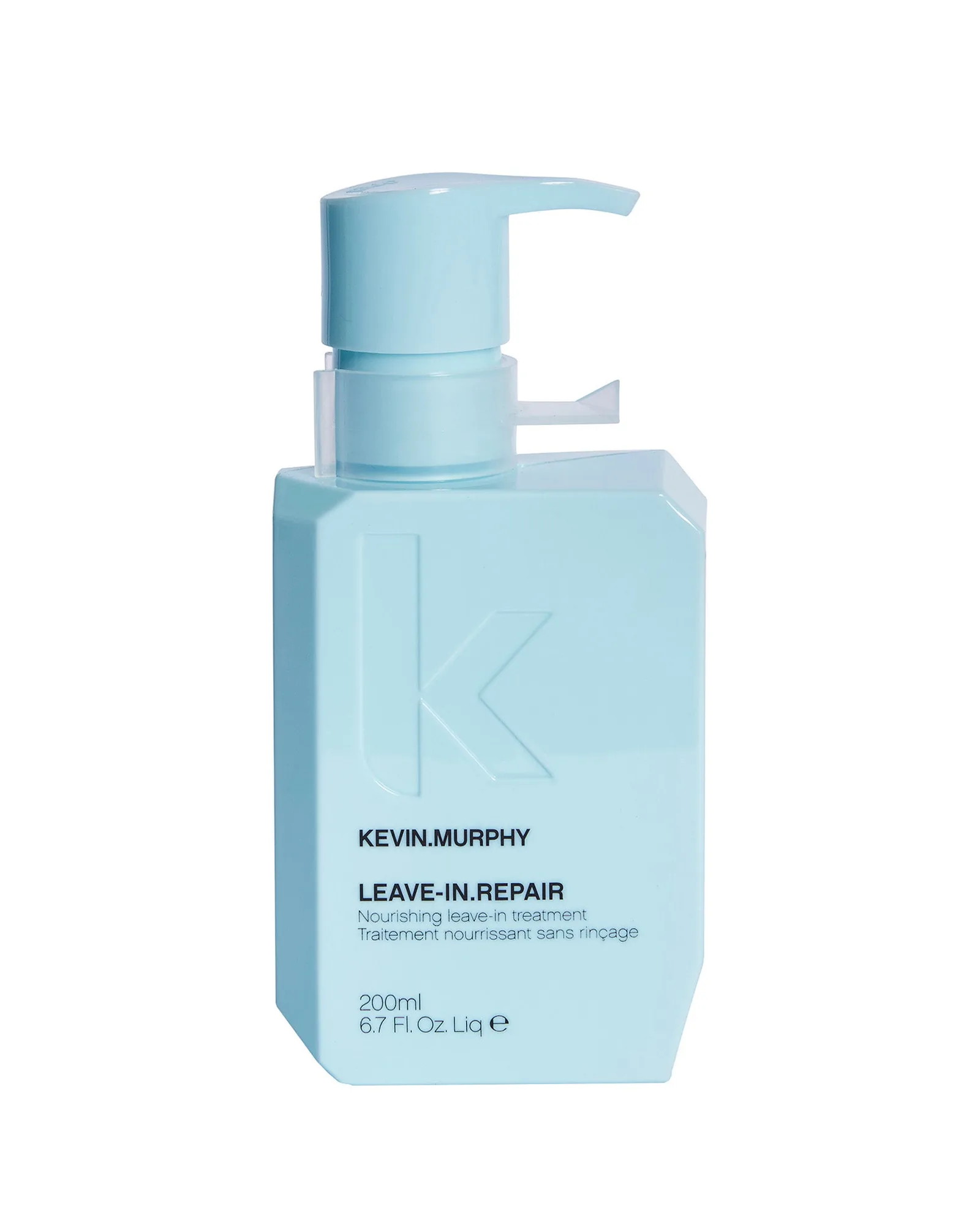
Leave-In.Repair Keratin Hair Treatment

Leave-in / Everyday leave-in, medium-weight

  • Leave-in
  • lotion
  • Also a heat protectant
  • Sulfate-free
  • Moisture-rich
  • Not vegan · ingredient list
  • Cruelty-free · PETA-listed
Size6.7 fl oz
Price$43seen at one store · 6.7 oz
Price / oz$6.42/ozat 6.7 oz
Where to buy1 store

Scent:

Notes: herbal.

Listing used for research: amazon.com

Personal fit

Is this right for you?

Complete the consultation to see exactly how well this product fits your hair and your goals. With 2,400+ products in our library we can match exactly the right products to you.

  • In 10 minutes we can identify your exact hair condition and traits.
  • Every product matched against your hair across the 23 factors we check.
  • A personalized routine for your daily life — your schedule, styling habits, and local weather.
  • Find products that do the same job at a lower cost.
  • Your goals, scalp, damage history, water, budget, and scent preferences all shape your plan.

$49.00 one-time consultation, no subscription

Add the optional $49/year membership for unlimited adjustments for changes in weather and lifestyle.

Start your consultation

Priced above most leave-ins

$6.42/oz at 6.7 oz — more than 80% of the 549 leave-ins , which mostly run $1.25–5.69/oz.

Price and stores

Great for

Heat stylingthe brand states protection to 200°F
Protein-hungry hairthat stretches and stays stretched when wet
Maximum slipfor hair that tangles the moment it is wet
Dry, thirsty hairhumectants and emollients both sit up front
Curl definitionfilm formers hold a clump together
A wide range of haira middle-of-the-range weight

Maybe skip if

this product carries a scent
Curly-method routinesthese silicones need a detergent to remove
Protein-sensitive hairthat goes stiff or straw-like on protein
Very dry or damaged hairit contains fast-drying alcohol
Vegan and cruelty-freeour record does not support both claims here
Tight budgetsit sits in the upper price tiers

Whether this weight sits well on your hair depends on density, porosity, and how much you already layer — that is what the consultation works out.

What the formula actually does

Read from the label, not the marketing

Each row says where it comes from: F means we derived it from this product’s own ingredient list, S means it is a claim the brand makes that the formula neither confirms nor contradicts.

Weight on the hair Medium

Middle of the range — noticeable on fine hair, light on coarse hair.

Slip and detangling High

Conditioning agents sit high in the list — this is a detangling formula.

Water-binding (humectants) High

Humectants near the top — water-binding is a headline mechanism here.

Oils and butters Present, lower down

Oils are present, but low enough to be a finishing touch.

Protein Prominent

Protein high in the list — a strengthening formula, not a moisture one.

Heat protection Stated to 200°F

The brand states a protection temperature — a label claim, not a measurement.

Needs detergent to remove Yes

Water-insoluble silicones or waxes: a detergent wash is what removes them.

Fragrance Present

Fragrance is listed; it sits below the working ingredients.

from the formula stated by the brand reported by reviewers Scale: 1 dot low · 5 dots high, within this product type.

Ingredients that matter

The ingredients that change a decision

The workhorse ingredients plus anything lower down that changes a decision. These chips name what an ingredient does — they are not safety scores, and no ingredient here is rated good or bad on its own.

IngredientWhat it doesWhy it mattersChip
WaterWater (Aqua) (Eau) solvent The base everything else is dissolved in Neutral
Dimethicone silicone Smooths the cuticle and adds shine Buildup
Caprylic/Capric Triglyceride light ester Light slip without much weight Softens
Panthenol humectant Pulls water into the hair Detangles
Bromelain active The over-the-counter active Active
Papain active The over-the-counter active Active
Hydrolyzed Pea Protein film former Lays down the film that holds a shape Protein
Laurdimonium Hydroxypropyl conditioning agent Conditions and softens — this is what makes it comb through Detangles
Hydrolyzed Keratin film former A supporting film former Protein
Pelargonium Graveolens Flower Oil botanical extract A trace plant extract Fragrance
Citrus Aurantium Dulcis (Orange) Peel Oil fragrance The scent Fragrance
Pogostemon Cablin Oil botanical extract A trace plant extract Fragrance
What the list leaves out, and what it carriesNo sulfates. Protein-forward — a strengthening formula, not a moisture one. Contains fragrance. The silicones here need a detergent wash to come off.
Full ingredient list (40)

US labelling rules put ingredients above 1% in descending order of amount; below 1% they may be listed in any order. Annotations keep three readings separate: the ingredient's general function, its role in this product type, and what its position can support.

  • 1 Water · Water (Aqua) (Eau)
    General function

    The base of almost every rinse-off and cream hair product. It carries everything else and is normally the first ingredient on the label.

    Leading ingredient

    Listed in the first three ingredients, it is likely a structural part of this formula.

    • solvent
  • 2 Dimethicone
    General function

    The most common conditioning silicone. It coats the strand for shine, slip, and frizz control, and needs a detergent (not just water) to wash out.

    Leading ingredient

    Listed in the first three ingredients, it is likely a structural part of this formula.

    May suitClimate-sensitive or frizz-prone hair

    A surface film slows how quickly humidity reaches the cortex, which is what limits swelling-driven frizz in damp air.

    May suitFrizz-prone, damaged, or high-friction hair

    Lays a smooth film along the cuticle, which lowers combing friction and flattens the surface irregularities that read as frizz.

    May not suitBuild-up-sensitive routines

    Dimethicone does not disperse in water. On a routine that skips detergent it stays on the hair and accumulates wash after wash.

    • silicone
    • emollient
    • conditioning agent
  • 3 Caprylic/Capric Triglyceride
    General function

    A light, refined coconut-derived oil that spreads easily and does not go rancid. It gives slip without a heavy feel.

    Leading ingredient

    Listed in the first three ingredients, it is likely a structural part of this formula.

    May suitFine or easily flattened hair

    A light emollient: it softens the surface with noticeably less weight than an oil or a butter.

    May suitFrizz-prone, damaged, or high-friction hair

    Spreads thin and lowers friction between strands without the heaviness of a fixed oil.

    • light ester
    • emollient
  • 4 Panthenol
    General function

    Provitamin B5. It draws in water and penetrates the strand a little, which is why it is the standard ingredient for softness and shine claims.

    Supporting ingredient

    Listed in positions 4–8, it likely makes a meaningful contribution alongside the formula's main ingredients.

    May suitFine or easily flattened hair

    It hydrates without adding oil or a film, which is the combination fine hair usually needs.

    May suitFrizz-prone, damaged, or high-friction hair

    Deposits a lubricating layer that makes combing easier, which is most of what stops mechanical damage adding to frizz.

    May suitVery dry or highly damaged hair

    A humectant that also penetrates the cuticle, so it holds water inside the strand rather than only on the surface.

    PubChem
    • humectant
    • conditioning agent
    • vitamin
  • 5 Bromelain
    General function

    A pineapple enzyme used in scalp products to help loosen surface build-up.

    Supporting ingredient

    Listed in positions 4–8, it likely makes a meaningful contribution alongside the formula's main ingredients.

    • active
  • 6 Papain
    General function

    A papaya enzyme used in scalp products for gentle clarifying.

    Supporting ingredient

    Listed in positions 4–8, it likely makes a meaningful contribution alongside the formula's main ingredients.

    • active
  • 7 Hydrolyzed Pea Protein
    General function

    A plant protein used for strength claims in vegan formulas.

    Supporting ingredient

    Listed in positions 4–8, it likely makes a meaningful contribution alongside the formula's main ingredients.

    May suitFrizz-prone, damaged, or high-friction hair

    Filling surface gaps evens out the cuticle, which is part of what makes damaged hair comb and reflect light more like undamaged hair.

    May suitMaximum-hold styling

    Film formers are what hold a style: they dry into a connected film across the strands so the shape resists movement.

    May suitVery dry or highly damaged hair

    Hydrolysed fragments are small enough to sit in the gaps of a worn cuticle for a wash or two, temporarily restoring stiffness and cutting breakage in combing.

    • film former
    • protein
    • hydrolysed protein
  • 8 Laurdimonium Hydroxypropyl
    General function

    A truncated label entry for a laurdimonium conditioning agent; the full INCI name names what it is bonded to.

    Supporting ingredient

    Listed in positions 4–8, it likely makes a meaningful contribution alongside the formula's main ingredients.

    • conditioning agent
  • 9 Hydrolyzed Keratin
    General function

    Fragments of the same protein hair is made of. They fill gaps on damaged strands and make hair feel firmer for a few washes.

    Secondary ingredient

    Lower in the ordered portion of the list, it is more likely playing a supporting role than defining the formula.

    May suitFrizz-prone, damaged, or high-friction hair

    Filling surface gaps evens out the cuticle, which is part of what makes damaged hair comb and reflect light more like undamaged hair.

    May suitMaximum-hold styling

    Film formers are what hold a style: they dry into a connected film across the strands so the shape resists movement.

    May suitVery dry or highly damaged hair

    Size decides where it goes. In fibre testing, fractions around 221 and 2,577 Da reached the cortex while a 75,440 Da fraction stayed on the surface. A label prints the name, never the size, so a protein line is a claim about the ingredient rather than about the depth.

    International Journal of Cosmetic Science
    • film former
    • protein
    • hydrolysed protein
  • Below about this point, order stops being meaningful — these are typically used at 1% or less.
  • 10 Pelargonium Graveolens Flower Oil
    General function

    The essential oil of Pelargonium Graveolens. Essential oils are aromatic — they are in the formula for scent, and they are a common source of declared fragrance allergens.

    Estimated lower-concentration zone

    It appears around or below the estimated 1% line, where label order no longer indicates relative amount; its role may be minor or technical.

    May not suitFragrance-sensitive routines

    Essential oils are fragrance. Several carry constituents on the EU list of declared fragrance allergens, so a label with no fragrance line can still be a scented product.

    • botanical extract
    • essential oil
    • fragrance
  • 11 Citrus Aurantium Dulcis (Orange) Peel Oil
    General function

    Orange peel oil used for a fresh citrus scent; naturally high in limonene.

    Estimated lower-concentration zone

    It appears around or below the estimated 1% line, where label order no longer indicates relative amount; its role may be minor or technical.

    May not suitFragrance-sensitive routines

    Declared fragrance. On a fragrance-sensitive routine this is the line that decides it, wherever it sits on the label.

    • fragrance
    • botanical extract
  • 12 Pogostemon Cablin Oil
    General function

    Patchouli essential oil, used as an earthy fragrance note.

    Estimated lower-concentration zone

    It appears around or below the estimated 1% line, where label order no longer indicates relative amount; its role may be minor or technical.

    May not suitFragrance-sensitive routines

    Essential oils are fragrance. Several carry constituents on the EU list of declared fragrance allergens, so a label with no fragrance line can still be a scented product.

    • botanical extract
    • essential oil
    • fragrance
  • 13 Eugenia Caryophyllus (Clove) Leaf Oil
    General function

    The essential oil of Clove (Eugenia Caryophyllus). Essential oils are aromatic — they are in the formula for scent, and they are a common source of declared fragrance allergens.

    Estimated lower-concentration zone

    It appears around or below the estimated 1% line, where label order no longer indicates relative amount; its role may be minor or technical.

    May not suitFragrance-sensitive routines

    Declared fragrance. On a fragrance-sensitive routine this is the line that decides it, wherever it sits on the label.

    • fragrance
    • botanical extract
  • 14 Bambusa Vulgaris Leaf/Stem Extract
    • botanical extract
  • 15 Simmondsia Chinensis (Jojoba) Seed Oil
    General function

    Not chemically an oil: about 97% of it is liquid wax esters, which is why it resists going rancid and sits close to the scalp's own sebum. It smooths without a heavy finish.

    Estimated lower-concentration zone

    It appears around or below the estimated 1% line, where label order no longer indicates relative amount; its role may be minor or technical.

    May suitDry, coarse, or high-porosity hair

    Coats the surface and slows water leaving the strand, which is usually what coarse hair that dries out fast is missing.

    May suitFrizz-prone, damaged, or high-friction hair

    A thin oil layer lowers friction between strands and flattens the raised cuticle that scatters light and catches on its neighbours.

    May suitMaximum-hold styling

    A wax holds by staying solid on the strand, which gives grip and separation rather than a set film that cracks.

    • emollient
    • light ester
    • oil
    • wax
  • 16 Cinnamomum Cassia Leaf Oil
    • botanical extract
    • essential oil
    • fragrance
  • 17 Glycerin
    General function

    A small water-loving molecule that draws moisture into the hair and holds it there. It is the most common softening ingredient in conditioners and leave-ins.

    Estimated lower-concentration zone

    It appears around or below the estimated 1% line, where label order no longer indicates relative amount; its role may be minor or technical.

    May suitDry, coarse, or high-porosity hair

    High-porosity hair loses water fast; a humectant holds some of it in place for longer than the wash itself would.

    May suitVery dry or highly damaged hair

    Binds water into the outer layers of the strand, and water is what makes dry hair flexible again rather than brittle.

    DependsClimate-sensitive or frizz-prone hair

    Water moves both ways. Measured across concentrations, glycerin solutions give water up in some conditions and take it from the air in others. What it does for you depends on how much of it is there and on the air around it.

    Scientific Reports
    • humectant
  • 18 Ubiquinone
  • 19 sodium laneth-40 maleate/styrene sulfonate copolymer
    General function

    A synthetic film-forming polymer. Polymers of this kind dry to a continuous film on the hair, which is how a styling product holds a shape.

    Estimated lower-concentration zone

    It appears around or below the estimated 1% line, where label order no longer indicates relative amount; its role may be minor or technical.

    May suitClimate-sensitive or frizz-prone hair

    A set polymer film is a physical barrier to humidity, so a style keeps its shape longer in damp conditions.

    May suitMaximum-hold styling

    Synthetic film formers dry into a continuous film, which is what holds a shape against movement and against humid air.

    DependsBuild-up-sensitive routines

    Some acrylate copolymers rinse with water and some need a detergent; the label alone does not say which one a formula used.

    • film former
    • polymer
  • 20 Cetyl Alcohol
    General function

    A fatty alcohol used to thicken creams and add slip. It softens rather than dries.

    Estimated lower-concentration zone

    It appears around or below the estimated 1% line, where label order no longer indicates relative amount; its role may be minor or technical.

    May suitDry, coarse, or high-porosity hair

    The waxy solid that gives a conditioner its body. It deposits a soft lubricating layer, which is most of what makes hair feel smooth after rinsing.

    May suitFrizz-prone, damaged, or high-friction hair

    Deposits with the cationic conditioners and helps them lie flat along the strand, which is where the detangling actually comes from.

    PubChem
    • fatty alcohol
    • emollient
    • thickener
  • 21 Isopropyl Myristate
    General function

    A very light ester that makes products glide and disappear quickly on the hair.

    Estimated lower-concentration zone

    It appears around or below the estimated 1% line, where label order no longer indicates relative amount; its role may be minor or technical.

    May suitFine or easily flattened hair

    A light emollient: it softens the surface with noticeably less weight than an oil or a butter.

    May suitFrizz-prone, damaged, or high-friction hair

    Spreads thin and lowers friction between strands without the heaviness of a fixed oil.

    PubChem
    • light ester
    • emollient
  • 22 Isopropyl Alcohol
    General function

    A fast-evaporating alcohol used as a solvent and to speed drying. Well down the list it is a processing aid; near the top it can leave hair feeling dry.

    Estimated lower-concentration zone

    It appears around or below the estimated 1% line, where label order no longer indicates relative amount; its role may be minor or technical.

    May suitFine or easily flattened hair

    Evaporates on contact, which is how a spray sets almost instantly and leaves no weight behind it.

    PubChem
    • drying alcohol
    • solvent
  • 23 Propylene Glycol
    General function

    A small humectant and solvent that keeps formulas stable and helps active ingredients spread.

    Estimated lower-concentration zone

    It appears around or below the estimated 1% line, where label order no longer indicates relative amount; its role may be minor or technical.

    May suitFine or easily flattened hair

    Light and water-binding rather than oily, so it hydrates without contributing weight.

    May suitVery dry or highly damaged hair

    A small water-binding solvent. It holds moisture and helps the rest of the formula spread evenly over the strand.

    DependsClimate-sensitive or frizz-prone hair

    A humectant follows the air: it holds water in humid conditions and can give it up in very dry ones. Climate decides what it does more than the label does.

    PubChem
    • humectant
    • solvent
  • 24 Laureth-7
    • emulsifier
    • solubilizer
  • 25 butylene/ethylene/styrene copolymer
    • film former
    • polymer
  • 26 Ethylene/Propylene/Styrene Copolymer
    • film former
    • polymer
    • thickener
  • 27 Polyacrylamide
    General function

    A thickening polymer that also leaves a light film, used in gels and styling creams.

    Estimated lower-concentration zone

    It appears around or below the estimated 1% line, where label order no longer indicates relative amount; its role may be minor or technical.

    May suitClimate-sensitive or frizz-prone hair

    A set polymer film is a physical barrier to humidity, so a style keeps its shape longer in damp conditions.

    May suitMaximum-hold styling

    Synthetic film formers dry into a continuous film, which is what holds a shape against movement and against humid air.

    DependsBuild-up-sensitive routines

    Some acrylate copolymers rinse with water and some need a detergent; the label alone does not say which one a formula used.

    • film former
    • polymer
    • thickener
  • 28 C13-14 Isoparaffin
    General function

    A light carrier used to spread silicones and polymers thinly.

    Estimated lower-concentration zone

    It appears around or below the estimated 1% line, where label order no longer indicates relative amount; its role may be minor or technical.

    May suitFrizz-prone, damaged, or high-friction hair

    Emollients fill and smooth the surface of the strand, which lowers the friction that lifts the cuticle and reads as roughness.

    • emollient
    • solvent
  • 29 Behentrimonium Chloride
    General function

    A positively charged conditioning agent that binds to damaged, negatively charged spots on the hair. It is the main detangling ingredient in most rinse-out conditioners.

    Estimated lower-concentration zone

    It appears around or below the estimated 1% line, where label order no longer indicates relative amount; its role may be minor or technical.

    May suitFrizz-prone, damaged, or high-friction hair

    A cationic conditioning agent: it binds to the damaged, negatively charged parts of the cuticle and lowers combing friction there.

    DependsBuild-up-sensitive routines

    Substantive by design. A routine with no detergent wash gives it nothing to leave with.

    DependsVery dry or highly damaged hair

    Every detergent removes some sebum along with the product it is there to wash out. Which detergent it is matters more than that there is one.

    International Journal of Cosmetic Science
    • conditioning agent
    • cleanser
  • 30 Phenoxyethanol
    • preservative
  • 31 BHT
    • antioxidant
  • 32 Ethylhexylglycerin
    General function

    A preservative booster that also adds a little softness. Almost always paired with phenoxyethanol.

    Estimated lower-concentration zone

    It appears around or below the estimated 1% line, where label order no longer indicates relative amount; its role may be minor or technical.

    May suitFrizz-prone, damaged, or high-friction hair

    Emollients fill and smooth the surface of the strand, which lowers the friction that lifts the cuticle and reads as roughness.

    PubChem
    • preservative
    • emollient
  • 33 Chlorphenesin
    • preservative
  • 34 Sorbic Acid
    • preservative
  • 35 Benzoic Acid
    • preservative
  • 36 Fragrance · Fragrance (Parfum)
    General function

    An undisclosed blend of scent ingredients. Regulations let it stay unlisted, so a fragrance-free product is the only way to be certain what is not in it.

    Estimated lower-concentration zone

    It appears around or below the estimated 1% line, where label order no longer indicates relative amount; its role may be minor or technical.

    May not suitFragrance-sensitive routines

    Declared fragrance. On a fragrance-sensitive routine this is the line that decides it, wherever it sits on the label.

    • fragrance
    • declared fragrance
  • 37 Limonene
    General function

    A citrus-smelling fragrance component that EU rules require to be named separately because some people react to it.

    Estimated lower-concentration zone

    It appears around or below the estimated 1% line, where label order no longer indicates relative amount; its role may be minor or technical.

    May not suitFragrance-sensitive routines

    One of the 26 scent components the EU requires to be named individually above a threshold. It is named because it is a known contact allergen, not because it is unusual.

    PubChem
    • fragrance
    • named fragrance allergen
  • 38 Eugenol
    General function

    A clove-scented fragrance component listed separately as a recognised allergen.

    Estimated lower-concentration zone

    It appears around or below the estimated 1% line, where label order no longer indicates relative amount; its role may be minor or technical.

    May not suitFragrance-sensitive routines

    One of the 26 scent components the EU requires to be named individually above a threshold. It is named because it is a known contact allergen, not because it is unusual.

    PubChem
    • fragrance
    • named fragrance allergen
  • 39 Cinnamal
    General function

    A cinnamon-scented fragrance component listed as a recognised allergen.

    Estimated lower-concentration zone

    It appears around or below the estimated 1% line, where label order no longer indicates relative amount; its role may be minor or technical.

    May not suitFragrance-sensitive routines

    One of the 26 scent components the EU requires to be named individually above a threshold. It is named because it is a known contact allergen, not because it is unusual.

    • fragrance
    • named fragrance allergen
  • 40 Geraniol
    General function

    A rose-scented fragrance component, listed on its own because some people react to it.

    Estimated lower-concentration zone

    It appears around or below the estimated 1% line, where label order no longer indicates relative amount; its role may be minor or technical.

    May not suitFragrance-sensitive routines

    One of the 26 scent components the EU requires to be named individually above a threshold. It is named because it is a known contact allergen, not because it is unusual.

    • fragrance
    • named fragrance allergen

What the whole list adds up to

  • 10 fragrances
  • 7 emollients
  • 6 film formers
  • 6 botanical extracts
  • 5 preservatives
  • 4 solvents
  • 4 polymers
  • 4 named fragrance allergens
  • 3 light esters
  • 3 humectants
  • 3 essential oils
  • 3 thickeners
  • 2 conditioning agents
  • 2 actives

Ingredient list captured 2026-08-23. Formulas change — check the package in your hand when an ingredient matters to you.

Price · 6.7 oz

Seen at $43 1 store · checked Aug 23
Good value under $8 Under $1.24/oz it costs less than three-quarters of the 6 products we score as doing the same job

Priced above the products that do the same job. Stores sell it above the $8 line; products that do this job typically go for about $13 at this size.

Show the price ladder
Where we’ve seen it1 listing · 1 store
  • Amazon
    $43.00
    6.7 oz · $6.42/oz
    Aug 23Lowest per oz

Sorted by price per ounce. Dated observations from our research, not live prices. Direct store pages, no affiliate links. We don’t sell this product.

How we work this out
  1. 6.7 oz is the size stores list most often; every comparison on this page is made at it. Other sizes are shown in the Sizes row and the store list.
  2. Seen at $43 is the price we have observed for the 6.7 oz. We need three stores before we call a price commonly seen.
  3. Good value under $8 comes from the 6 products we score as doing the same job as this one. A quarter of them cost less than $1.24/oz; at 6.7 oz that is $8. Under that line you are paying less than most of them.
  4. About $13 is what those same products typically cost at this size — the midpoint of their prices per ounce, scaled to 6.7 oz.

Formula

Formula score
9 of 10

It costs more per ounce than 80% of the 549 leave-ins we’ve priced, and the formula carries the systems the format is built around. Nothing in our library comes close enough on formula to be a cheaper substitute.

How the score is counted
  • 1 products we score as doing the same job cost less per ounce
  • Costs more per ounce than 80% of the 549 leave-ins we’ve priced
  • Covers 5 of the 6 things a leave-in should do
  • Reviewers mention 4 things they like about how it performs
  • Conditioning agents up frontWhat makes wet hair comb through.2 pts
  • A humectantBinds water into the hair.2 pts
  • A light baseWater or a volatile carrier first, so it does not weigh hair down.2 pts
  • Oils or butters in the working zoneSoftens the strand rather than just coating it.2 pts
  • No detergent-dependent filmNothing that needs a clarifying wash to remove.1 pt
  • Fragrance kept out of the top eightScent as a finishing touch, not a major share.1 pt

The formula score is completeness for the job: the share of the systems this product type is normally built around that we can find in this list, weighted. It is not efficacy, not quality, and it never compares across product types.

Does the same job, for less

Same derived functions — what it cleans, conditions, coats or holds — at a lower cost per ounce. Scent, texture and where you buy it can still differ.

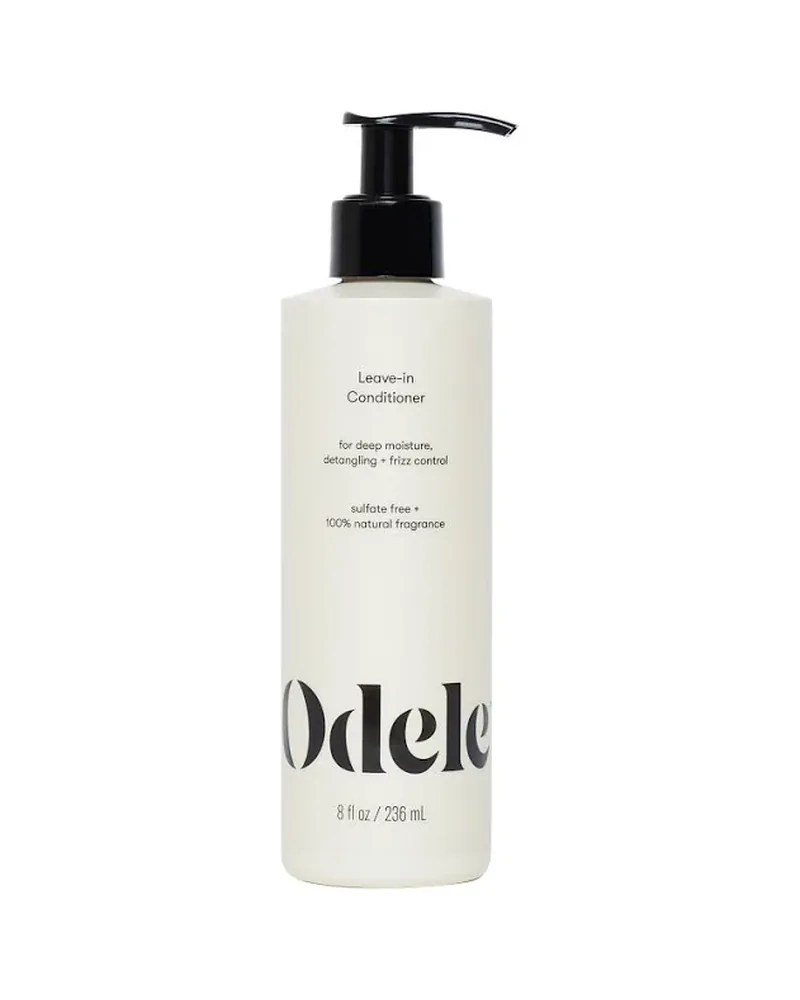
OdeleLowest cost per oz Leave-in Conditioner for Deep Moisture + Frizz Control $1.60/oz $4.82/oz less
  • Protein
  • Medium weight
  • Budget
· Close function
Function
  • Film formers
  • Oils and butters
Also
  • Vegan
  • Drugstore tier
  • 8 oz bottle
Compare

See more alternatives in the product library

These are functional neighbours, not personal recommendations — they are close on formula, not chosen for anyone. Get the one that fits your hair, routine, and budget

Suits every hair pattern

Final decision

Should you buy it?

Above-range price, specific fit
Best user

People who blow-dry or flat-iron — for heat protection and protein high in the formula

Biggest tradeoff

Less suited to anyone sensitive to fragrance, curly-method routines, or hair that stiffens on protein

We do not sell products or take placement fees. This page states what the formula and the prices show; the consultation is what matches it to a person.

Claims check

What the brand says, against what the formula shows

Claims are quoted from the brand. We only mark one supported, partly supported, or conflicting when the ingredient list actually speaks to it; everything else stays "stated by the brand", which is not a criticism — most claims simply cannot be read off a label.

3
SupportedBacked by ingredients
1
Partly supportedSome supporting logic
0
Stated by brandNo clear evidence
0
Potential conflictFormula works against claim
Keratin Hair Treatment: provides intense repair and nourishment for shiny, glossy, weightless hair, with the added bonus of heat protection

Humectants or rich emollients sit in the first eight ingredients.

  • Dimethicone
  • Caprylic/Capric Triglyceride
  • Panthenol
Supported

Helps hair feel hydrated.

Restores & Strengthens: helps reduce hair breakage and strengthen the hair

Protein sits in the first eight ingredients.

  • Hydrolyzed Pea Protein
  • Laurdimonium Hydroxypropyl
  • Hydrolyzed Keratin
Supported

Reinforces a damaged strand.

This leave-in treatment shields hair up to 200F/93C

Our library captures this as a heat protectant, but thermal protection is measured in a lab, not read off a list.

  • Dimethicone
  • Hydrolyzed Pea Protein
  • Hydrolyzed Keratin
Partly supported

Sold for hot tools; untestable here.

Sulphate & Paraben Free, cruelty free

No parabens appear in the ingredient list.

Supported

Preserved without parabens.

How to read this

We look at the first 10–15 ingredients and what they do in a formula — not marketing. If the list doesn't speak to a claim, we don't assume.

Reviewers

What people report

Recurring themes our researchers wrote in their own words from sourced reviews. We do not store or scrape star ratings.

Effective on over-bleached/very dry, damaged hair

Pleasant scent and nourishing feel, works well as a long-term staple

Repairs and strengthens hair noticeably from first use

Positive first impression after a single use, though limited testing

Underwhelming for some users -- no noticeable improvement in feel or health of hair

More from Kevin Murphy

How this page was made

  • Everything above is generated from our researched product record — identity, the ingredient list as printed, the brand's own claims, dated price observations, and review themes written in our researchers' own words. No part of this page is written per product.
  • The value band is a fixed label over two stored numbers: this product’s cost per ounce as a percentile of every product of this type we have priced, each at the size it is most often sold in, and how many products we score as doing the same job cost at least a quarter less per ounce.
  • Both scores out of ten are defined on this page. The formula score is completeness for the job, computed from a fixed per-format checklist shown beneath the gauge; the price score is cost per ounce against every product of this type we have priced.
  • The "Is this right for you?" panel reads only your own consultation answers, and it applies exactly the filters our recommendation engine applies. It is computed when you load the page and is never stored on it.
  • 4 sources consulted for this product (3 manufacturer or regulatory, 0 retailer, 1 editorial), last checked 2026-08-25.
  • Ingredient references are linked for 11 of 25 product-aware annotations on this page. Fit notes are conditional formulation guidance, not a conclusion about the finished product or about you.
  • We have not tested this product in a lab and we do not physically test your hair. Formula readings come from the ingredient list; behaviour claims are labelled as the brand's.
  • Ingredient order tells you relative amount only above roughly 1%. Prices are observations on the dates shown and change without notice.
  • Ingredient names link to our ingredient library, where each entry shows what it does, which product types use it, and where it usually sits on a label across everything we have researched.
  • This is cosmetic information, not medical advice, and nothing here diagnoses or treats a health condition.
  • Formula readings: derivation v22. Record last updated 2026-08-25.