Hair Care Guides

The color went wrong. Don’t rush the fix.
Describe it first, then change it.

Looking at a color you didn’t ask for is horrible, and grabbing another box tonight is tempting. Resist it. Work out what you dislike and gather the history. A colorist plans the fix from the hair on your head, not the picture on the box.

Your personal hair-care planProduct choices, routines and answers shaped around your hair.$49one-timeStart my consultation
A client and stylist discuss a visible color band at a dry salon consultation table.
Describe it first, then change it.

What is going on

An adult gently holds the ends of a dry hair section while observing color placement in a mirror.

Name the part you don’t like

Is it too dark, too warm, or patchy? Say where it sits, whether that’s the roots, a band through the middle or the ends. Look at dry hair in the same light each time. A photo helps you explain it but can’t choose the fix.

An adult with blond curls and a colorist compare brown swatches.

Tell the colorist the whole story

Write down the product names, shades, rough dates and which areas were done, including any bleach, relaxer, perm or home attempt. Add anything you used after it went wrong. If you don’t know something, say so. A gap is more useful than a guess.

What helps, day to day

A woman wearing glasses reads a hair product ingredient panel.

Another box promises to cancel the tone

  • Put the new color or the remover down until a colorist has seen your hair.
  • An opposite shade, a kitchen-cupboard stripping mix or a run of harsh washes each move the starting point again.
  • Keep washing and conditioning normally.
  • That’s separate from choosing the correction.
An adult with a blonde bob listens as a colorist indicates warm and neutral brown swatches.

What you want may not happen in one go

  • Ask what can realistically change now, what would take a few visits and what might stay a little uneven.
  • If keeping your length matters, ask about a gentler shade in between.
  • A reference photo is a direction to talk about, not a promise of matching it on the day.
A man reads a shampoo bottle while making a note, with a second hair-care bottle beside the notebook.

The plan sounds expensive to keep up

  • Before you agree, ask how long the appointment takes, what it costs, what follow-up it needs and what you’ll have to do at home.
  • Ask what happens if the first result needs tweaking.
  • Pick a plan you can actually keep up, even if that means waiting.

Products, by the job they do

A woman massaging shampoo lather onto her scalp with her fingertips.

Wash normally, don’t wash it out

Keep washing for your scalp and ordinary residue, following whatever aftercare the last service gave you. Washing over and over isn’t a controlled way to shift color, and a general shampoo isn’t a color remover.

Browse cleansing products. Bring the shampoos you are choosing between to the consultation, along with what you liked or disliked about them.

A woman smoothing conditioner through her mid-lengths and ends.

Keep it comfortable to handle while you plan

Use conditioner where the lengths catch, and don’t tug through anything that resists. A softer feel makes the wait easier. It won’t change the shade or undo what the chemicals did.

Browse rinse-out conditioners. Tell the consultation what you want from a conditioner and what you disliked about previous ones.

How to do it

Checking appointment preparation instructions on a phone.

1. Bring a useful record to the appointment

Share the shade you have, the change you want, the product history and your limits on time and money. Prepare the way the salon tells you. Don’t add a clarifying wash or an oil beforehand unless the colorist asks for it.

Guide: Prepare for a color appointment
Writing separate pre-use checks and waiting periods in a notebook.

2. Do the checks the product asks for

If a proposed product calls for checks, read its current instructions in full and give them the time they ask for. A strand test tells you about the color result. It says nothing about how your skin will react.

Guide: Plan product skin and strand checks

When to get help

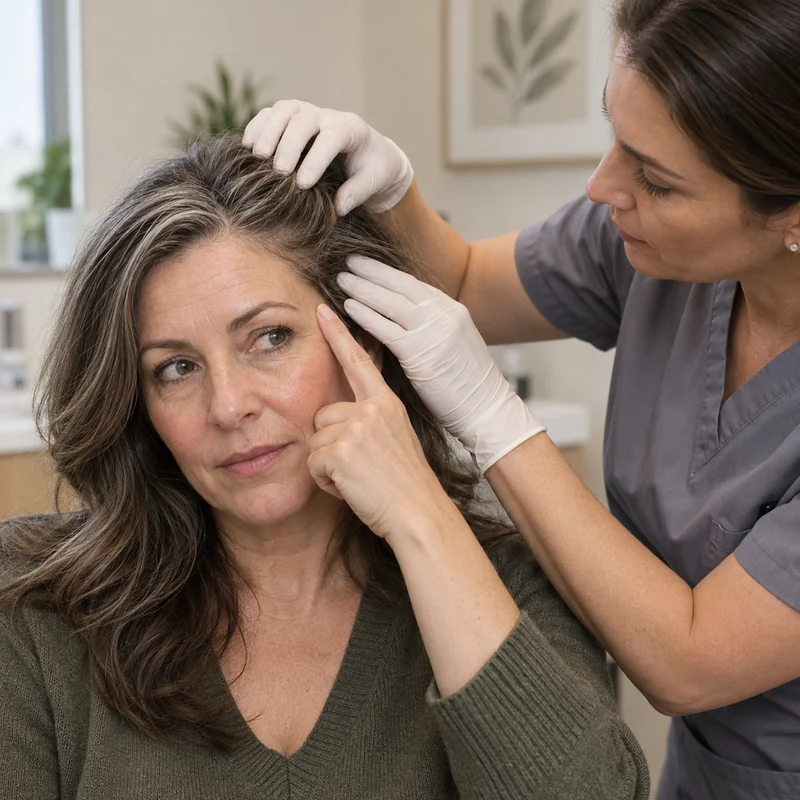
A medical professional examining the scalp where a woman points.

Signs that need more than routine care

  • If a color product burns, rinse it off straight away. If the burning, a rash or a sore scalp carries on afterwards, see a medical professional and don’t put the product back on to see whether it was really the cause.
  • Swelling of the lips, mouth or throat, or any trouble breathing after a dye, is an emergency. Get emergency help at once.

Illustrated care examples: before & after

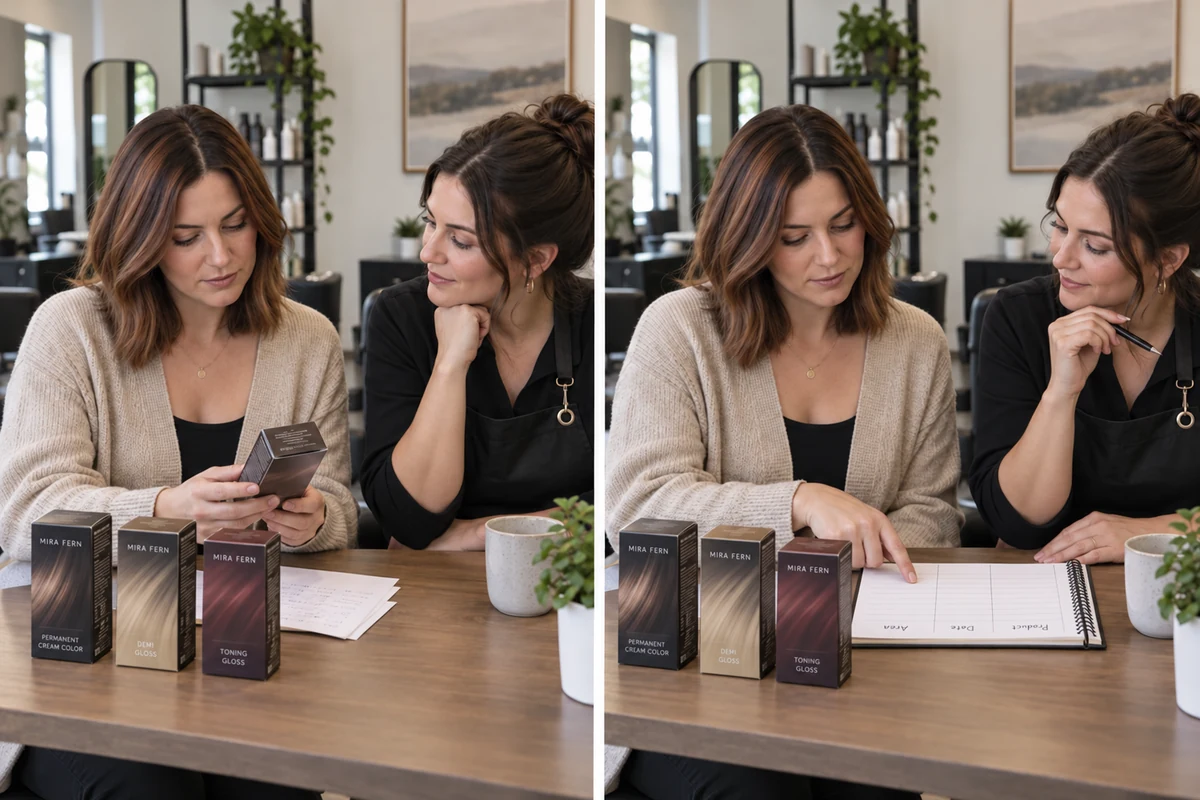
Products and history, together

The same client moves from loose product information to an organized product, date and area notebook beside closed color cartons.
Before · loose product informationAfter care · the history gathered
The products and what you know of the history are gathered to bring to the correction appointment. No color result is shown here.

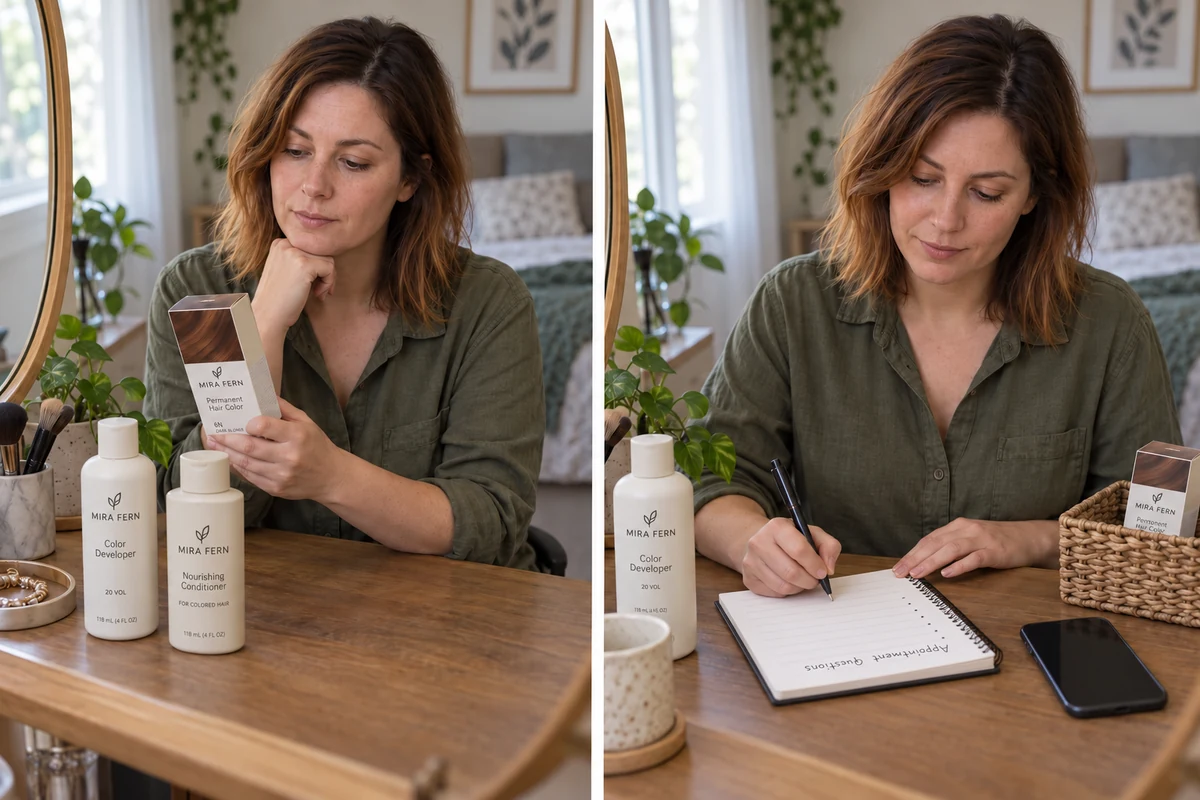
Questions before another dye

The same adult sets an unopened color carton aside and writes appointment questions while the hair remains unchanged.
Before · considering another color attemptAfter care · questions ready for the colorist
The box of dye is set aside and a list of questions for the colorist takes its place. The hair color is the same in both pictures.
A woman with curls writing a routine note beside her hair-care products.

Help with your hair-care routine

Bring your hair-care questions to the consultation. You can also read planning a deliberate darker shade after bleaching.

  • Is it too dark, too brassy, or just patchy?
  • What does the colorist need to know about what I’ve already done?
  • What result, cost and upkeep can I actually live with?

Tell us about the services still in your hair, the rough areas, the products you’ve used and what you can manage. We can keep the washing, conditioning and handling gentle while you plan. The colorist decides the chemistry and what’s possible from your starting point.

The Hair Care Consultation gives you a personal plan with product recommendations, routines and guidance on your hair-care questions.

$49 with 60 days of follow-ups, or $99 with 12 months. Pay once; the year renews only if you choose.