Hair Care Guides

Make the first haircut feel known.
Agree what happens, and how to pause.

A first trip to the salon or barber means new people, new noises and someone touching their head. It’s a lot. Plan a short sequence, tell the stylist what helps your child, and pick a small goal together. Sitting in the chair can be enough.

Your personal hair-care planProduct choices, routines and answers shaped around your hair.$49one-timeStart my consultation
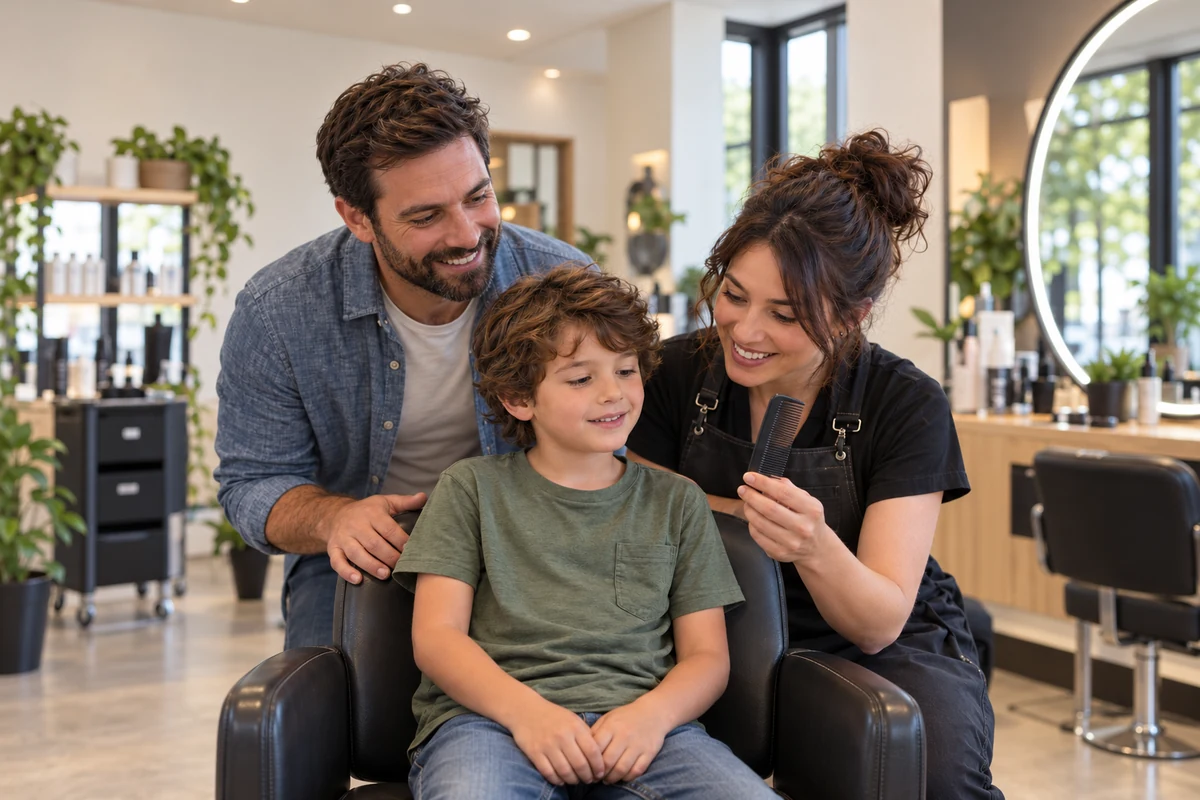
A child sits in a salon chair with a caregiver and stylist close by, looking at a comb.
Agree what happens, and how to pause.

What is going on

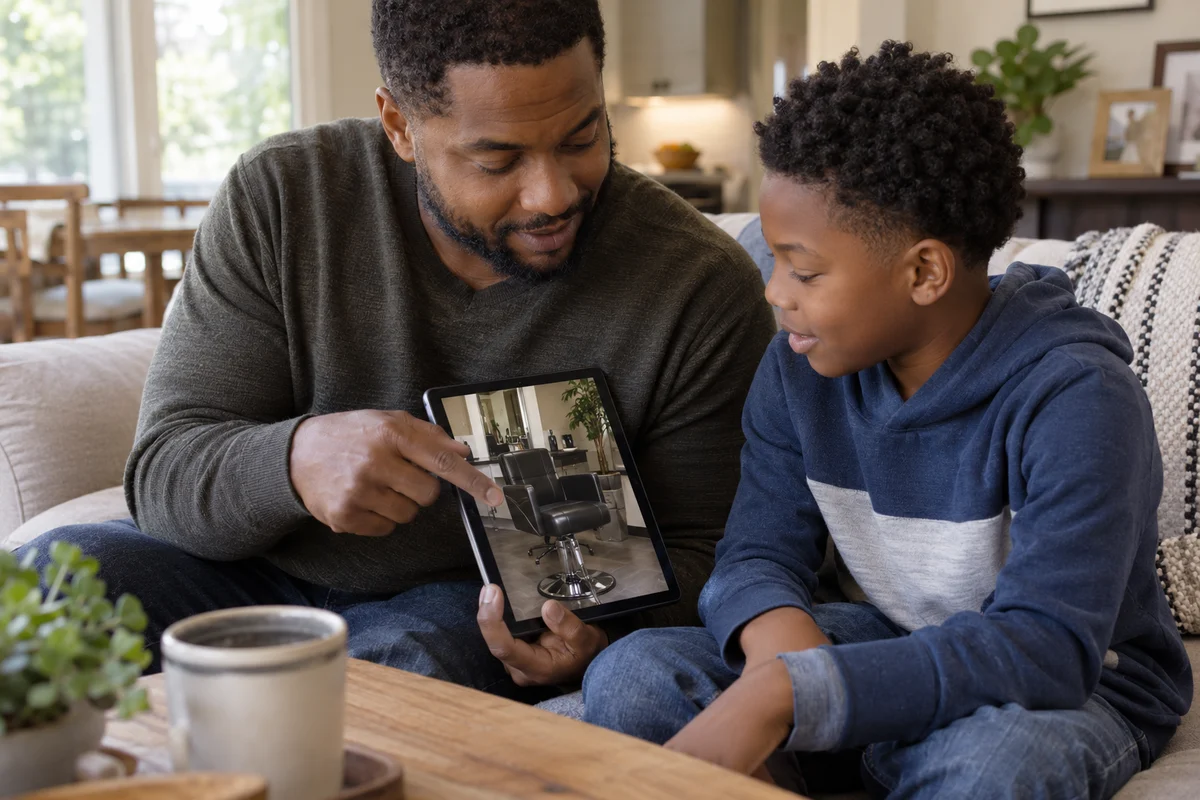
A caregiver and child look at a photograph of a salon chair on a tablet.

Show them the real place and what happens

Ask the salon for photos or a quick hello, or pop in to look around. Walk through the steps plainly. Arrive, meet the person, talk about the plan, decide what to try. Put leaving in the list too, so the visit has a clear end.

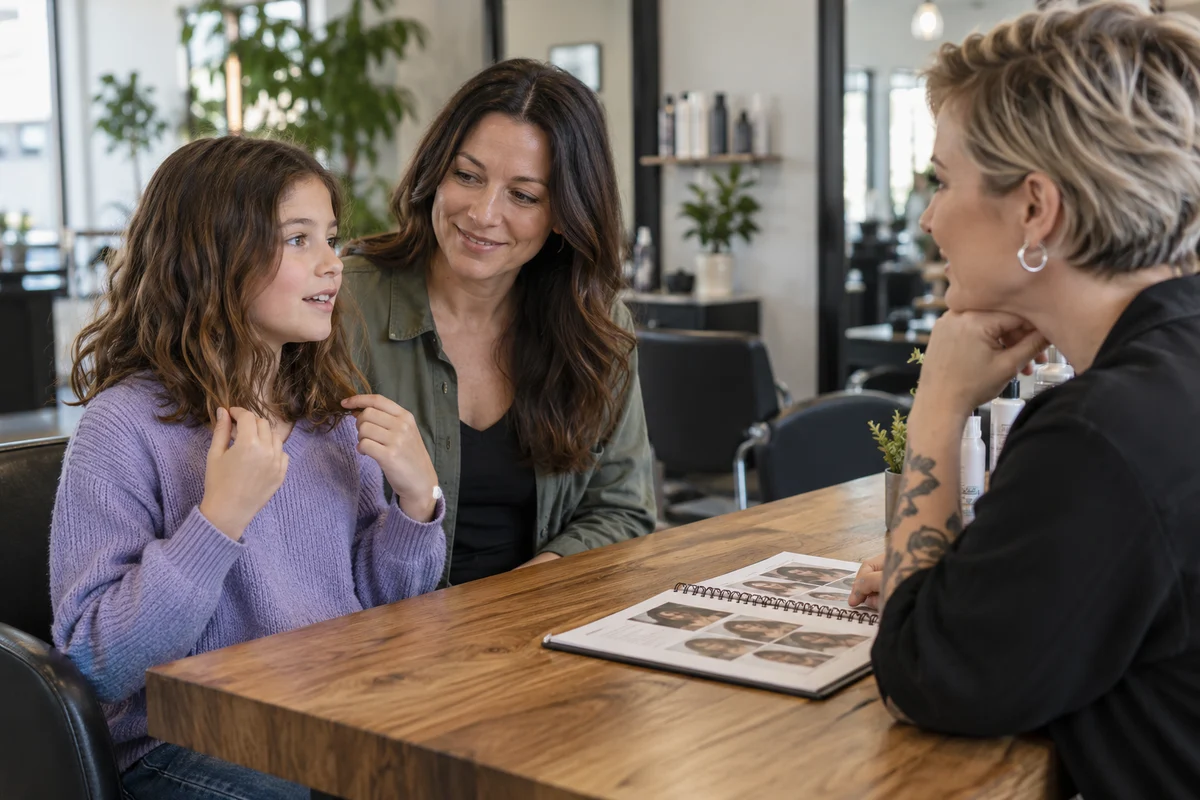
A child indicates their current hair ends while a caregiver and stylist discuss the visit.

Agree how much the first visit covers

Ask whether they’ve cut hair like your child’s and worked with children before. Talk about a small first service or just a look-around visit, including timing and cost. Say what length or style your child wants to keep before anyone starts.

What helps, day to day

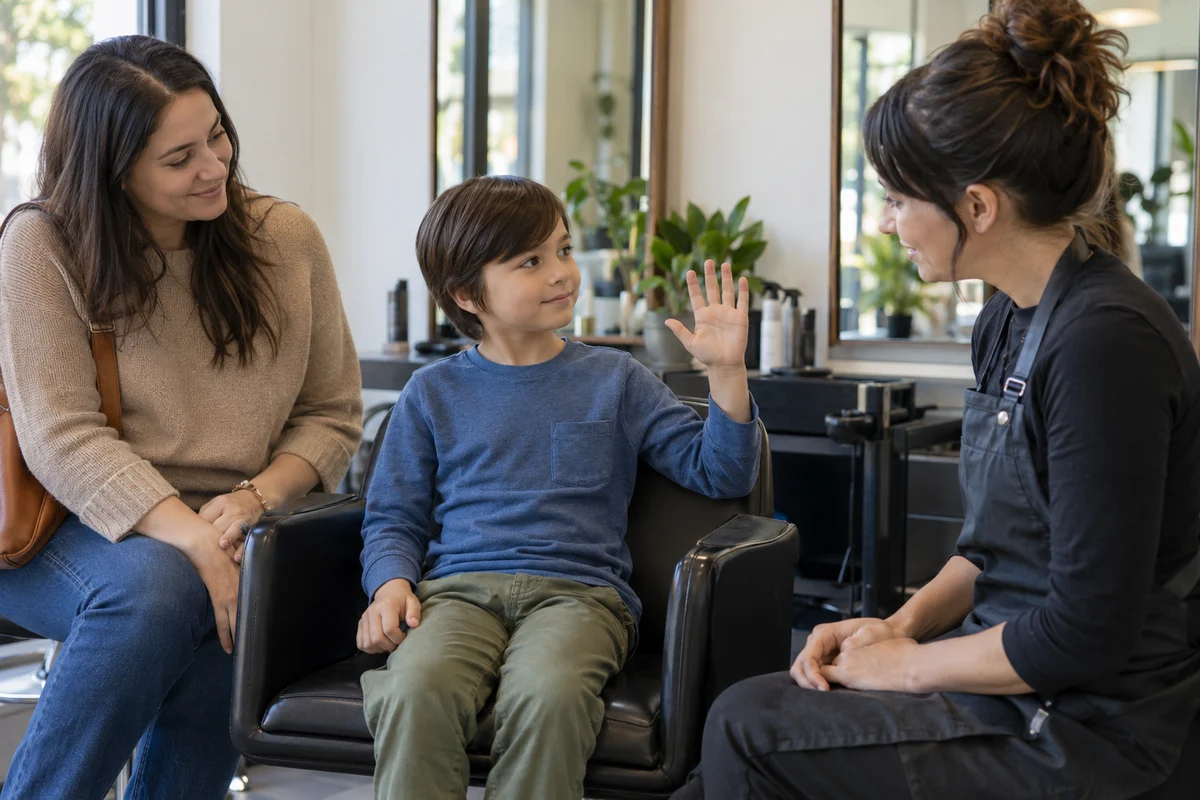
A child shows an open palm to a listening stylist and caregiver before care begins.

Your child wants a say over being touched

  • Pick a word or a raised hand that means pause, and tell the stylist about it.
  • Practice it at home.
  • When it’s used, everything stops, and someone asks before carrying on.
  • A pause signal only works if the adults actually honor it.
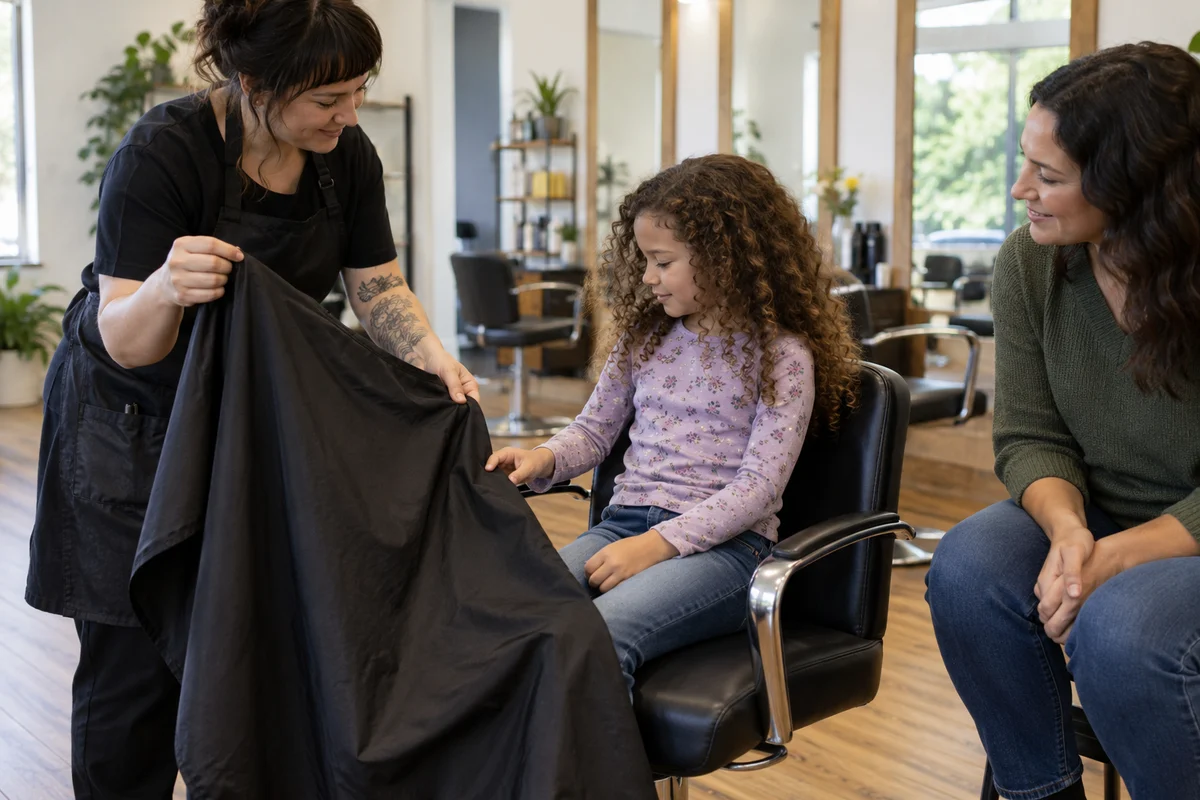
A child touches the edge of a loose cape held by a stylist while a caregiver watches.

The cape or the clippers are new and strange

  • Explain beforehand that a cape touches the neck and clippers buzz.
  • If your child wants to look at one, let them, with the stylist’s help.
  • Talk about alternatives ahead of time.
  • Don’t promise nothing will feel odd.
  • Something probably will, and that’s fine.
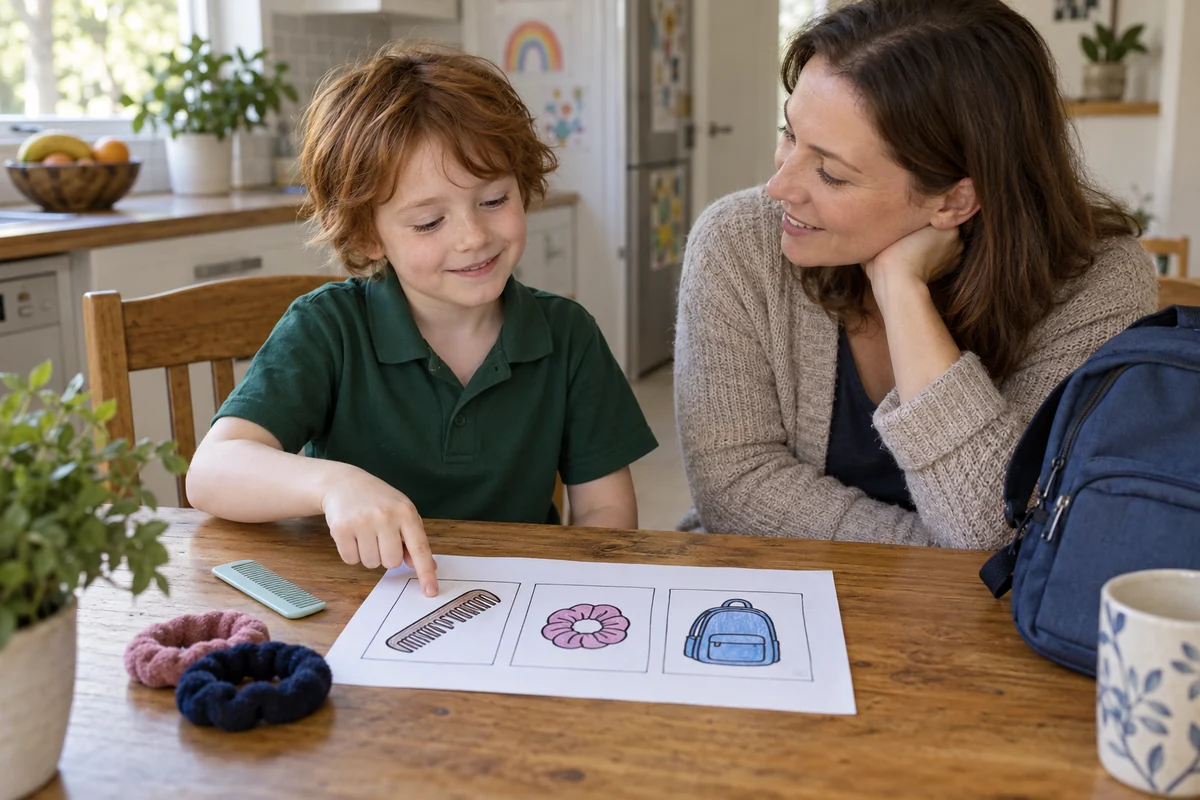
A child with short auburn hair points to a picture checklist while an adult listens beside a school bag.

Today the whole thing is too much

  • Take the break you agreed on, or call it a day.
  • Note which part went fine and plan the next step with the stylist.
  • A short visit still teaches you something.
  • Holding a child still to finish the haircut teaches them the wrong thing.

Products, by the job they do

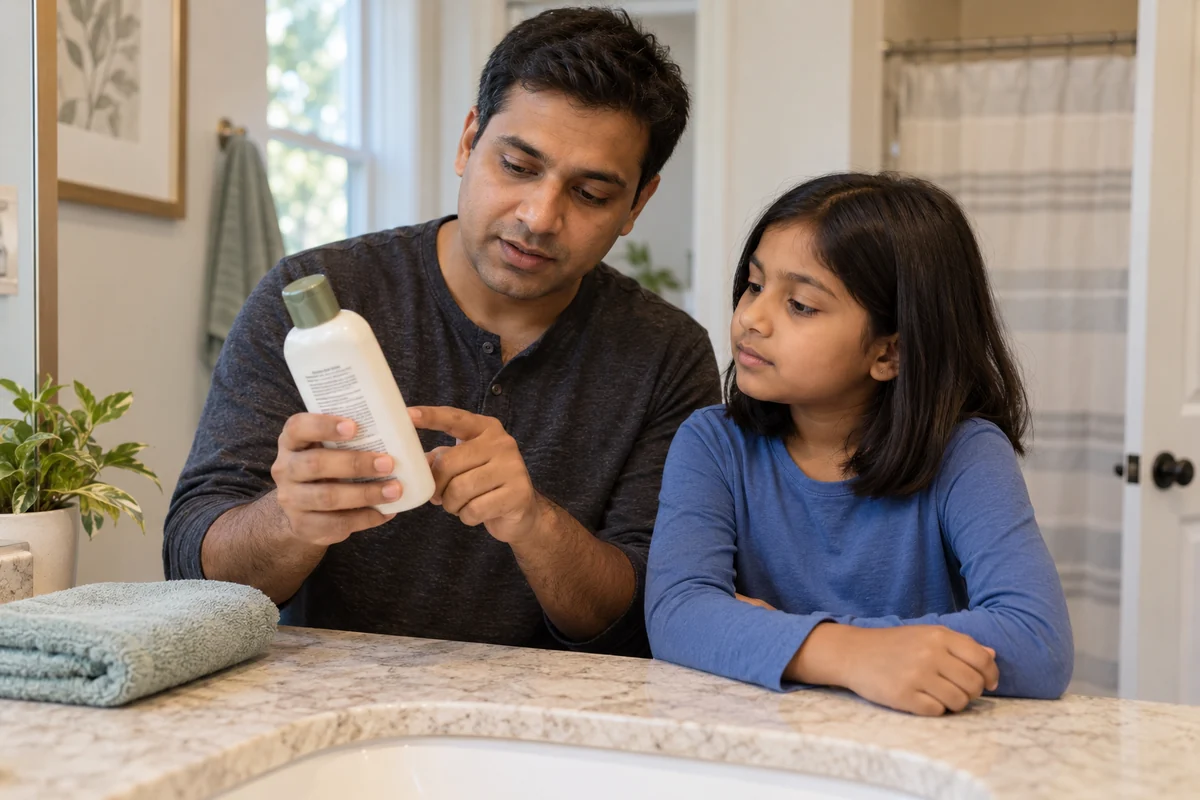
An adult and child look at the back label of a hair-care bottle together at a dry vanity.

Ask how they want the hair to arrive

Check whether the salon wants hair clean, dry, damp or styled as usual. Not every service needs a fresh wash first. Your child’s usual shampoo is fine for that. The salon decides what the booked service needs.

Browse cleansing products. Your current shampoo, wash schedule and past treatments help guide a personal recommendation.

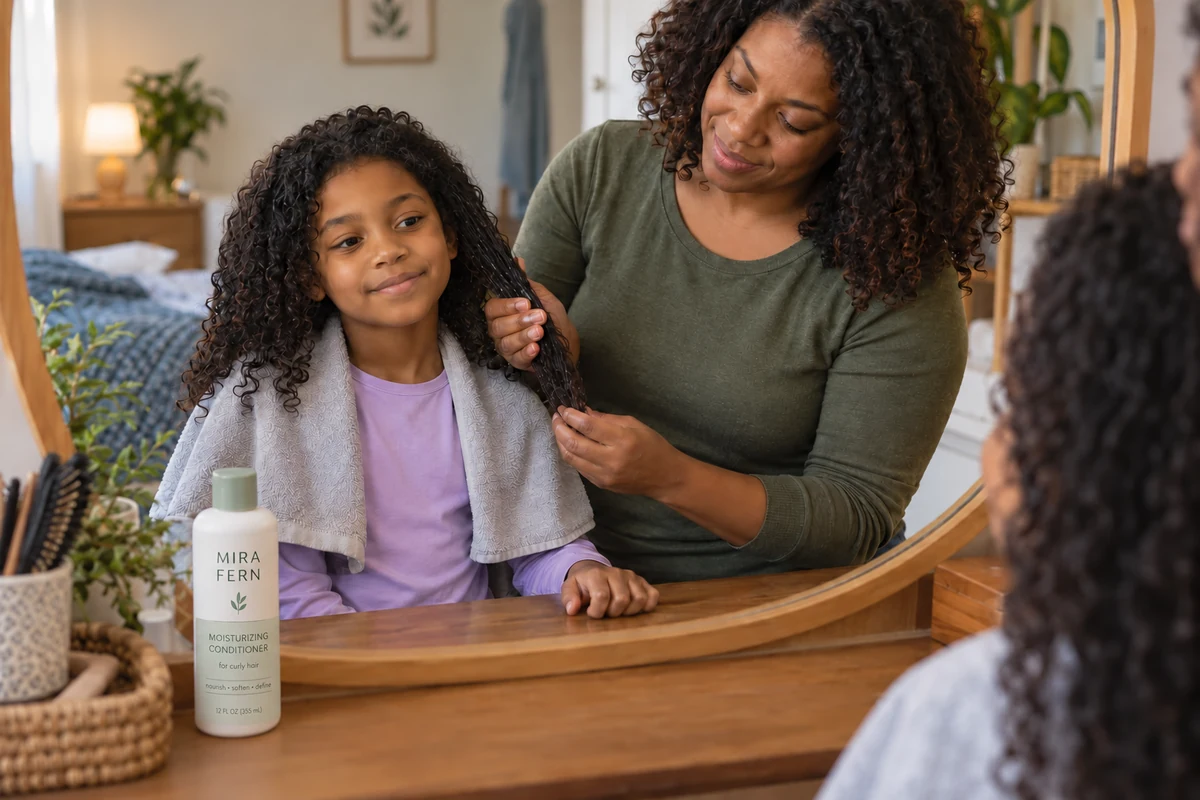
An adult supports a damp section of a child’s curly hair while smoothing conditioner through its lower lengths.

Keep the care at home familiar

Carry on with the conditioner and gentle detangling your child already knows while you plan the visit. Ask before any unfamiliar salon treatment goes on. A first haircut doesn’t mean new products.

Browse rinse-out conditioners. The consultation uses your hair details and treatment history to compare conditioner options.

A short preparation checklist

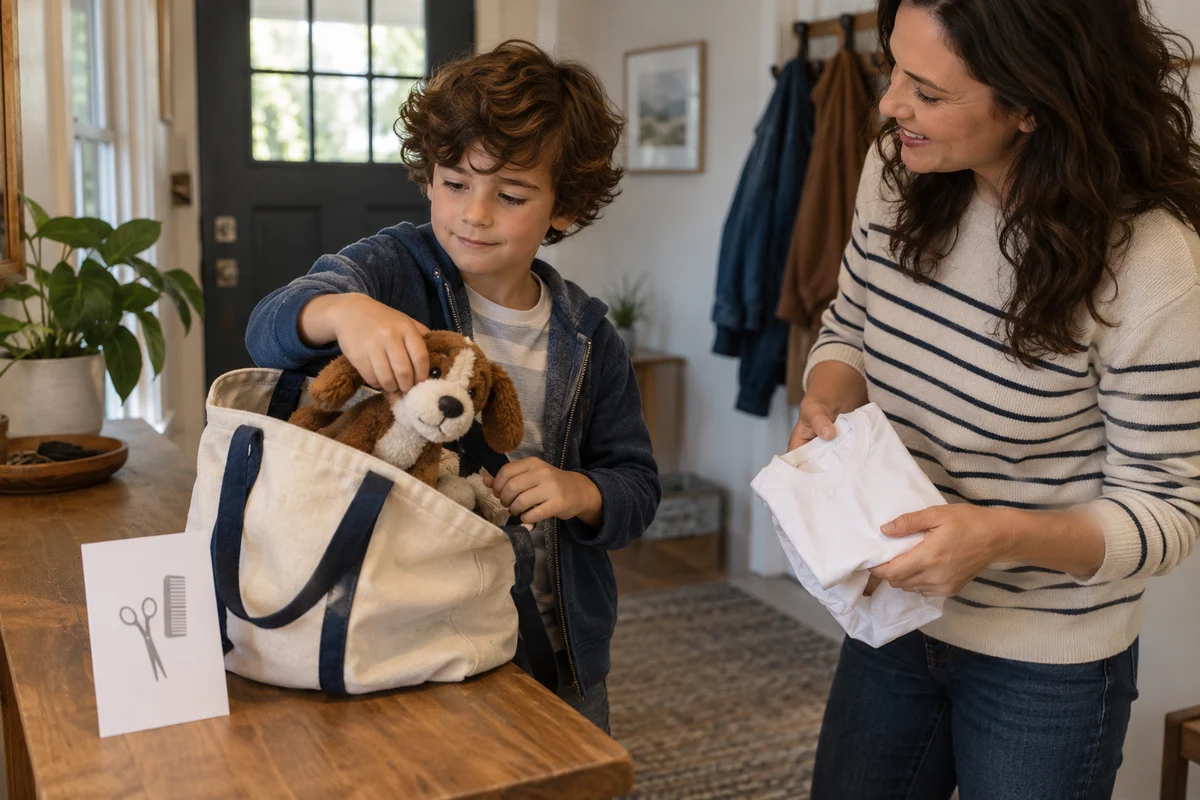
A child and caregiver pack a plush toy and spare shirt for a salon visit.

Bring only what helps

Pack one familiar comfort item, any communication aid and a spare top if loose hairs will bother them. Tell the stylist directly about anything your child can’t have on their hair. Let your child help choose what goes in the bag.

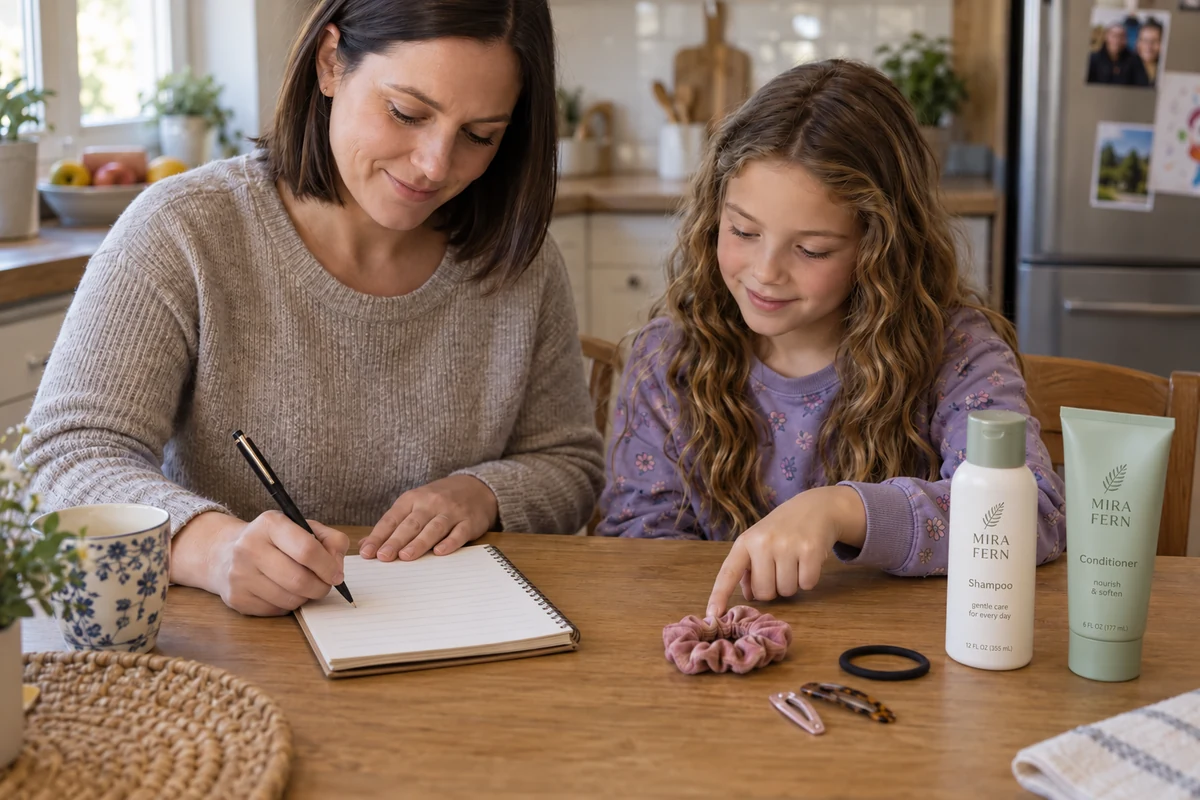
A caregiver begins a hair-care note while a child points to a preferred soft tie.

Write down what worked

Afterwards, note the time of day that suited them, the words that helped and where they wanted to pause. Ask what they’d keep or change. Agree the next visit’s plan with the stylist rather than assuming the same amount will suit every time.

Illustrated care examples: before & after

The visit in pictures

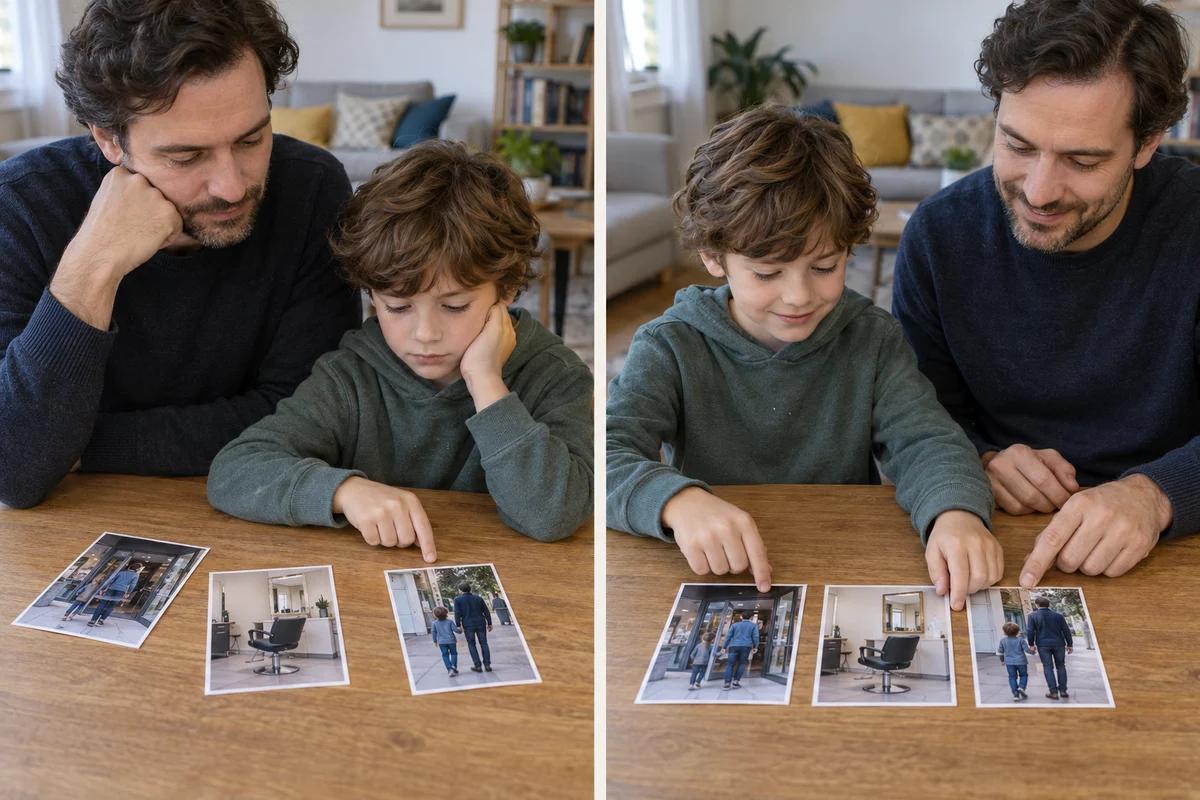
The same caregiver and child arrange salon photographs into a visit sequence.
Before · pictures not yet arrangedAfter care · the visit in order
Pictures of the visit in the order it will happen. Use photos of the real place if you can and describe each step without promising a finished cut.

Tools down when they ask

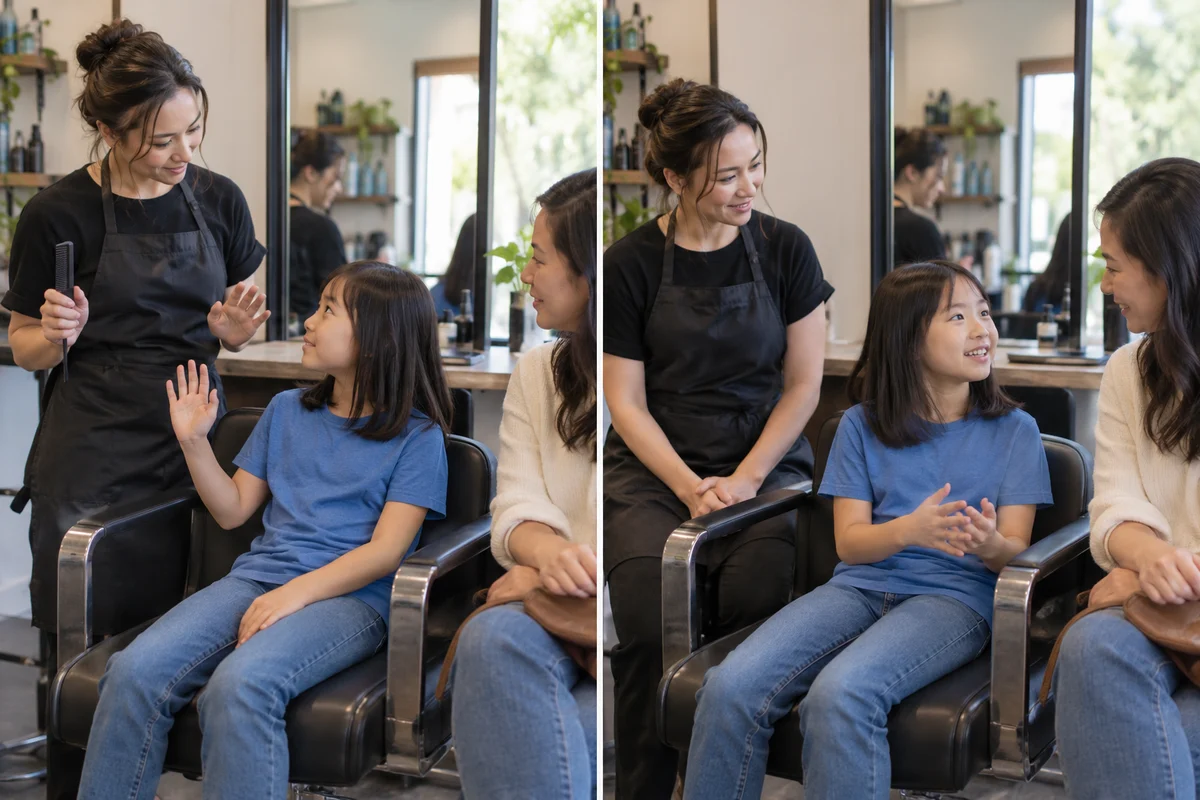
The same child raises a hand, then talks with a caregiver after the stylist puts the comb down.
Before · the child asks to pauseAfter care · the tools are put down
The child asks for a break and the adult puts the tools down, that is the whole change. The picture says nothing about how the haircut turns out.
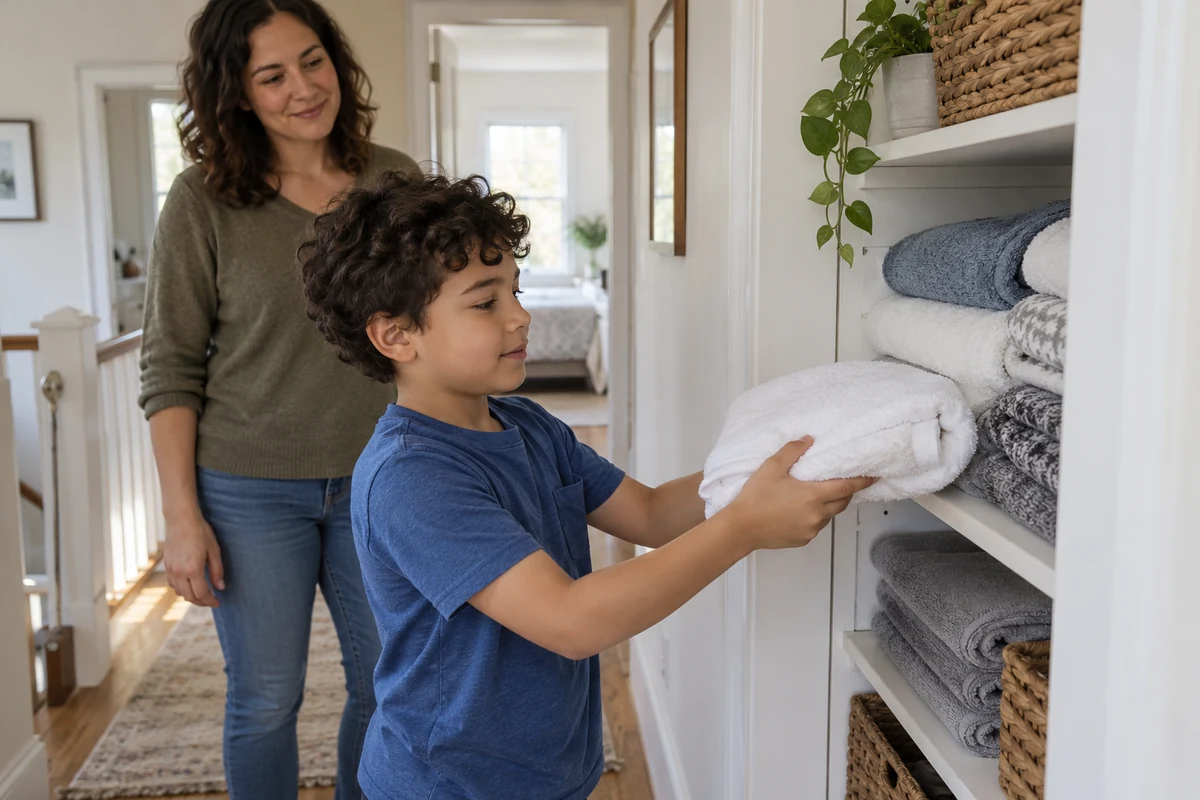
A child takes a folded towel from a low linen shelf while a caregiver watches nearby.

Help with your hair-care routine

Bring your hair-care questions to the consultation. You can also read keeping everyday detangling comfortable.

  • How much should we try to do on the first visit?
  • How do we explain it beforehand and make sure the pause signal is respected?
  • What should the stylist know before my child sits down?

Your child’s age, how they communicate, their hair, what they like and what’s happened before all shape the preparation. Everyday care at home can be planned around those details. What happens in the chair is agreed with the salon or barber and your child.

The Hair Care Consultation gives you a personal plan with product recommendations, routines and guidance on your hair-care questions.

$49 with 60 days of follow-ups, or $99 with 12 months. Pay once; the year renews only if you choose.