Hair Care Guides

Keep your hair comfortable on a run.
Less swinging, pulling and catching on gear.

A bouncing ponytail or hair caught under a strap can distract you through a whole run. Try a loose style that keeps the lengths together, check it with your running gear, and carry a spare tie so you can change it when you stop.
Your personal hair-care planProduct choices, routines and answers shaped around your hair.$49one-timeStart my consultation
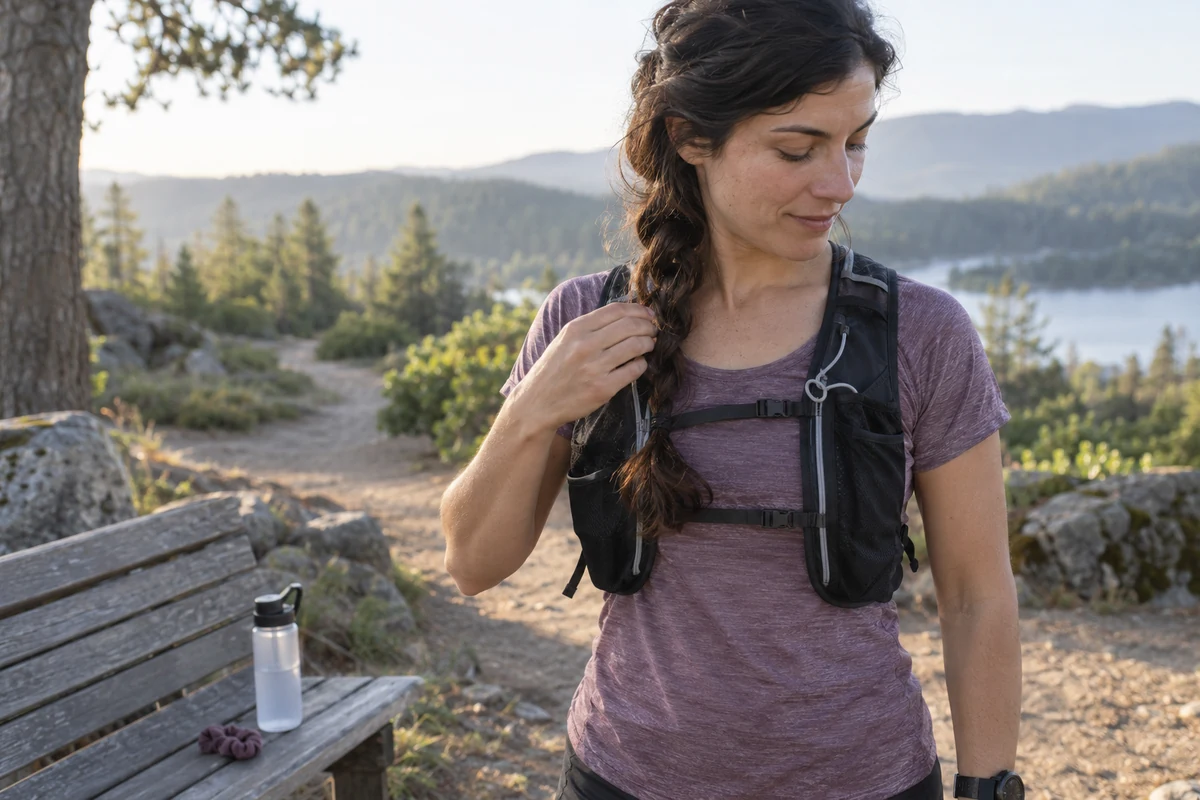
A runner in a purple shirt holds a loose side braid clear of a running vest strap beside a bench.
Less swinging, pulling and catching on gear.

What makes a running style uncomfortable

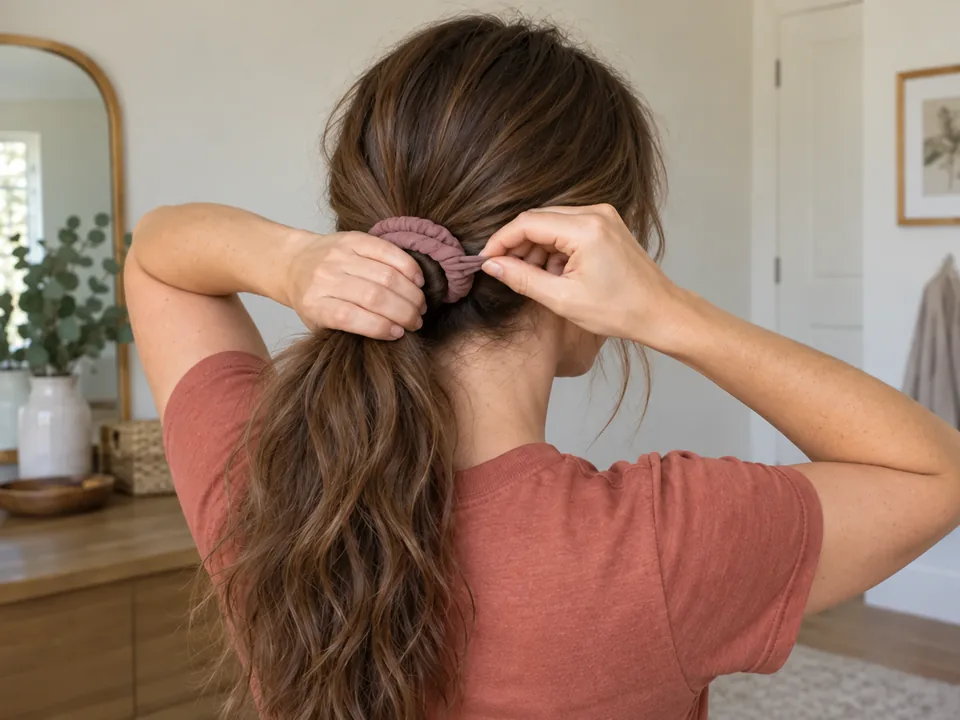
A woman supports her low ponytail with her left hand while her right fingers release the opened loop of a mauve fabric scrunchie around the base.

A long tail can swing and tug

A loose ponytail leaves the lengths free to swing. If it keeps hitting your face or tugging, try a loose braid to hold the lengths together. Short layers can stay out rather than being pulled tightly into the tie.

Lowering a soft beanie gently over dry hair.

Hats and straps can press or catch

A tie beneath a hat band can press against your head. Loose lengths can catch under a vest strap or collar. Keep the tie clear of the band and bring hair out from under straps before fastening them.
Before, during and after your run

Supporting the ponytail while loosening its fabric tie.

Stop and loosen a pulling tie

  • Stop somewhere safe before adjusting your hair. Support the gathered hair with one hand while the other opens the outer loop of the tie.
  • Undo the wraps instead of dragging the tie down the hair. Regather more loosely if it was pulling.
  • If one fit slips and the next squeezes, try a different tie size instead of adding another tight wrap. Take down a style that hurts.
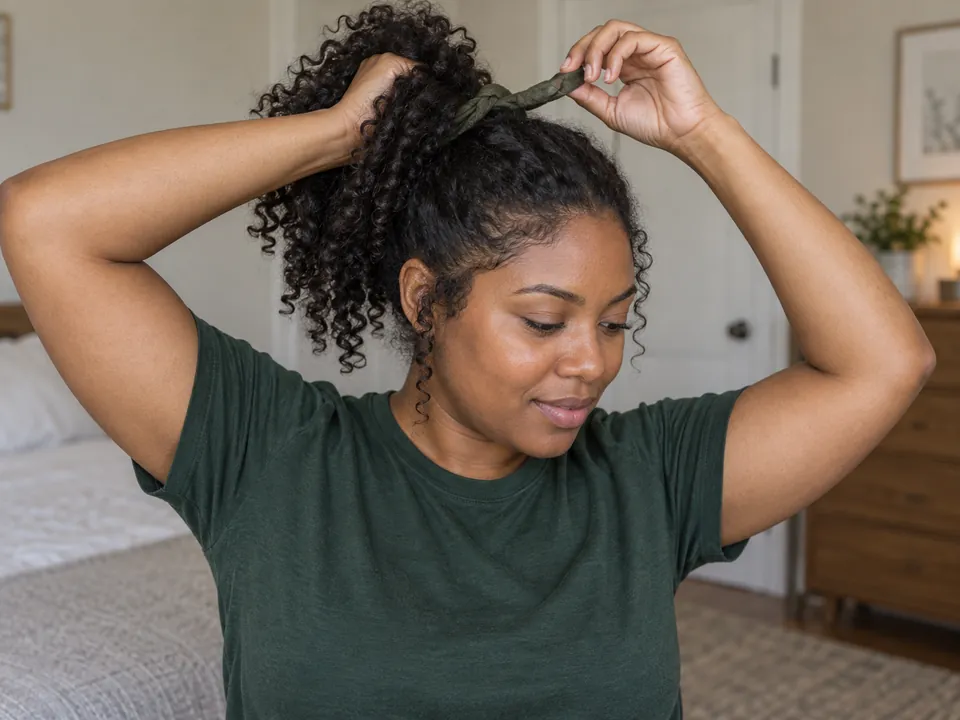
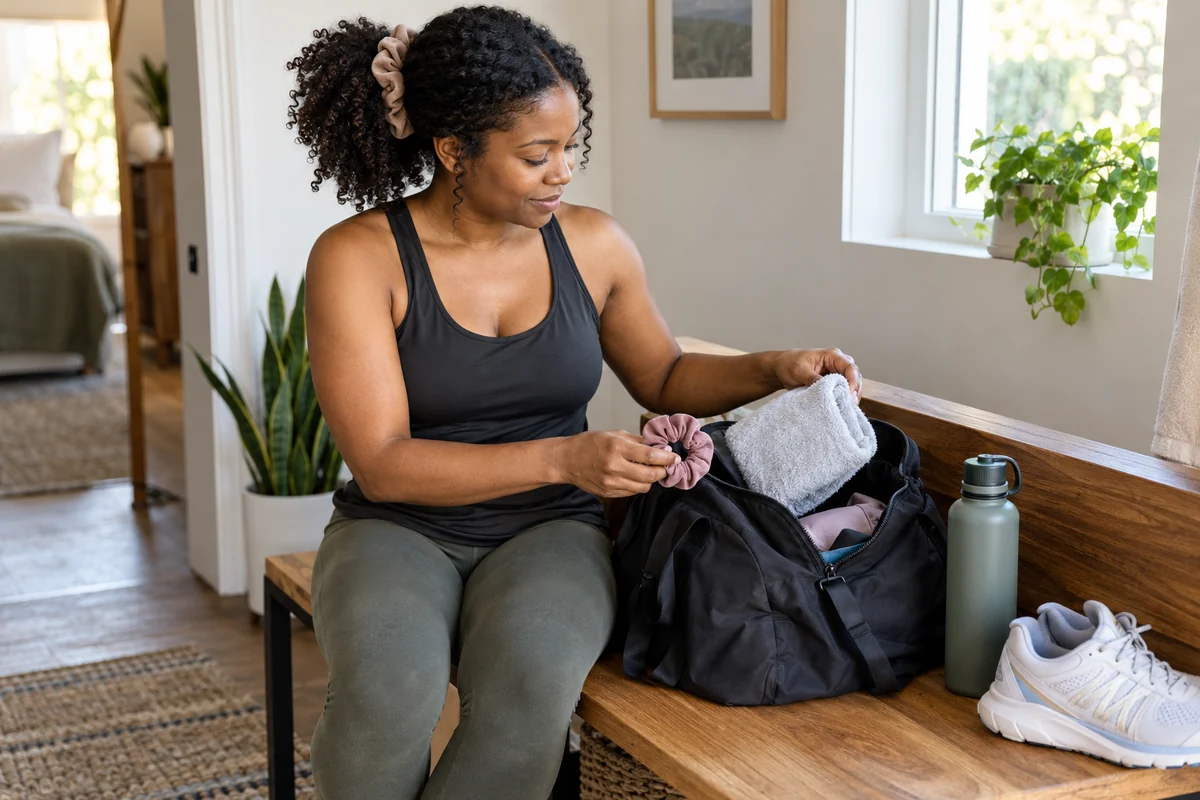
A woman with loosely gathered coily hair packs a clean towel and spare hair tie for exercise.

Try the full kit before a long run

  • Wear the hat, collar and vest you plan to use on a shorter training run. Check that the tail or braid stays clear of buckles and straps.
  • Pack a familiar spare tie where you can reach it during a stopped break. Try a new fastener or style on a training day first.
  • If hair catches, stop and release the strap or buckle before freeing it. Refasten the gear with the hair clear.
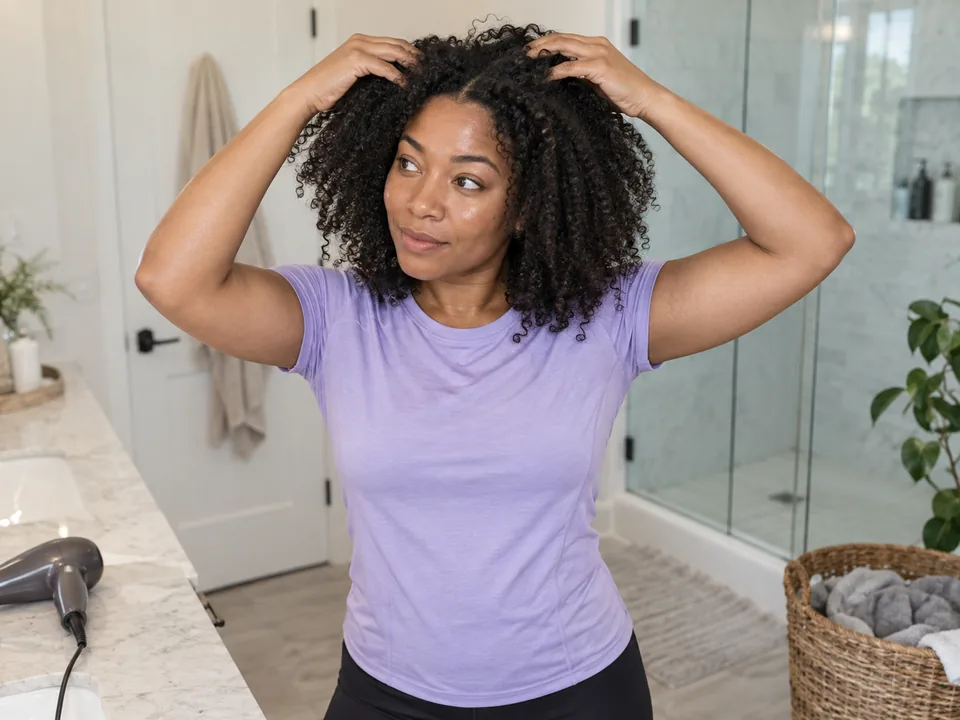
A woman checks the roots of her loose curls with her fingertips; the dryer rests on the counter.

Check the roots when you finish

  • After taking the style down, feel the roots at the crown and nape. Leave damp hair loose to dry where possible.
  • Wash with shampoo and water when the scalp feels oily, dirty or coated. How often you need to wash can vary with the session and your hair.
  • If you cannot shower yet, keep the hair comfortable and plan a wash when you can. A quick restyle does not remove buildup.

Care for your scalp and lengths afterward

A woman lifts her own wet hair at the back while water from a fixed showerhead reaches her crown.

Shampoo when your scalp needs washing

Choose a shampoo that cleans your scalp comfortably at the frequency you need. Work it through the scalp and rinse well. A short run and a long, sweaty session may leave different washing needs.

Browse cleansing products. Bring the shampoos you are choosing between to the consultation, along with what you liked or disliked about them.
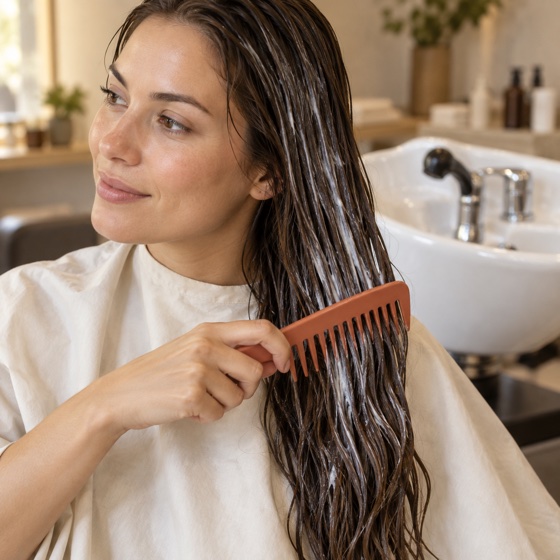
A woman detangling conditioned hair with a wide-tooth comb.

Conditioner for post-run tangles

On wash day, use rinse-out conditioner on wet lengths as its bottle directs. Detangle curls or coils gently while damp and conditioned, then rinse the conditioner out fully. For straight hair, let it partly dry after washing before gently combing the ends.

Browse rinse-out conditioners. Tell the consultation what you want from a conditioner and what you disliked about previous ones.
Choose a comfortable tie or loose braid

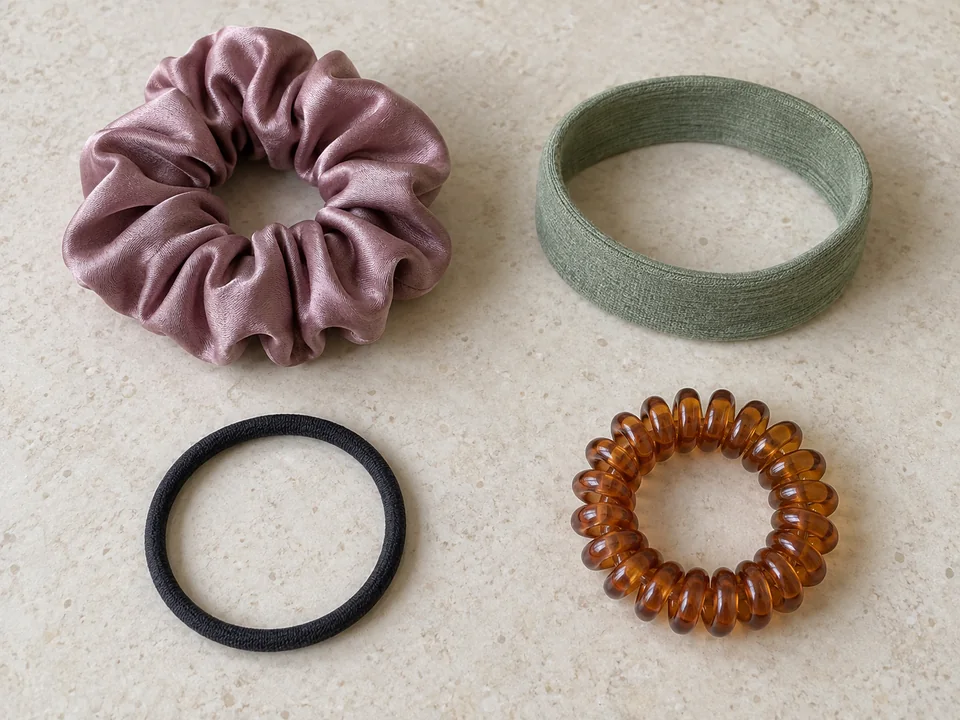
Four hair ties: a mauve scrunchie at top left, wide green fabric ring at top right, slim charcoal covered elastic at bottom left and amber spiral at bottom right.

Find a tie that holds comfortably

For dry, loose hair, compare covered ties with smooth joins. Choose a size that holds without pulling. The full method shows how to add a wrap, check the fit and unwind it before removal.

Guide: Tie choice and tension
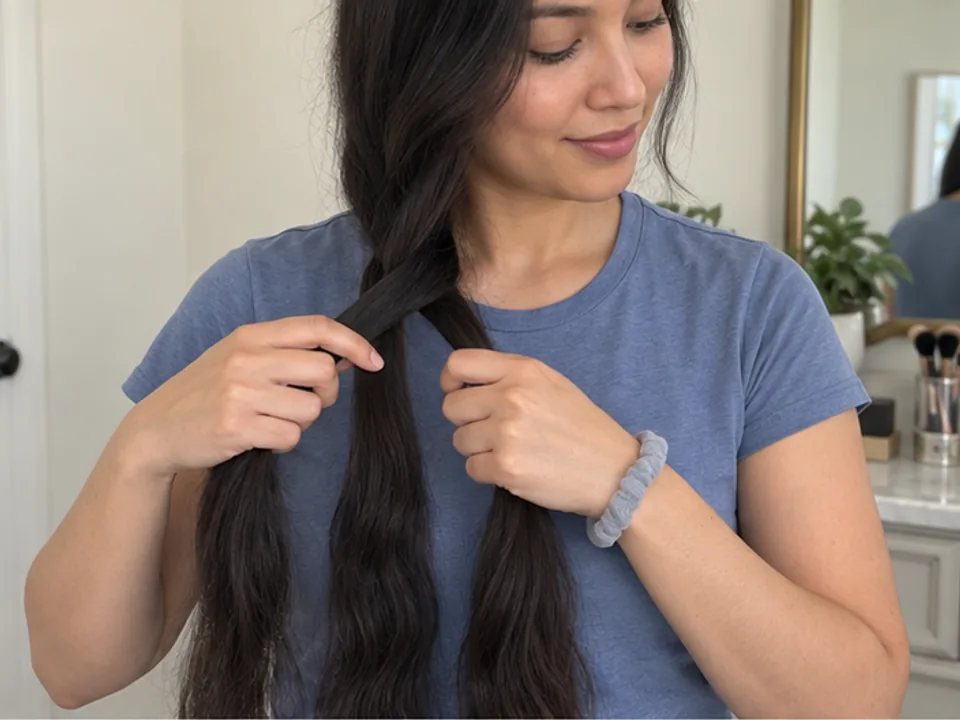
A woman begins a side braid by moving one outside section over the middle, keeping three sections separate.

Try a loose three-strand braid

If your dry hair reaches over one shoulder without pulling, a loose braid can keep the lengths together. Follow the illustrated method, then try it on a short training run before using it for a longer outing.

Guide: Make a loose everyday braid
Illustrated care examples: before & after

A tail or a braid

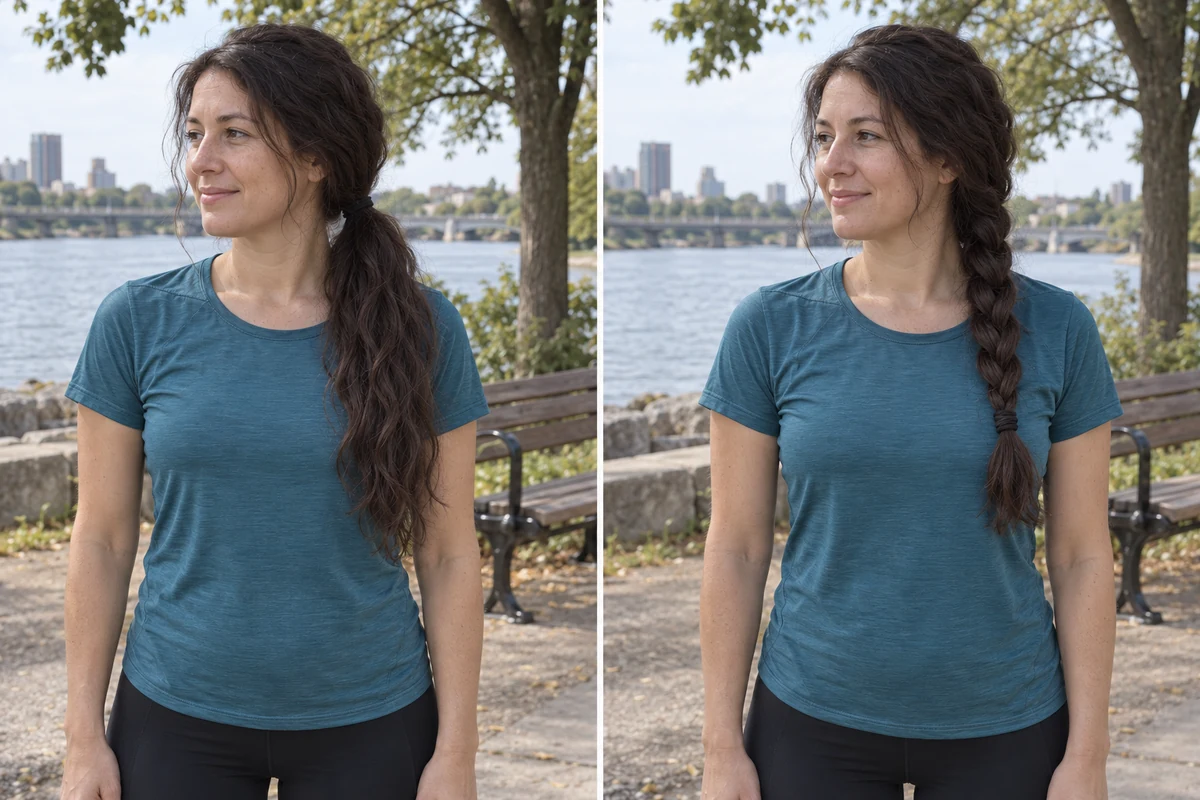
Two views of the same runner show a low ponytail and a loose side braid.
Before · loose ponytailAfter styling · loose side braid
The braid holds the lengths together instead of leaving a free tail. Try each style on a short run to compare comfort.

Keep hair clear of straps

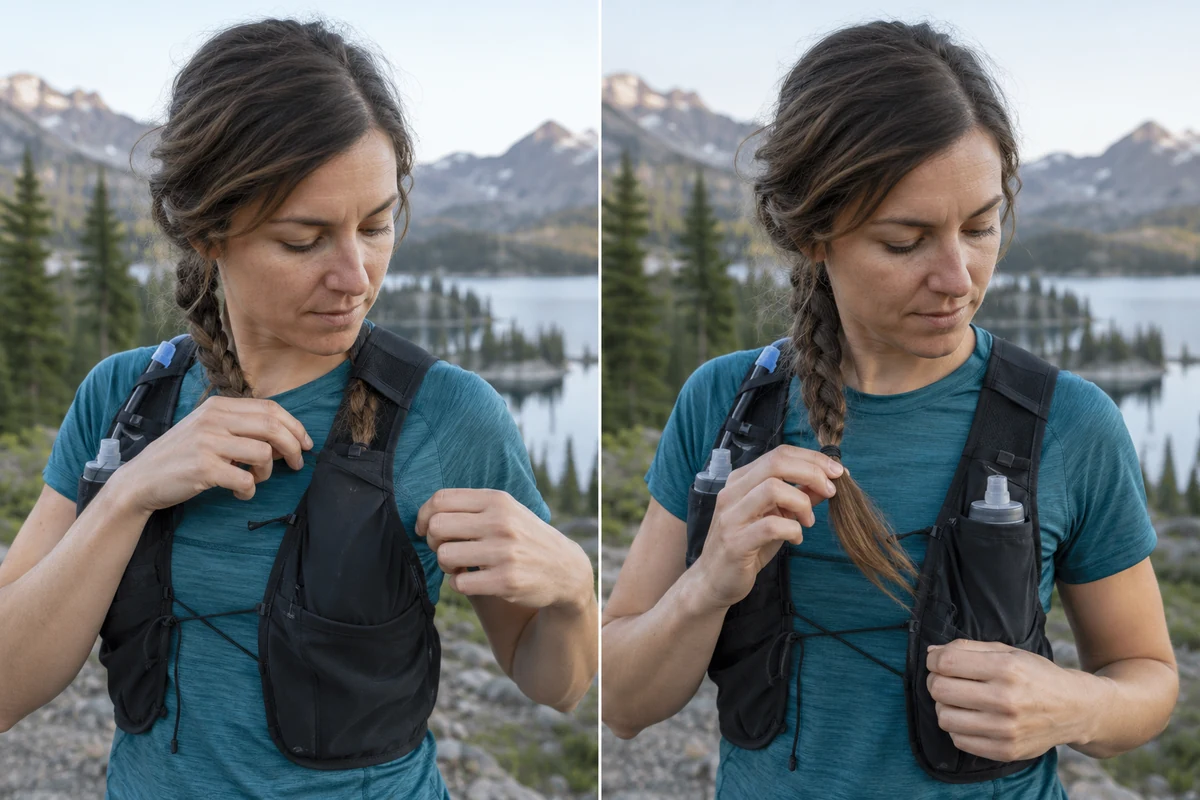
The same runner first has a braid beneath a vest strap, then holds it clear in front of the strap.
Before · braid beneath a vest strapAfter care · braid clear of the strap
The braid sits outside the vest strap in the second view. Free caught hair before fastening the gear again.
A woman with curls writes a routine note beside hair-care products.

Help with your hair-care routine

Bring your hair-care questions to the consultation. You can also read planning hair care around regular exercise.

  • Would a loose braid suit me better than a ponytail?
  • How can I keep my hair clear of my running vest?
  • What should I do when my tie starts slipping?

Tell us your hair length, where the style pulls or catches, and the gear you run in. Your consultation can suggest a simpler style and a wash routine that fits your training week.

The Hair Care Consultation gives you a personal plan with product recommendations, routines and guidance on your hair-care questions.

$49 with 60 days of follow-ups, or $99 with 12 months. Pay once; the year renews only if you choose.