Hair Care Guides

Ask the hair questions before procedure day.
Your facility’s instructions set the plan.

In the run-up to a procedure, hair is one more thing to worry about. Mostly it’s preparation. What’s allowed beforehand, what needs to be reachable, and how washing will work afterwards. Ask your facility early. Someone else’s experience may not match yours.

Your personal hair-care planProduct choices, routines and answers shaped around your hair.$49one-timeStart my consultation
A woman with short silver curls reviews a preparation sheet beside a closed toiletry pouch.
Your facility’s instructions set the plan.

What is going on

A woman reads a preparation sheet at home before packing her hair supplies.

Get the current written preparation instructions

Confirm which washing and product rules apply to your procedure and when. Keep the facility’s contact details with the sheet. Don’t swap in a general hair routine, another hospital’s checklist or a pre-op wash recipe from the internet.

A woman with box braids holds one braid loosely beside a questions notebook and unused clip.

Describe what’s on your head now

Mention extensions, a wig, a hairpiece, fasteners or a head-worn device before the day. Ask what has to come off or be reachable, who handles it and when. Don’t cut hair or dismantle an unfamiliar attachment to guess what the team wants.

What helps, day to day

A woman wearing glasses reads a hair product ingredient panel.

The sheet names a special wash

  • Use only the product, the body areas, the timing and the rinsing the facility specifies.
  • Don’t assume an antiseptic body wash belongs on your scalp or near your eyes.
  • If a direction is unclear, ask the facility rather than adapting it from a normal shampoo label.
An adult wearing a behind-the-ear hearing aid and a stylist review a booklet before a hair service.

A style or attachment takes advance work

  • If something has to come off, allow time to arrange the right person and a comfortable alternative.
  • Ask before you pay for a long-lasting style close to the date.
  • A neat braid or protective style isn’t automatically allowed for every procedure or position you’ll be in.
A helper in a blue shirt supports the wet hair ends while rinsing out conditioner with a handheld sprayer.

Washing afterwards may need a hand

  • Ask what washing access, movement and equipment limits to expect, then line up the help those answers call for.
  • Agree who can gather supplies, help with a permitted wash or clear up.
  • Don’t promise yourself a wash day before you know the rules.

Products, by the job they do

A woman massaging shampoo lather onto her scalp with her fingertips.

Keep the preparation product separate

The facility chooses any procedure-specific wash, and nothing here can approve a substitute or change its directions. Keep the two clearly apart when you set out supplies.

Browse cleansing products. Your current shampoo, wash schedule and past treatments help guide a personal recommendation.

A woman smoothing conditioner through her mid-lengths and ends.

Check whether ordinary layers are allowed

Ask how the preparation instructions affect conditioner, leave-ins and styling products. Don’t add a familiar layer after a special wash unless the facility says that’s fine. Ordinary care for your lengths, within the limits you’ve been given, can come afterwards.

Browse rinse-out conditioners. The consultation uses your hair details and treatment history to compare conditioner options.

Make a short preparation sheet

A woman with curls writing a routine note beside her hair-care products.

Write down only what’s confirmed

Record the preparation instructions, your attachment questions, who to contact and the plan for hair care afterwards. Mark anything still unanswered. Keep this sheet next to the facility’s full instructions. It’s a summary, not a replacement for them.

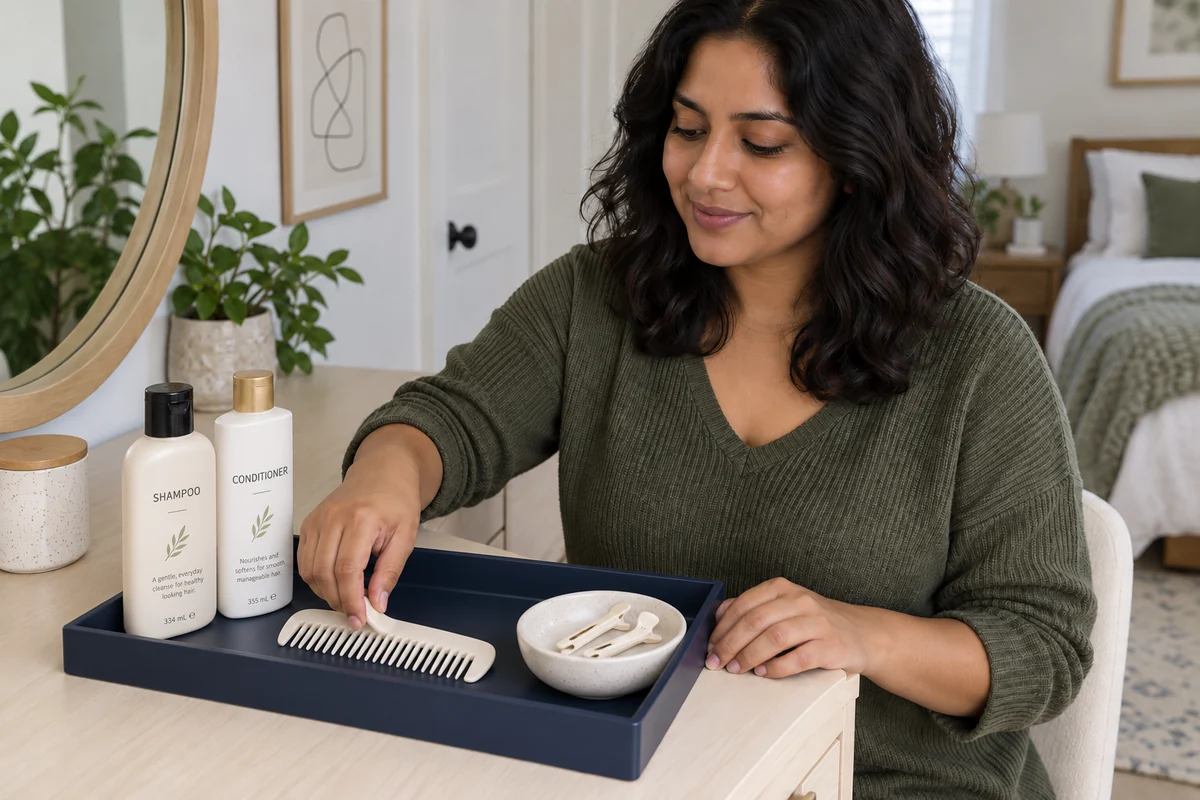
A woman returns a pale comb to a dark tray containing capped shampoo and conditioner bottles and a bowl of clips.

Gather supplies once you have answers

Set aside only what the confirmed plan needs, including anything allowed for drying and somewhere to keep removable accessories. Leave the original labels readable. Optional salon services and new products stay out of the preparation if they raise questions nobody’s answered.

When to get help

A woman and a medical professional seated together, looking at a calendar.

Signs that need more than routine care

  • If two sets of instructions conflict, a product reacts, or a new sore or rash appears in the area being treated, contact the procedure team or a medical professional before going ahead. Follow the facility’s rules about reporting illness. Nothing in a hair-care guide can clear you for a procedure.

Illustrated care examples: before & after

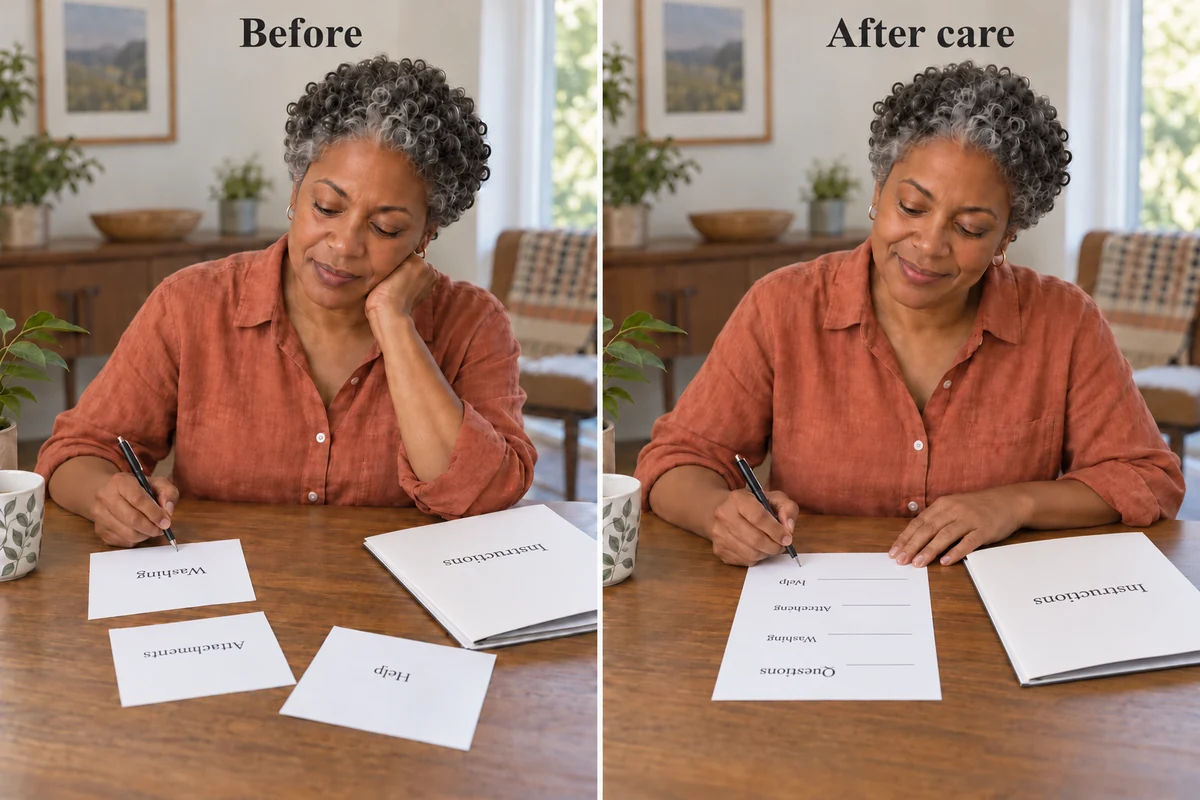
Questions on one sheet

The same woman consolidates washing, attachment and help questions into one sheet.
Before · three separate question notesAfter care · one sheet beside the instructions
The washing, attachment and help questions are brought onto one sheet, with the facility’s full instructions kept right beside it.

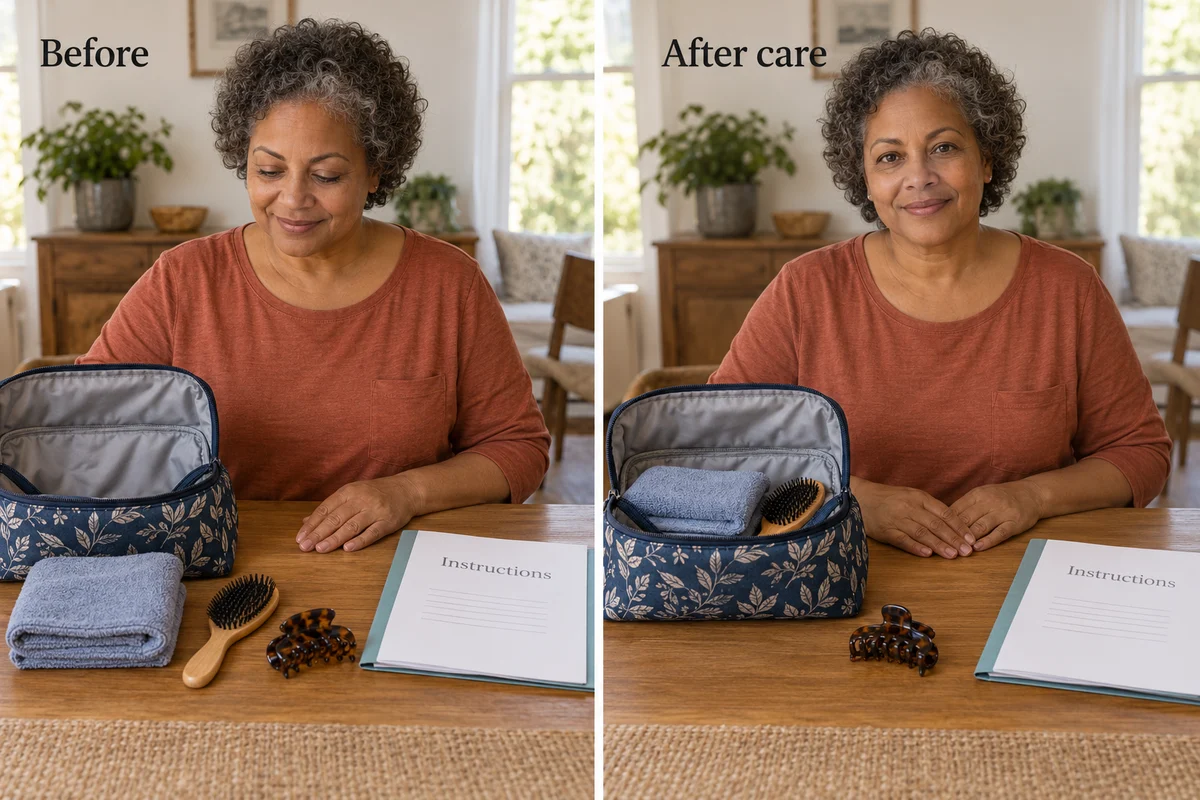
Pack only what was confirmed

The same woman packs a towel and brush while leaving an optional clip beside the instruction folder.
Before · supplies not yet sortedAfter care · confirmed items packed apart
Only the items confirmed for your own plan go into the bag, packed apart from the rest. What is allowed, clips included, comes from your plan alone.
A woman with very short hair writing an appointment checklist.

Help with your hair-care routine

Bring your hair-care questions to the consultation. You can also read keeping device instructions separate from ordinary hair care.

  • Which washing and product instructions apply to my procedure?
  • What has to come off or be reachable, and who does it?
  • What help and supplies will I need at home afterwards?

Share the restrictions you’ve been given, what’s on your head and who can help. A consultation can organize everyday cosmetic choices around that, without giving you procedure instructions, judging a treatment or deciding when a restricted step can start again.

The Hair Care Consultation gives you a personal plan with product recommendations, routines and guidance on your hair-care questions.

$49 with 60 days of follow-ups, or $99 with 12 months. Pay once; the year renews only if you choose.