Hair Care Guides

Start with your device’s own instructions.
Then fit the hair care around it.

Hearing aids, sound processors and other head-worn devices each have their own rules about moisture, removal and cleaning. Know your exact model before planning washing, products or clips. What’s fine for one device can be wrong for another in the same spot.

Your personal hair-care planProduct choices, routines and answers shaped around your hair.$49one-timeStart my consultation
An adult wearing a behind-ear hearing aid reads a booklet beside closed hair products at a dry table.
Then fit the hair care around it.

What is going on

An adult wearing a behind-the-ear hearing aid reads a small instruction booklet at a dry table.

Know what can move and what must stay

Keep the current instructions for your exact device and its accessories with your care plan. Don’t assume it should come off for every wash, or that you can reseat it yourself. The fitting instructions you were given stand. Hair care works around them.

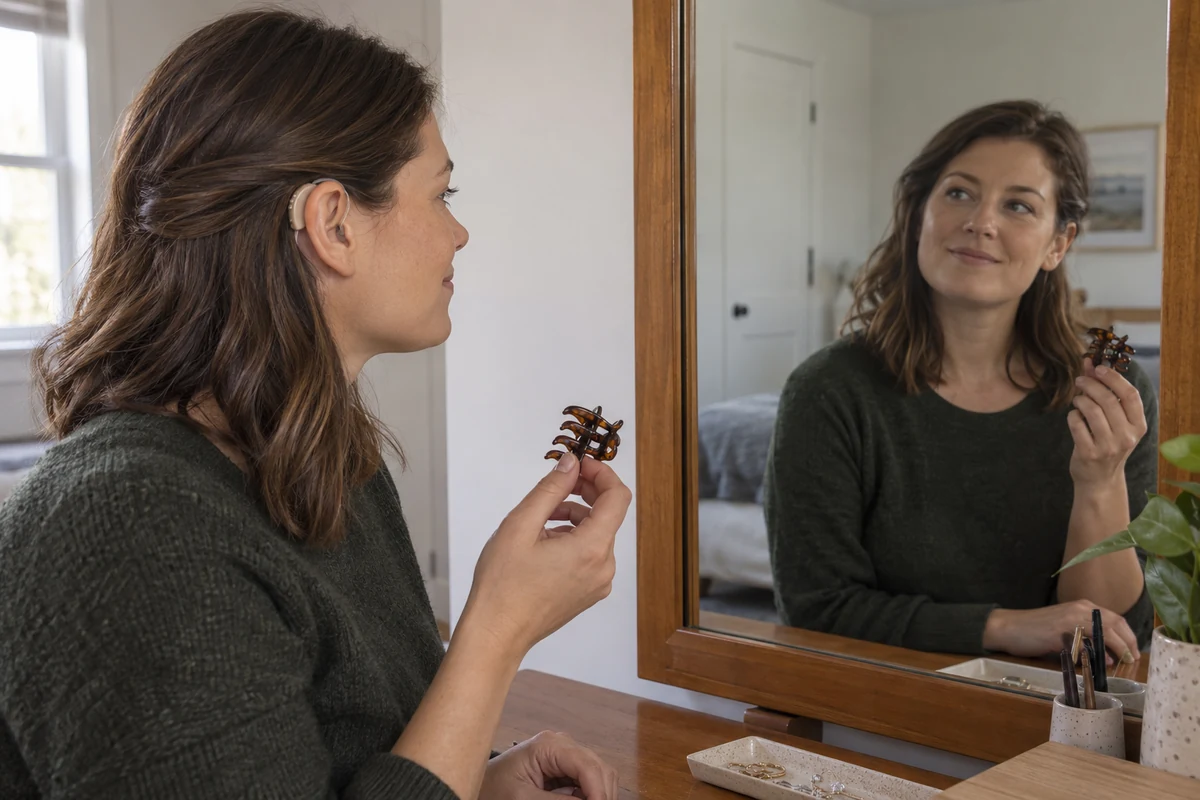
An adult wearing a behind-the-ear hearing aid holds a plain hair clip away from the ear while checking its position in a mirror.

Find the shared space

Notice where your hair, an ordinary clip and the device all meet. Keep fasteners out of that spot. Don’t tighten a band, swap a magnet or move the device to make a hairstyle work. The hairstyle moves instead.

What helps, day to day

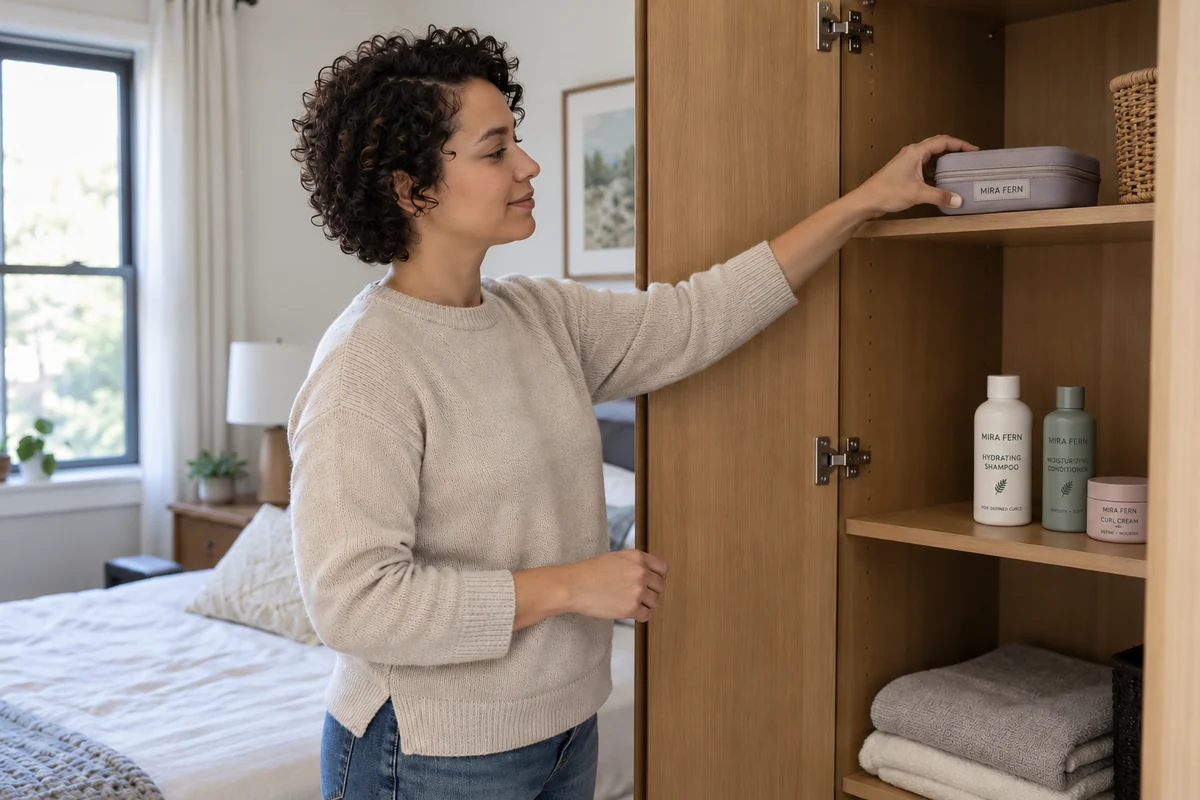
An adult places a closed small case on a dry shelf, separate from closed hair-product bottles on a lower shelf.

A removable device needs somewhere to go during care

  • When the instructions say to take it off, have the specified storage ready, away from splashes, spray and hot tools, and out of reach of children and pets.
  • Put it back on the way the manual says.
  • A quick wipe doesn’t make it ready.
A woman wearing glasses reads a hair product ingredient panel.

A hair product could get onto the device

  • Read the product’s directions and the device’s before you use anything near it.
  • Never spray toward openings, and never use a hair product to clean, loosen or hold equipment.
  • If you can’t keep the two apart the way the instructions ask, skip that styling step.
An adult wearing a behind-the-ear hearing aid and a stylist review a booklet before a hair service.

Someone else is washing or styling your hair

  • Tell them where the device sits and share the instructions that matter for what they’re doing.
  • Agree how you’ll communicate, and pause if taking it off affects your hearing.
  • Decide who handles the device.
  • A salon visit isn’t a license to change its settings or attachments.

Products, by the job they do

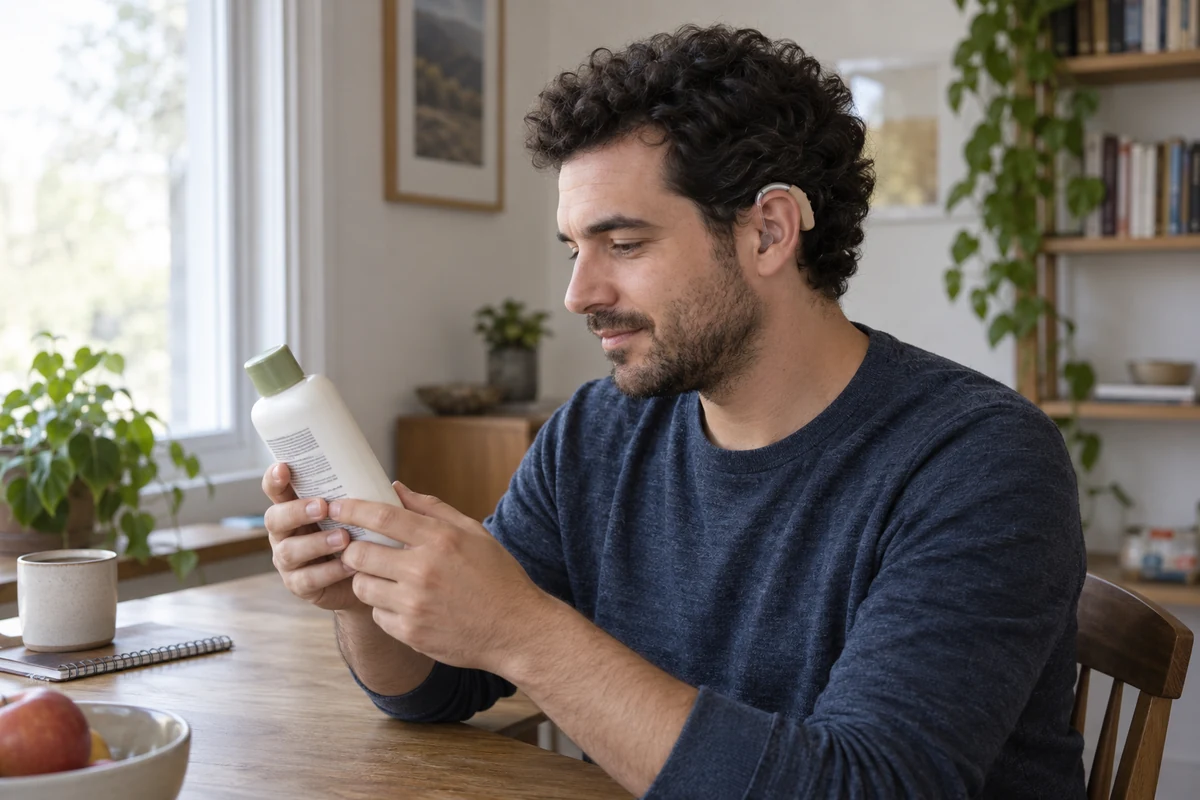
An adult wearing a behind-the-ear hearing aid reads the label of a closed shampoo bottle at a dry table.

Plan the shampoo and the device separately

Your scalp, how you wash and any limits you share guide an ordinary shampoo choice. No shampoo comes certified for a hearing aid or processor. Rinsing it out and protecting the device both have to work.

Browse cleansing products. The consultation uses your wash frequency and scalp concerns to recommend a shampoo.

A woman smoothing conditioner through her mid-lengths and ends.

Keep conditioning without touching the equipment

Follow the conditioner’s placement and rinse directions alongside the device’s rules. Length, pattern and how your hair handles still matter. Don’t smear conditioner over a contact point or the device to stop rubbing, and don’t cut a rinse short to keep water away.

Browse rinse-out conditioners. The consultation uses your hair details and treatment history to compare conditioner options.

Write a care order for your device

An adult wearing a behind-the-ear hearing aid writes in a notebook beside an open booklet.

Write the order before you start

From your own instructions, note when removal is allowed, where the device goes, then washing or styling, drying and putting it back. Leave open questions visible. This is a reminder of your device’s plan, not a universal set of steps.

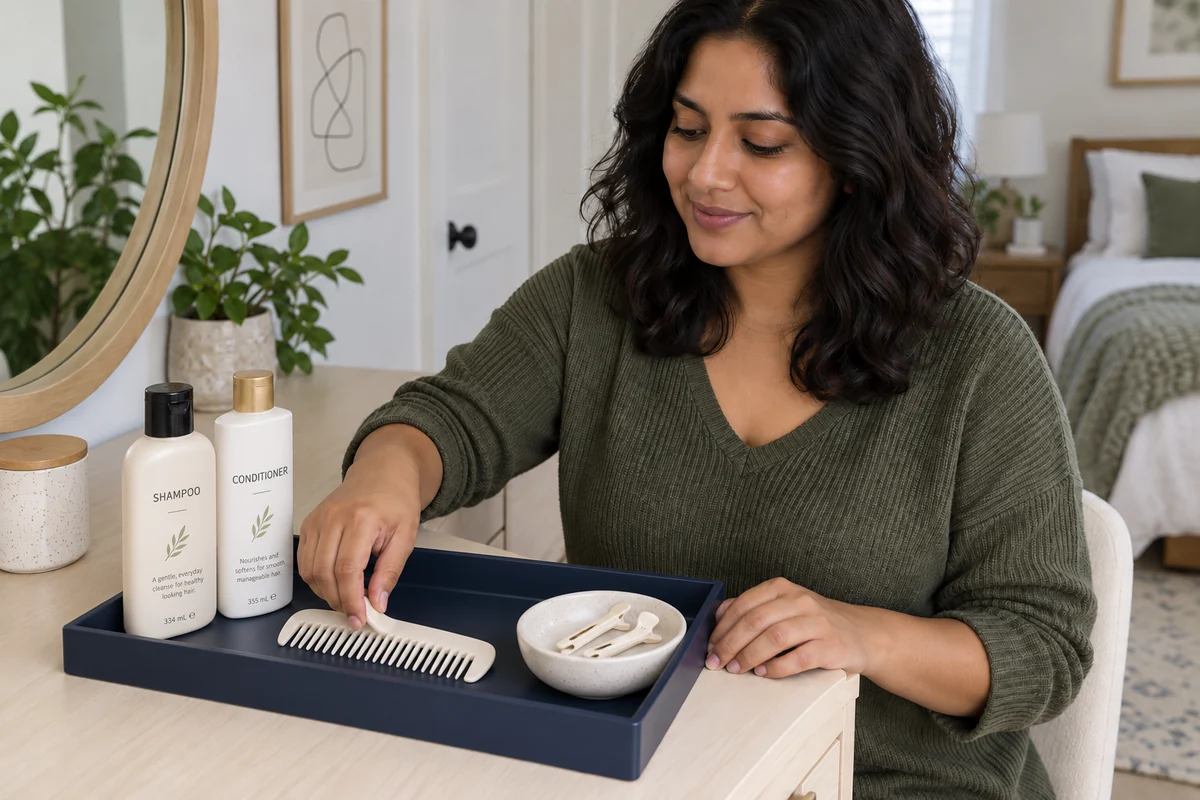
A woman returns a pale comb to a dark tray containing capped shampoo and conditioner bottles and a bowl of clips.

Keep hair supplies and device supplies apart

Give ordinary hair products and the device’s approved care items separate homes. Keep labels readable and lids closed. A hair towel, a household cleaner or an improvised cover isn’t a device accessory until the maker says it is.

When to get help

A woman and a medical professional seated together, looking at a calendar.

Signs that need more than routine care

  • Ear pain, inflammation, a scalp that stays irritated or any sore is worth showing a medical professional, and your device’s own guidance will say what symptoms it wants reported. For fit, damage or a device that stops working, go to whoever fitted it. A removal rule written for one device never carries over to one that’s meant to stay in place.

Illustrated care examples: before & after

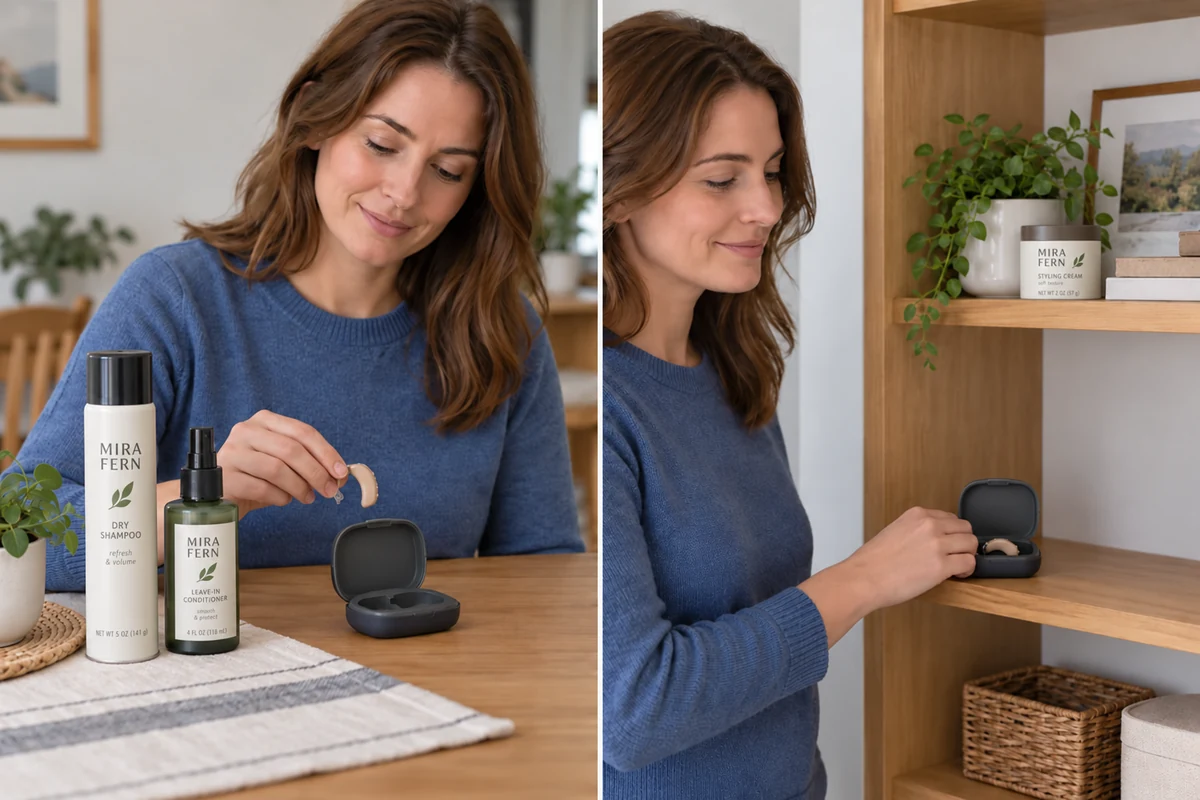
A dry place of its own

An adult places a removed hearing aid in a case on a dry shelf separate from closed hair products.
Before · held above its caseA separate dry place · case away from hair products
If your device’s instructions call for taking it out during care, it goes in its own case away from hair products. Storage only, not removal or operation.

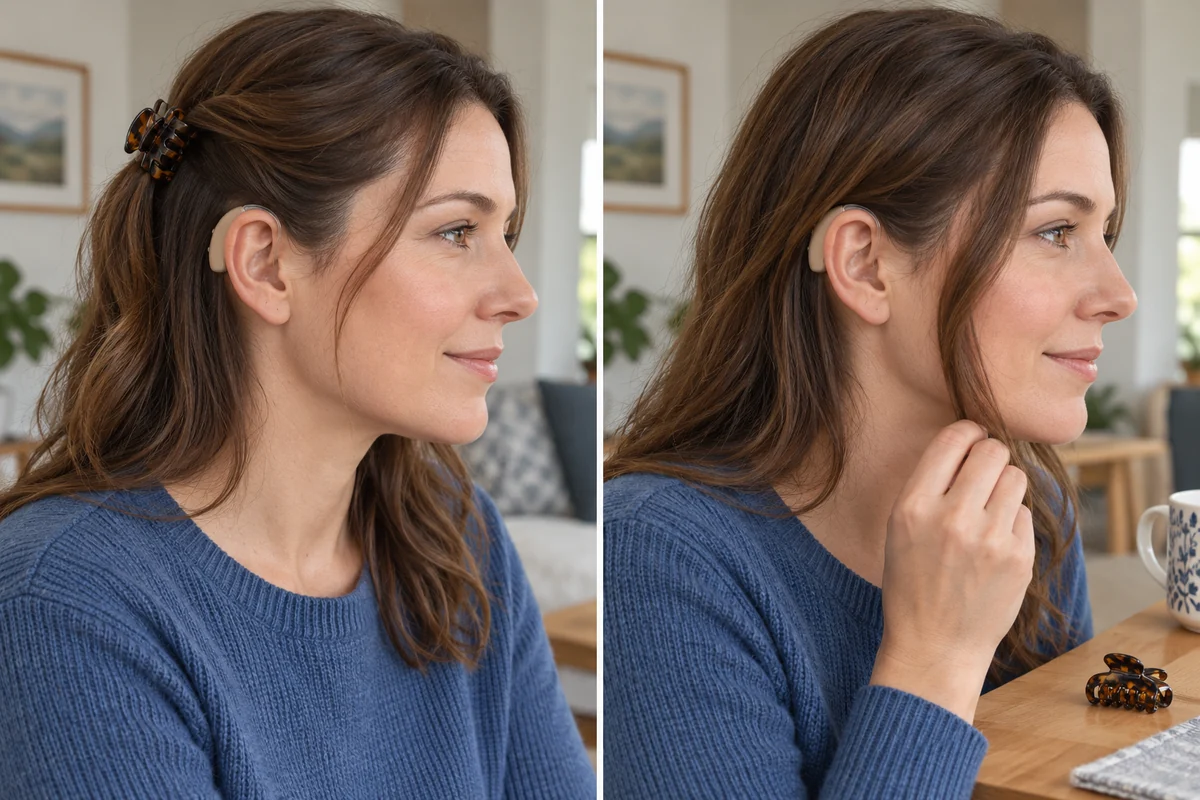
Move the clip, not the earpiece

The same adult removes a separate hair clip while leaving a behind-ear hearing aid unchanged.
Before · clip holding a side sectionChange the hair accessory · clip out, strand held forward
The clip comes out and the strand is held forward, while whatever sits on the ear stays exactly as it was. Its own instructions cover how it sits.
A woman with very short hair writing an appointment checklist.

Help with your hair-care routine

Bring your hair-care questions to the consultation. You can also read managing ordinary headphone contact separately.

  • What does my device need during washing and styling?
  • Where do my clips and the device overlap?
  • How will I communicate and pause when someone else does my hair?

Share the device rules you want respected, where it touches, and what you need for washing, styling and support. A consultation can fit your hair care around those facts. It won’t judge how the device works, change settings or promise anything about equipment.

The Hair Care Consultation gives you a personal plan with product recommendations, routines and guidance on your hair-care questions.

$49 with 60 days of follow-ups, or $99 with 12 months. Pay once; the year renews only if you choose.