Hair Care Guides

Plan around the energy you have today.
Make the whole job smaller where you can.

When your energy comes and goes, the same wash can feel fine one day and impossible the next. Count the whole job. Setting up, washing, rinsing, drying and clearing away. Then decide what’s needed today and where you’ll pause. Your own pacing plan still stands.

Your personal hair-care planProduct choices, routines and answers shaped around your hair.$49one-timeStart my consultation
A seated adult reviews a small hair-care kit and a simple plan before beginning.
Make the whole job smaller where you can.

What is going on

A woman with curls writing a routine note beside her hair-care products.

Count the whole task

Notice which part costs the most. Standing, reaching, drying, or clearing up afterwards. Then make the job smaller around that part, or ask for help with just that bit. A quick product that leaves a difficult rinse unfinished isn’t the low-effort option it looks like.

A man seated at a dry dressing table with both forearms resting on a folded towel beside a mirror, comb and bottles.

Rest before the next demanding step

Lay out your supplies, then rest before you start if that helps. Keep dry styling for another time instead of doing everything at once. Stick to the pacing you’ve worked out. A good day isn’t an instruction to catch up on everything you’ve put off.

What helps, day to day

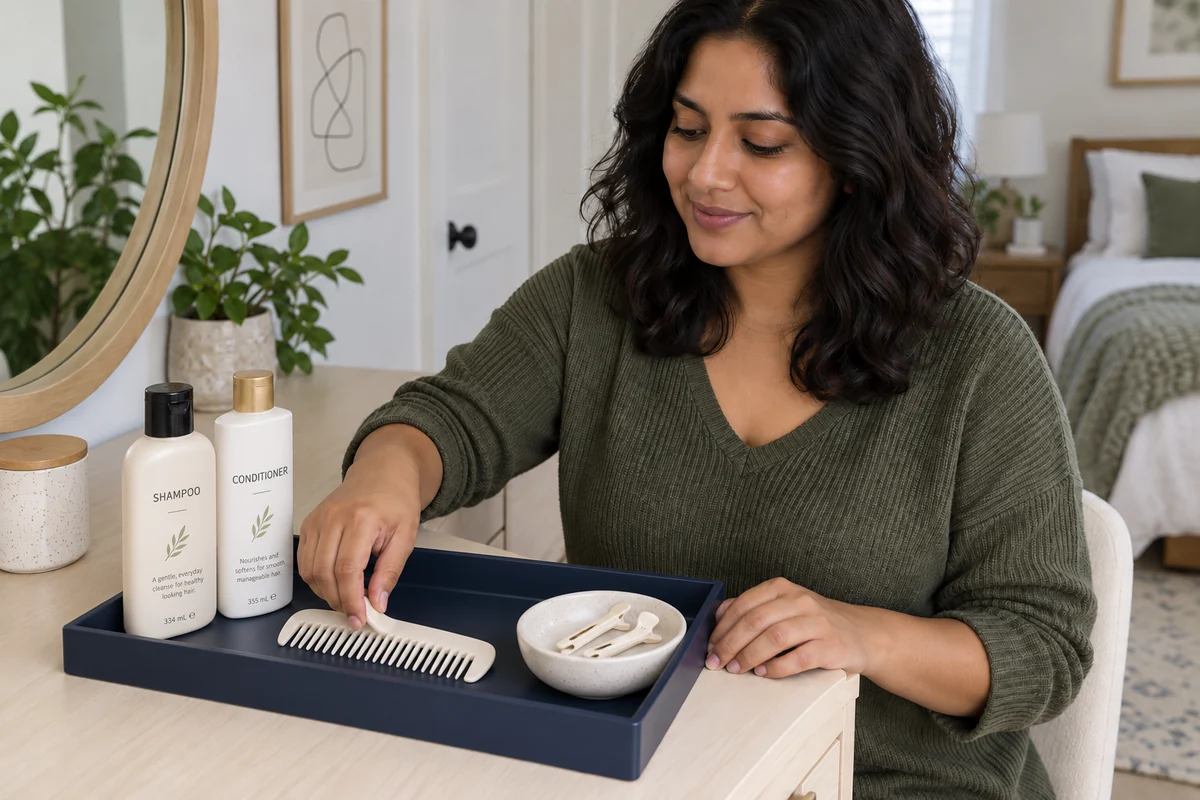
A woman returns a pale comb to a dark tray containing capped shampoo and conditioner bottles and a bowl of clips.

Setting up uses the energy you needed for washing

  • Keep the essentials together where you can reach them without stretching, with a dry towel ready.
  • Set them out earlier, in a window when you have a little more.
  • Only use equipment that’s meant for the job.
  • Sitting down doesn’t make a wobbly setup safe.
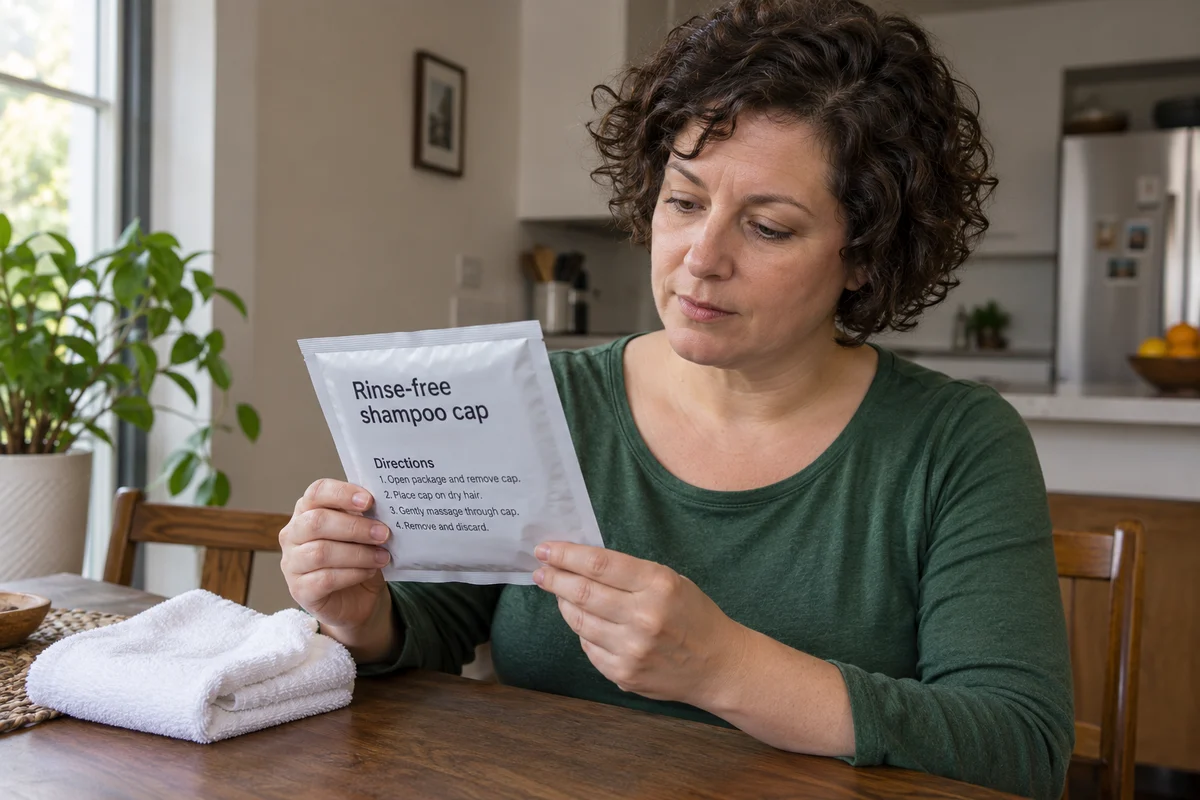
An adult reads the directions on an unopened rinse-free shampoo-cap pack beside a clean towel.

A wash under running water is too much today

  • A rinse-free shampoo cap is one option, if its directions suit you, your hair fits and you can reach to use it.
  • It still takes fitting, working through, taking off and drying.
  • Don’t cram all your hair into a small cap, and check whether yours needs warming first.
Two adults review a paper calendar at a kitchen table with closed care bottles and a towel nearby.

You want help with just one part

  • Name the exact task that would make the difference.
  • Gathering supplies, rinsing, or clearing up afterwards.
  • Agree when and how it happens.
  • You keep the rest.
  • Accepting help doesn’t mean handing over your products or how you like your hair done.

Products, by the job they do

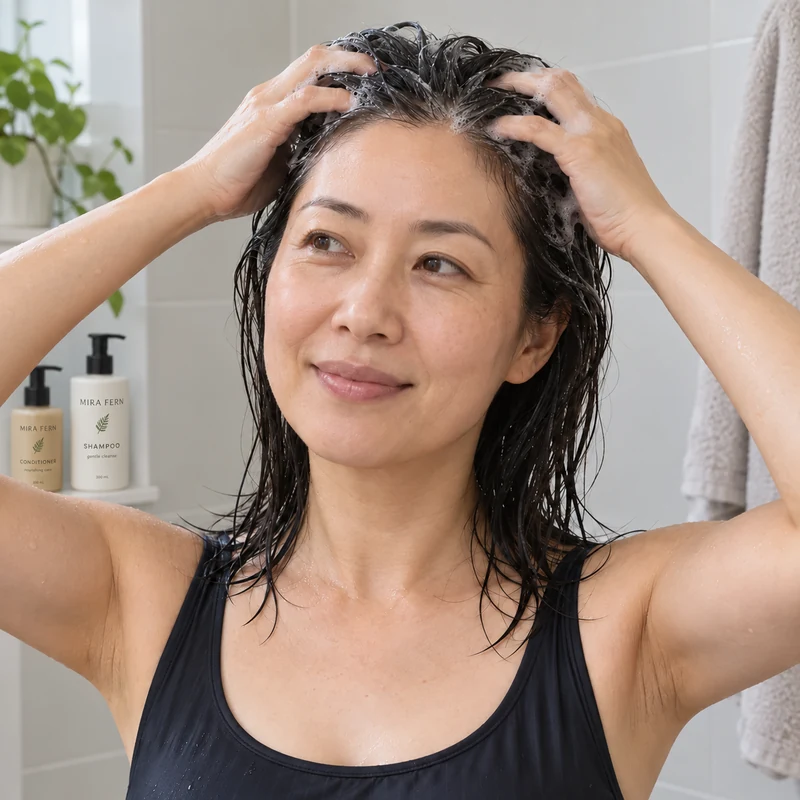
A woman massaging shampoo lather onto her scalp with her fingertips.

Choose a shampoo you can finish

Think about how you’ll get it out before anything else. An ordinary rinse-out shampoo still needs its full rinse on a low day, and the rinse is what costs energy. Your setup, your scalp and the bottle’s directions all come into it.

Browse cleansing products. The consultation uses your wash frequency and scalp concerns to recommend a shampoo.

A woman smoothing conditioner through her mid-lengths and ends.

Keep the conditioner that makes handling easier

Conditioner stays when it makes the lengths easier to manage, and optional layers can wait. One conditioning step is often less effort than fighting tangles afterwards.

Browse rinse-out conditioners. Your tangles, past treatments and preferred finish help guide a personal conditioner recommendation.

How to do it

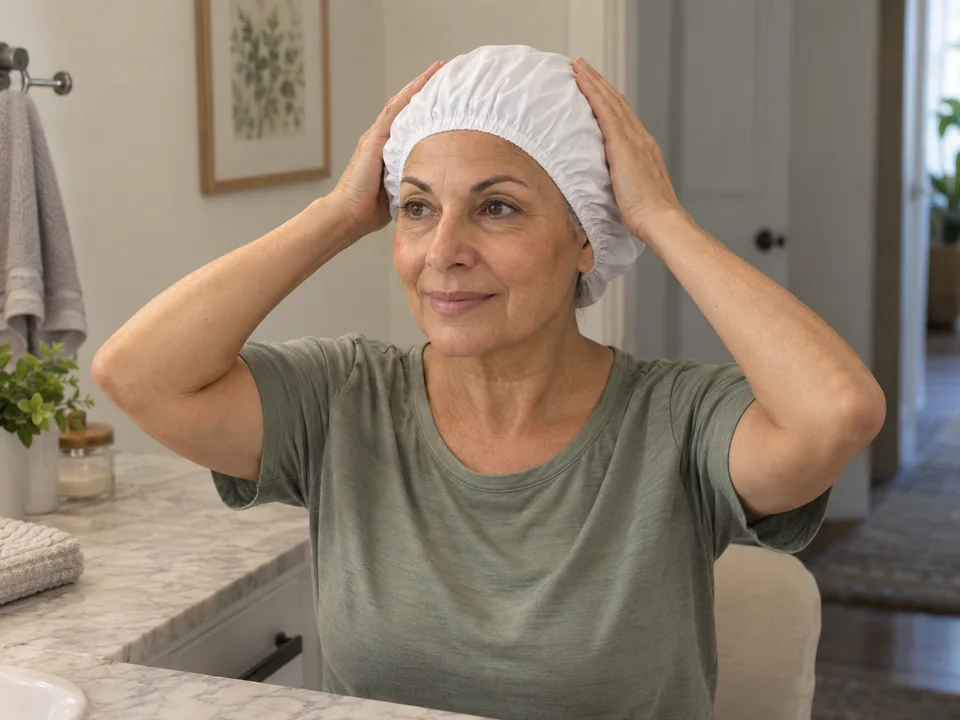
A woman gently presses both hands against the outside of a fitted rinse-free shampoo cap.

1. Use a room-temperature cap, if yours allows it

Choose a sealed cap that allows room-temperature use. All your hair needs to fit comfortably, and you need to be able to put it on, work it through and take it off. Follow the pack’s timing, throw it away afterwards and let any dampness dry.

Guide: Use a room temperature rinse-free shampoo cap
Hands gently pressing cotton fabric around the lower lengths of wet hair.

2. Press the drips out gently

For loose wet hair, use a clean, dry, soft bit of a cotton T-shirt. Press and let go, section by section, without rubbing, twisting or a tight wrap. This takes the drips out. The rest of the drying still needs time, so plan for it.

Guide: Dry hair gently with a cotton T-shirt

When to get help

A woman and a medical professional seated together, looking at a calendar.

Signs that need more than routine care

  • Fatigue that’s new, doesn’t let up or is getting in the way of daily life is worth raising with a medical professional, and so is a scalp that’s sore, irritated or losing hair in patches. If the whole wash stays out of reach however small you make it, ask them about practical care support too.

Illustrated care examples: before & after

Gathered before you start

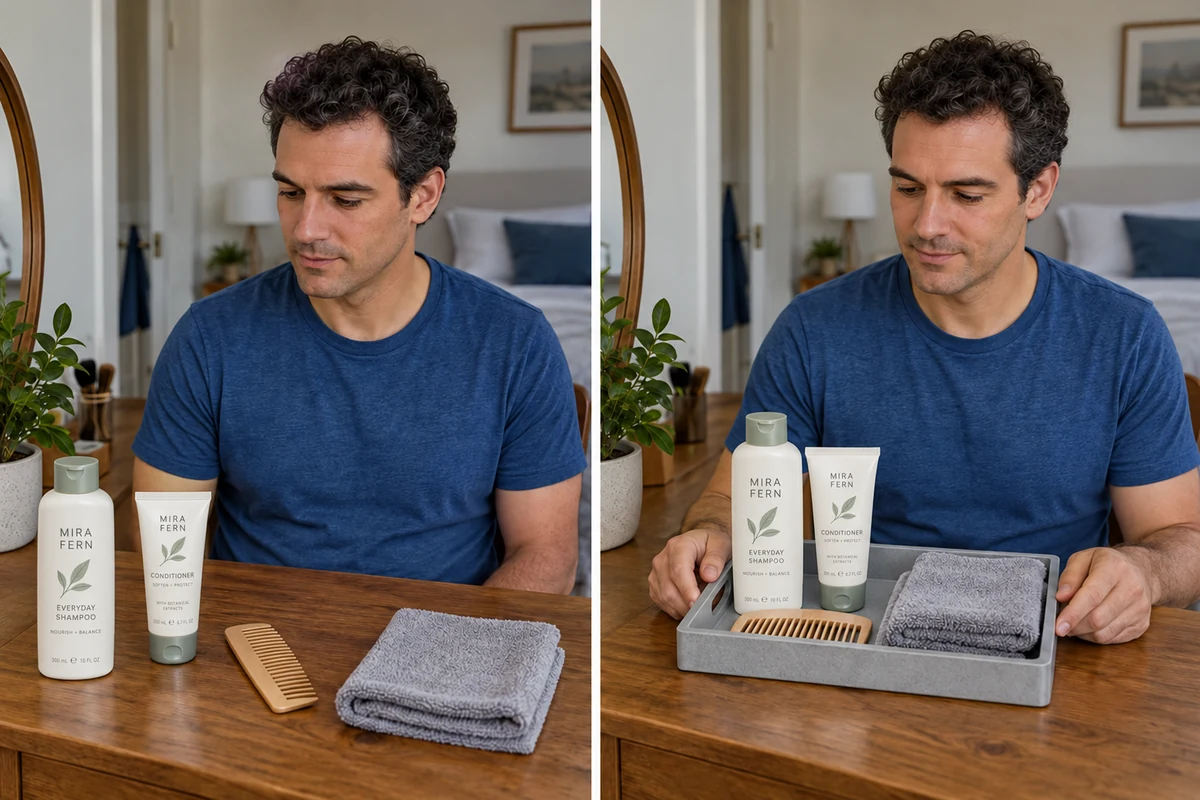
The same seated adult gathers care items from a scattered arrangement into a nearby tray.
Before · items still to gatherAfter care · the chosen kit in reach
Everything you plan to use is within reach before you begin, so there is no searching mid-task. The setup is all the pictures show.

Rest between the optional steps

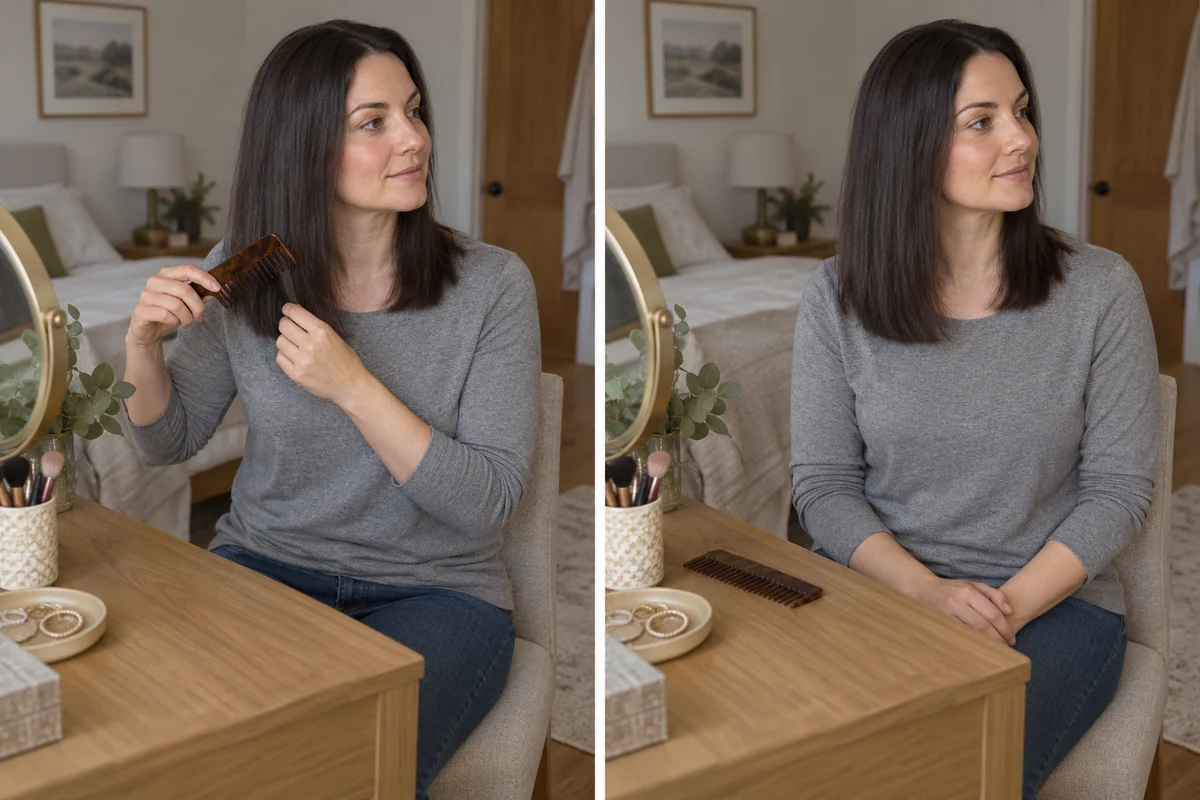
The same seated adult puts a comb down and rests their hands after handling dry hair.
Before · an optional dry styling stepAfter care · tool down, hands resting
The styling tool is set down and the hands rest. Optional dry styling can wait, while anything wet that a label says to rinse still gets rinsed.
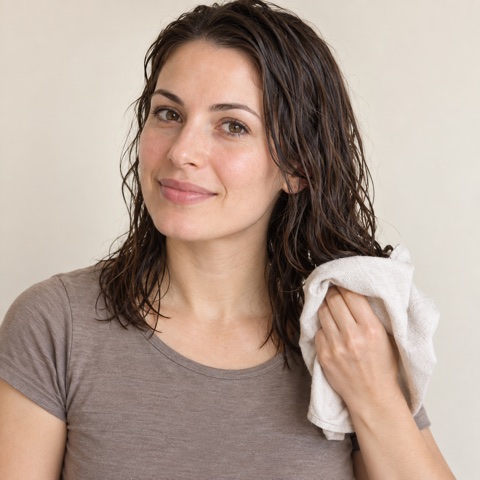
A woman gently squeezing damp hair with a towel.

Help with your hair-care routine

Bring your hair-care questions to the consultation. You can also read planning care around interruptions from caregiving.

  • Which part of a wash takes the most out of me?
  • Where can I stop without leaving product in my hair?
  • Would one helper task or a rinse-free cap work today?

Share how your energy varies, any limits you already follow, how far you can reach, who can help and which steps are hardest to finish. A consultation can shape your hair care around that, without telling you how much to do or promising a shortcut.

The Hair Care Consultation gives you a personal plan with product recommendations, routines and guidance on your hair-care questions.

$49 with 60 days of follow-ups, or $99 with 12 months. Pay once; the year renews only if you choose.