Hair Care Guides

Keep the treatment instructions in plain sight.
Sort the order without changing the treatment.

When you’re on a scalp treatment, it can feel like every ordinary step might undo it. Build the routine around the treatment’s exact instructions. Shampoo, conditioner and styling each have their own job. The aim is a sequence you understand, not guesswork.

Your personal hair-care planProduct choices, routines and answers shaped around your hair.$49one-timeStart my consultation
A man reads a folded instruction leaflet beside closed scalp-care and shampoo bottles.
Sort the order without changing the treatment.

What is going on

A woman reads a closed bottle beside its leaflet and a separate shampoo bottle.

Know what each bottle is for

Keep the treatment in its own container with its current instructions attached. Then note which of your other products cleans, which conditions and which styles. Bottles that look alike can have different directions, and an over-the-counter treatment is still a treatment, not another shampoo.

A woman reads an instruction leaflet while writing in a notebook headed Instructions and Questions.

Write down the sequence you were given

Record exactly what you were told. Where it goes, wet or dry hair, how long it stays, whether to rinse. Mark anything unclear as a question. Don’t invent a waiting time, mix products or turn a rinse-out step into a leave-on one to save effort.

What helps, day to day

A woman wearing glasses reads a hair product ingredient panel.

Two sets of directions seem to clash

  • Keep both labels and the treatment instructions to hand and ask the contact named in your plan to clear it up.
  • Hold off on the optional cosmetic change until you have an answer.
  • Comparing ingredient lists yourself can’t settle whether a treatment and a cosmetic can be used together.
Two adults review a paper calendar at a kitchen table with closed care bottles and a towel nearby.

The routine isn’t the same every day

  • Set reminders based on the instructions you were actually given, including any wash days they allow.
  • Don’t rearrange the treatment around your favorite styling day, and don’t double up after a missed one.
  • The plan will say what to do about a missed step, so follow that.
A man reads a shampoo bottle while making a note, with a second hair-care bottle beside the notebook.

You want to explain a new problem

  • Write down what happened, where, when and which products were on your hair at the time.
  • Separate a hard-to-rinse feel, tangled lengths and a scalp that feels different.
  • Keep it factual.
  • The timing by itself doesn’t prove a product caused it, and it isn’t a reason to change the treatment yourself.

Products, by the job they do

A woman massaging shampoo lather onto her scalp with her fingertips.

Keep cosmetic cleansing inside the plan’s limits

Where the plan limits washing or extra scalp products, that comes first. Within those limits, an ordinary cleanser can be compared like any other.

Browse cleansing products. Your current shampoo, wash schedule and past treatments help guide a personal recommendation.

A woman smoothing conditioner through her mid-lengths and ends.

Give the lengths their own job

Where the plan allows it, choose a conditioner for tangles and the finish you want, and keep its placement and rinsing in line with your instructions. Extra conditioner isn’t a treatment for a scalp that’s bothering you.

Browse rinse-out conditioners. The consultation uses your hair details and treatment history to compare conditioner options.

Make the plan you already have easier to follow

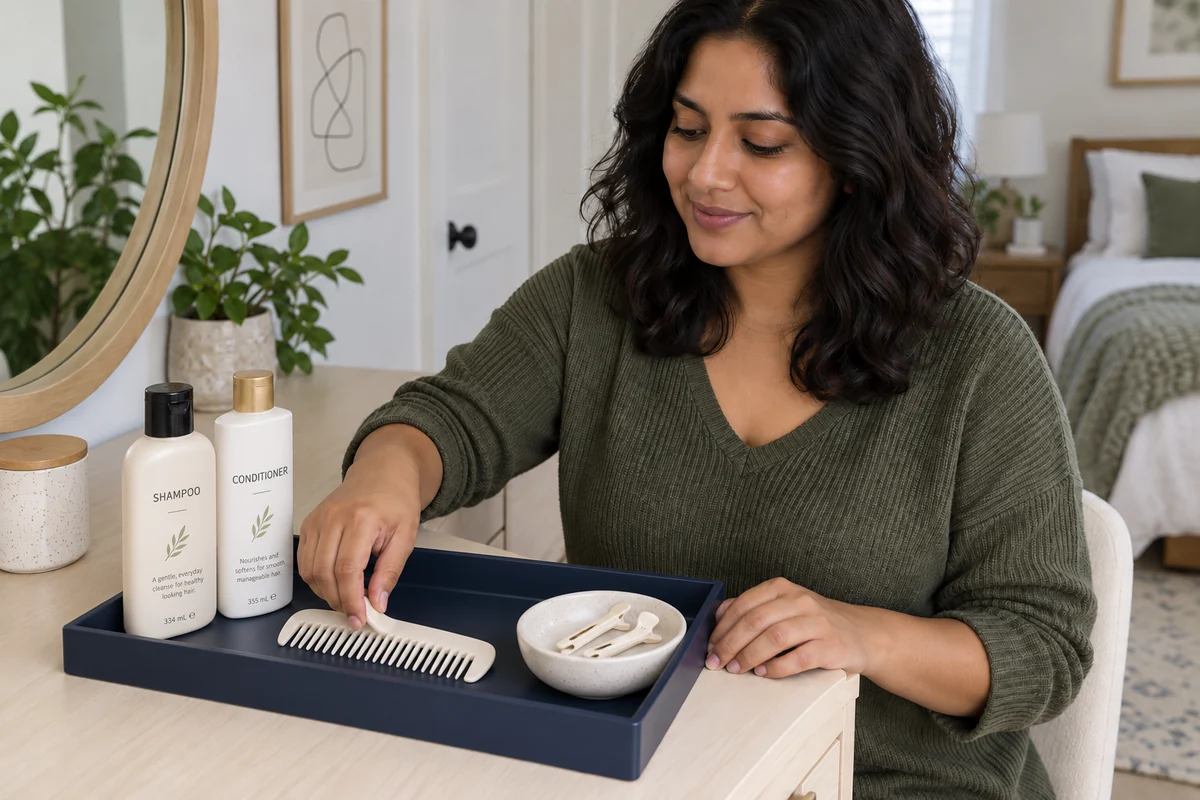
A woman returns a pale comb to a dark tray containing capped shampoo and conditioner bottles and a bowl of clips.

Keep labels and supplies easy to tell apart

Store each product as its own label says, with the directions somewhere you can find them again. If it helps, keep treatment supplies separate from everyday ones. Never decant a treatment into a hair-product bottle, and never mix two products together.

A woman with curls writing a routine note beside her hair-care products.

Bring one specific question

Ask something concrete, like how an ordinary conditioner fits with the washing instructions you were given, and hand over the actual product details. That gets a better answer than asking whether all conditioners are safe with all treatments. Keep the answer with the plan.

When to get help

A woman and a medical professional seated together, looking at a calendar.

Signs that need more than routine care

  • If things are getting worse, your scalp has sores or stays painful, or the treatment itself seems to be causing a reaction, see a medical professional promptly. Ask the contact named in your plan about any instruction that’s unclear or hard to follow before you change it.
  • Trouble breathing, or swelling of the mouth or throat, is an emergency. Call for emergency help right away.

Illustrated care examples: before & after

Each product with its directions

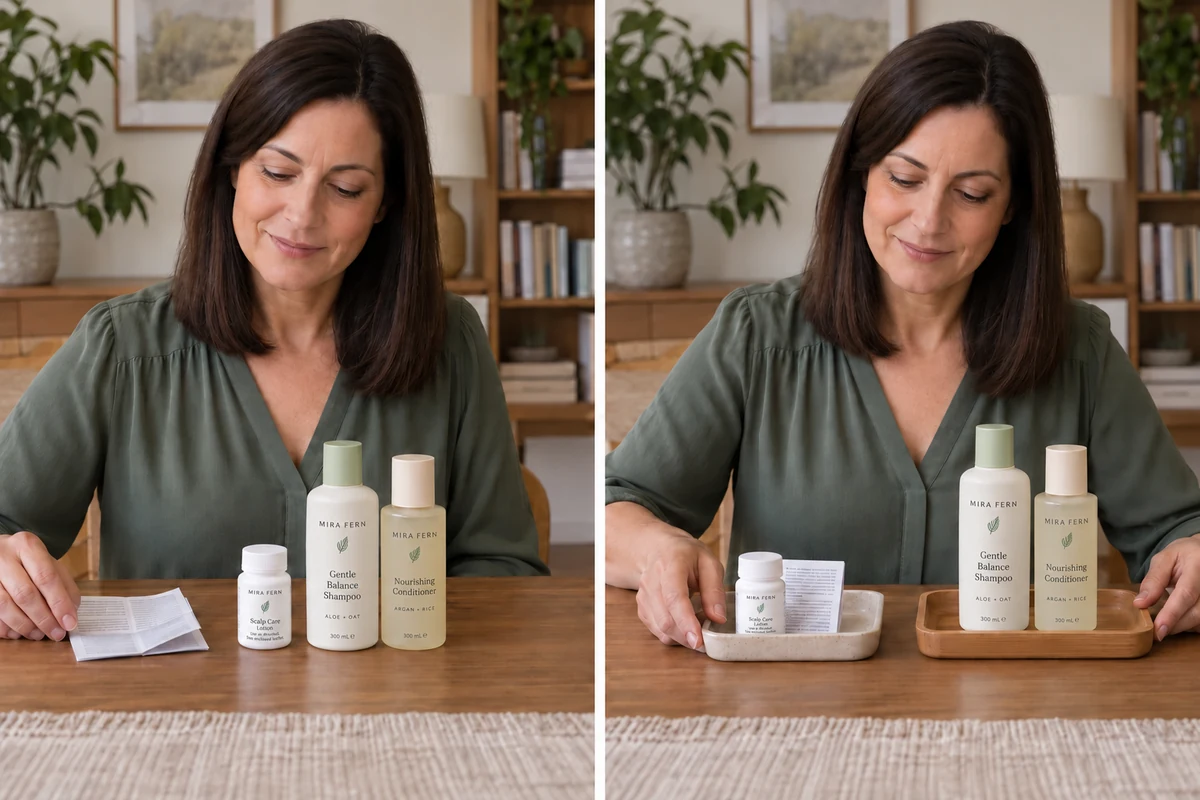
The same woman organizes a closed scalp-care bottle with its leaflet separately from two cosmetic bottles.
Before · products grouped togetherAfter care · directions kept with each product
Each product now sits with its own directions, before working out how everyday cosmetics fit around the existing plan. Keeping them apart is just the sorting.

Write the question before changing anything

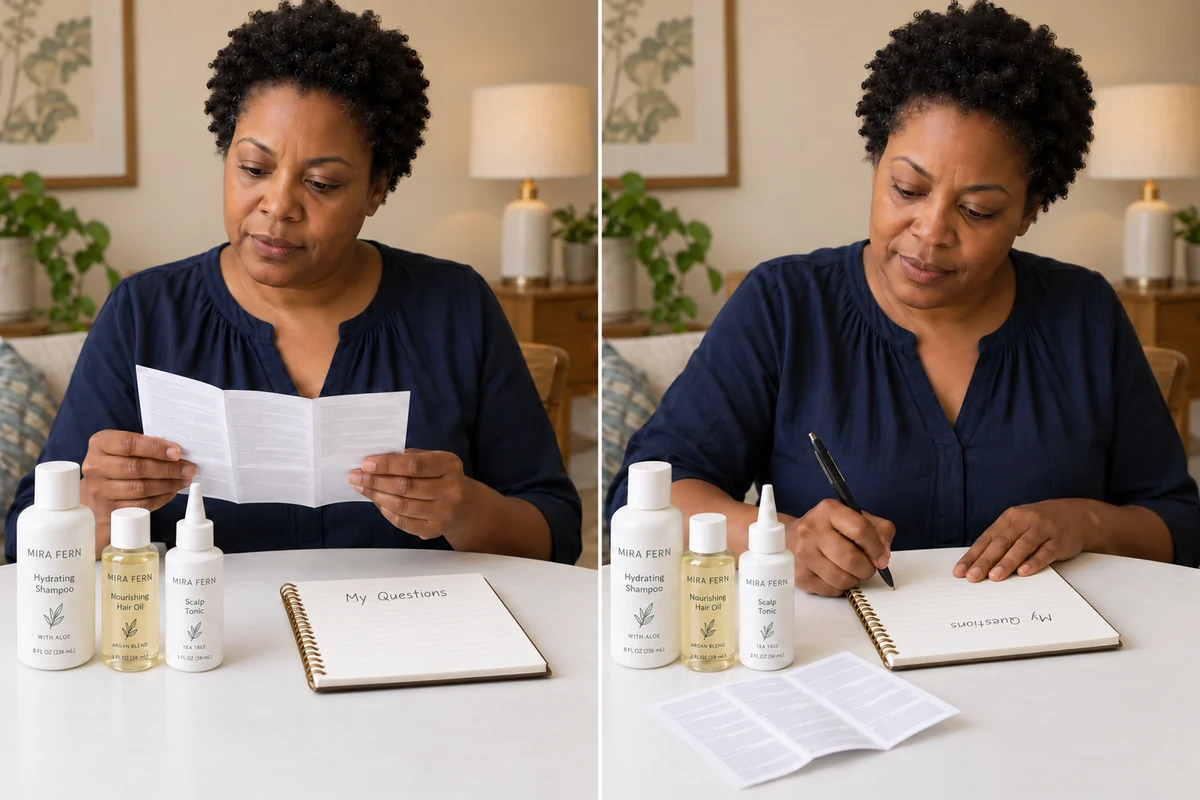
The same woman moves from reading a leaflet to recording a question while all bottles remain closed.
Before · a question while readingAfter care · a place to write it
Something in the directions is unclear, so it gets written down before the sequence is changed. The answer about timing or amount comes from whoever gave the directions.
A woman with very short hair writing an appointment checklist.

Help with your hair-care routine

Bring your hair-care questions to the consultation. You can also read gentle handling of lengths alongside a scalp condition.

  • Which instructions cover each product and each step?
  • Where does an ordinary step leave me with a question?
  • What exactly should I describe to the person who gave me the plan?

Tell us the restrictions you want respected, your usual products and the steps you find hard. The consultation organizes handling around them. It won’t ask for private records, judge whether products can be combined with a treatment, or change the treatment’s place, timing or amount.

The Hair Care Consultation gives you a personal plan with product recommendations, routines and guidance on your hair-care questions.

$49 with 60 days of follow-ups, or $99 with 12 months. Pay once; the year renews only if you choose.