Hair Care Guides

What to do after a smoothing service.
The exact service sets the first rules.

You’ve paid for a smoothing service and now you’re not sure when you can wash, which of your products are allowed or whether the salon’s list of new bottles is necessary. Start by pinning down exactly what was used. Everything else follows from that.

Your personal hair-care planProduct choices, routines and answers shaped around your hair.$49one-timeStart my consultation
An adult compares closed hair-care bottles with a service aftercare sheet at home.
The exact service sets the first rules.

What is going on

An adult keeps a service folder, aftercare sheet and notebook together while recording questions.

Keep the service name with its instructions

Write down the exact system or product, the date and the salon’s contact. Keep their washing, drying and styling instructions together with it. If something is missing, ask the salon rather than borrowing advice written for a different smoothing service.

A woman wearing glasses reads a hair product ingredient panel.

Hold the instructions up against what you already own

Read the names and directions of what’s on your shelf. If the service instructions are vague about one, ask the salon about that product by name. A similar claim on the label doesn’t prove it’s fine, and a different brand doesn’t mean it must go.

What helps, day to day

An adult with brown waves writes notes beside a phone.

You’ve heard two different first-wash rules

  • Confirm the exact service with the salon and ask for one answer you can follow.
  • Different systems really do have different first-care rules.
  • Picking the longest wait to be safe isn’t the same as knowing which instructions are yours.
A man reads a shampoo bottle while making a note, with a second hair-care bottle beside the notebook.

They want you to replace your whole shelf

  • Separate what the aftercare genuinely requires from what’s just a preference.
  • Ask what each suggested product changes and whether something you own already meets the same directions.
  • Spend within your plan.
  • A familiar service name isn’t a reason to buy the whole set.
A woman with curls writing a routine note beside her hair-care products.

It only looks smooth with constant extra styling

  • Note which washing and drying steps you followed and how the result differs from what you expected.
  • Ask the salon to look at that with you.
  • More heat or another chemical service isn’t the automatic answer to a disappointing result.

Products, by the job they do

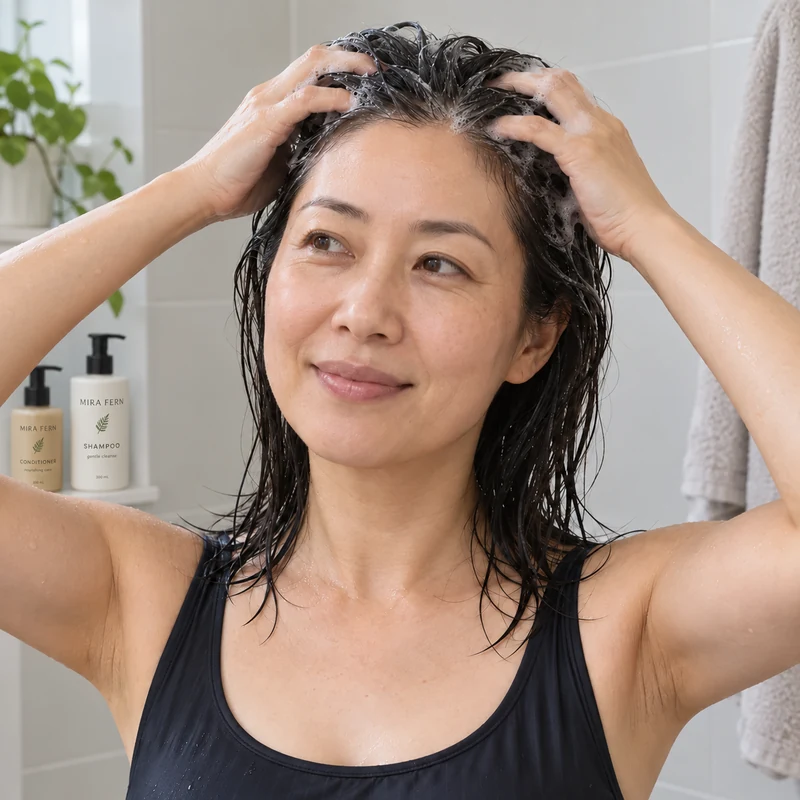
A woman massaging shampoo lather onto her scalp with her fingertips.

A shampoo that fits the directions

Once washing is allowed, pick shampoo for how oily your scalp is and what’s building up, while keeping to the service’s instructions. No single ingredient rule covers every smoothing system.

Browse cleansing products. The consultation uses your wash frequency and scalp concerns to recommend a shampoo.

A woman smoothing conditioner through her mid-lengths and ends.

Conditioner where the lengths need it

Use conditioner within both its own label and the service directions, on the lengths that need slip. A smoothing service doesn’t replace conditioner, and it doesn’t call for extra conditioning everywhere either. Watch for rough areas, tangles and heaviness.

Browse rinse-out conditioners. Your tangles, past treatments and preferred finish help guide a personal conditioner recommendation.

Make the instructions usable

An adult with blond curls and a colorist compare brown swatches.

Clear up one specific doubt

Take your service record and the exact product or step you’re unsure about back to the salon. Ask whether it’s allowed, when, and how. Keep the answer with your record rather than relying on the nickname everyone uses for the service.

A woman with very short hair writing an appointment checklist.

Write a short first-care sequence

Write down the confirmed order for washing, drying and styling, including anything the salon told you to avoid. Mark anything still unresolved as a question. A short list you wrote yourself is much easier to follow than several conflicting opinions.

When to get help

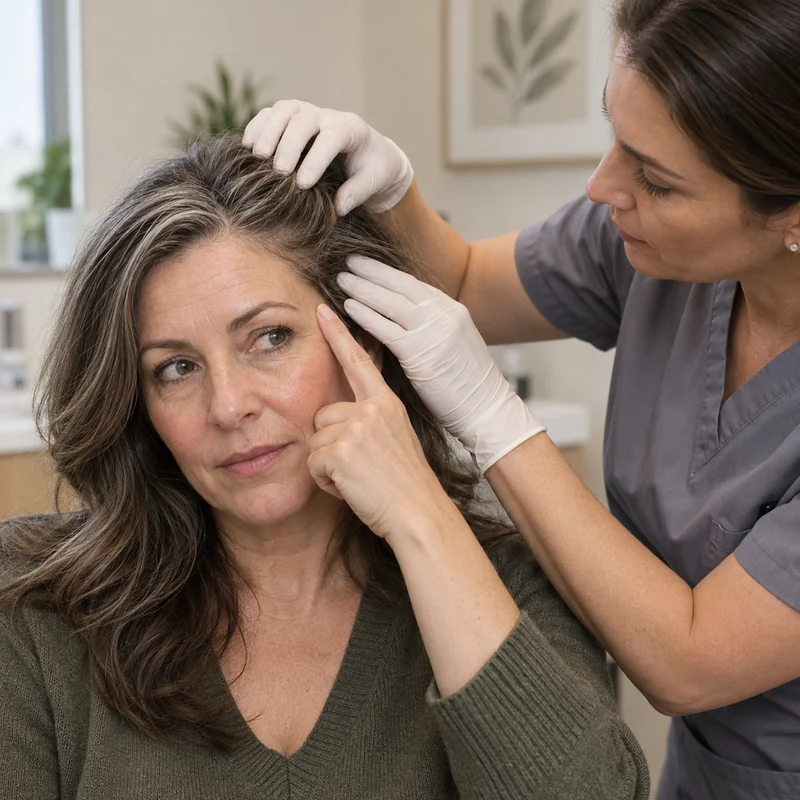
A medical professional examining the scalp where a woman points.

Signs that need more than routine care

  • If your scalp stays sore or breaks out in a rash after the service, or your eyes keep stinging, stop any product that seems to be causing it and see a medical professional rather than waiting for it to pass. Take the exact product and service details with you.
  • If breathing becomes difficult during or after the service, that is an emergency. Get emergency help straight away.

Illustrated care examples: before & after

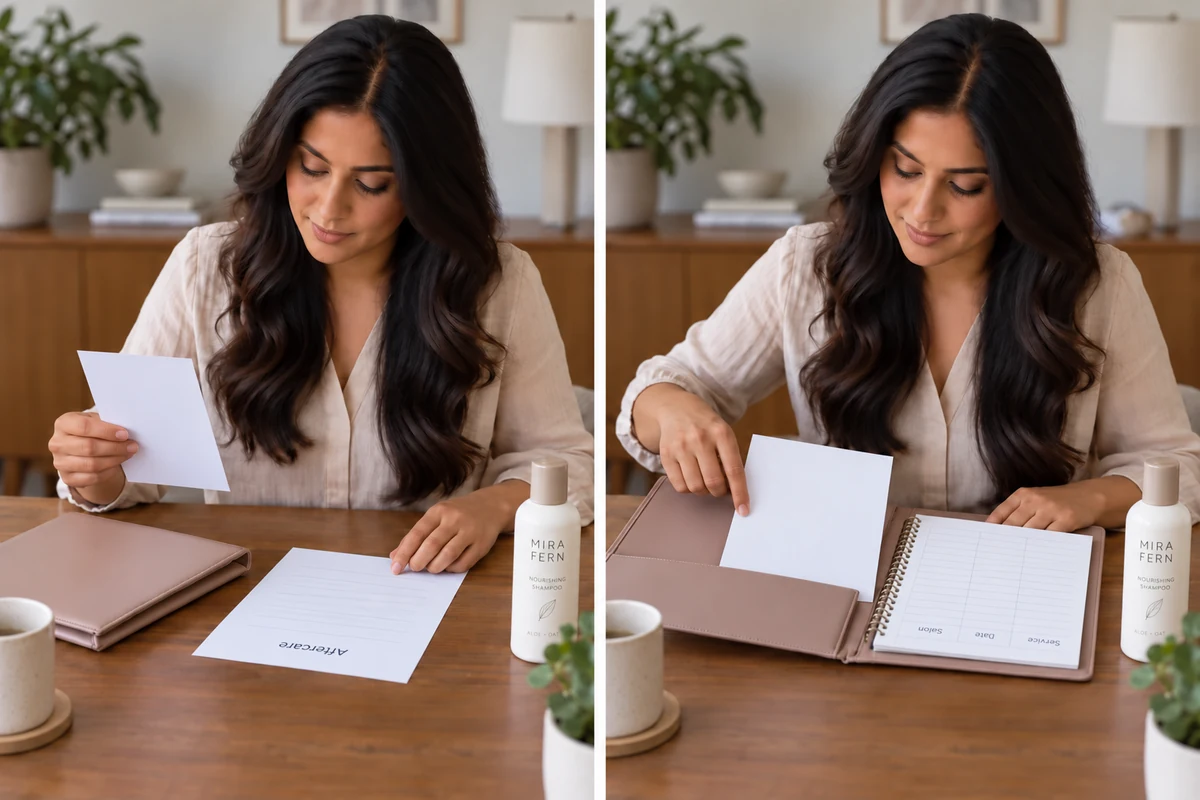
Service record with its instructions

The same adult gathers the salon receipt and aftercare sheet into a folder with a service record; hair remains unchanged.
Before · service papers kept apartAfter care · record and aftercare together
The service record and its aftercare instructions are gathered together. The notes in the pictures are blank, so the first-wash rule comes from your own paperwork.

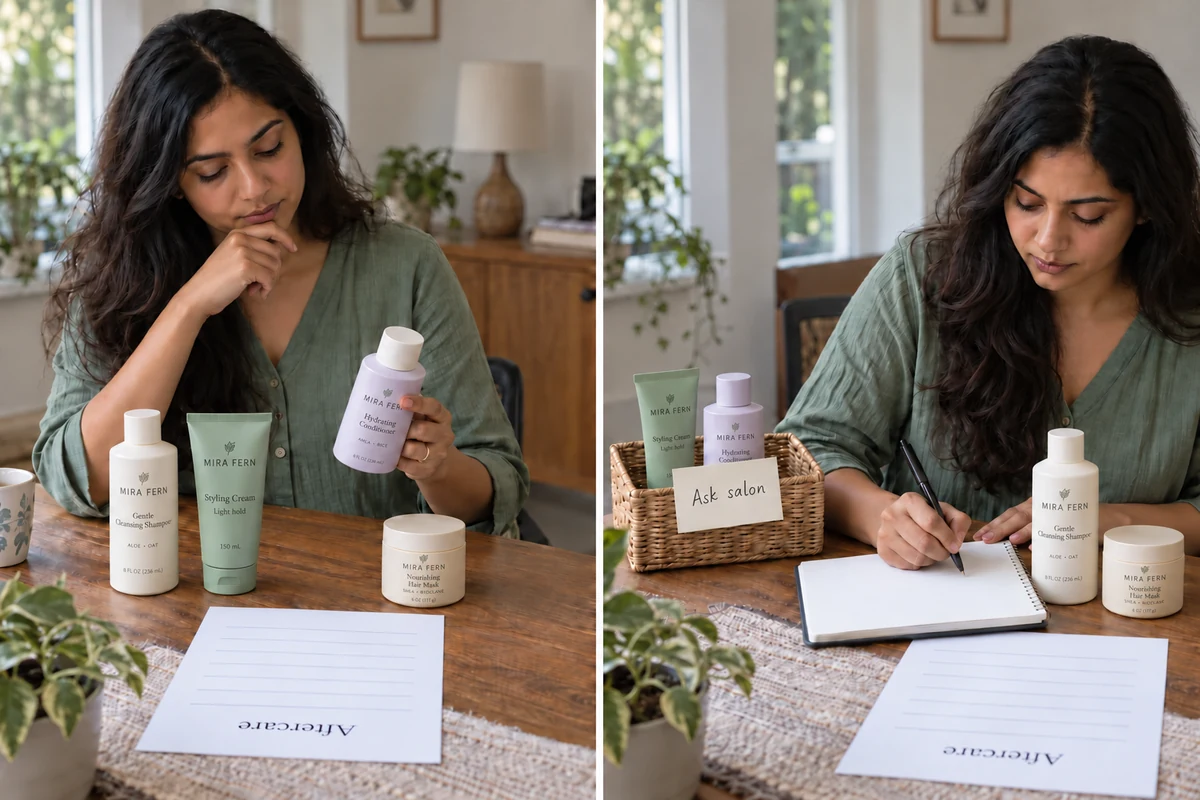
Ask about the unsure products

The same adult organizes closed products beside aftercare notes and places unresolved choices in an Ask salon basket without using them.
Before · product choices still unresolvedAfter care · unsure products set aside
The products you are unsure about are pulled out to ask the stylist, and the rest of the shelf stays put. No need to replace it all.
A woman uses a tablet displaying product directions beside a capped hair-care bottle at a dry desk.

Help with your hair-care routine

Bring your hair-care questions to the consultation. You can also read ordinary care for retained chemical treatments.

  • Which exact system did I have, and what are its real instructions?
  • Which of the products I already own are okay to keep using?
  • What do I still need the salon to clear up for me?

The written service directions, the products you already own, how your scalp has been and the finish you want are what shape the plan. Missing aftercare can’t be invented, and nobody can judge chemical compatibility from a product name.

The Hair Care Consultation gives you a personal plan with product recommendations, routines and guidance on your hair-care questions.

$49 with 60 days of follow-ups, or $99 with 12 months. Pay once; the year renews only if you choose.