Hair Care Guides

Wetting hair isn’t washing it.
Build the routine around what you actually do.

If your practice brings you to water several times a day, hair care can feel like a constant chore. Start by noting what actually happens, a touch of water, part of the head wet, or a full wash, and how often.

Your personal hair-care planProduct choices, routines and answers shaped around your hair.$49one-timeStart my consultation
An adult records water contact and product use beside a towel.
Build the routine around what you actually do.

What is going on

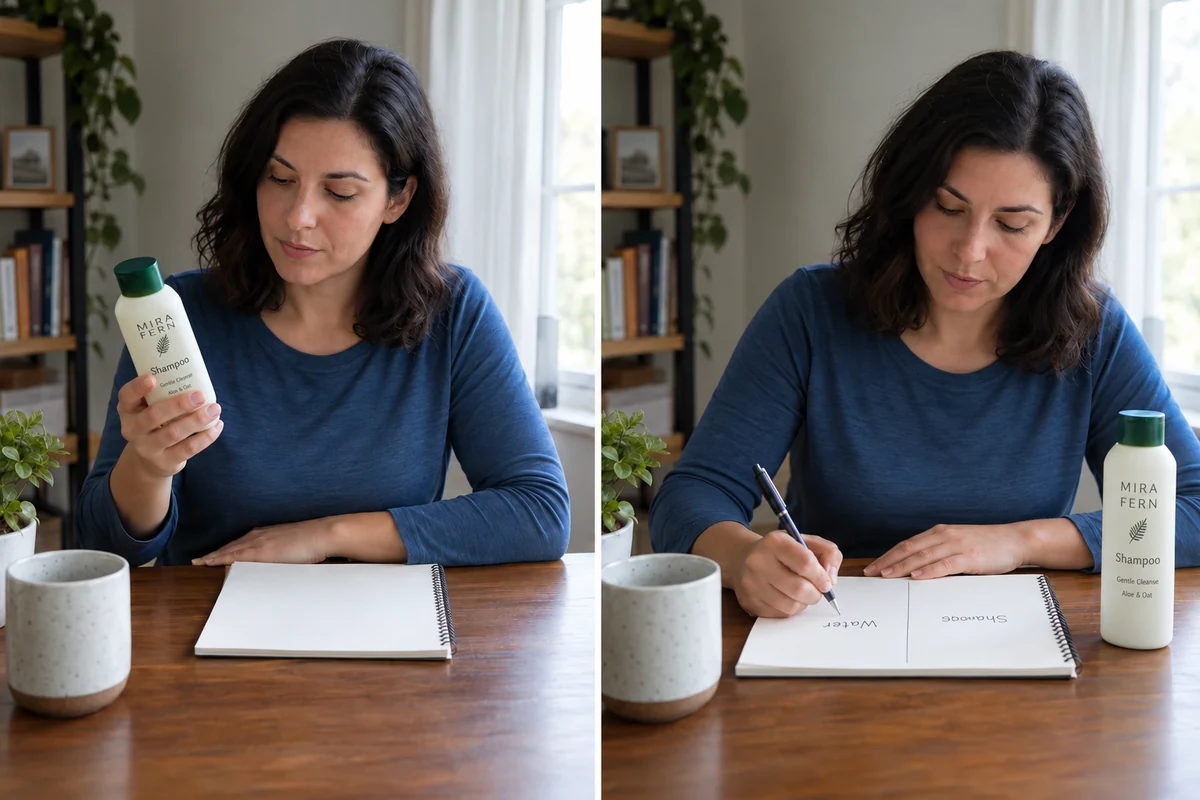
An adult points to separate water and product entries in a care notebook.

Map where the water actually goes

Note which parts of your hair get wet and whether any cleanser is involved. Add how often it happens and what you need to do afterwards. A quick touch of water at the hairline sets up very different drying than soaking the whole length.

An adult sets a towel beside a clock and a care schedule at a dry vanity.

Look at the gaps between wettings

Think about what comes next, an appointment, a covering, a journey, bed, not just the moment at the basin. Have a clean towel ready and know where you can finish. If the gap is always too short, ask for help with the setup or schedule.

What helps, day to day

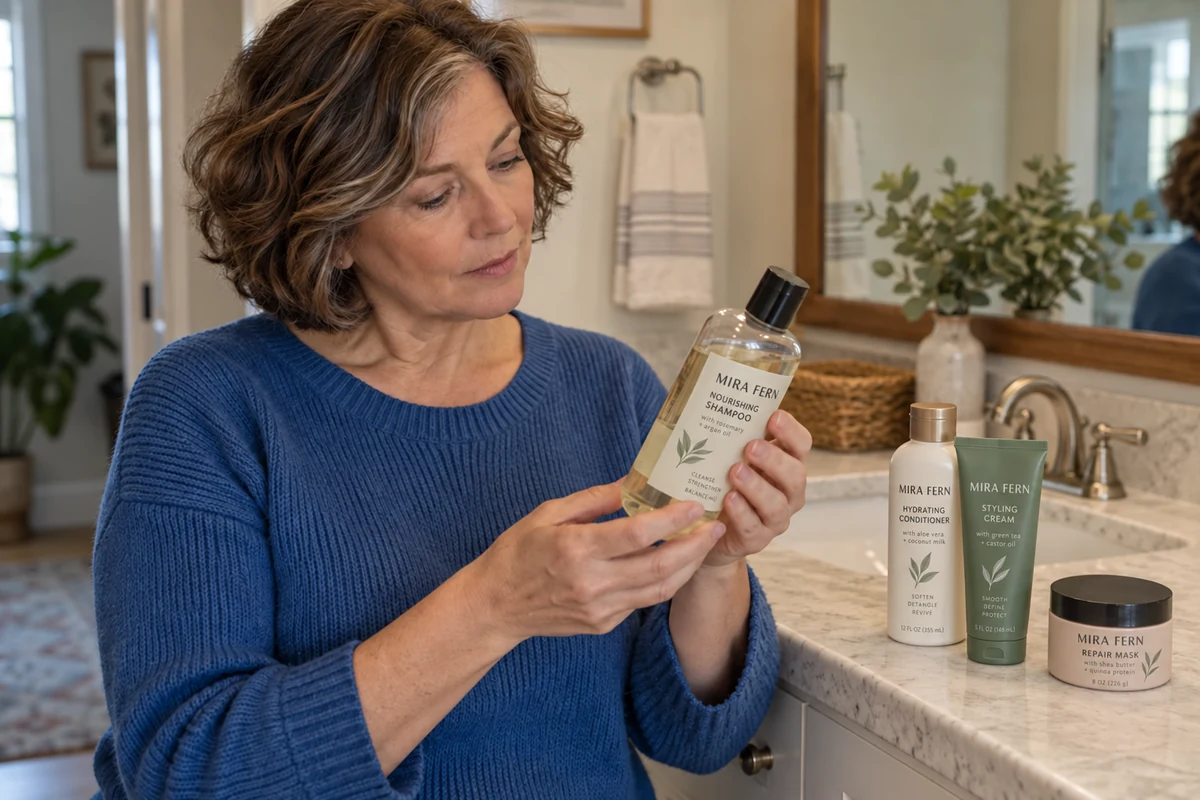
A woman reads a partly used shampoo bottle beside other closed products.

Every wetting has turned into a shampoo

  • Ask yourself whether shampoo is part of the practice or a habit that crept in.
  • Wash with shampoo when your scalp is oily, has residue or needs it, not every time water touches your hair.
  • Whether water, a product or a substitute fulfills your practice is a question for your own guidance, not this page.
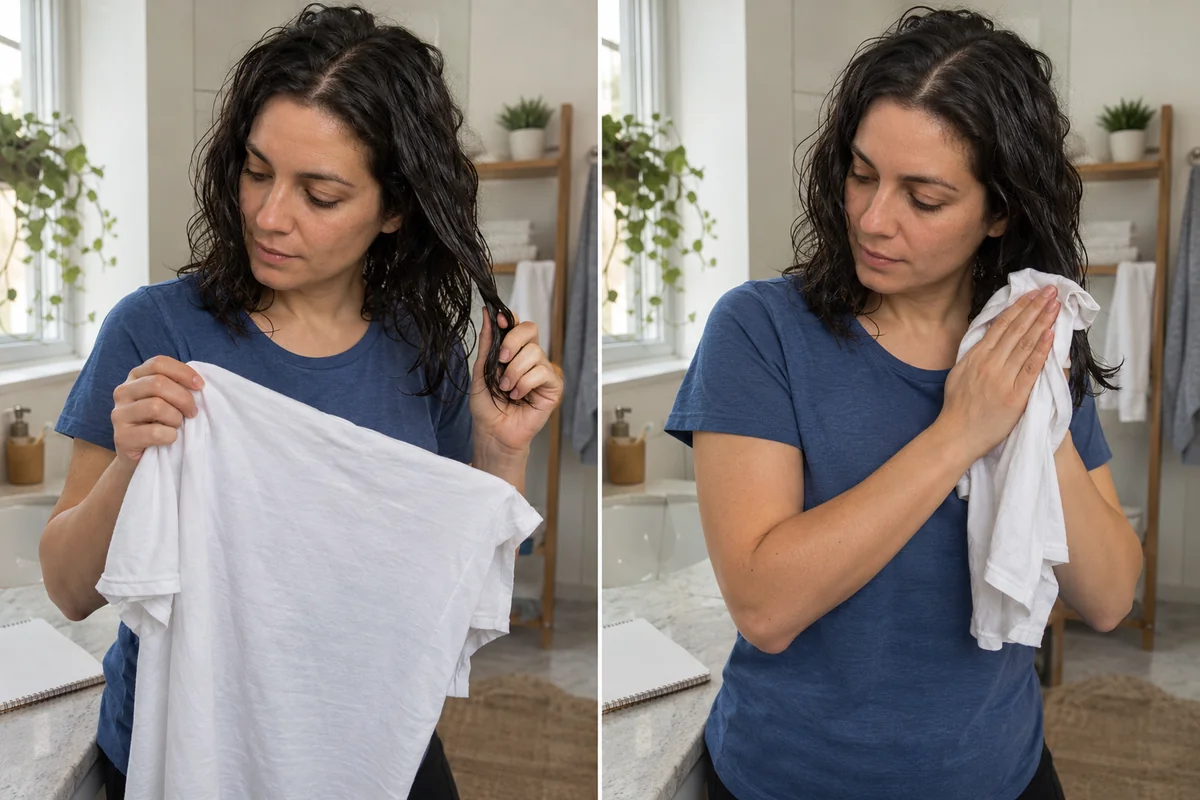
An adult gently presses a damp loose section through smooth cotton fabric.

A small wet patch gets a rough towel

  • Press the wet area gently with the towel rather than rubbing back and forth.
  • You’re taking off the excess, not drying it completely.
  • Installed styles, locs and extensions have their own handling instructions, so follow those.
An adult with covered hair prepares a towel, comb, closed bottle and spare covering on a dry vanity.

You have to cover up before you’re dry

  • Plan the drying and re-covering together, and find a workable spot before the next deadline comes round.
  • Don’t change a required practice because of a hair-care article.
  • When practice and practical access seem to clash, ask the adviser you trust.

Products, by the job they do

A woman uses a tablet displaying product directions beside a capped hair-care bottle at a dry desk.

Separate shampoo need from water frequency

Choose a shampoo around how oily your scalp gets, residue and how it feels. Frequent wetting on its own doesn’t mean the scalp needs shampoo each time.

Browse cleansing products. Your current shampoo, wash schedule and past treatments help guide a personal recommendation.

Two adults compare a bottle's directions and a hair-care shopping note, with separate closed products in front of them.

Fit conditioner into the real sequence

Condition where the lengths need it, in the order the directions describe. You don’t have to repeat every product after every wetting. Whether a product is acceptable within your practice is a separate question. A cosmetic label won’t settle it, so check with your adviser.

Browse rinse-out conditioners. Your tangles, past treatments and preferred finish help guide a personal conditioner recommendation.

How to do it

An adult records water, shampoo and drying as separate care steps.

Write the cosmetic steps down separately

List water contact, shampoo, conditioner and drying as separate lines for a typical day. That gives anyone helping you a far clearer picture than saying you wash many times.

A man seated at a dry dressing table with both forearms resting on a folded towel beside a mirror, comb and bottles.

Choose a setup you can finish

Keep supplies within reach and sit or stand somewhere supported. If repeated reaching gets hard, ask for help. A simpler setup makes the cosmetic steps less tiring without this guide suggesting any change to your practice.

Illustrated care examples: before & after

Blot the wet section

An adult moves a towel around a small damp loose section and gently presses it.
Before · a wet loose sectionAfter care · gentle fabric contact
A loose wet section is pressed gently into fabric to take up the extra water. That is the start of drying, not the whole head dry.

Wetting and shampoo, noted apart

An adult places a closed shampoo aside while recording water contact separately.
Before · one label for every washAfter care · separate entries for each
Instead of one word for every wash, water contact and shampoo get their own entries. What your practice requires and what your hair needs are two different questions.
A man reads a shampoo bottle while making a note, with a second hair-care bottle beside the notebook.

Help with your hair-care routine

Bring your hair-care questions to the consultation. You can also read keeping cosmetic steps understandable.

  • Which parts of my hair actually get wet, and when?
  • Which steps use a product and which are water only?
  • Where can I finish drying before the next commitment?

Share the real pattern of water contact, shampoo, products and where you can dry. The consultation can tell cosmetic needs apart from repeated wetting. It doesn’t interpret religious requirements or say whether a product or routine meets them.

The Hair Care Consultation gives you a personal plan with product recommendations, routines and guidance on your hair-care questions.

$49 with 60 days of follow-ups, or $99 with 12 months. Pay once; the year renews only if you choose.