Hair Care Guides

Sort the hair out before you start.
No hairstyle, however neat, counts as safety gear.

Working around moving equipment means training, guards and whatever hair covering your workplace requires. Agree all of that before you step into the task area, including loose ends and which accessories are allowed. Then do the tidying and the taking-down away from the machines.

Your personal hair-care planProduct choices, routines and answers shaped around your hair.$49one-timeStart my consultation
An adult worker and supervisor discuss written instructions in a separate training room.
No hairstyle, however neat, counts as safety gear.

What is going on

An adult reads a printed equipment booklet in a quiet training room.

Ask about your exact task and machine

Check the required covering, how it fastens and who checks it with your supervisor. The rules can differ from one machine or duty to the next. Mention extensions, short loose pieces and any covering you wear. Don’t pick a covering from a hairstyle photo.

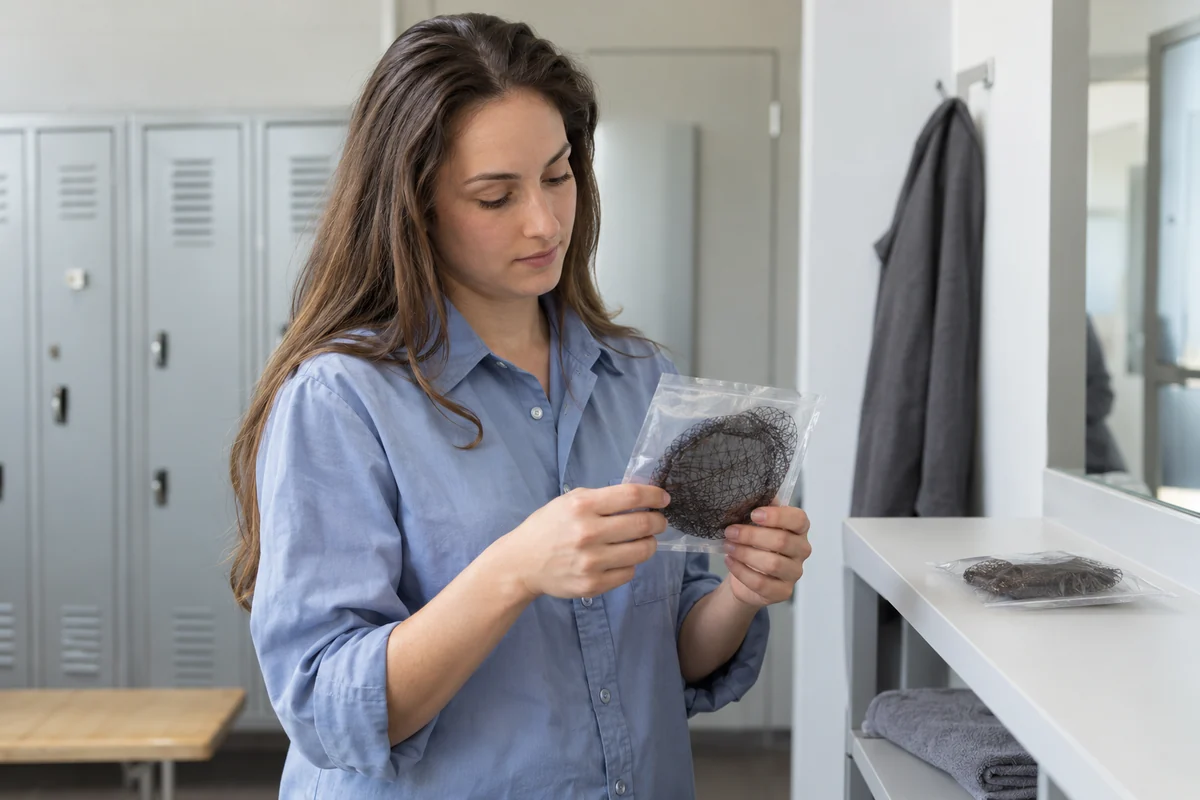
An adult checks a sealed plain covering packet in a designated changing room.

Get the approved kit ready away from the machines

Keep the required covering, and any spare you’re allowed, in the prep area. Check it for wear and size before you start. If your hair doesn’t fit the way the rules require, ask for an approved alternative rather than adding pins or another cover.

What helps, day to day

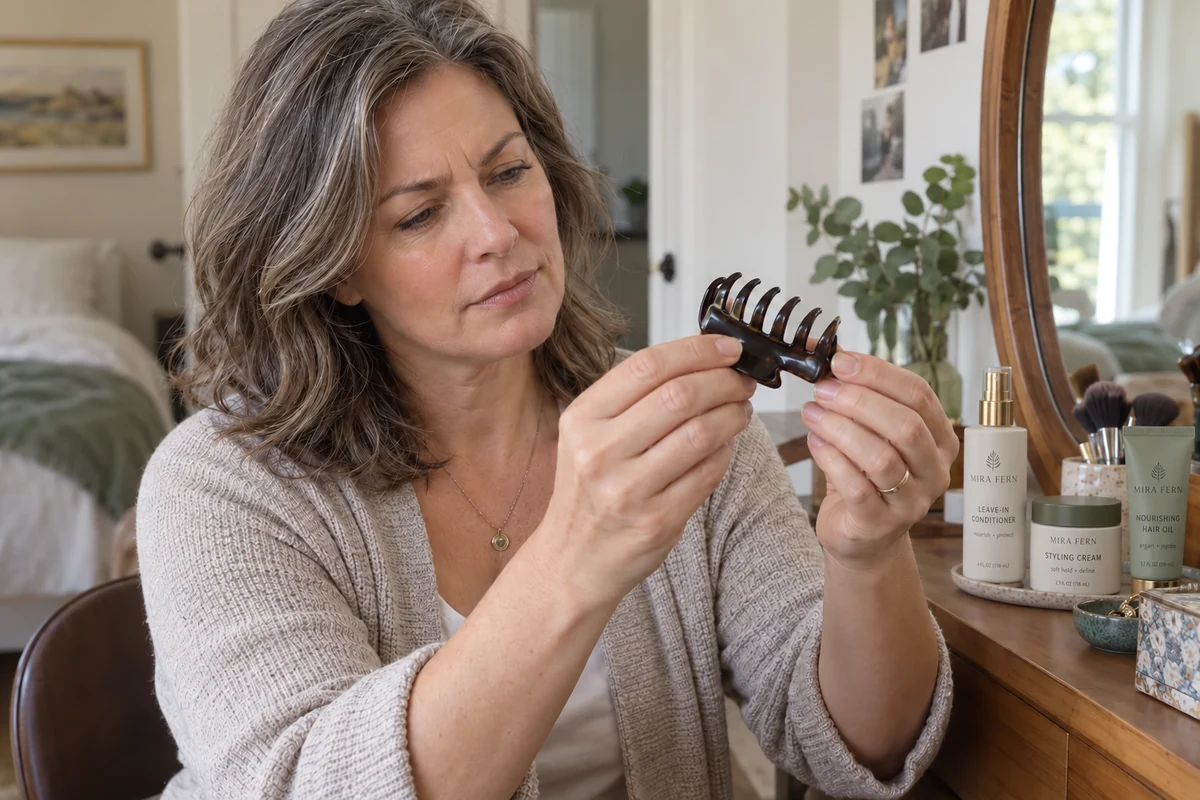
A woman examines a claw clip away from her hair, holding its solid body.

Your accessory isn’t allowed, or it gets in the way

  • Take it off in the prep area and use the approved alternative.
  • Don’t hide a clip under a covering or adjust equipment to make room for it.
  • Have the whole arrangement checked the way your workplace requires.
An adult worker speaks with a supervisor in a separate break room.

The covering shifts while you’re working

  • Follow the safe-stop procedure you were trained in and tell the responsible person before you touch your hair.
  • Stay clear of moving parts and never reach across equipment for a loose section.
  • Put the approved arrangement back and have it checked before you restart.
An adult seated on a mat supports loosely gathered curls while holding a removed soft scrunchie.

It pulls once the shift is over

  • Once you’re out of the work area and have done whatever removal steps are required, hold the hair and let the fastening go gently.
  • Notice where it was pulling so the next approved setup can be adjusted.
  • Tightening it more each day isn’t the answer to a covering that doesn’t suit you.

Products, by the job they do

A woman wearing glasses reads a hair product ingredient panel.

Keep styling products in their place

A styler can tidy pattern, length or stray pieces as part of the prep routine you’re allowed. That’s all it does. No amount of gel or hairspray turns a loose-ended style into one that meets machinery rules.

Browse styling products. Tell the consultation how much hold you want and which stylers you have tried.

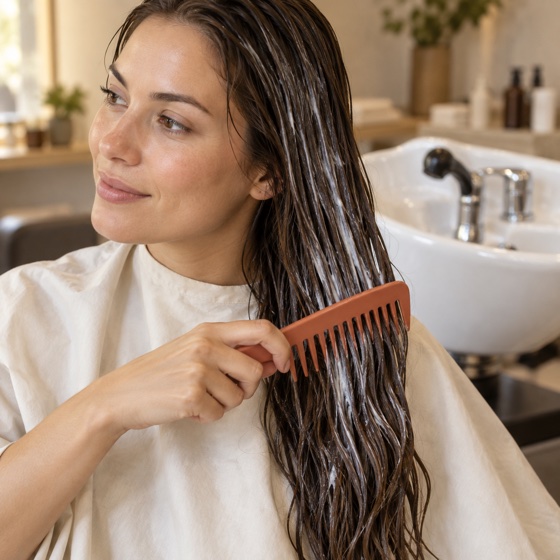
A woman detangling conditioned hair with a wide-tooth comb.

Make the end-of-shift takedown easier

With hair fastened and released every shift, keep conditioner in your regular wash and leave time for a gentle takedown. Slip helps the handling. It doesn’t replace containment checks or guards.

Browse rinse-out conditioners. Your tangles, past treatments and preferred finish help guide a personal conditioner recommendation.

How to do it

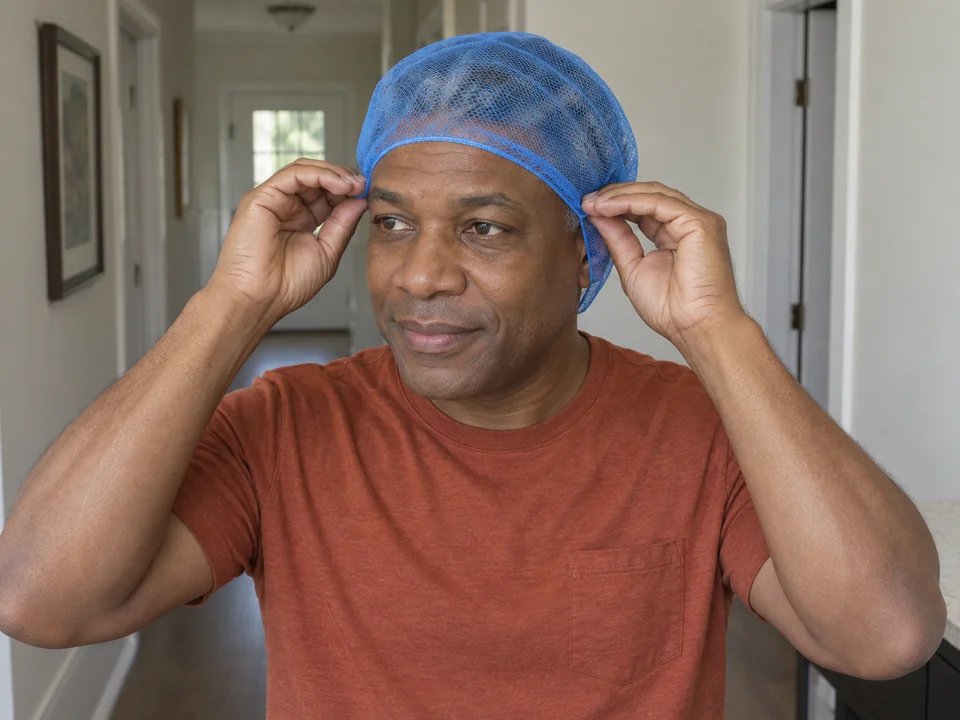
An adult checks the comfortable edge of a full-head blue mesh hairnet, with all short hair contained.

1. Use the net method only for the covering you’re issued

This is only for a full-head net your workplace has chosen, where the net’s directions match. All of your hair has to fit without pulling, and then the required workplace check still happens. A net is not a substitute for guards or for machine safety.

Guide: Fit and remove a full-head work hairnet
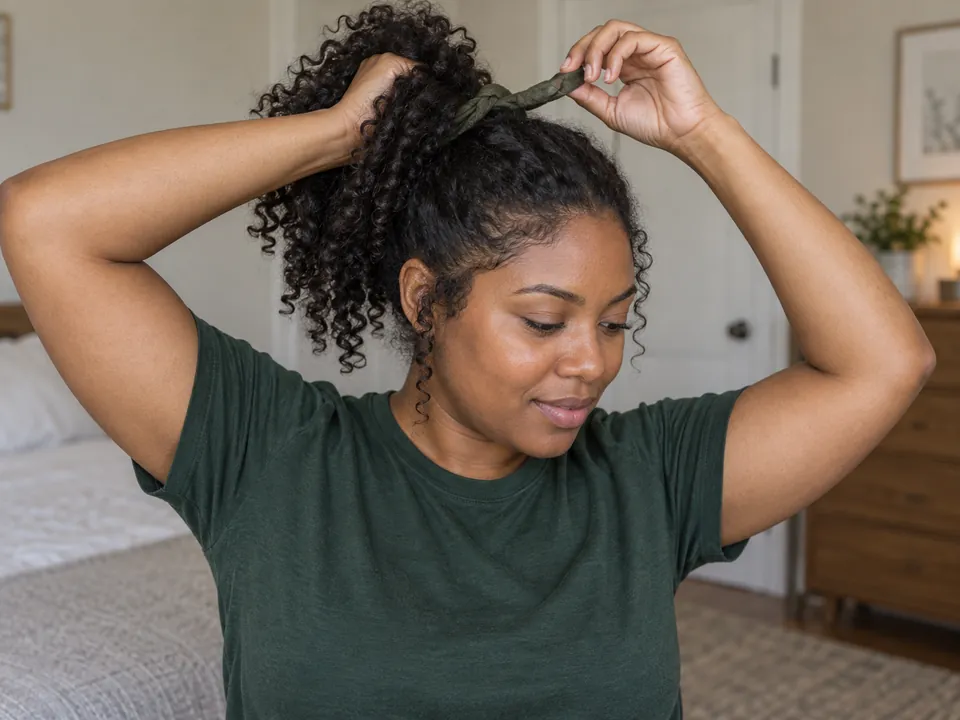
Supporting the ponytail while loosening its fabric tie.

2. Let a pulling style go only where that’s allowed

Use this simple-fastener method away from the task, after you’ve stopped and removed everything the procedure requires. Hold the fastening and let it out gently. Feeling comfortable afterwards doesn’t mean you can go back to the machine without the required containment.

Guide: Loosen a hairstyle that pulls

Illustrated care examples: before & after

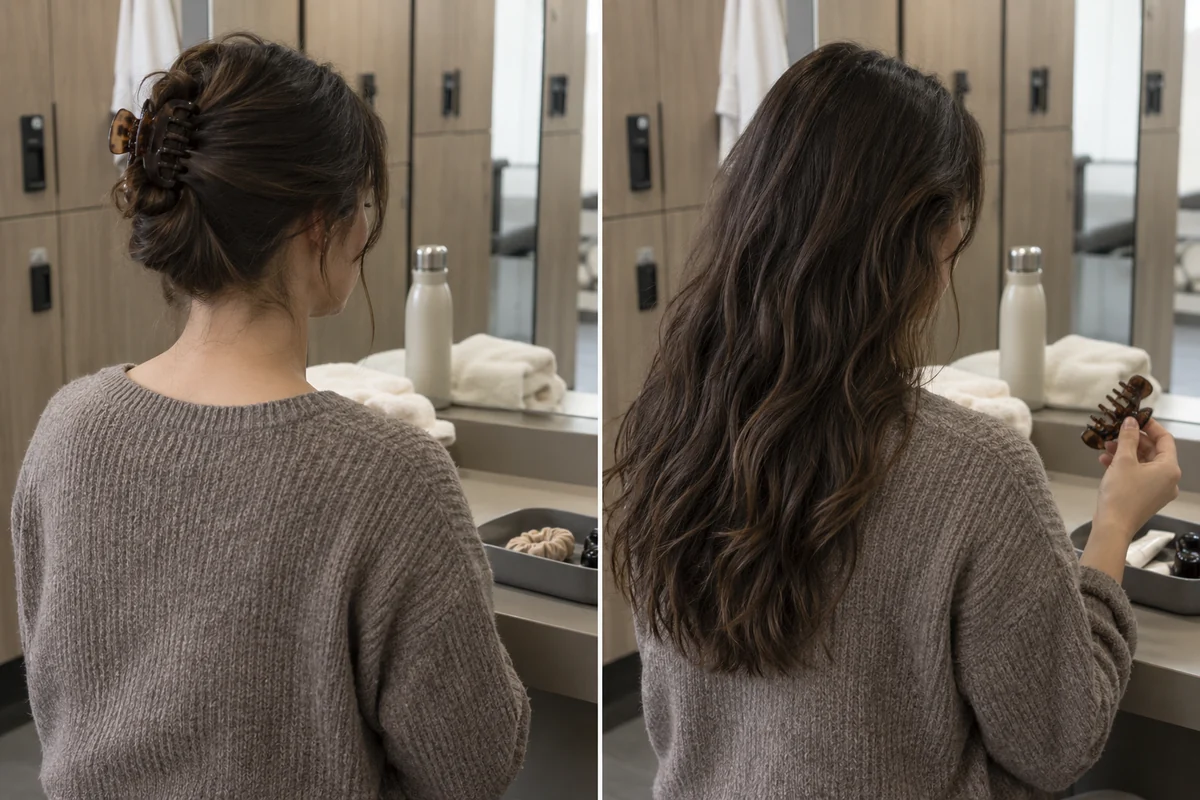
Clip out, away from machines

The same adult removes a claw clip in a separate changing room.
Before · claw clip in own hairAfter care · clip out over a tray
Well away from any machine, the claw clip comes out over a personal tray and the hair is let down. Neither picture shows hair ready for the floor.

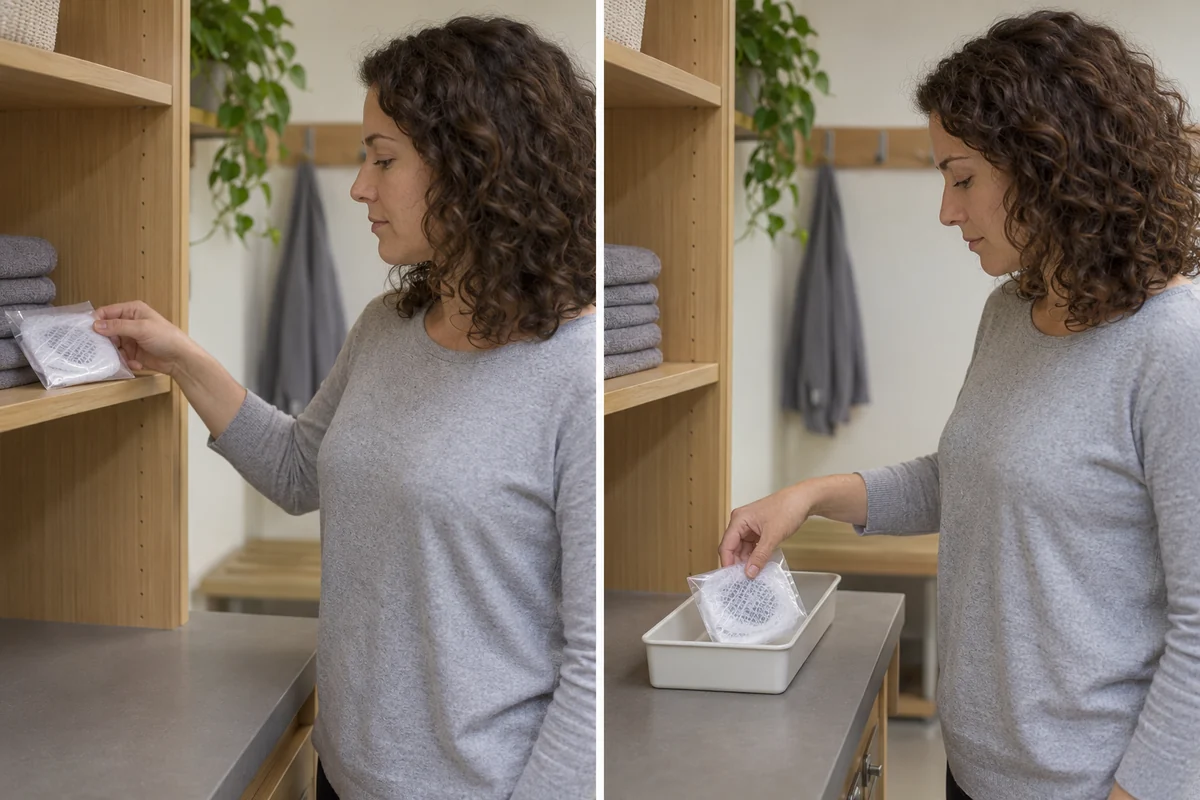
Spare covering within reach

The same adult moves a sealed covering packet into the designated preparation tray.
Before · sealed spare on a shelfAfter care · packet in the prep tray
The sealed spare moves from the shelf to the tray where you get ready. Which covering you wear, and whether it holds the hair, is the workplace’s call.
A woman with curls writing a routine note beside her hair-care products.

Help with your hair-care routine

Bring your hair-care questions to the consultation. You can also read keeping hair arrangements within exact protective-equipment requirements.

  • Who checks my hair is contained properly for this task?
  • What’s the approved alternative if the first covering doesn’t fit?
  • Where and how do I stop before I touch my hair?

Share what containment is approved for you, your hair length, the fasteners you use and where it pulls. The consultation can help with the prep beforehand and the care afterwards. Your workplace training, the equipment instructions and your supervisor still govern machine safety.

The Hair Care Consultation gives you a personal plan with product recommendations, routines and guidance on your hair-care questions.

$49 with 60 days of follow-ups, or $99 with 12 months. Pay once; the year renews only if you choose.