Hair Care Guides

Make the next step easy to see.
A missed wash is a cue, not a failure.

Remembering to wash, starting, and keeping track of the steps are three different problems. Pick one small support for whichever part gets stuck. A visible cue, supplies set out, a short list. The aim is care you can do, not a perfect streak.

Your personal hair-care planProduct choices, routines and answers shaped around your hair.$49one-timeStart my consultation
A woman reads a care checklist held with its printed side facing her.
A missed wash is a cue, not a failure.

What is going on

An adult places a hair-care reminder beside a closed kit on a dry shelf.

Put the reminder where the gap is

Miss the wash a lot? The cue may be landing at the wrong time. Put a reminder where you’ll see it before the wash window, or hook it onto something that happens anyway, like getting home. If alarms fire when you can’t act, move them.

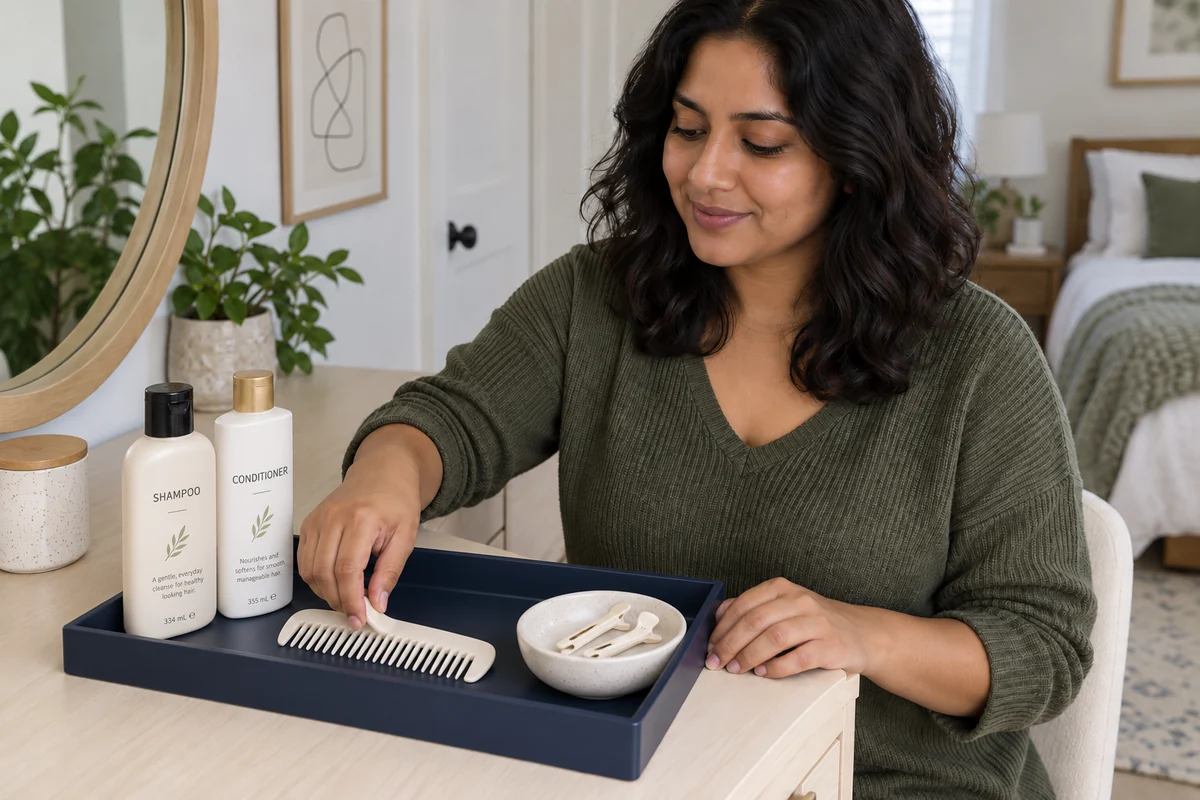
A woman returns a pale comb to a dark tray containing capped shampoo and conditioner bottles and a bowl of clips.

Make the first move tiny

Set out a clean towel, or gather the products you use, whenever you have a spare moment. Keep them stored properly with their labels on. Getting the kit ready can be its own task. You don’t have to wet your hair for it to count.

What helps, day to day

An adult reads a simple hair-care checklist beside closed bottles and a clean towel.

You lose the order halfway through

  • Keep a short list of the steps somewhere you can read it with wet hands and without touching a phone in the shower.
  • Put rinsing and drying on it too, and tick steps off if that helps.
  • The bottle still sets how long a product stays on and where it goes.
A woman uses a tablet displaying product directions beside a capped hair-care bottle at a dry desk.

The timer runs out before you’re done

  • If a product has its own timing, set a timer for that and finish rinsing it out properly.
  • Save optional treatments for a day you have the time.
  • A timer you set to keep yourself moving doesn’t change what the label says, and it never makes a rinse-out product safe to leave in.
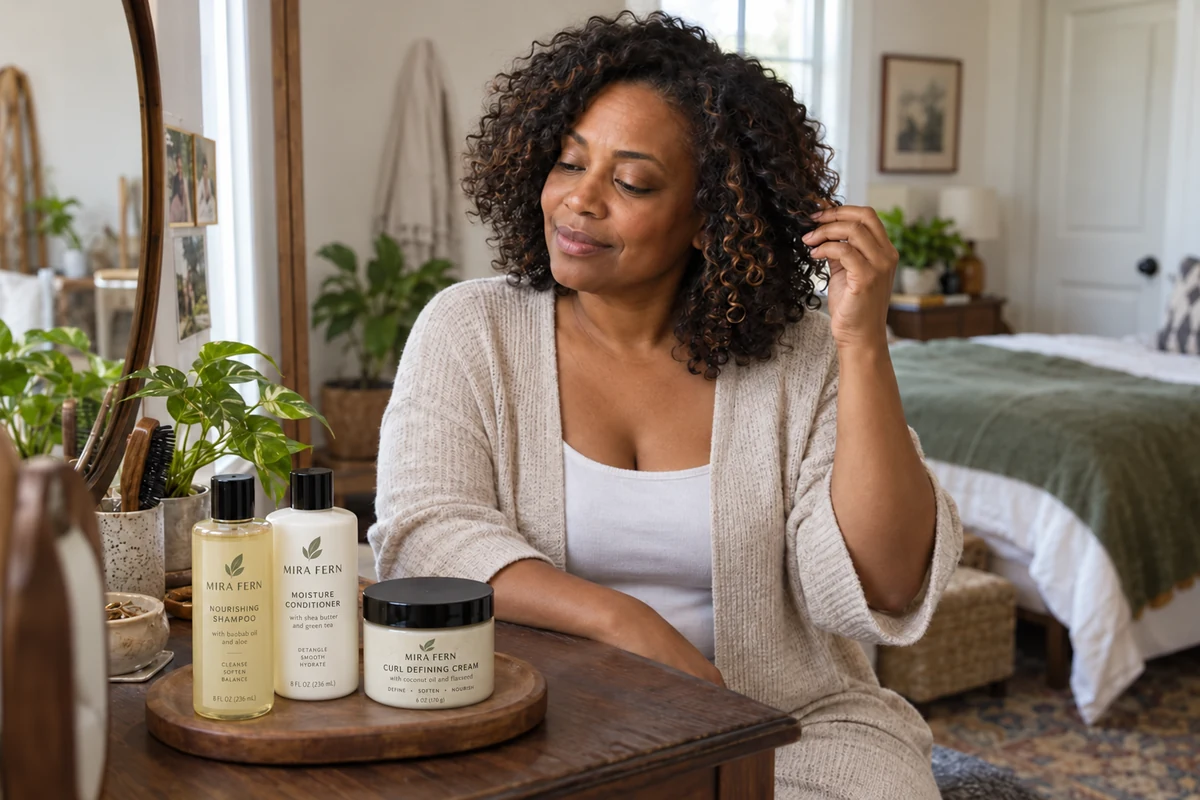
A woman with shoulder-length curls gently holds a curl at a dressing table with a small group of products.

One missed wash turns into a long gap

  • It happens, and the way back is smaller than it feels.
  • Check how your scalp feels, whether there are tangles and what’s already on your hair, then do the next complete wash.
  • No doubling up, no extra scrubbing, no punishment routine.
  • If the reminder failed, change the cue or ask someone for the support you’d like.

Products, by the job they do

A woman massaging shampoo lather onto her scalp with her fingertips.

Choose a shampoo you recognize at a glance

Use a shampoo whose bottle you can spot and whose directions you can follow without thinking. More products, or a stronger one, won’t fix a problem that’s really about getting started.

Browse cleansing products. Bring the shampoos you are choosing between to the consultation, along with what you liked or disliked about them.

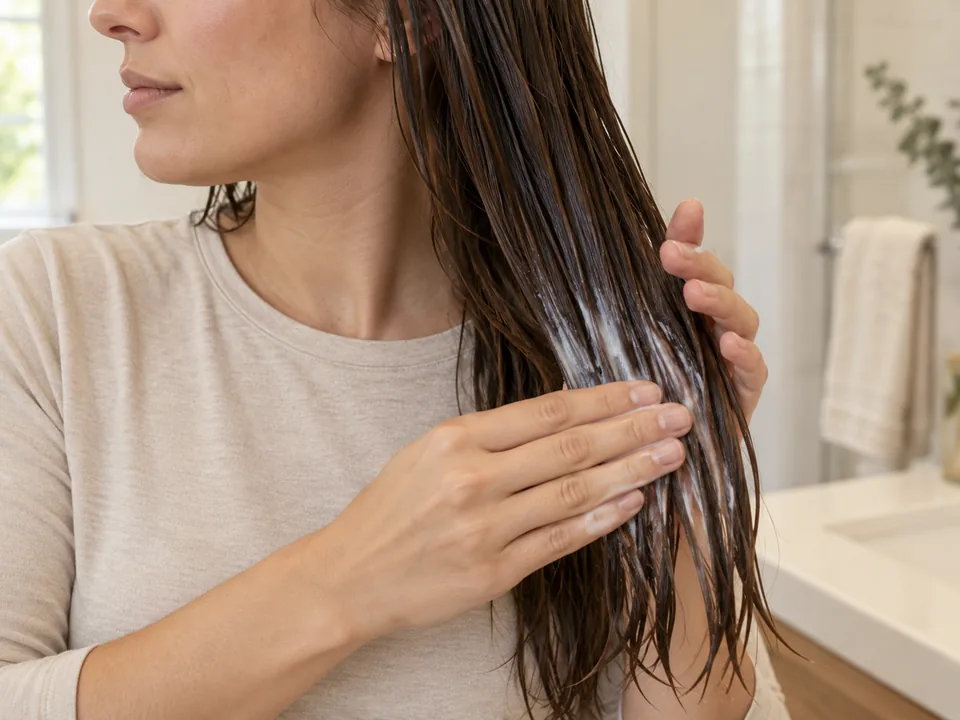
A woman smoothing conditioner through her mid-lengths and ends.

Give conditioner a fixed spot in the list

Keep the conditioner that helps on your written list, with where it goes and the rinse step after it. Don’t drop a step that makes handling easier just because it’s the one you forget. Make its cue clearer instead.

Browse rinse-out conditioners. Tell the consultation what you want from a conditioner and what you disliked about previous ones.

How to do it

A woman uses both hands to gently work shampoo at the back and sides of her scalp, with the lengths hanging loose.

1. Run the whole wash, start to finish

With loose hair and an ordinary rinse-out shampoo, wet the scalp, work the shampoo in with the pads of your fingers, then rinse the roots and underneath completely. Follow any wait or repeat on the bottle. A medicated treatment has its own routine.

Guide: Shampoo your scalp
A thin coating of conditioner being smoothed over the lower lengths and ends, away from the scalp.

2. Condition just the lengths if roots feel heavy

If conditioner at the roots feels too heavy, keep it to the lengths you can hold away from the scalp. Use the amount, placement and wait the bottle gives, then rinse. If that doesn’t suit your hair or your label, stick with what works.

Guide: Apply conditioner to the lengths and ends

When to get help

A woman and a medical professional seated together, looking at a calendar.

Signs that need more than routine care

  • If remembering or getting started is a new problem, or it’s affecting more than your hair, that’s worth raising with a medical professional, because support exists and you don’t have to figure it out alone. A scalp that stays sore or a new bare patch is worth mentioning too. Stop any product that stings.

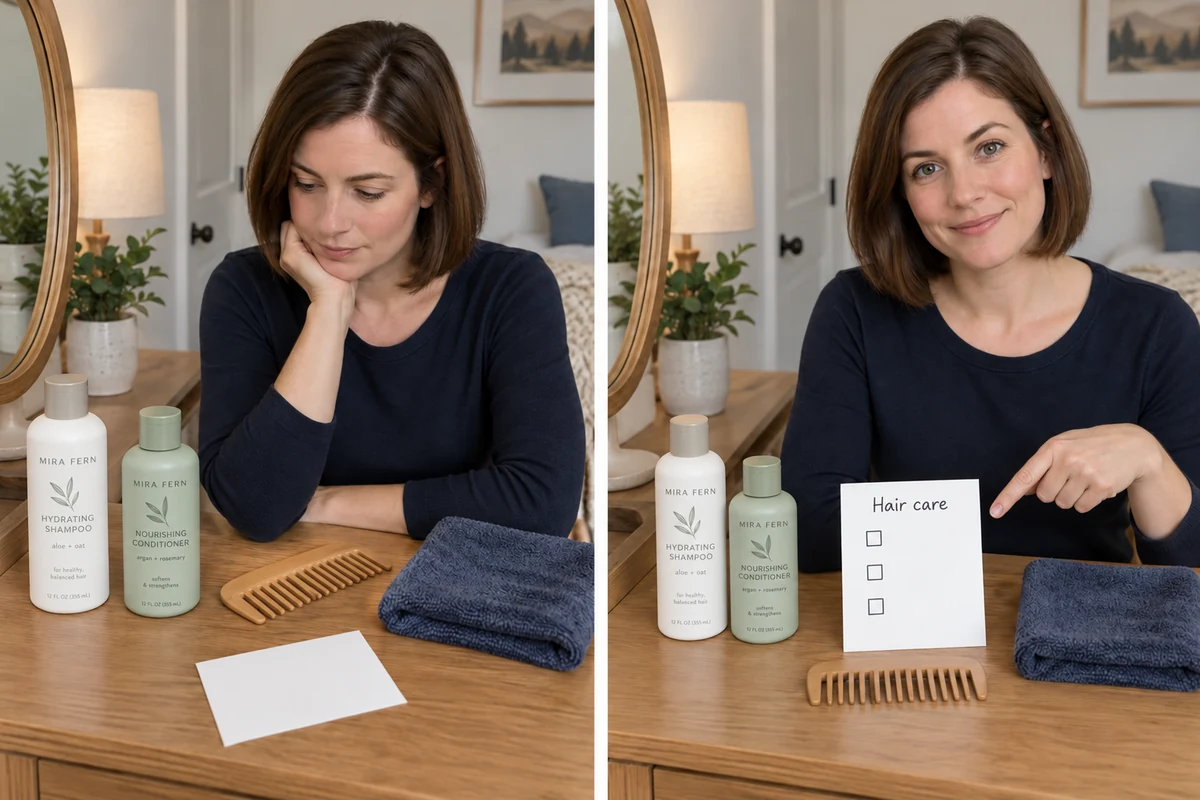
Illustrated care examples: before & after

A cue beside the kit

The same adult moves a care reminder from a closed notebook to a visible dry shelf beside the care kit.
Before · the reminder tucked awayAfter care · the note beside the kit
The reminder moves from out of sight to beside the kit, where you can act on it. A visible note is a nudge, nothing more.

Line up the steps first

The same adult arranges closed care products and a towel beside a simple checklist.
Before · items with no orderAfter care · familiar sequence laid out
The products are set out in the order they get used, so starting takes less thought. Washing, waiting and rinsing times still come from the labels.
A woman gently squeezing damp hair with a towel.

Help with your hair-care routine

Bring your hair-care questions to the consultation. You can also read choosing which routine steps earn their place.

  • Is my problem remembering, starting, or keeping the order?
  • Where would a reminder actually catch me when I can act?
  • What would make it easier to get going again after a missed wash?

Tell us where the routine falls apart, the reminders you already use, your products and what your hair needs. The consultation can make the care more doable without pretending one checklist fixes everything.

The Hair Care Consultation gives you a personal plan with product recommendations, routines and guidance on your hair-care questions.

$49 with 60 days of follow-ups, or $99 with 12 months. Pay once; the year renews only if you choose.