Hair Care Guides

Helping a parent with their hair.
Let what they want lead.

Watching a parent struggle with a bottle they’ve opened for fifty years is hard, and it’s tempting to take over. Most people want help with one thing, not everything. Ask what they want kept as it is and what has become difficult.

Your personal hair-care planProduct choices, routines and answers shaped around your hair.$49one-timeStart my consultation
An older woman indicates a comb handle while a relative listens beside her.
Let what they want lead.

What is going on

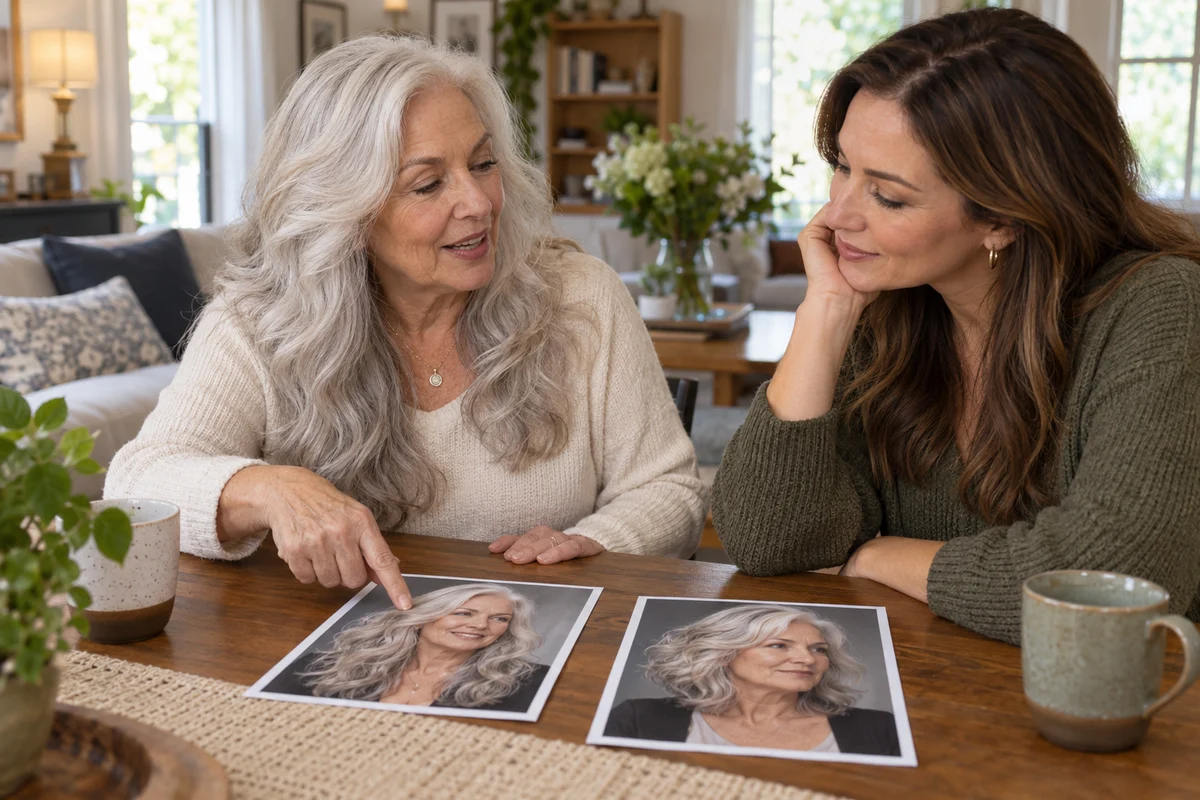
An older adult with long silver waves points to personal hairstyle photographs while a relative listens.

Ask what matters to them

Talk about the style, the products, their privacy and the hairdresser they’ve always gone to. Speak to them directly, however they communicate best, with real choices and time to answer. Saying yes to one task isn’t permission to change the whole routine.

An older adult points to a bottle closure while discussing help with a relative.

Work out which part is actually hard

Is it the travel, opening the package, standing at the sink, reaching the back, or remembering the order? Often what they want is the setup done, not hands in their hair. Agree who does what and how either of you can call a pause.

What helps, day to day

A woman uses a tablet displaying product directions beside a capped hair-care bottle at a dry desk.

The labels are too small to read

  • Keep the directions somewhere they can read or hear them, in the format they prefer.
  • Leave products in their original containers with the warnings on.
  • Try opening and dispensing together, since a pump isn’t always easier.
  • Helping with the package doesn’t mean choosing a new product.
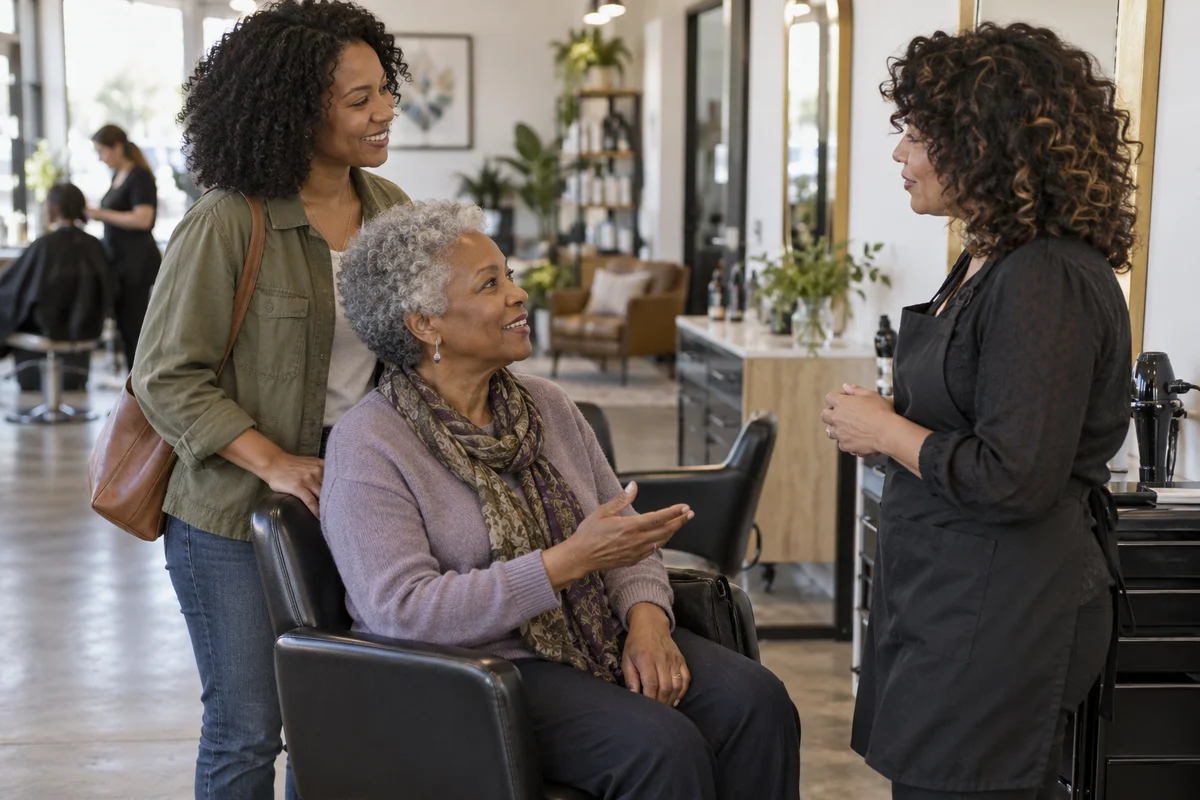
An older adult discusses a salon appointment with a stylist while a chosen relative is present.

Getting to the salon has become difficult

  • Ask the salon about access, seating, how long the appointment takes, quieter times, or whether anyone does home visits.
  • Check what your relative wants and what it costs.
  • A style they’ve worn for years doesn’t have to go just because the journey got harder.
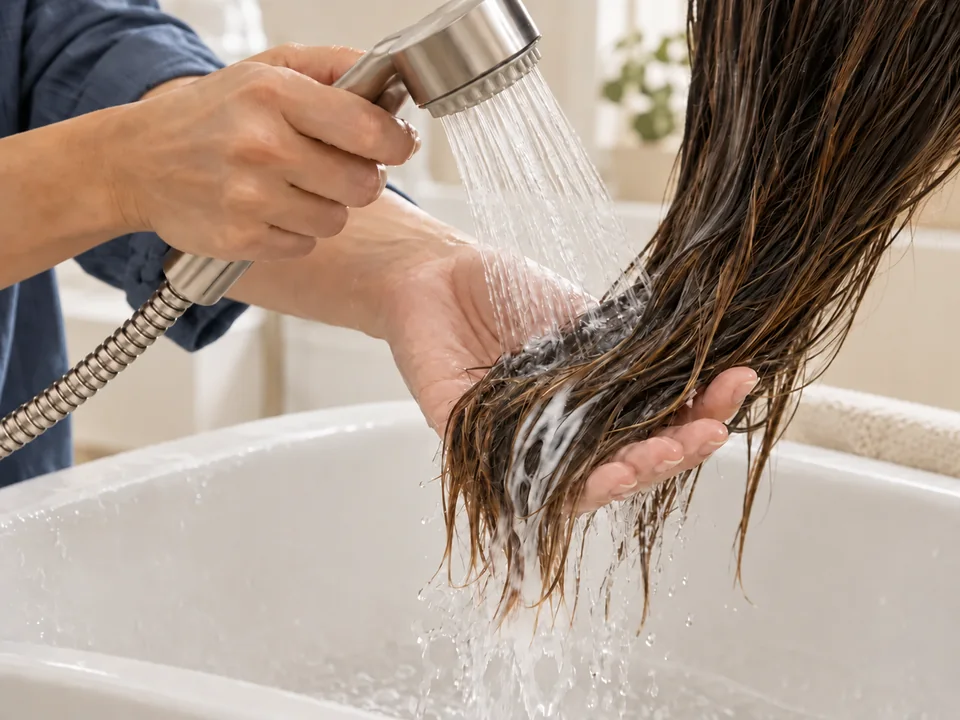
A helper in a blue shirt supports the wet hair ends while rinsing out conditioner with a handheld sprayer.

Hands-on help needs clear boundaries

  • Say what you’re about to do before you touch, and stop if they ask.
  • Keep them comfortably positioned, rinse fully, and respect any care instructions they already have.
  • If it needs lifting or a setup neither of you can manage safely, arrange proper help rather than improvising.

Products, by the job they do

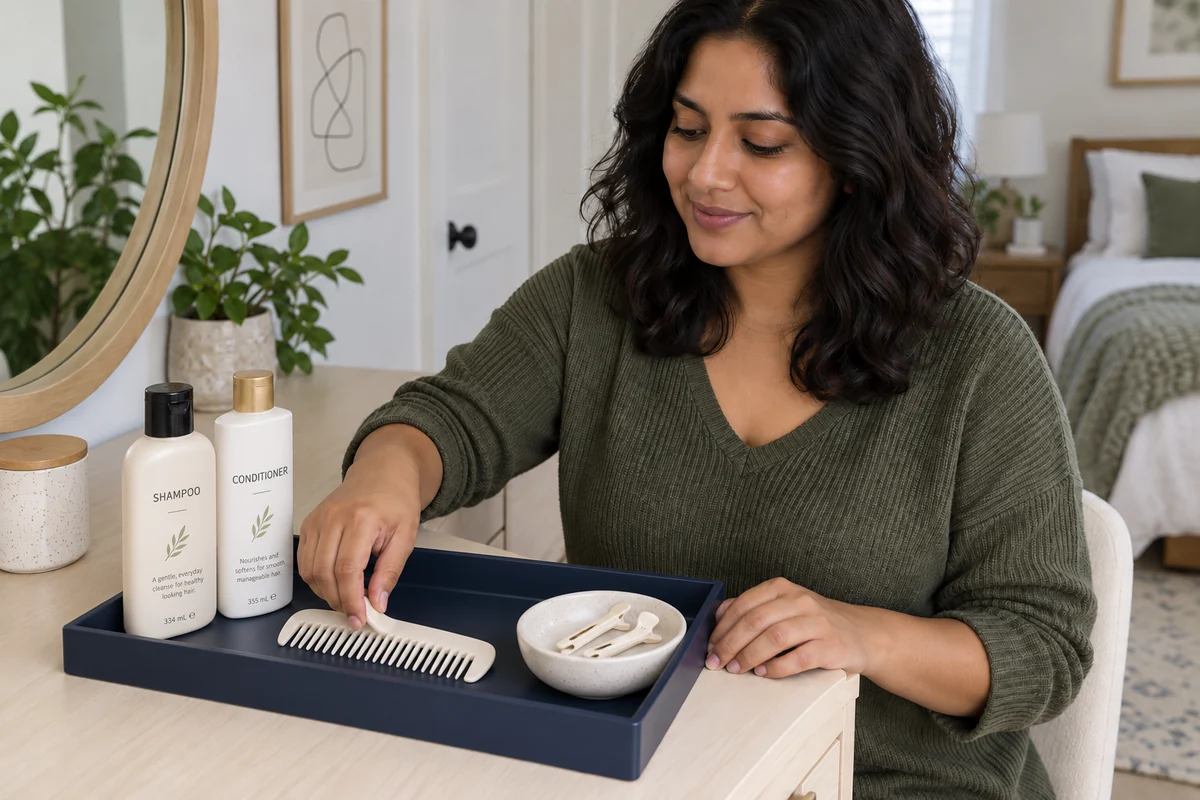
A woman returns a pale comb to a dark tray containing capped shampoo and conditioner bottles and a bowl of clips.

A shampoo they know and can use

Choose around their scalp, their activity, what they like and any treatments in their hair. Older doesn’t mean stronger cleansing, washing less, or a product for ageing hair.

Browse cleansing products. Your current shampoo, wash schedule and past treatments help guide a personal recommendation.

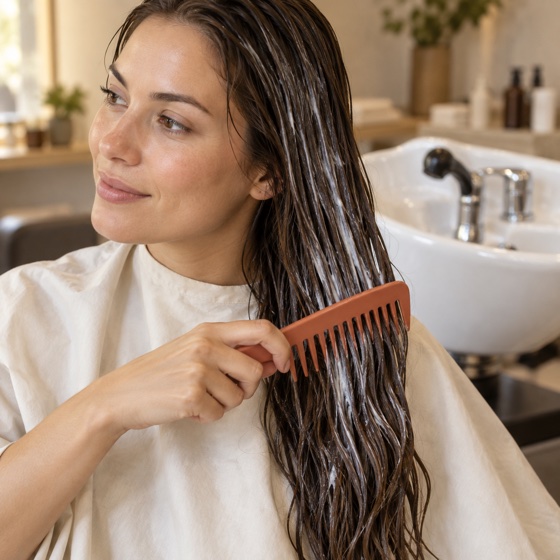
A woman detangling conditioned hair with a wide-tooth comb.

Keep the conditioner that makes handling easy

If a conditioner helps them manage their lengths, keep it, used as the label says. Who does each step matters too. Don’t drop a product that works just because someone else would prefer fewer bottles.

Browse rinse-out conditioners. The consultation uses your hair details and treatment history to compare conditioner options.

Make the plan usable

An older adult writes a care-preferences note while a relative listens beside familiar items.

Keep one agreed care note

With their permission, write down preferred products, styles, any instructions they already have and which tasks they welcome help with. Add a pause signal if that’s useful. Share it only with the people they want involved, and update it when something changes.

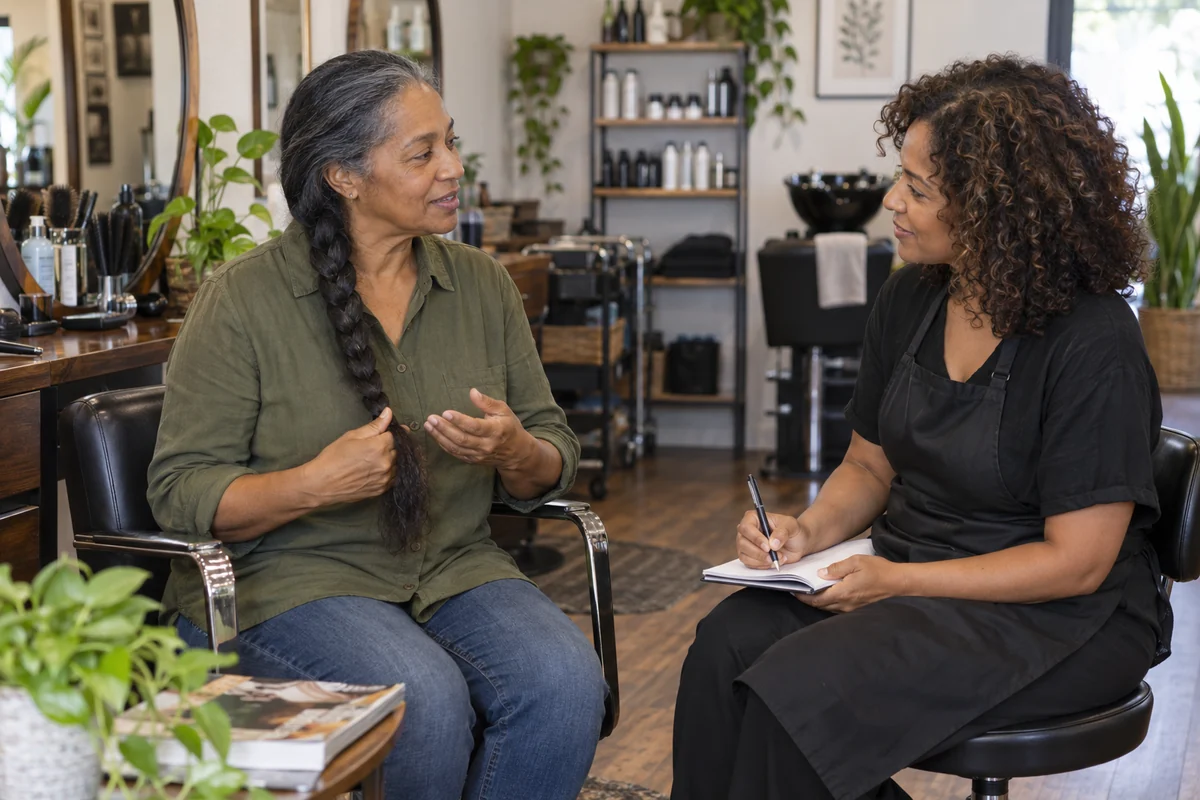
An adult holding a long braid discusses care with a stylist who takes notes in a salon.

Check whether the help still fits

Afterwards, ask what felt comfortable and what they’d change. Revisit the plan when their needs or wishes shift. A good plan keeps them independent where they can be and helped where they want to be, with neither counted as a failure.

When to get help

A woman and a medical professional seated together, looking at a calendar.

Signs that need more than routine care

  • A new patch of hair loss, scalp pain that lingers, or sores and irritation are worth a visit to a medical professional, and worth not putting off because getting there is a hassle. If everyday care has become distressing for either of you, ask about practical support that respects what your relative wants.

Illustrated care examples: before & after

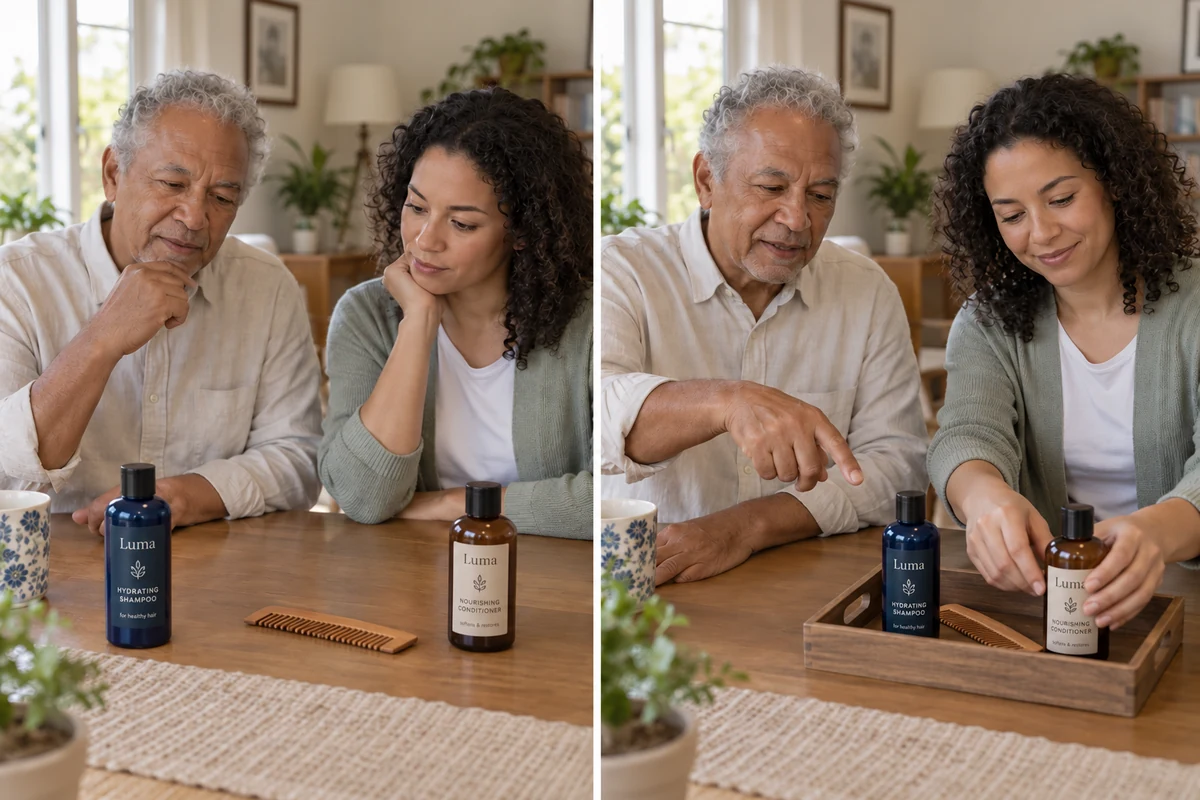
An agreed place for things

The same older adult and relative discuss care items, then place the chosen bottles and comb together in a tray.
Before · items with no set placeAfter care · chosen items together
The items the person chose now live together in a spot they agreed on. A tidy spot is not the same as needing less help.

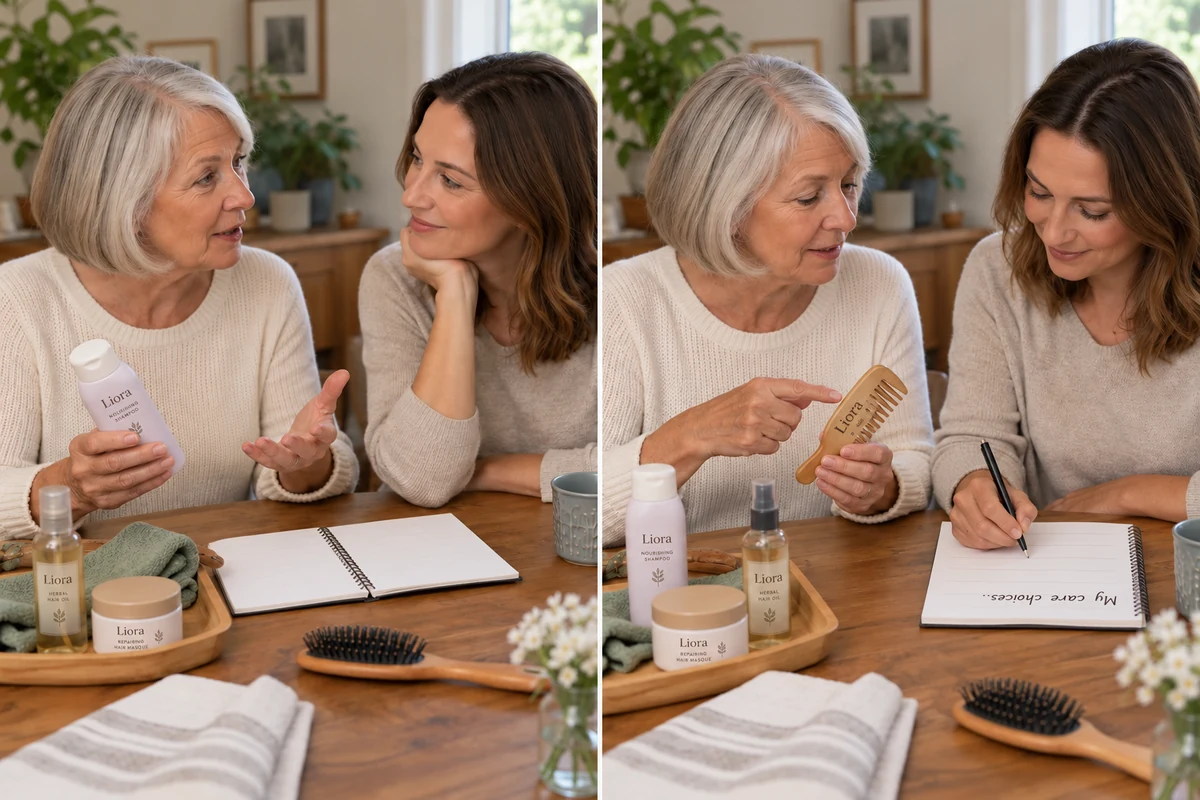
Their preferences, in their words

The same older adult describes a bottle and comb while a relative begins a note headed My care choices.
Before · talking through preferencesAfter care · an agreed care note begun
The note holds only what you agreed together, with the older person’s own choices at the center. It is a plan, not a result.
A woman gently squeezing damp hair with a towel.

Help with your hair-care routine

Bring your hair-care questions to the consultation. You can also read adapting care around limited arm reach.

  • Which part of their hair care does my relative actually want help with?
  • What should stay the way it is and under their control?
  • What does a helper need to know, and what should stay private?

With their permission, share what your relative likes, their hair and products, what they genuinely find hard, and who helps. Those details lead to care that fits, without assuming they can’t manage or replacing their choices.

The Hair Care Consultation gives you a personal plan with product recommendations, routines and guidance on your hair-care questions.

$49 with 60 days of follow-ups, or $99 with 12 months. Pay once; the year renews only if you choose.