Hair Care Guides

Keep the red you paid for.
Fading lengths and new roots are two jobs.

Red fades and roots grow. Before you chase the color, work out what you have. Permanent salon color, a demi, or a direct-dye refresh. Then decide whether the problem is roots, a shade shift in the lengths, or just the upkeep.

Your personal hair-care planProduct choices, routines and answers shaped around your hair.$49one-timeStart my consultation
An adult supports copper-red lengths while considering their next color plan.
Fading lengths and new roots are two jobs.

What is going on

An adult supports loose auburn lengths in an open palm in ordinary indoor light.

Say depth and warmth separately

Tell your colorist whether you want a deeper red, a softer copper or less of that orange warmth, rather than just brighter. Look at your dry hair in the same light. A photo of someone else’s red won’t tell them what yours will hold.

An adult loosely opens a part showing brown new growth beside copper-colored lengths.

New growth is its own job

Look at whether the contrast is at the roots or along lengths that were colored before, and tell your colorist both. The same permanent formula doesn’t have to go from scalp to ends every time the root line shows.

What helps, day to day

An adult with red curls sits for a reachable photograph with a supported phone.

The color looks different after a wash

  • Keep one dated photo of your dry lengths in good light and jot down how often you wash and which pigment products you’ve used.
  • That gives your colorist something real to work from.
  • It won’t pin the fading on one ingredient or tell you how long the next refresh will hold.
An adult with copper curls reads a jar labeled Copper Color Hair Mask while a separate conditioner stays on the table.

A copper mask might send it the wrong way

  • A depositing mask adds its own pigment, so check the exact shade and the directions rather than treating every red or copper product as the same.
  • If you already dislike the warmth, or you’re planning a different service, ask before you add it.
An adult compares two hair-product bottles beside a calculator and shopping notes.

The upkeep doesn’t fit your week anymore

  • Decide how much root contrast and fade you’re happy to live with.
  • Talk through appointment frequency, the real cost and a lower-maintenance version before booking another refresh.
  • Red doesn’t have to look freshly done every single day.

Products, by the job they do

A woman massaging shampoo lather onto her scalp with her fingertips.

Pick a wash routine you can keep up

Wash when your scalp needs it, with a cleanser that fits any directions from your color service. Oil, sweat and styling layers matter as much as the color. Color-care marketing doesn’t set your wash schedule or require you to avoid every sulfate.

Browse cleansing products. For shampoo recommendations, share how your roots feel between washes and what you use now.

A woman applying conditioner to her damp lengths and ends.

Treat the feel without guessing at the pigment

Choose conditioner for the ends, whether they catch, feel coated or fight the comb. Check whether it deposits color. A richer mask or another tint isn’t the fix for a faded shade.

Browse rinse-out conditioners. Tell the consultation what you want from a conditioner and what you disliked about previous ones.

How to do it

Checking appointment preparation instructions on a phone.

1. Talk about roots, lengths and the next shade separately

Bring the service history and any at-home pigment products. Show the root contrast and the change in the lengths you actually want fixed. Ask what will be kept, what might shift, and what aftercare or return visit to expect.

Guide: Prepare for a color appointment
Writing separate pre-use checks and waiting periods in a notebook.

2. Do the checks before any home color

Use the directions on the exact box you’re about to use to time its required checks. A red you’ve used before can have a different formula now. Don’t mix products, and don’t let a past use that went fine stand in for the check.

Guide: Plan product skin and strand checks

When to get help

A medical professional examining the scalp where a woman points.

Signs that need more than routine care

  • If a dye leaves your scalp burning, with a rash or itching that doesn’t settle, stop using it and see a medical professional, with the box in hand. An earlier application that went fine, or a patch test that passed, doesn’t mean the next one will. It’s worth getting looked at before your next color, not after.

Illustrated care examples: before & after

Roots shown on their own

The same adult first wears a usual part, then gently opens it to show existing new growth.
Before · the usual part at restAfter care · root contrast easier to see
The part is opened so the new growth shows apart from the lengths. That makes it easier to talk about which part of the color actually needs attention.

Which way you want the red

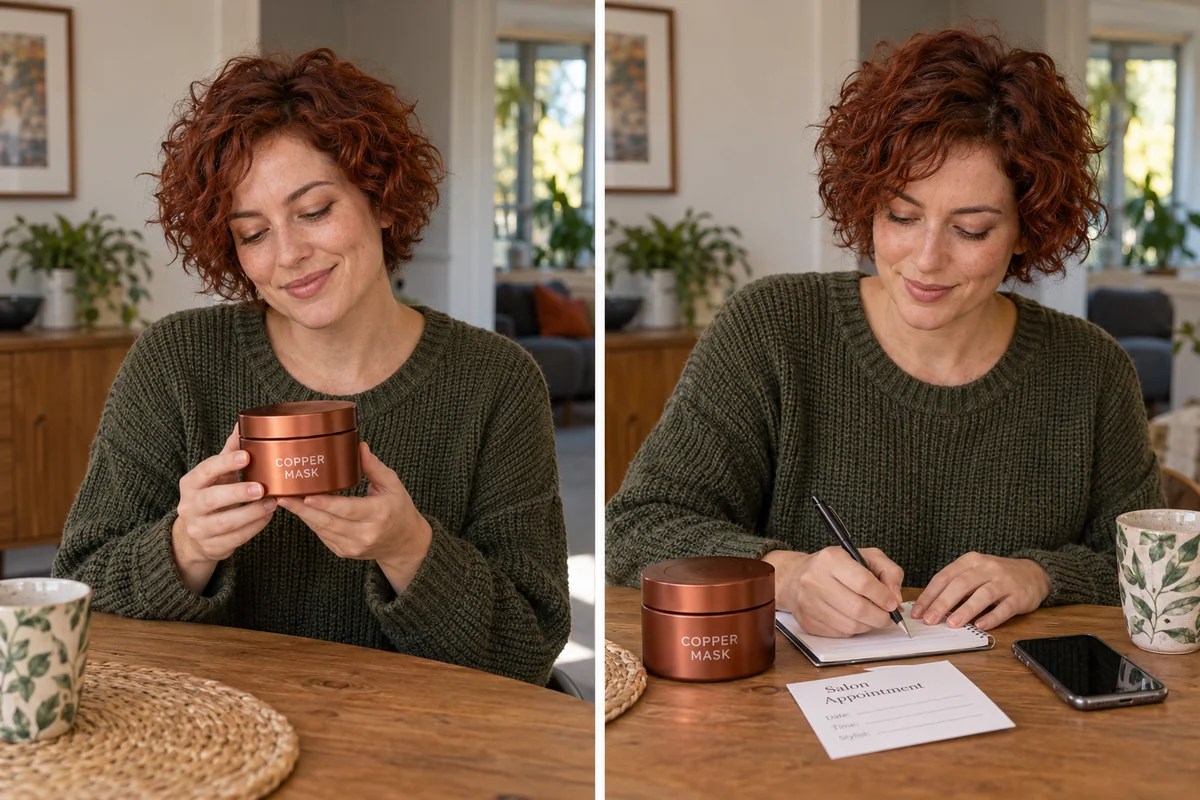
The same adult sets a closed copper mask aside and notes a shade question.
Before · copper refresh being consideredAfter care · the wanted change written down
A copper refresh brings its own pigment with it. Before choosing one, write down whether you want more warmth, less warmth or a different depth.
A woman with curls writing a routine note beside her hair-care products.

Help with your hair-care routine

Bring your hair-care questions to the consultation. You can also read caring for natural red hair when added tint is unwanted.

  • Is it the roots, the depth or the warmth that’s bothering me?
  • What color services and home products are still in my hair?
  • How much fade and how many appointments am I really up for?

Tell us your color service and any home refreshes, plus how you wash, how the ends feel and how you style. The consultation can connect those to keeping the red you want. It won’t pick a dye formula or promise how long color lasts.

The Hair Care Consultation gives you a personal plan with product recommendations, routines and guidance on your hair-care questions.

$49 with 60 days of follow-ups, or $99 with 12 months. Pay once; the year renews only if you choose.