Hair Care Guides

One head, two haircuts.
The top and the sides need different care.

An undercut gives you a long top over sides that are bare, and the two never want the same thing. The scalp still needs washing. The top still needs conditioning, drying and hold. Decide early whether you’re keeping the line or growing it out.

Your personal hair-care planProduct choices, routines and answers shaped around your hair.$49one-timeStart my consultation
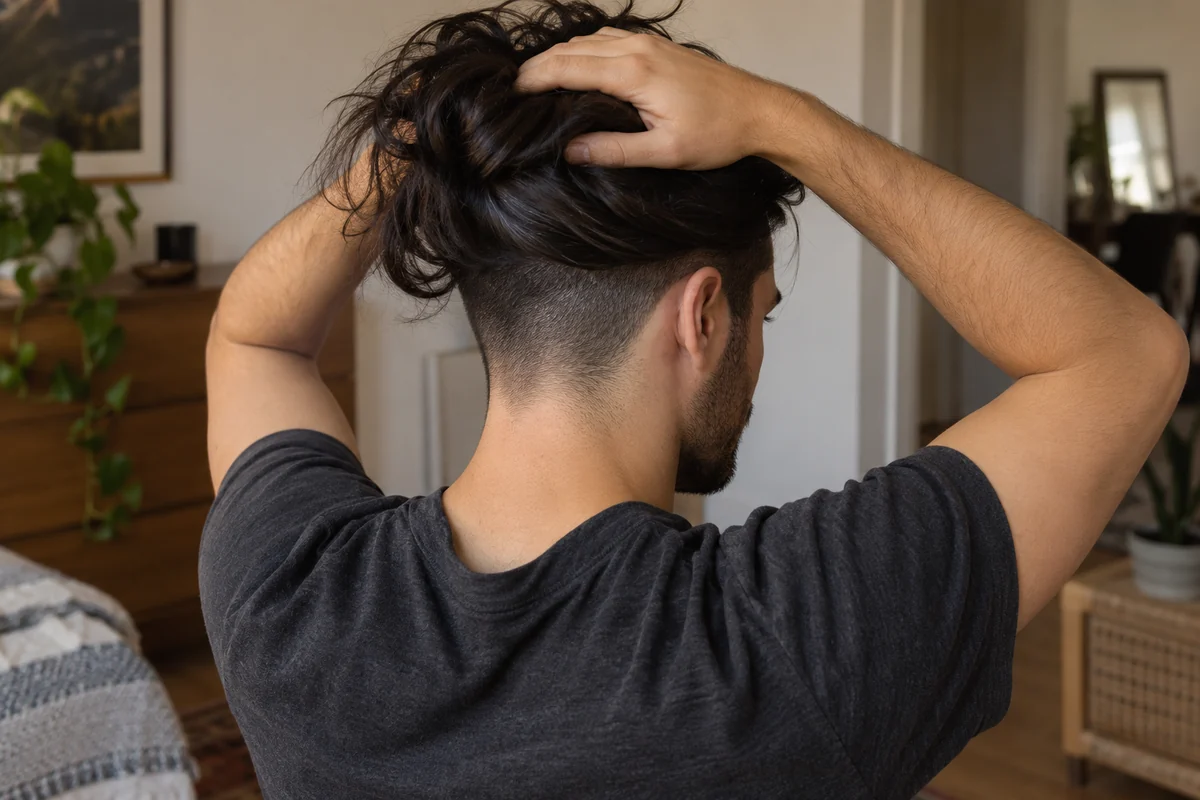
An adult lifts the long upper hair with both hands, revealing deliberately clipped sides and nape.
The top and the sides need different care.

What is going on

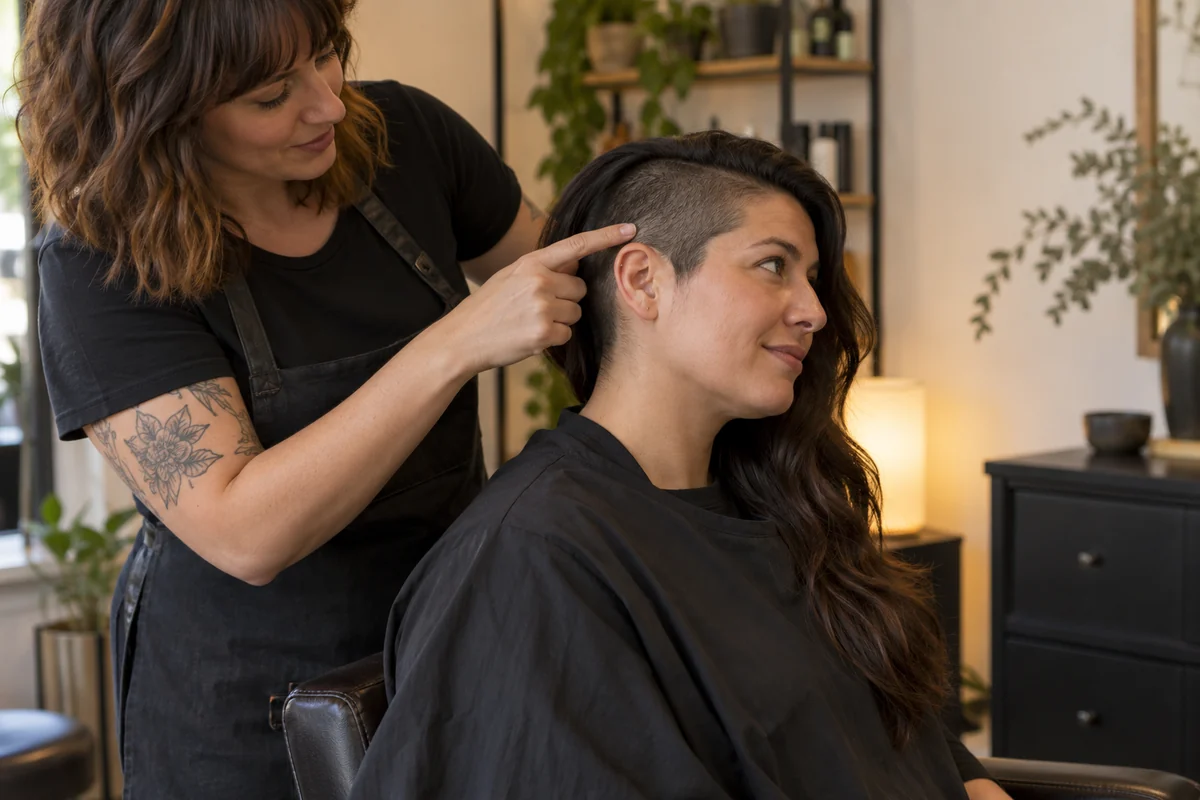
A stylist indicates the short side beneath the long top while the adult sits with cutting tools put away.

Tell your barber which line to keep

Find where the long section meets the short. Before a cut, say whether you want that line kept sharp, softened or grown out. Taking the sides shorter and trimming the top are two separate decisions, so confirm both before the clippers come out.

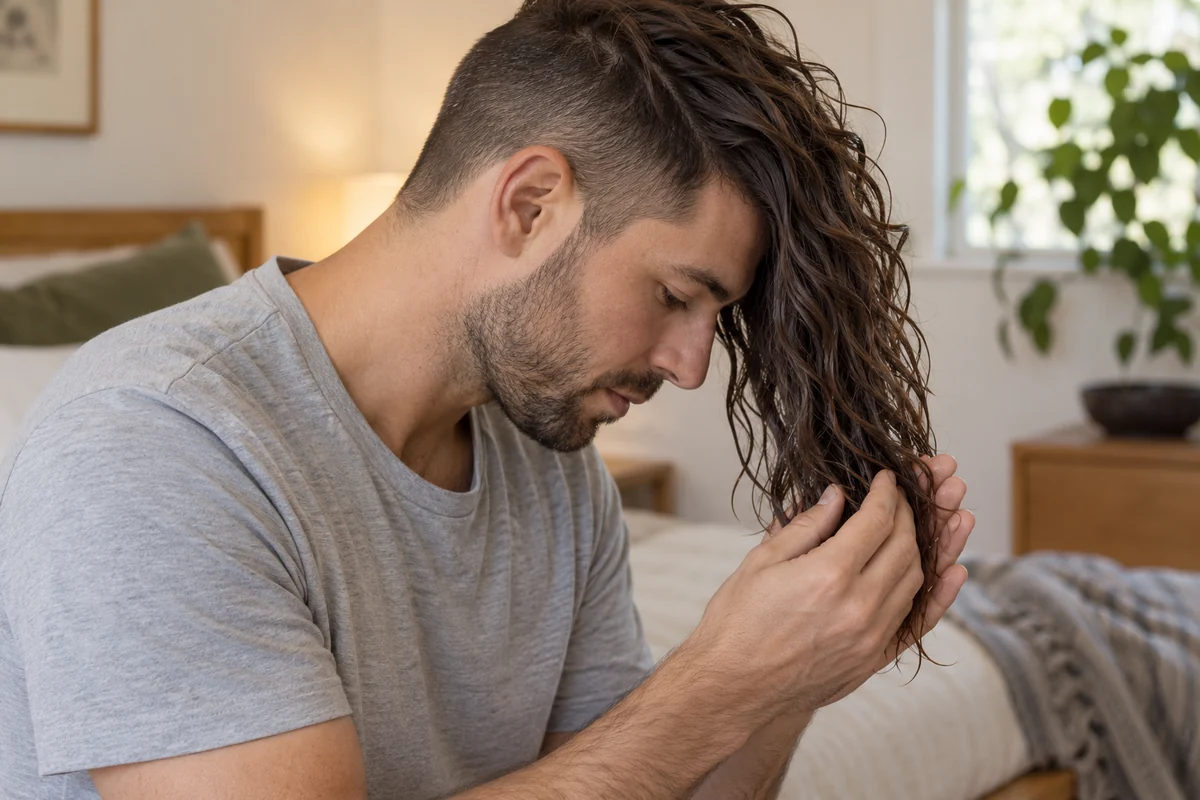
An adult with clipped sides brings the damp long top forward and works hands through its reachable ends.

The top is still long hair

Shaving the underneath doesn’t turn the rest into a short-hair routine. The top’s ends still catch, still hold color and still take their time to dry. Bring the lengths forward and look at them on their own, apart from the buzzed area.

What helps, day to day

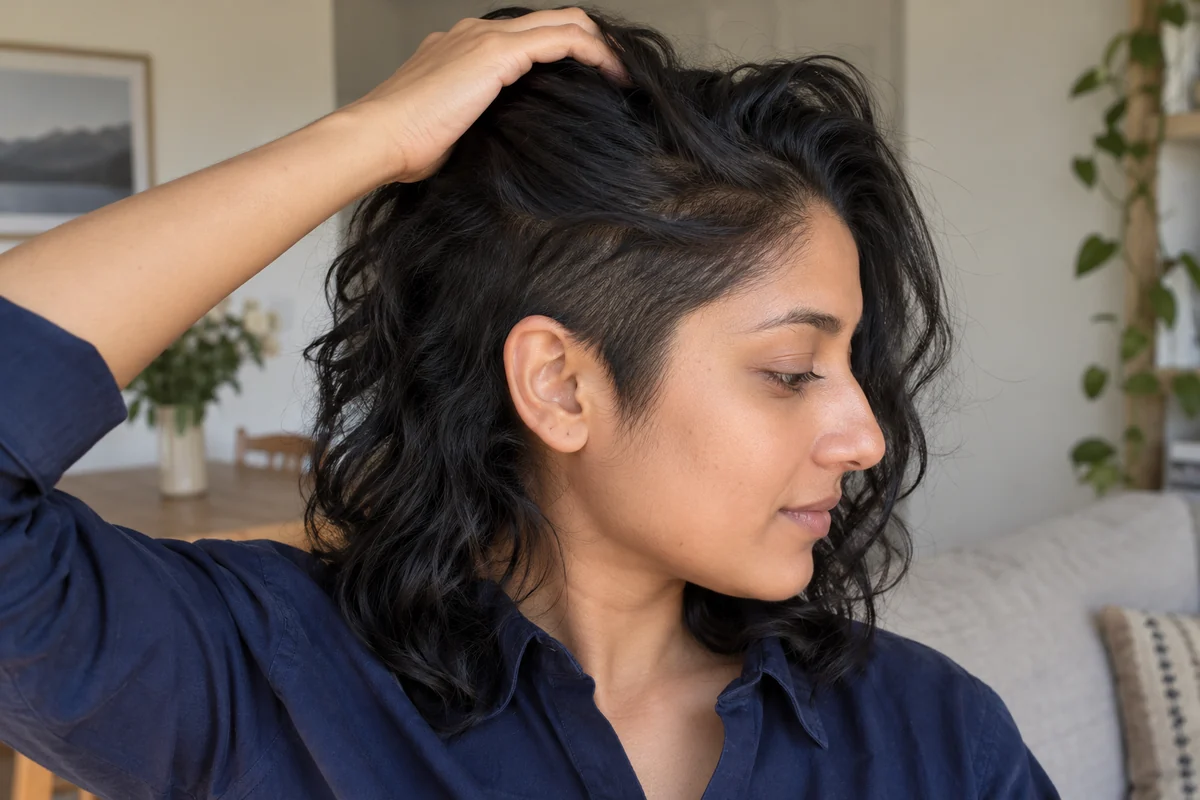
An adult holds long wavy top hair away from a short grown-out side with softly projecting hairs.

The short bits are starting to stick out

  • Decide whether you want a fresh short line or you’re letting the sides grow in.
  • Ask your barber about an in-between shape and how often it needs doing.
  • Pasting every short hair flat works against a grow-out you actually want.
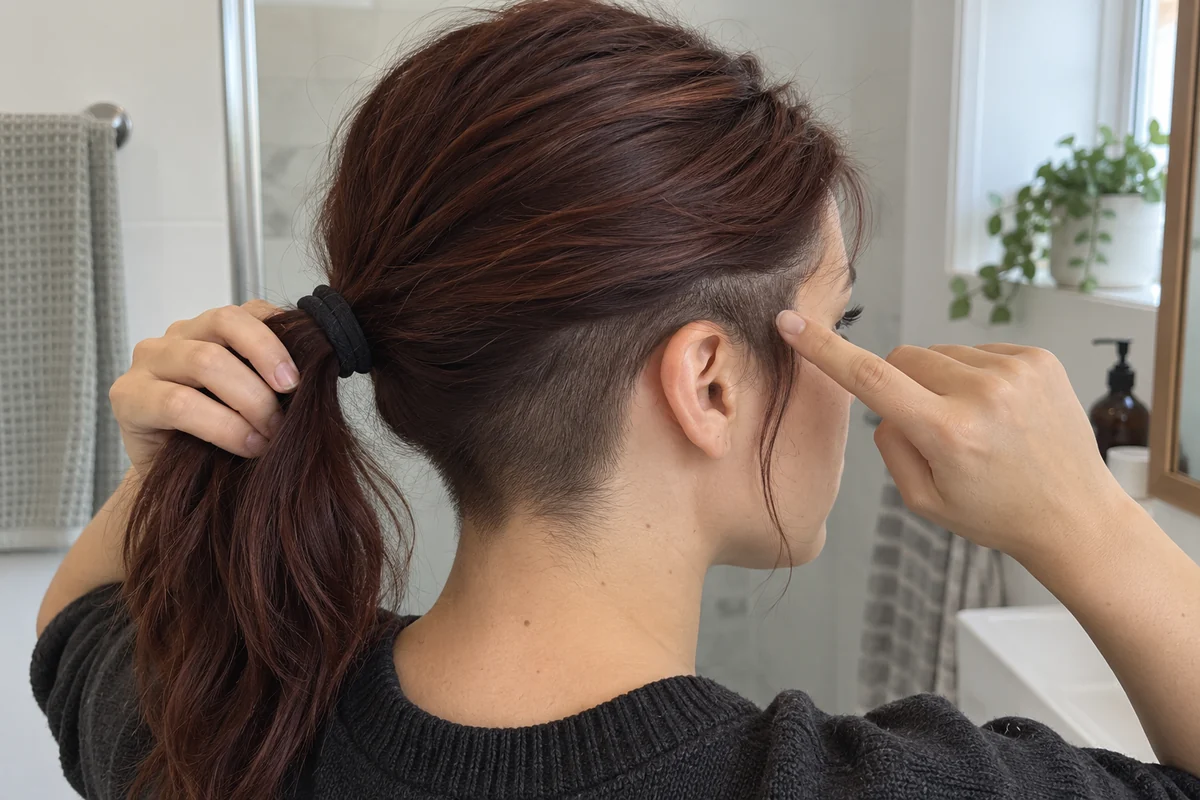
An adult supports a low ponytail made from the long top while indicating the short free side above the ear.

The short pieces won’t stay in the tie

  • Gather only the long hair that reaches without pulling.
  • Leave the short edge free rather than cinching the tie to trap it.
  • If the shortest top pieces can’t reach, move the tie lower or wear the top down.
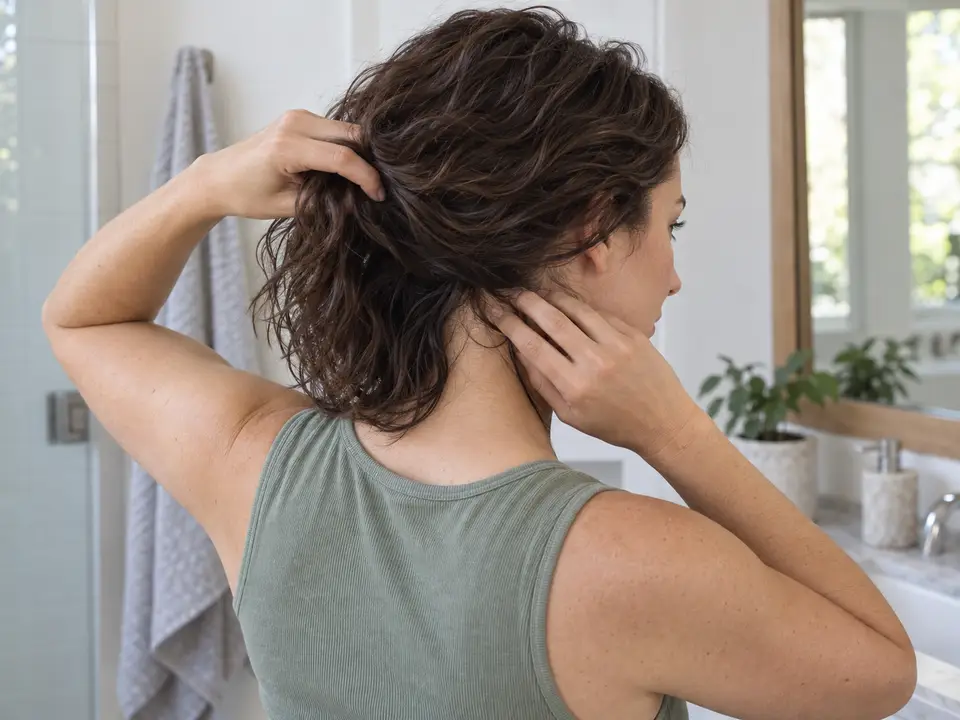
A woman checks the inside of her loose hair near the nape with clean fingers while the rest falls freely.

The sides are dry long before the top

  • Check the roots and inner lengths of the top before you tie it away.
  • Take out any clips so the damp parts can breathe.
  • Dry sides don’t mean a thick or folded top is done, so give the long zone the extra time.

Products, by the job they do

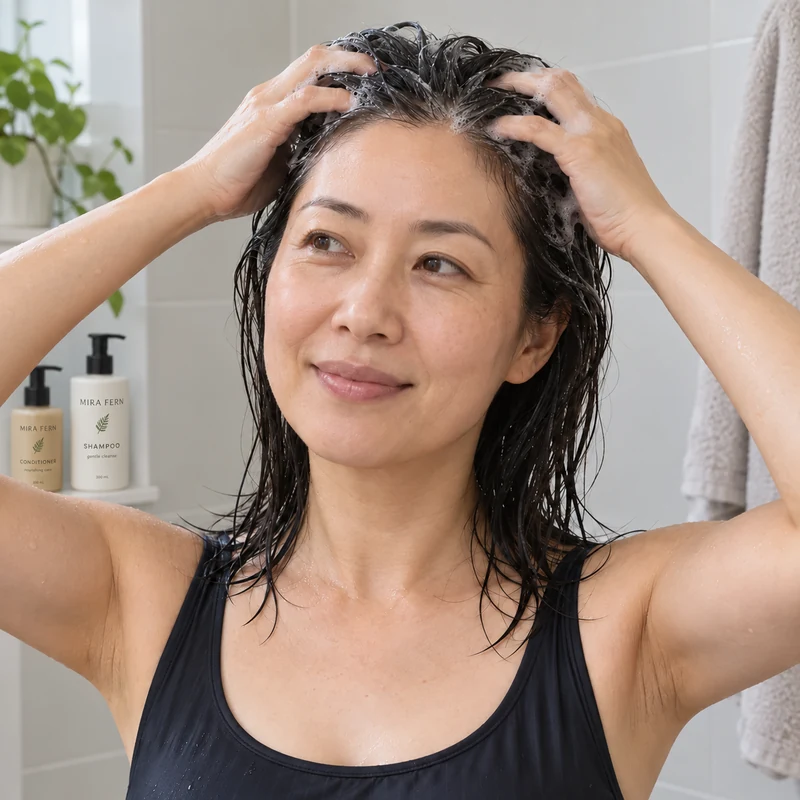
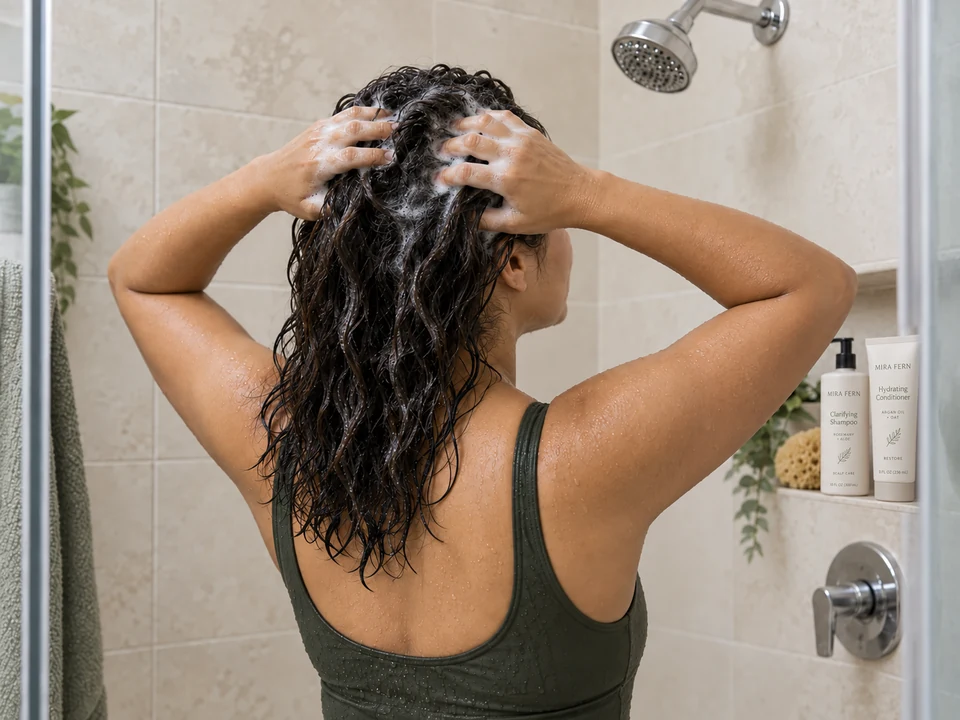
A woman massaging shampoo lather onto her scalp with her fingertips.

Wash the scalp on both sides of the line

Lift the top so you can get underneath it, then wash the short areas with the pads of your fingers. Short sides don’t need a harsher shampoo or a daily wash just because they’re short. Wash when the scalp is oily.

Browse cleansing products. The consultation uses your wash frequency and scalp concerns to recommend a shampoo.

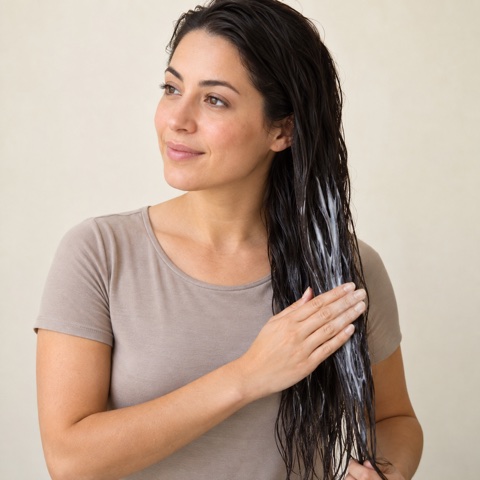
A woman smoothing conditioner through her mid-lengths and ends.

Condition where the length is

Condition the long lengths you can reach rather than smearing the same layer over the buzzed edge. How much slip and weight the top wants depends on its texture, color and tangles.

Browse rinse-out conditioners. The consultation uses your hair details and treatment history to compare conditioner options.

How to do it

A woman uses both hands to gently work shampoo at the back and sides of her scalp, with the lengths hanging loose.

1. Get underneath the long top

Use a regular rinse-out shampoo. Move the long section aside, work across the whole scalp with your fingertips and rinse underneath it. Don’t scrub the short area with your nails.

Guide: Shampoo your scalp
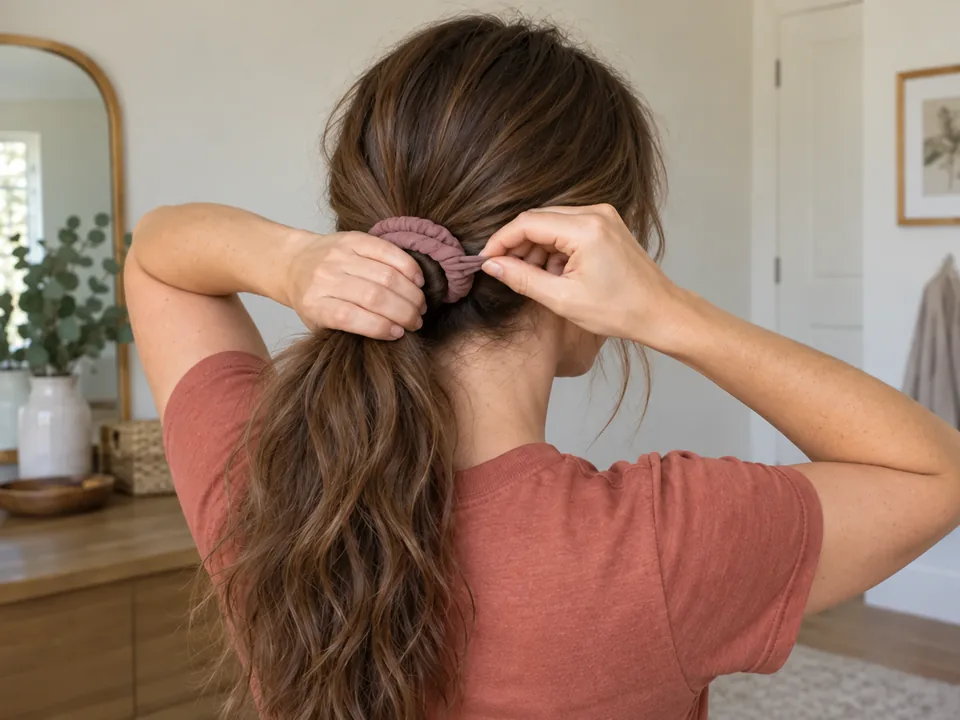
A woman supports her low ponytail with her left hand while her right fingers release the opened loop of a mauve fabric scrunchie around the base.

2. Tie the top without straining the line

Only on dry, loose hair, and only when the top reaches a low or mid gathering point without strain. Let the short pieces stay free and use just enough turns of the tie to hold. If it pulls, let it out.

Guide: Tie a loose ponytail

Illustrated care examples: before & after

Gather what reaches

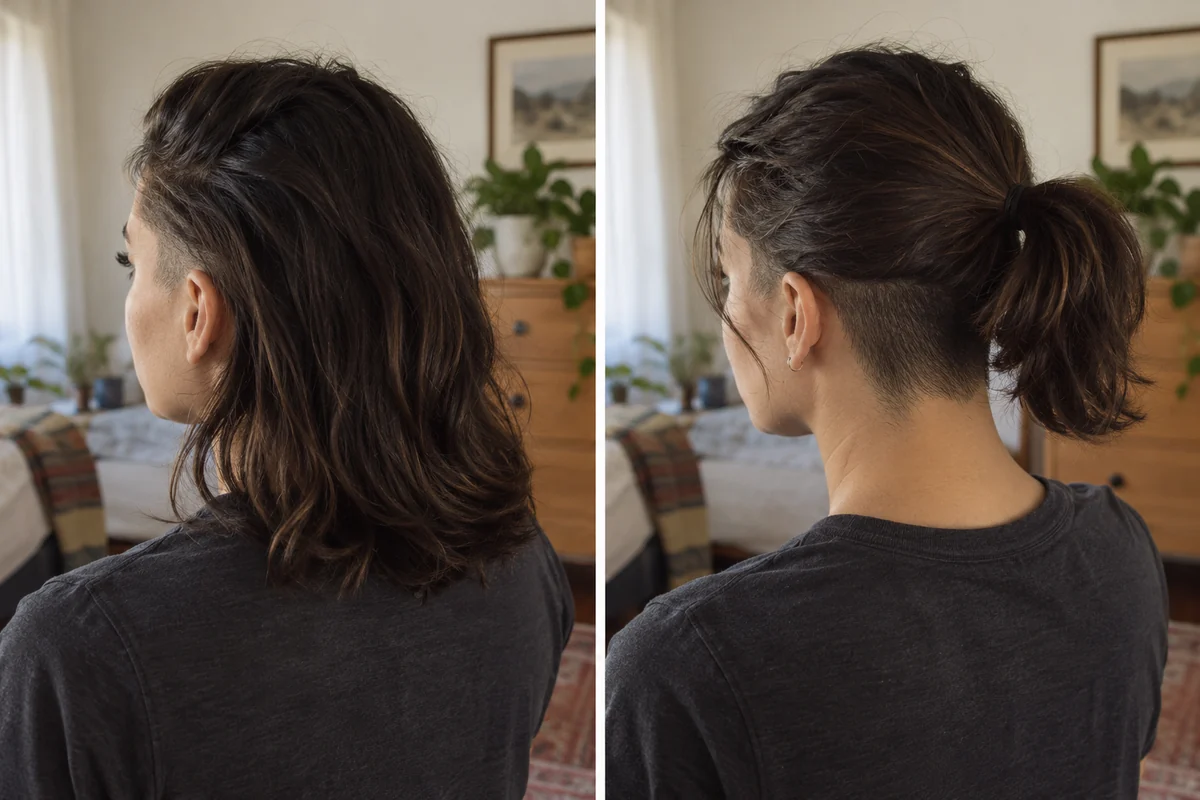
A matched pair shows the long top down over an undercut, then in a relaxed mid-height ponytail that leaves the short sides free.
Before · long top worn downAfter care · top gathered, sides free
The dry top is gathered only as far as it reaches without strain, held low or mid height, with the clipped sides left alone.

Long top let down to check

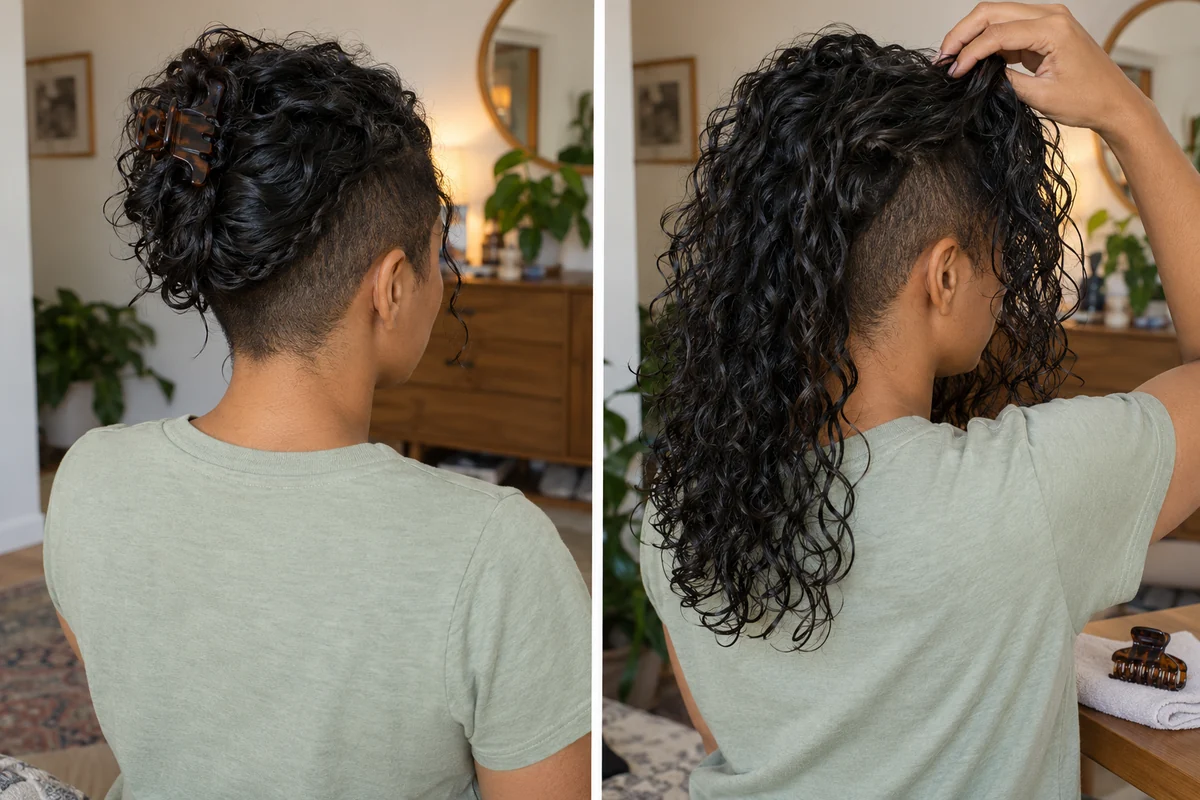
A matched pair shows a damp curly long top held in a clip, then released with the clip on the table while a hand checks inner hair.
Before · damp top clipped upAfter care · top released for a check
The clip comes out and the long top hangs so you can feel the roots and the inner lengths. The short sides may be dry already.
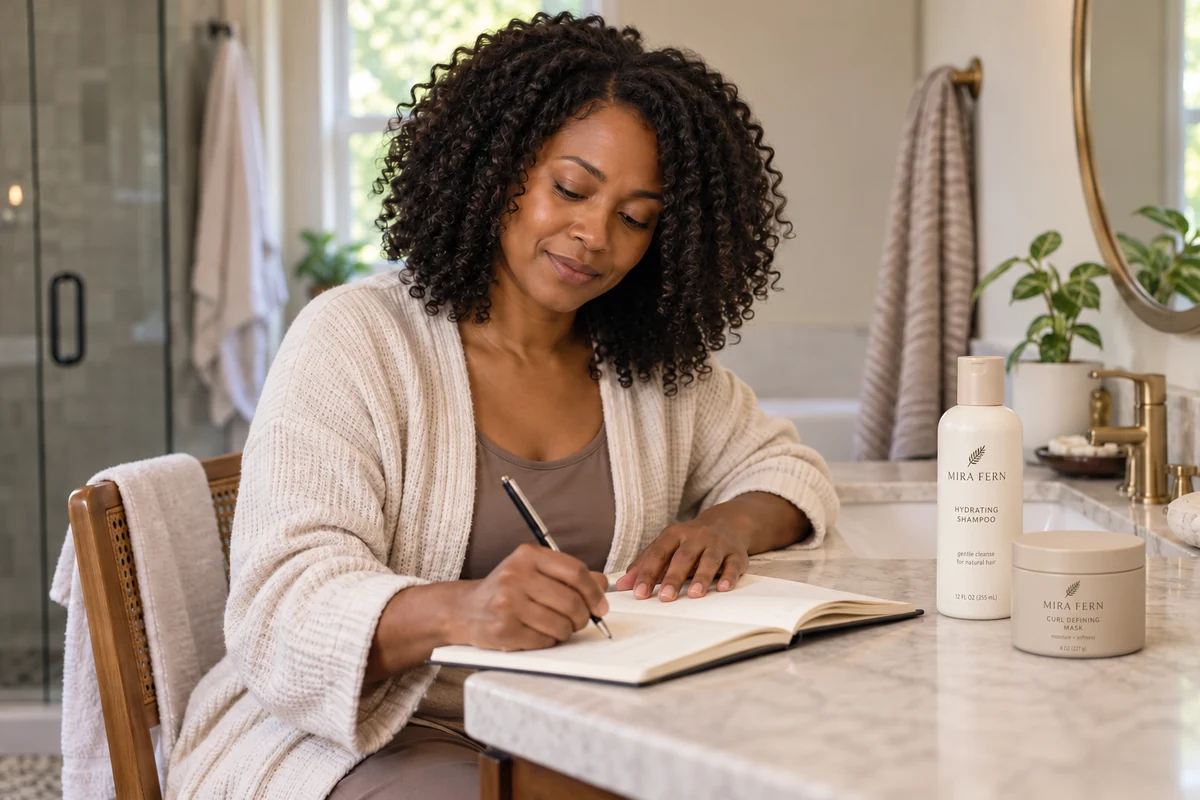
A woman with curls writing a routine note beside her hair-care products.

Help with your hair-care routine

Bring your hair-care questions to the consultation. You can also read planning a changing short-hair outline.

  • Can I keep the long top while the sides grow out?
  • Where should the conditioner stop when the lengths are so different?
  • Where can I tie the top so it doesn’t pull at the line?

The plan uses the hair and scalp details you share, past treatments, current products, preferences and the time and budget you have.

The Hair Care Consultation gives you a personal plan with product recommendations, routines and guidance on your hair-care questions.

$49 with 60 days of follow-ups, or $99 with 12 months. Pay once; the year renews only if you choose.