Hair Care Guides

You can learn their hair, together.
Comfort first, your own routine second.

Caring for a child whose hair is nothing like yours can feel like starting from zero. Begin with what already works for them, listen to what they like, and learn one thing at a time. Their texture is something to understand, not fix.

Your personal hair-care planProduct choices, routines and answers shaped around your hair.$49one-timeStart my consultation
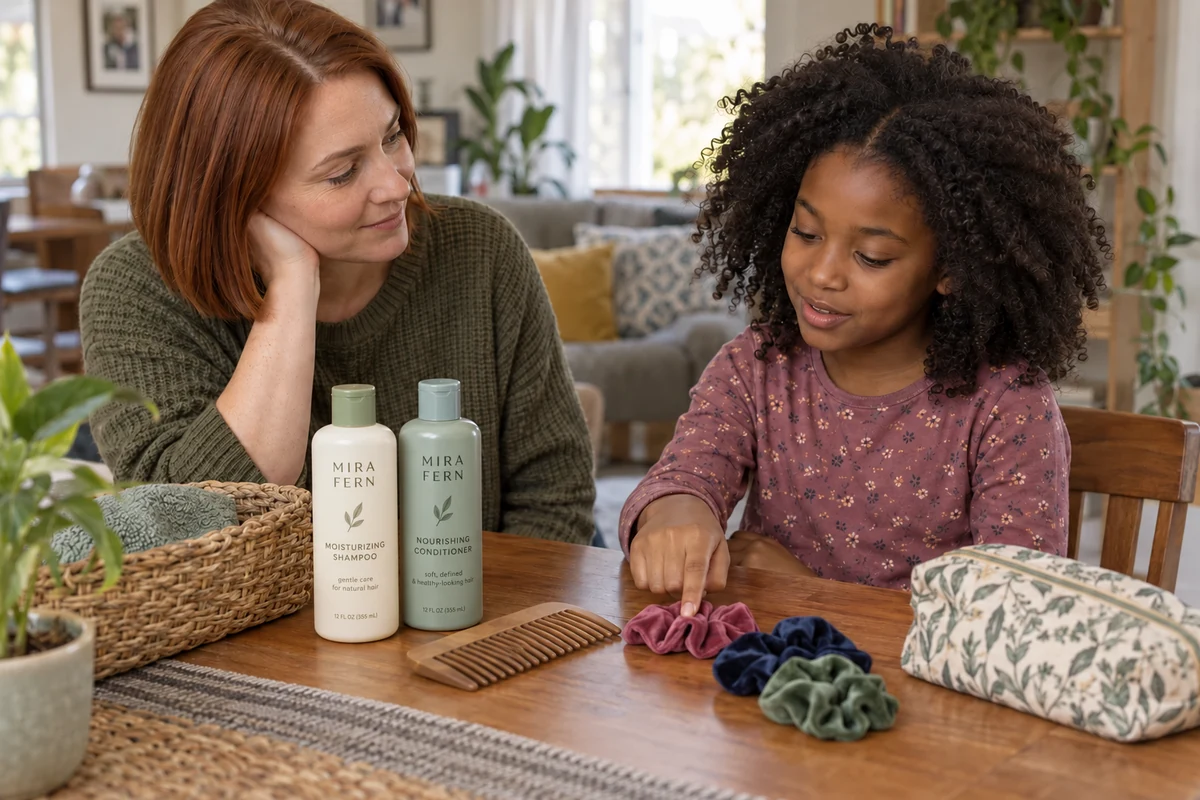
A caregiver with straight hair listens as a child with coily hair points to a soft hair tie.
Comfort first, your own routine second.

What is going on

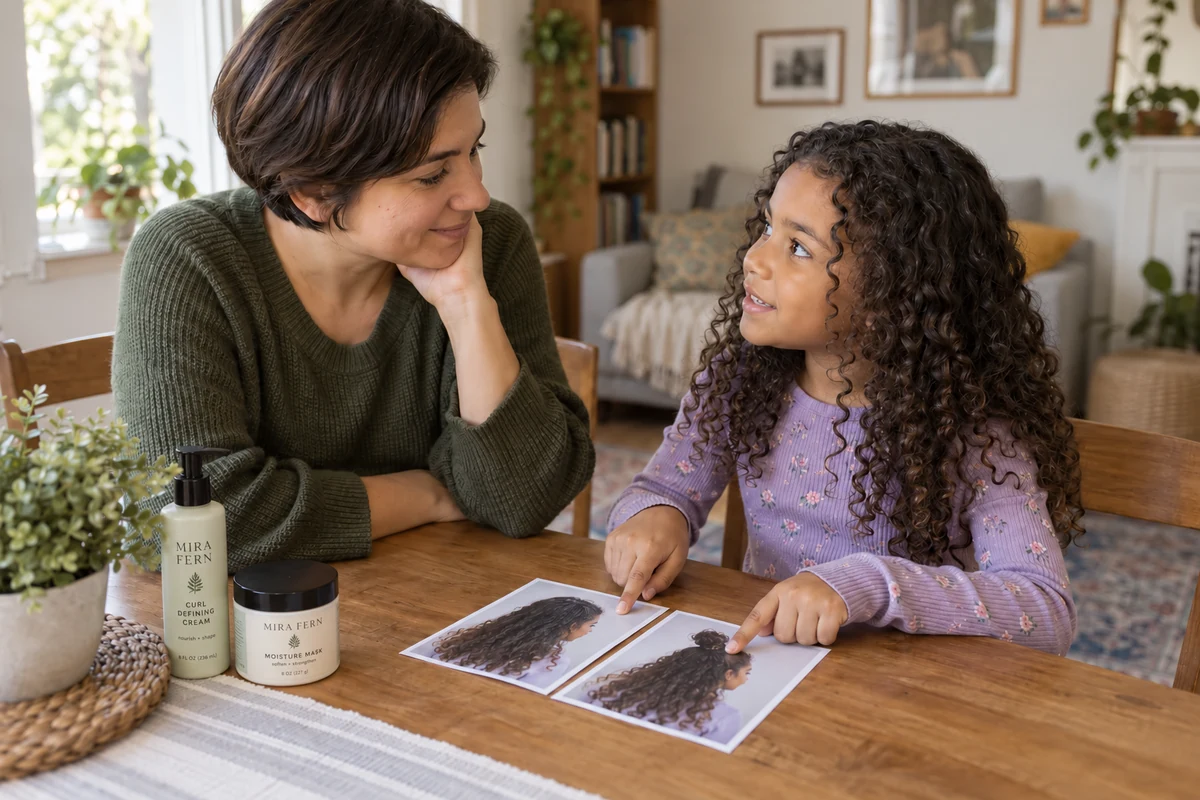
A child points to photographs of their own styles while a caregiver listens.

Start with what the child already knows

Ask which styles feel comfortable, which products they know and what wash day looks like. If a previous caregiver knows their hair, learn from them. Keep the practices and styles that matter to the child rather than replacing what’s new to you.

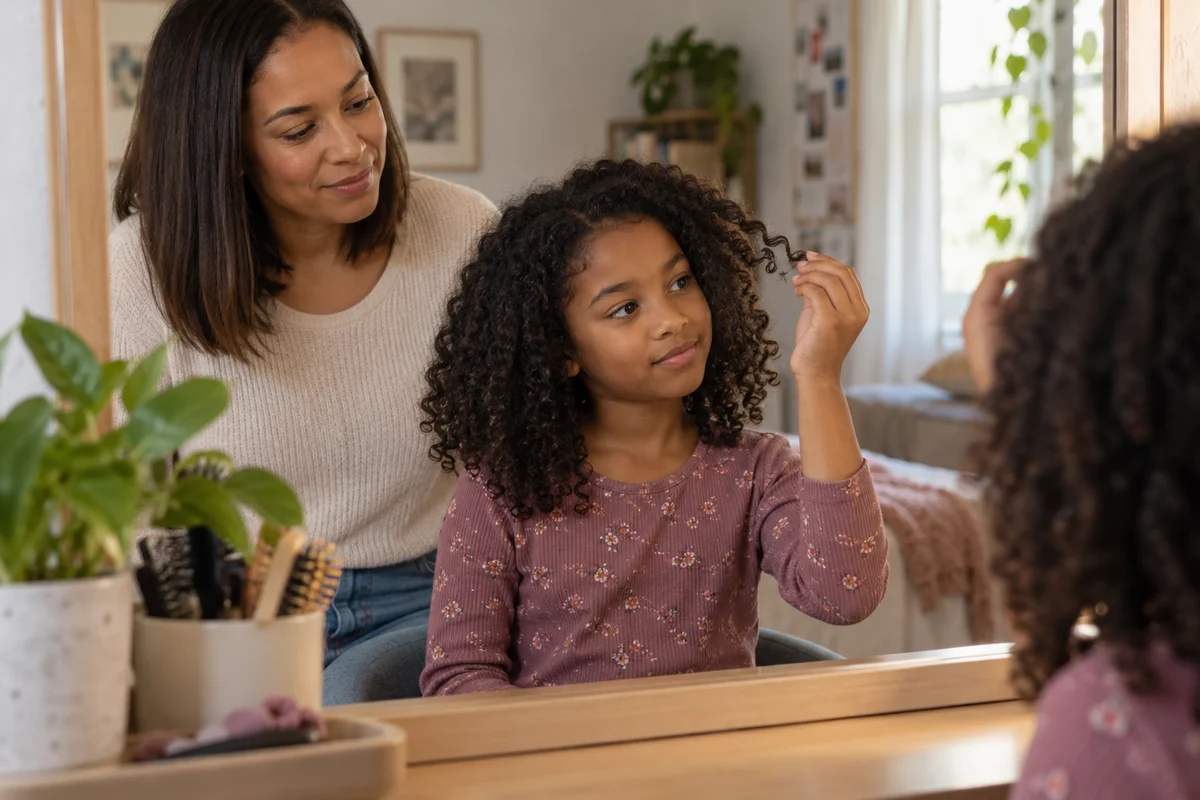
A child gently lifts a curl while a caregiver watches without handling the hair.

Look at this child’s hair, not a category

Notice the pattern, the length, where the tangles gather and how the hair behaves after washing. Neither their ethnicity nor your own hair is a recipe. Different parts of one head can behave differently, and learning those details beats chasing a single texture label.

What helps, day to day

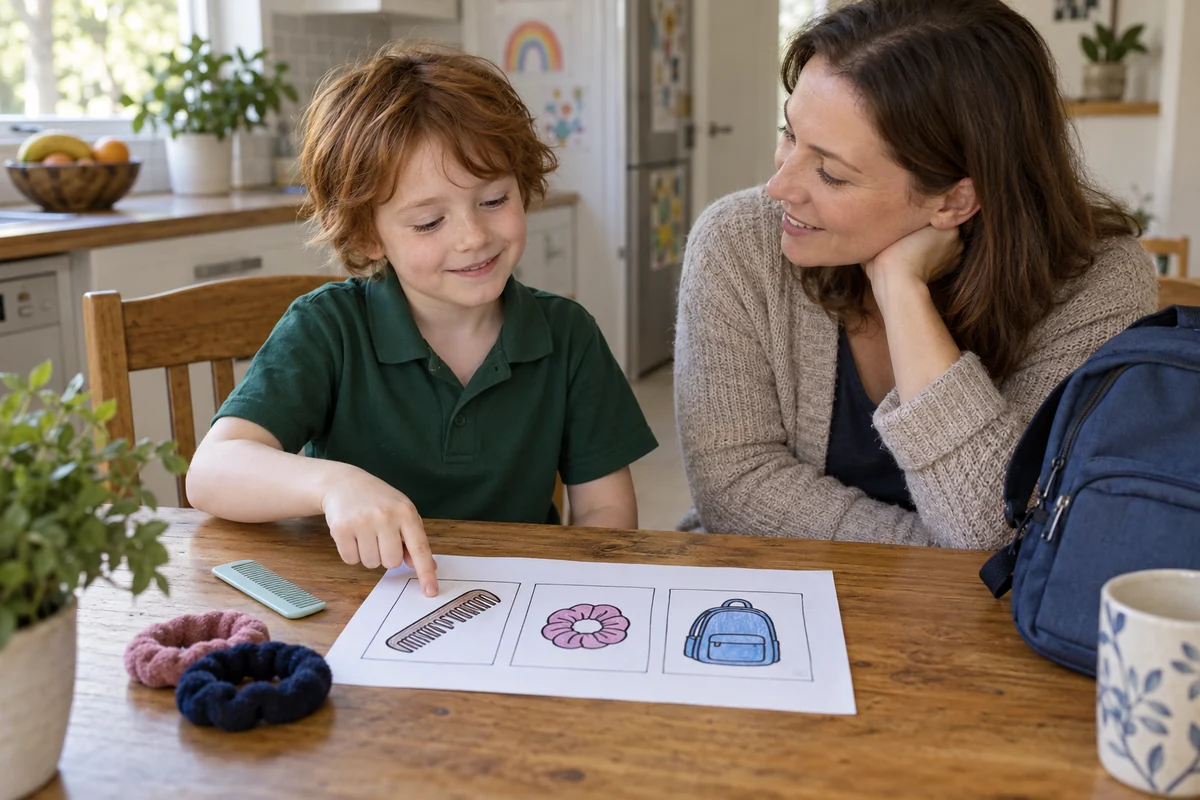
A child with short auburn hair points to a picture checklist while an adult listens beside a school bag.

The child is nervous about a new routine

  • Explain each step before you touch their hair, and agree on a signal that means pause.
  • Let them choose between two options you can both live with, or show you what they hate.
  • Stop if it hurts.
  • Learning this is your job, not theirs.
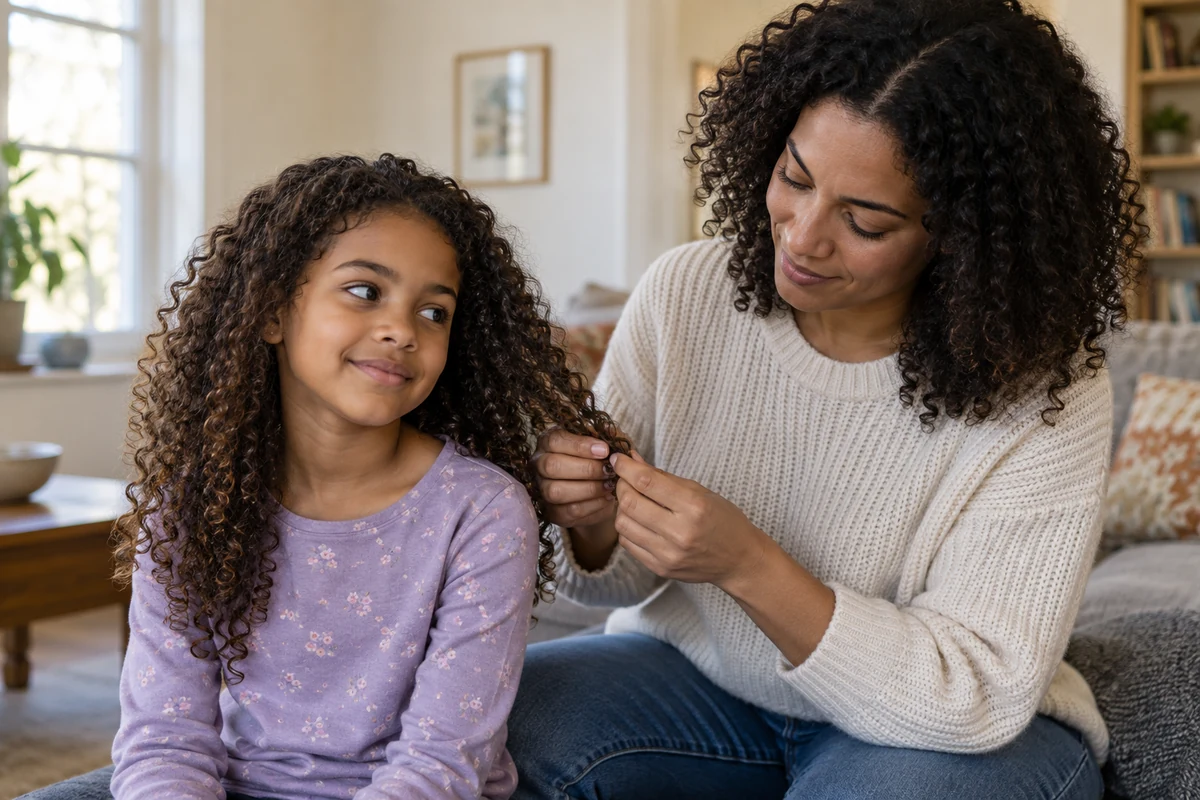
A caregiver supporting a small section of a child’s curly hair during gentle detangling.

Your usual brush just won’t go through

  • Don’t push harder with the same brush.
  • Use conditioner for slip and hold the section so the pull doesn’t reach the scalp.
  • If the technique is new to you, ask someone skilled to show you on a willing child.
  • A tight mat needs practiced hands, not force.
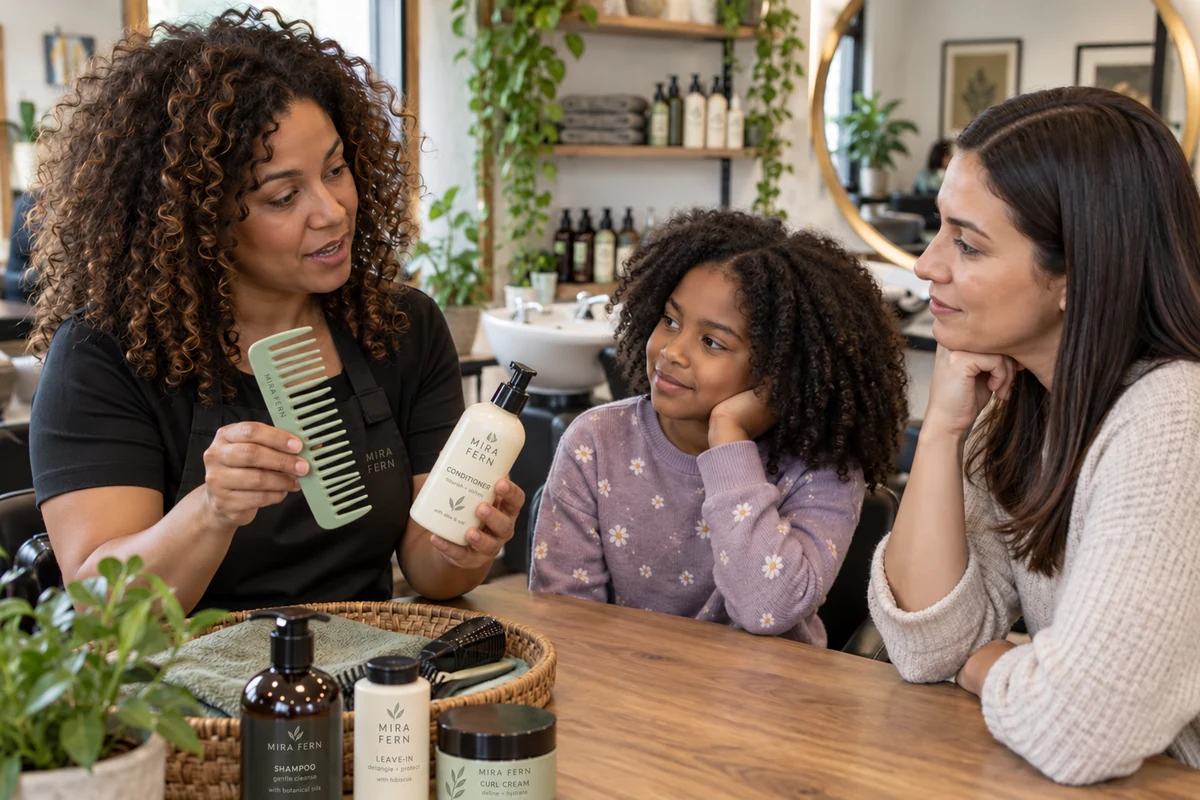
A stylist discusses a comb and conditioner with a child and caregiver at a salon.

You need someone to show you

  • Look for a stylist or barber who works with children and knows this pattern, length and style.
  • Ask them to walk you through a home routine you can manage, including how to get product out and when to stop.
  • Someone who shares the child’s background can help, but the child’s comfort still decides.

Products, by the job they do

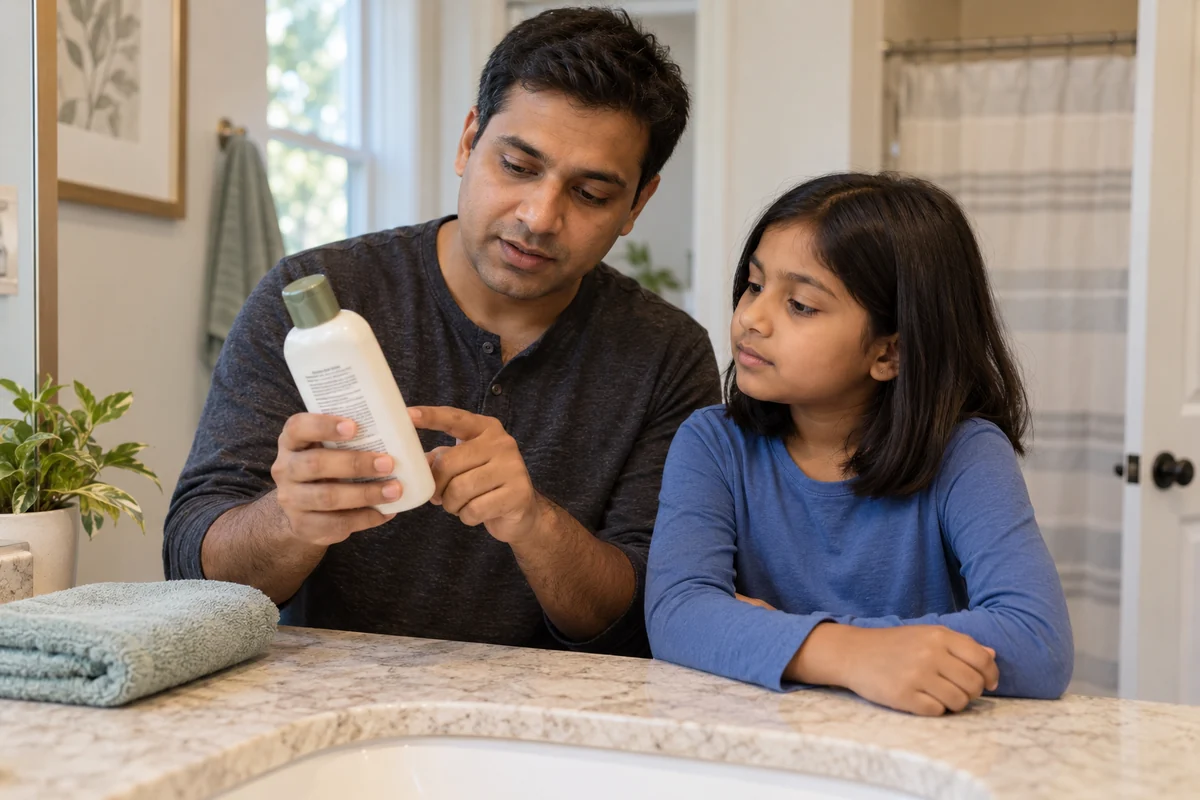
An adult and child look at the back label of a hair-care bottle together at a dry vanity.

Keep the shampoo they know while you learn

Before changing anything, check the product is meant for their age and suits their scalp. The stronger cleanser or adult treatment already in your bathroom isn’t the right choice just because it’s there.

Browse cleansing products. Your current shampoo, wash schedule and past treatments help guide a personal recommendation.

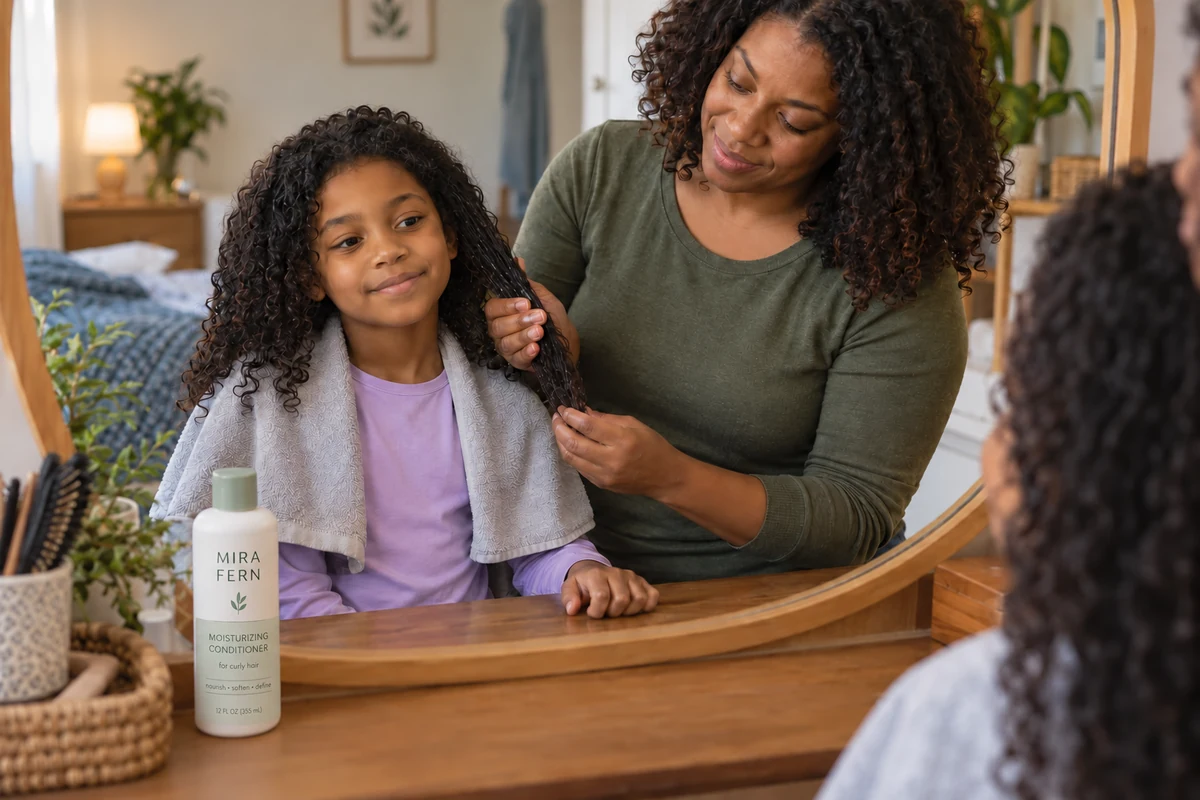
An adult supports a damp section of a child’s curly hair while smoothing conditioner through its lower lengths.

Slip for their lengths

A conditioner made for children can make dry or curly lengths easier to handle. Use the amount and rinse the label gives. Richer isn’t automatically better.

Browse rinse-out conditioners. The consultation uses your hair details and treatment history to compare conditioner options.

Build your own learning plan

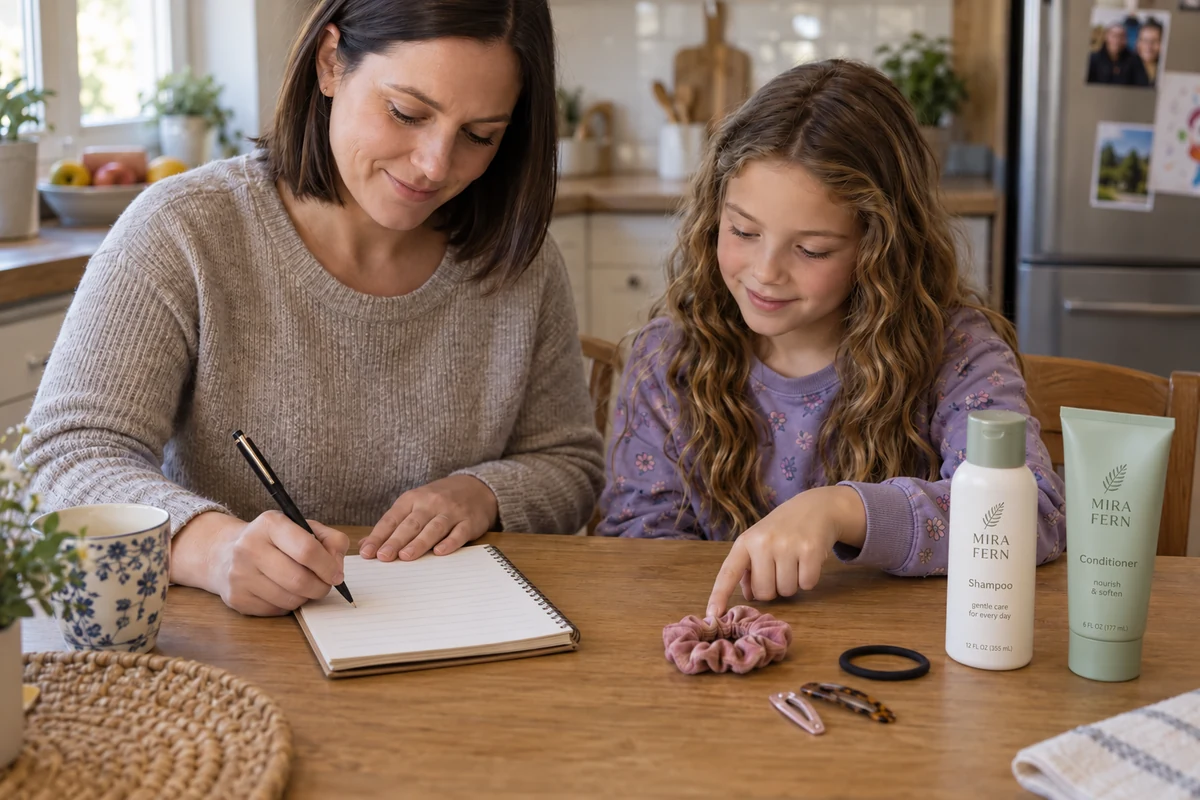
A caregiver begins a hair-care note while a child points to a preferred soft tie.

Write one plan anyone could follow

Keep the exact product names, what works for detangling, the styles the child likes and their pause signal in one place. Add what you still need to learn. A short, current note lets another caregiver carry on without the child explaining it all again.

A child points to the back of their dry hair while an adult watches during a practice session in a living room.

Learn one thing, then ask how it felt

Pick one skill to learn, with help and an adult present. Afterwards ask what felt easier and what didn’t. Keep their familiar care going while you practice. Photos or videos can help you remember, but only if the child agrees and they stay private.

Illustrated care examples: before & after

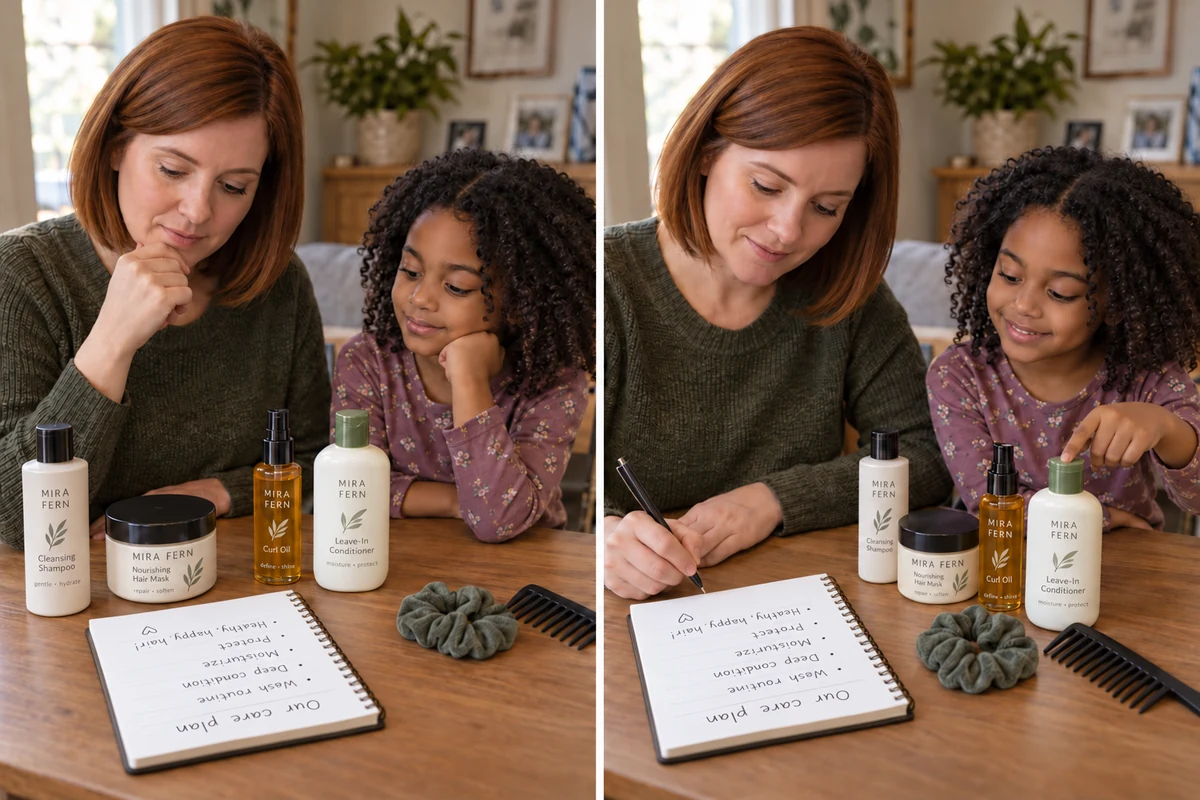
Start a shared care note

The same caregiver and child look at products, then begin a care note together.
Before · products, no shared planAfter care · a care note begun
The unfamiliar products are the same. What is new is a note, started by asking what already works and what the child finds comfortable.

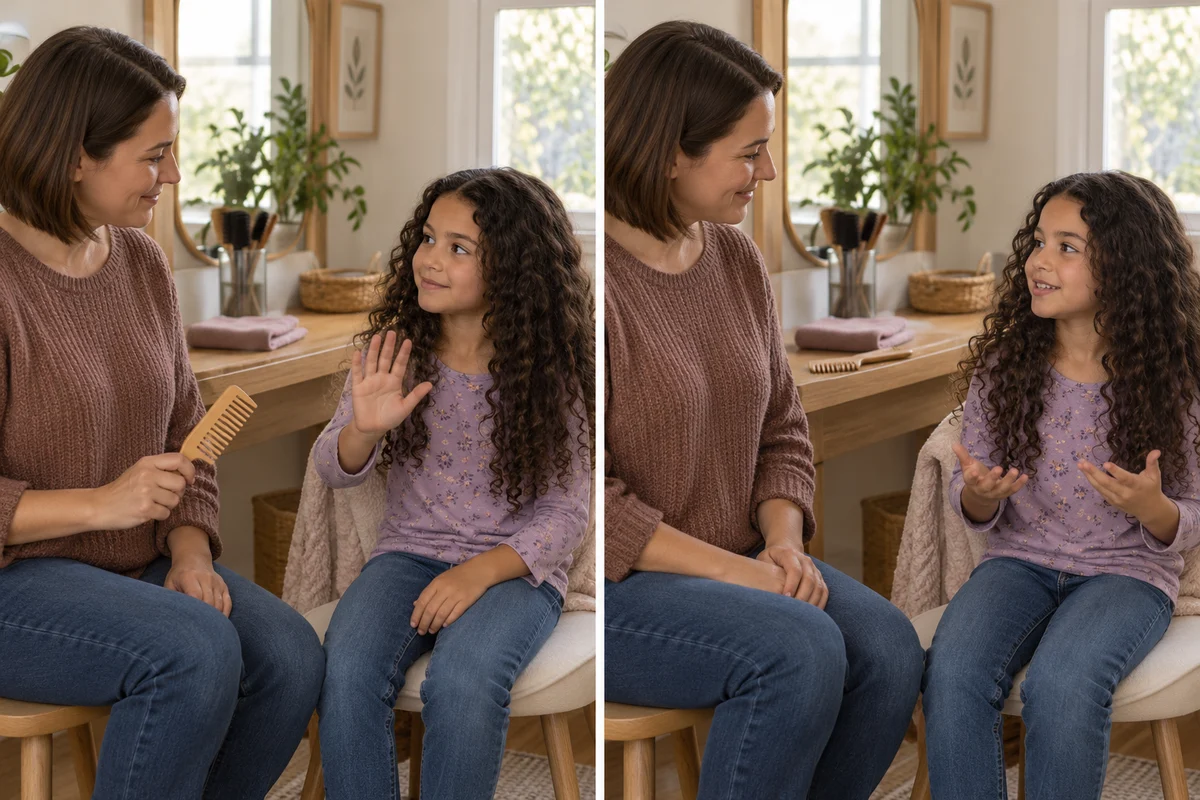
Stop when the child says so

The same child raises a hand, then talks while the caregiver sets the comb down.
Before · the child asks to pauseAfter care · the caregiver stops and listens
The child signals a pause and the hands come away. What happens next gets decided together, and no finished style is part of this pair.
A child takes a folded towel from a low linen shelf while a caregiver watches nearby.

Help with your hair-care routine

Bring your hair-care questions to the consultation. You can also read making a child’s tangles more manageable.

  • What should we keep doing while I learn the rest?
  • What’s different from how I do my own hair?
  • Who can show me without overriding what the child wants?

Tell us the child’s age, pattern, length, current style, anything you’ve noticed about their scalp and the routines they’re comfortable with. Add what you’re learning and who’s helping, so the plan fits this child rather than copying what you do for yourself.

The Hair Care Consultation gives you a personal plan with product recommendations, routines and guidance on your hair-care questions.

$49 with 60 days of follow-ups, or $99 with 12 months. Pay once; the year renews only if you choose.