Hair Care Guides

Your usual products aren’t on the shelf.
Replace the job, not the brand.

Standing in a foreign pharmacy aisle with none of your usual bottles is disorienting. Start with the job the missing product did, find something labeled for it, and read the package in front of you. A familiar name doesn’t mean the same formula.

Your personal hair-care planProduct choices, routines and answers shaped around your hair.$49one-timeStart my consultation
A woman with a gray wavy bob examines a bottle in both hands at a temporary apartment table beside a notebook and open suitcase.
Replace the job, not the brand.

What is going on

A woman uses a tablet displaying product directions beside a capped hair-care bottle at a dry desk.

Read the job and the directions together

Work out whether it cleanses, conditions, stays in or rinses out. Then read the actual ingredient list, the warnings and the directions. If you can’t read them well enough to trust them, ask the maker or pick something with directions you can follow.

A woman considering several hair-care bottles and jars on her bathroom counter.

Replace the one thing you’re missing

List what you still have and the one job you can’t do. A missing conditioner doesn’t mean your shampoo and styler need replacing too. A photo of your usual packaging helps you compare, though another country’s version may not be the same inside.

What helps, day to day

A woman writes notes beside a manual and a visibly unplugged dryer on a dry desk.

Two products look like the same thing

  • Compare what each says it does, how it’s rinsed and what hair it’s meant for.
  • Check the ingredients you avoid against the actual label, not the front of the box.
  • A similar name, color or scent description doesn’t mean a matching formula.
A man seated at a dry dressing table with both forearms resting on a folded towel beside a mirror, comb and bottles.

You still can’t read the instructions

  • Leave it unopened until you can get directions you trust.
  • Don’t guess a dilution, an amount or a timing from a different product.
  • Medicines, hair color and chemical services need their own exact directions, so don’t improvise substitutes for those.
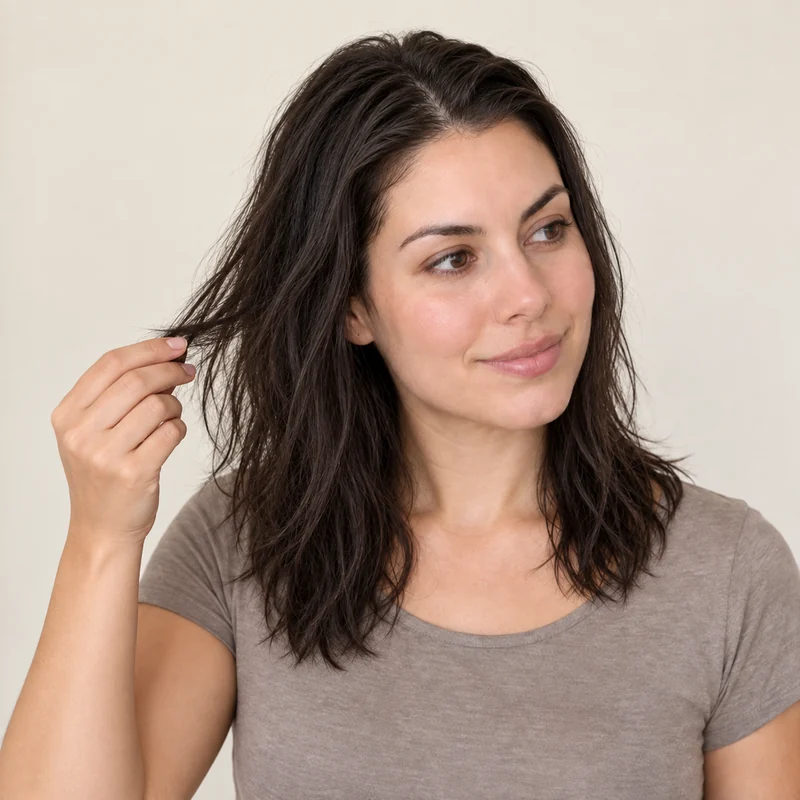
A woman gently feeling a section of her loose hair with her fingers, with no visible product.

The replacement feels different

  • Note what you used and how your hair felt after using it as directed.
  • With an everyday styler, check the amount the label allows before adding another layer.
  • If anything stings or itches, rinse it off and stop. Finishing the experiment isn’t worth it.

Products, by the job they do

A woman massaging shampoo lather onto her scalp with her fingertips.

Match the cleansing job

Look for a shampoo with clear directions that fit the washing you can actually do where you are. A prescribed scalp treatment is its own thing, and choosing an everyday shampoo doesn’t replace it.

Browse cleansing products. Bring the shampoos you are choosing between to the consultation, along with what you liked or disliked about them.

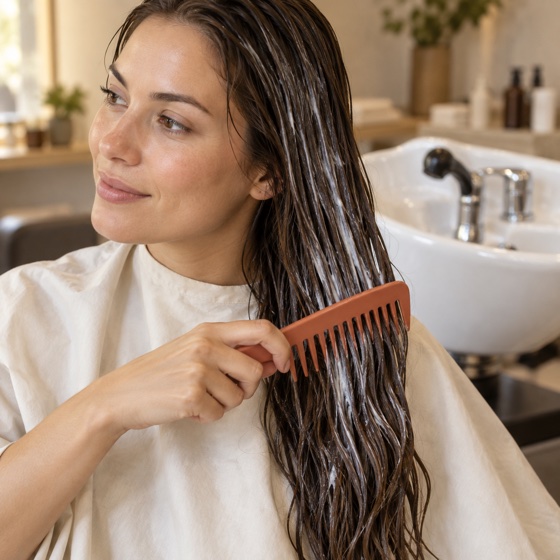
A woman detangling conditioned hair with a wide-tooth comb.

Confirm the conditioning step

Check whether the replacement rinses out or stays in, and where it goes. Use it the way the label says. Two conditioners can feel identical in the bottle and still not be interchangeable on your hair.

Browse rinse-out conditioners. Tell the consultation what you want from a conditioner and what you disliked about previous ones.

How to do it

Supporting dry ends while distributing a small amount of styler.

1. Learn from one everyday styler

If the label allows a range of amounts, change the amount a little within that range and compare the finish once it’s settled. Keep everything else the same. Don’t do this with anything that has a fixed dose or with a chemical treatment.

Guide: Adjust styling product amount

Illustrated care examples: before & after

Down to two candidates

A man with long curls sits before several containers, then just two standing on the table with the others gathered in a pouch.
Before · several containers to considerAfter this step · two set apart to check
Two containers pulled out for a closer look at what they do and how they are used. Looking alike is no sign the formulas match.

The swap, written down

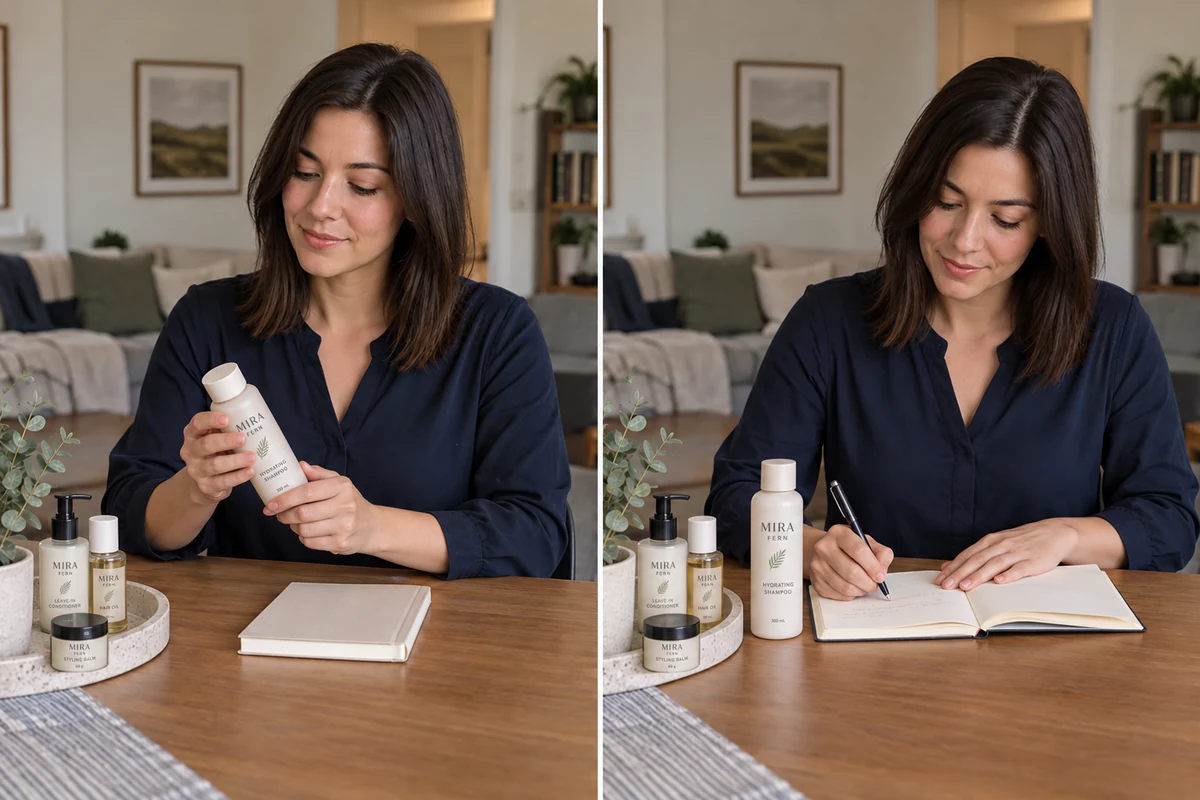
A woman examines a bottle beside a closed notebook, then sets the bottle down and writes in the open notebook; other containers remain on a tray.
Before · reading a new bottleAfter this step · its name noted beside it
Write down what you bought and how its label says to use it, so the next comparison means something. Still read the package and keep your usual limits.
A woman with curls writing a routine note beside her hair-care products.

Help with your hair-care routine

Bring your hair-care questions to the consultation. You can also read choosing products for a clear job.

  • Which job am I actually missing?
  • Can I read this label well enough to use it?
  • What should I leave alone while I try the new one?

The plan uses the hair and scalp details you share, past treatments, current products, preferences and the time and budget you have.

The Hair Care Consultation gives you a personal plan with product recommendations, routines and guidance on your hair-care questions.

$49 with 60 days of follow-ups, or $99 with 12 months. Pay once; the year renews only if you choose.