Hair Care Guides

Wind finds every loose piece.
Contain what matters and keep the roots relaxed.

Wind blows the short pieces into your face and tangles the lengths at your nape, and fighting it on the move makes you tug the style tighter. Decide what needs containing before you go out, then fix it somewhere sheltered. Some movement is fine.

Your personal hair-care planProduct choices, routines and answers shaped around your hair.$49one-timeStart my consultation
An adult in a rust jacket wears a loose side braid on a breezy park path, with a few front strands still moving.
Contain what matters and keep the roots relaxed.

What is going on

An adult with a chin-length wavy bob lightly gathers front pieces back while standing in a sheltered doorway.

Short front pieces and the long tail are two problems

A ponytail holds the length but leaves the short front layers free to fly, and the tail still swings. Work out which part bothers you. Use only a tie or clip those pieces can reach. Pulling the whole style tighter won’t make short layers longer.

Lowering a soft beanie gently over dry hair.

A hat helps with some of it

A hat can tame some loose pieces, as long as it’s comfortable and suits what you’re doing. Check what still hangs below it. If you wear a helmet or other required headgear, its fit comes first, so don’t pad it out with extra hair.

What helps, day to day

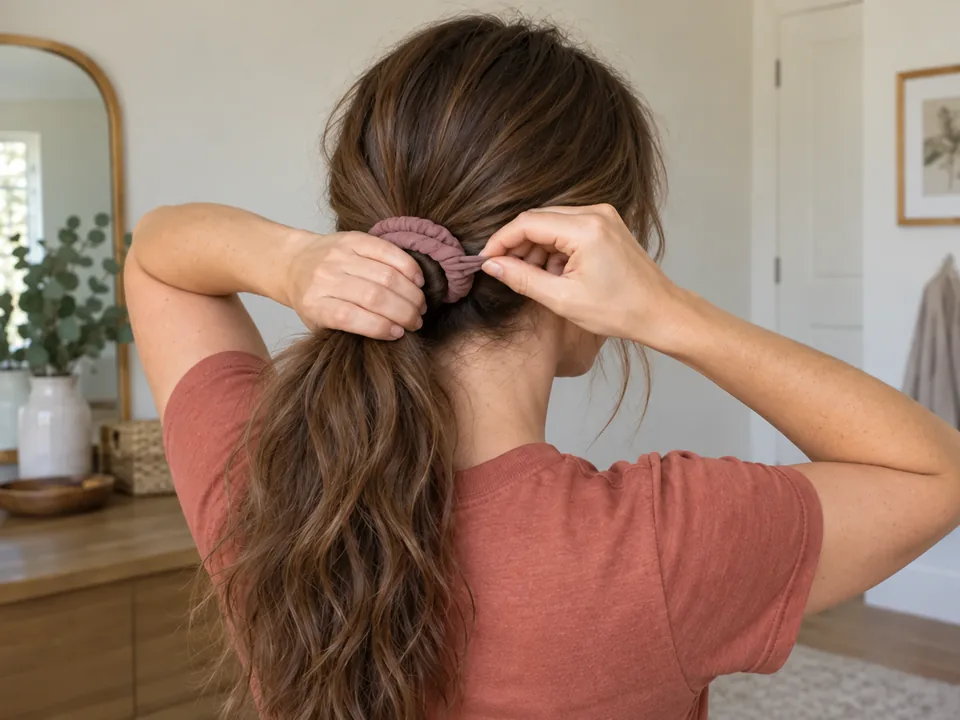
A woman supports her low ponytail with her left hand while her right fingers release the opened loop of a mauve fabric scrunchie around the base.

The tail keeps whipping across your face

  • Before you go out, put dry lengths into a loose braid or another contained style you know.
  • After tying it, check the roots aren’t pulling.
  • If the wind keeps undoing it, stop somewhere sheltered and redo it. Tightening it on the move just hurts.
A woman with long gray-streaked waves holds the lengths forward, clear of the open front of her winter coat.

The nape tangles as the layers move

  • Lift the hair clear whenever you put on or take off a collar, scarf or bag. The wind moves where the lengths sit, so check more than once.
  • Keep a braid or tail clear of zips and buckles too.
  • If the nape tangles every time, braid it before you leave.
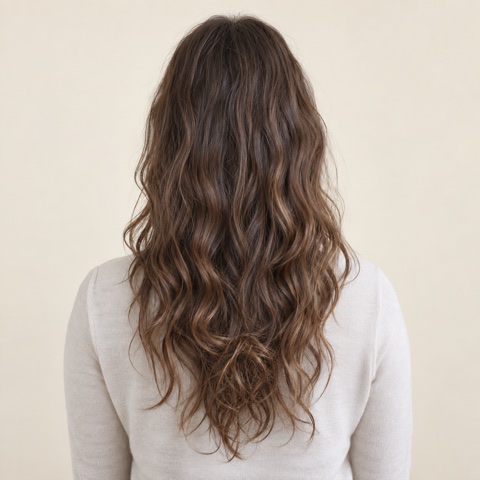
Wavy hair with tangles concentrated near the ends.

You come in with a tangled mess

  • Take off the hat or scarf gently before you touch the hair.
  • Hold a small section and work from the ends, stopping where it resists. Don’t brush through the whole lot at once.
  • If dry detangling pulls or wrecks your curls, leave it for your next conditioned detangle.

Products, by the job they do

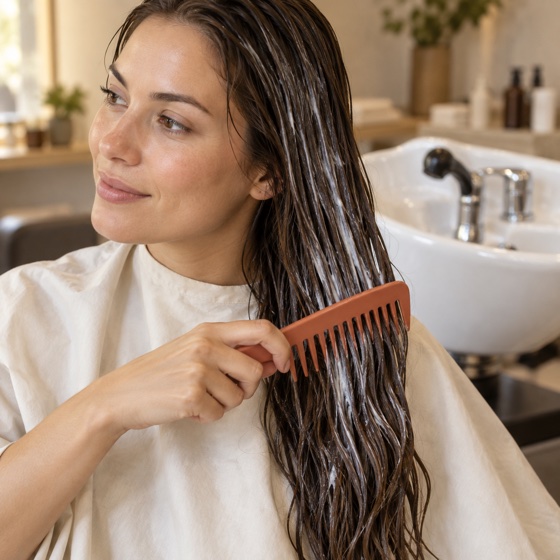
A woman detangling conditioned hair with a wide-tooth comb.

Keep enough slip in the lengths

Where the tangles collect, your pattern and any treatment on the hair affect which conditioner suits you. Small sections, and never force a knot, however much conditioner is on it.

Browse rinse-out conditioners. Your tangles, past treatments and preferred finish help guide a personal conditioner recommendation.

A woman cupping a damp curl section with styling gel on her hands.

Hold for the finish you like, not a force field

A styler can support the finish you like, but nothing keeps hair completely still outdoors. Think about what you already use, how soft you want it and how easily it brushes out later. Don’t keep brushing through a stiff cast chasing windblown pieces.

Browse styling products. Tell the consultation how much hold you want and which stylers you have tried.

How to do it

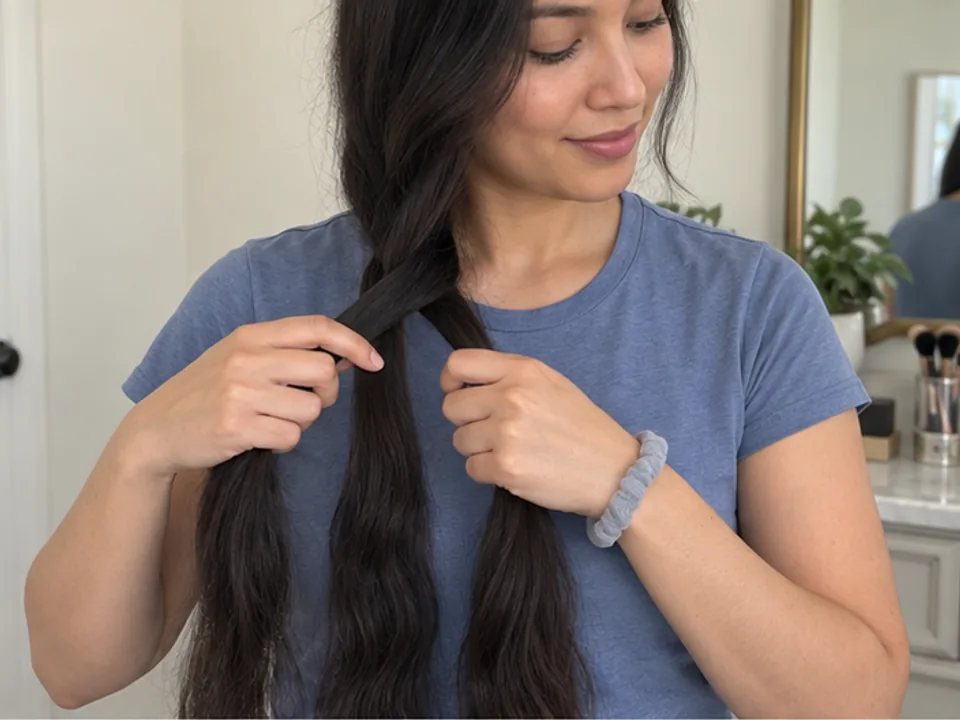
A woman begins a side braid by moving one outside section over the middle, keeping three sections separate.

1. Braid it loosely before you leave

Use dry, loose hair that reaches over one shoulder without pulling. Keep the first crossing relaxed and secure the ends comfortably. A braid contains the length for most outings. It isn’t armour, so judge whether it suits what you’re doing.

Guide: Make a loose everyday braid
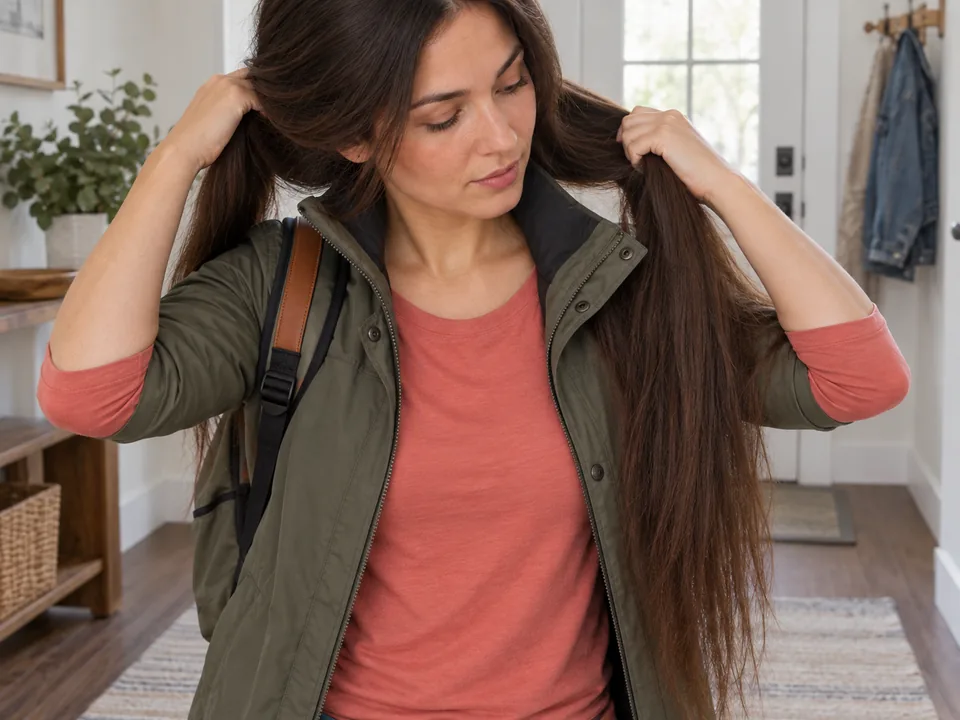
Both hands lift long hair clear before a collar and backpack strap touch the nape.

2. Check the nape whenever clothing changes

Start with dry hair and bring the nape clear of collars and straps. If dry handling disturbs your curls, do the detangling in your usual conditioned routine first. Stop at a fixed or painful mat rather than dragging a comb through it.

Guide: Prevent nape tangles while wearing long hair down

Illustrated care examples: before & after

Loose or braided in wind

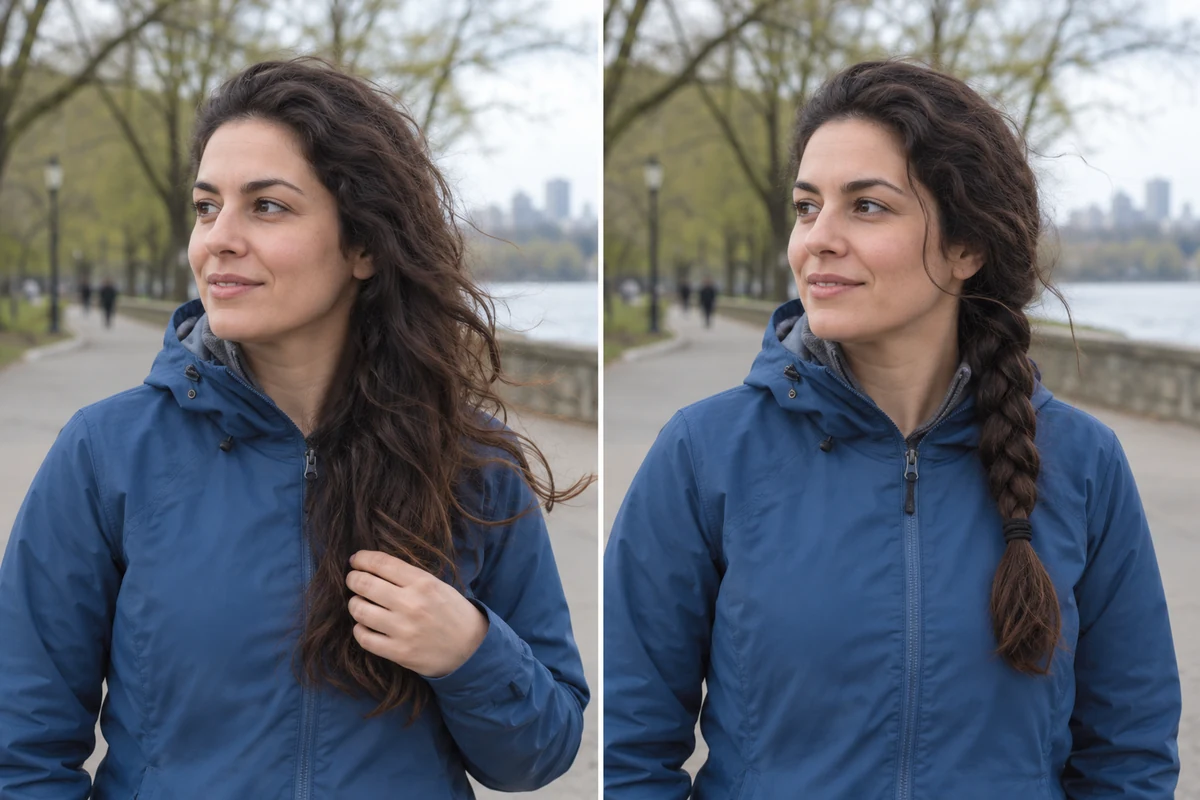
The same adult in a blue jacket has loose windblown lengths in one panel and a loose side braid in the other.
Before · loose lengths blowingAfter styling · lengths in a loose braid
A loose braid keeps the lengths together in the wind, though the front wisps still fly. It is not windproof and the photos say nothing about damage.

Ends supported, not pulled

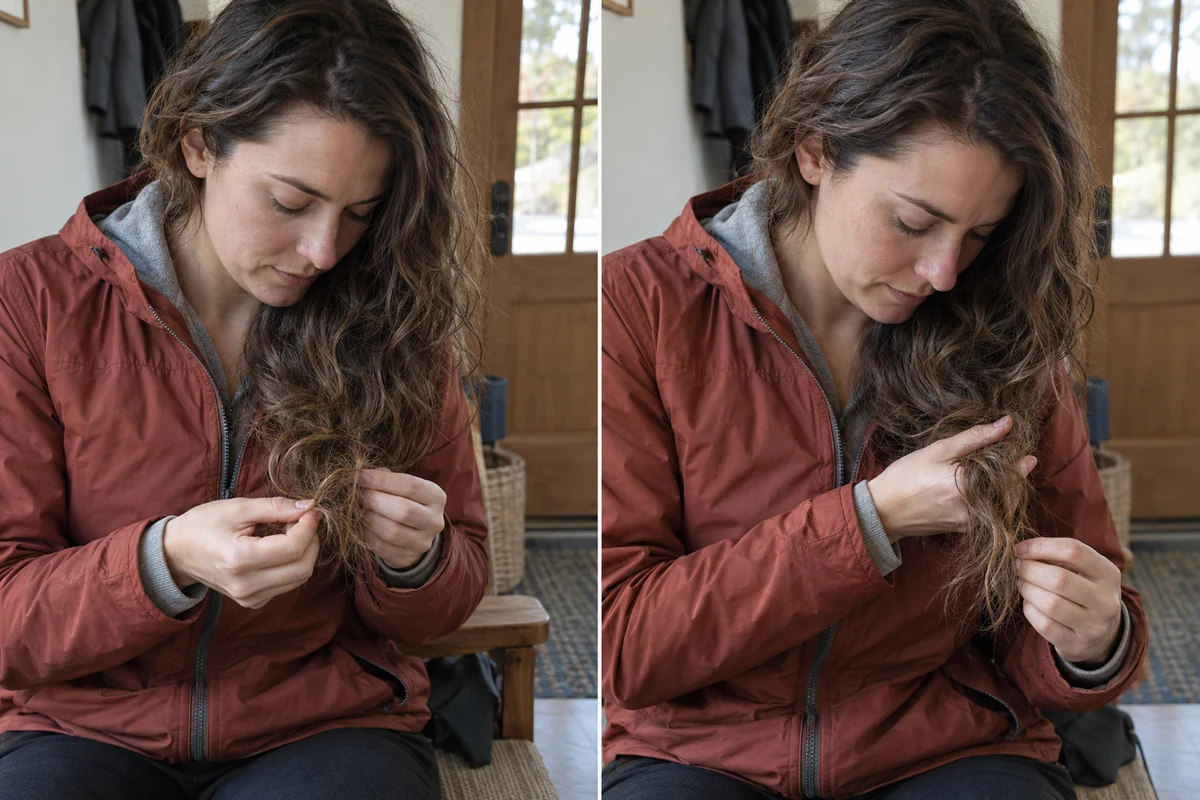
An adult first identifies a small tangled lower section, then supports the section above it while easing a few ends apart.
Before · finding the tangled sectionAfter care · ends held and eased
Back indoors, the tangled section is found and then supported while the ends are eased. The knot isn’t out yet, and a stubborn one is never forced.
A woman with curls writing a routine note beside her hair-care products.

Help with your hair-care routine

Bring your hair-care questions to the consultation. You can also read keeping long lengths clear of clothing and bags.

  • Is it the front pieces, the tail or both that the wind gets?
  • Where can I stop and sort my hair out?
  • What will make coming back indoors less of a tangle?

Tell us what you do outdoors, how long and layered your hair is, how windy it usually gets and where the tangles form. The plan can match a style that stays put with conditioning and hold that suit your finish.

The Hair Care Consultation gives you a personal plan with product recommendations, routines and guidance on your hair-care questions.

$49 with 60 days of follow-ups, or $99 with 12 months. Pay once; the year renews only if you choose.