Hair Care Guides

Hair care with low vision.
Make bottles and directions easier to identify.

Tiny labels and lookalike bottles can make hair care frustrating. Choose markers you can distinguish and directions you can read or hear. Keep supplies in familiar places, check each product before use, and choose the help you want.

Your personal hair-care planProduct choices, routines and answers shaped around your hair.$49one-timeStart my consultation
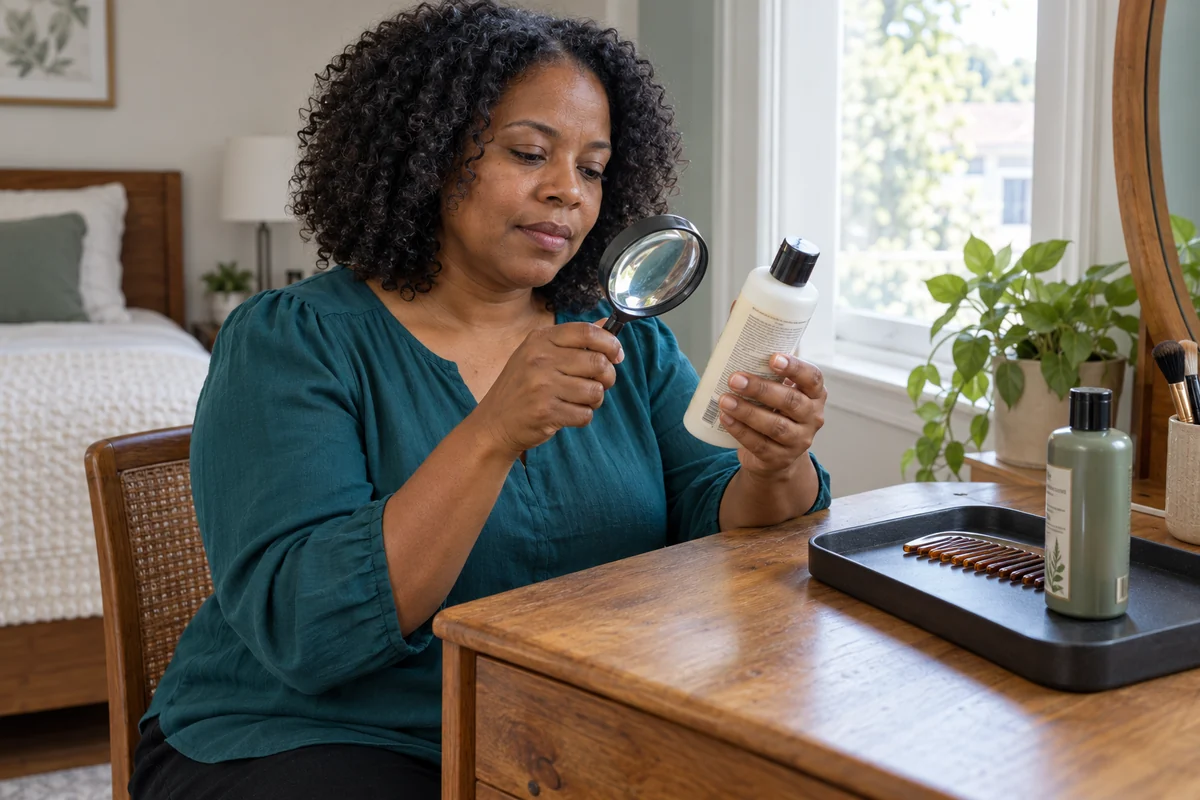
A woman holds a magnifier over the label of a hair-care bottle at a dry dressing table.
Make bottles and directions easier to identify.

Set up labels and directions

A woman uses a tablet displaying product directions beside a capped hair-care bottle at a dry desk.

Choose a usable format for directions

Try larger print, magnification, audio or braille if you use it. Adjust the light and reading position to reduce glare. A phone or tablet can hold directions to enlarge or hear; read them somewhere dry before handling wet bottles.

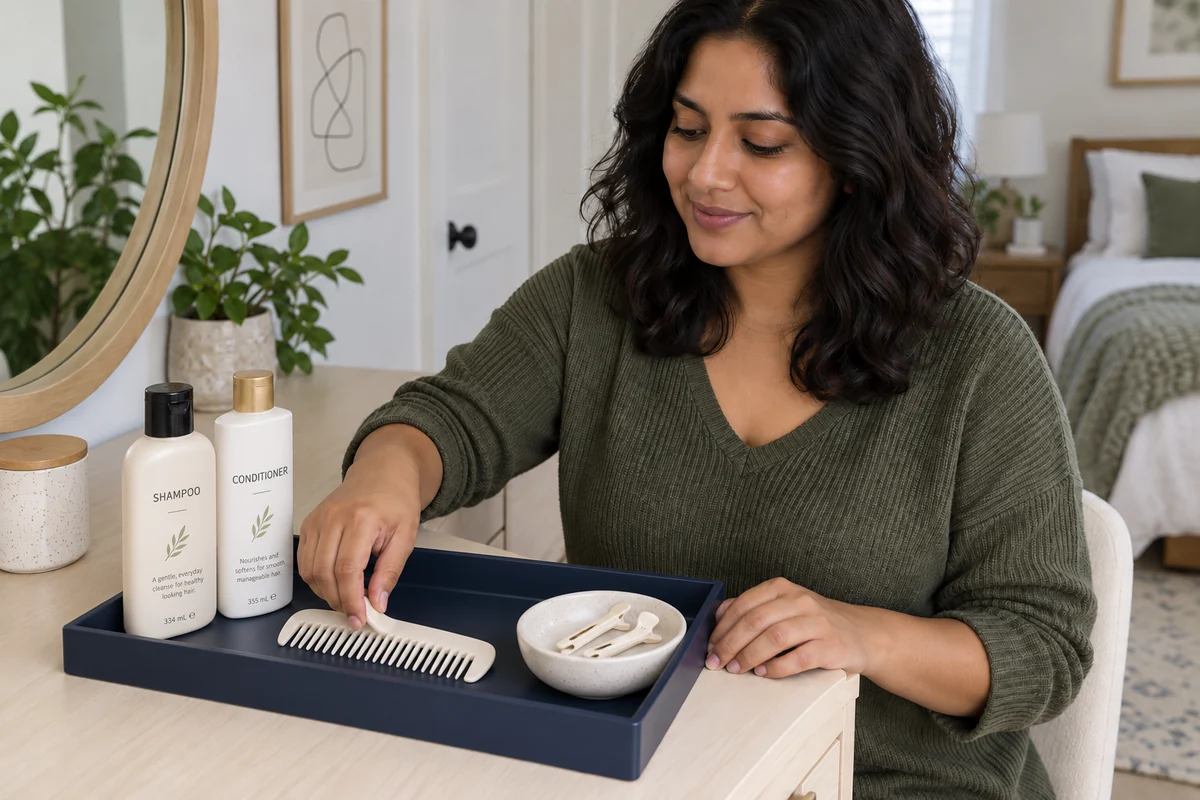
A woman returns a pale comb to a dark tray containing capped shampoo and conditioner bottles and a bowl of clips.

Keep each item in a consistent place

Choose a spot for each bottle and tool, and ask others to return it there. A plain tray that contrasts with the items may help. Check the product label or marker before use, even when the bottle is in its usual place.

What helps, day to day

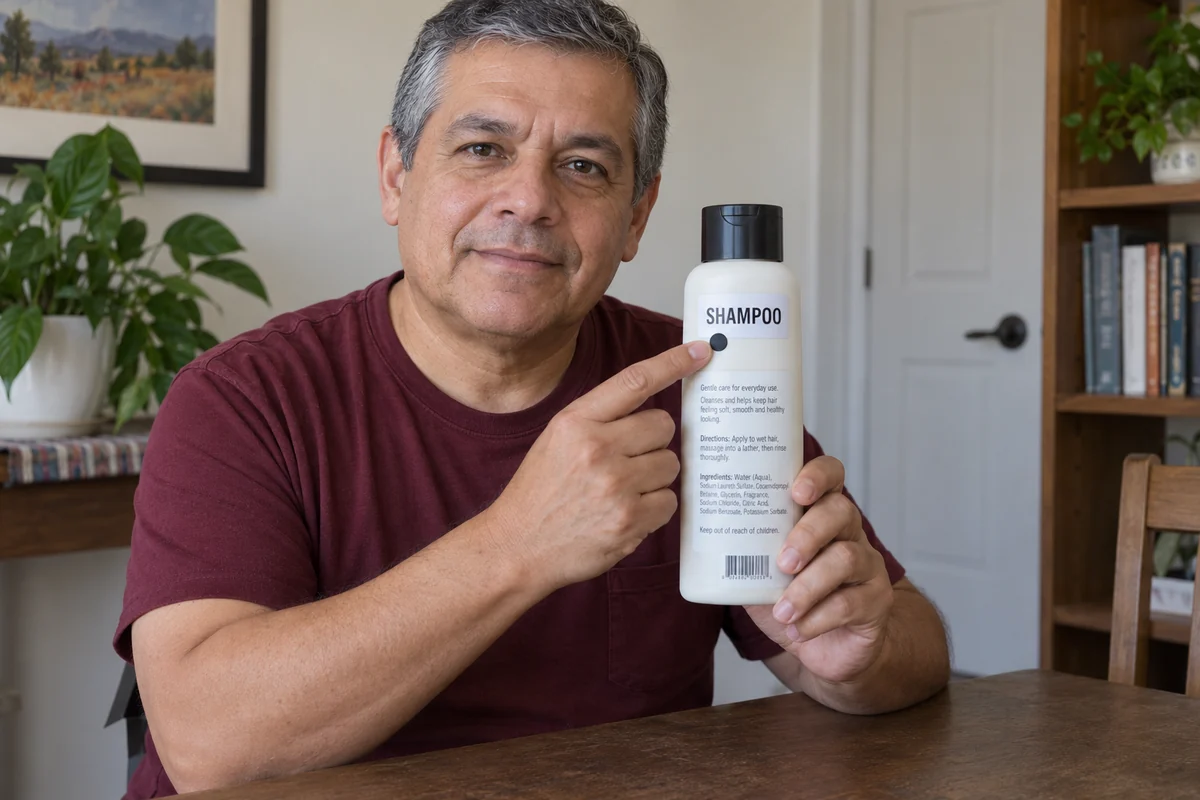
A man touches a raised marker below a bold shampoo label on a bottle with its original information still visible.

Give products distinct markers

  • Confirm each product, then add a raised marker, band or large-print label you can distinguish.
  • Keep the original name, directions and warnings uncovered.
  • Save what each marker means.
  • If a marker moves, loosens or becomes unclear, confirm the product before using it.
A woman with curls writing a routine note beside her hair-care products.

Save directions and check replacements

  • Save the exact name, instructions and warnings in your preferred format, including where to apply it and whether to rinse.
  • Ask the maker for accessible directions or someone to read them with you.
  • Check replacement bottles for changes before adding your markers.

Products, by the job they do

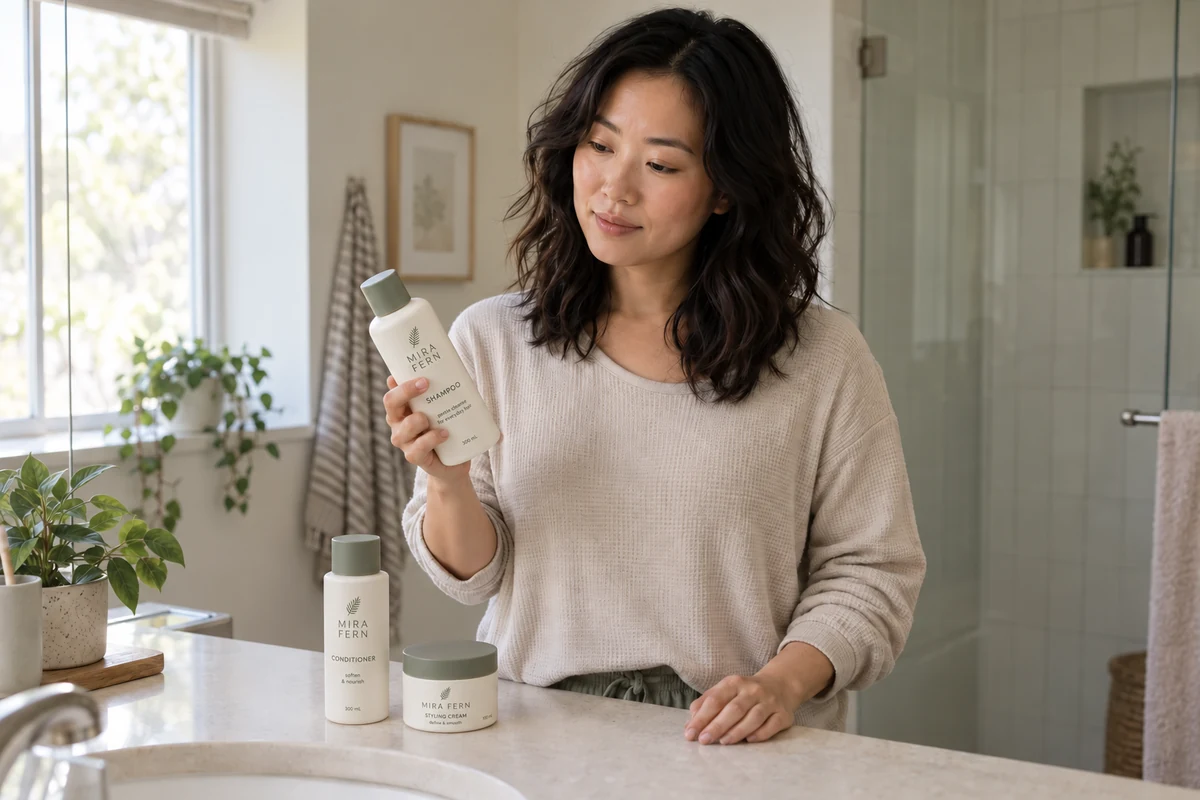
A woman choosing a bottle from a small everyday hair-care set.

Choose shampoo you can identify and dispense

Your scalp still sets the shampoo choice. Choose a bottle you can identify, grip and open. Try its cap or dispenser before washing. If it’s difficult, look for different packaging or arrange help dispensing it.

Browse cleansing products. Bring the shampoos you are choosing between to the consultation, along with what you liked or disliked about them.

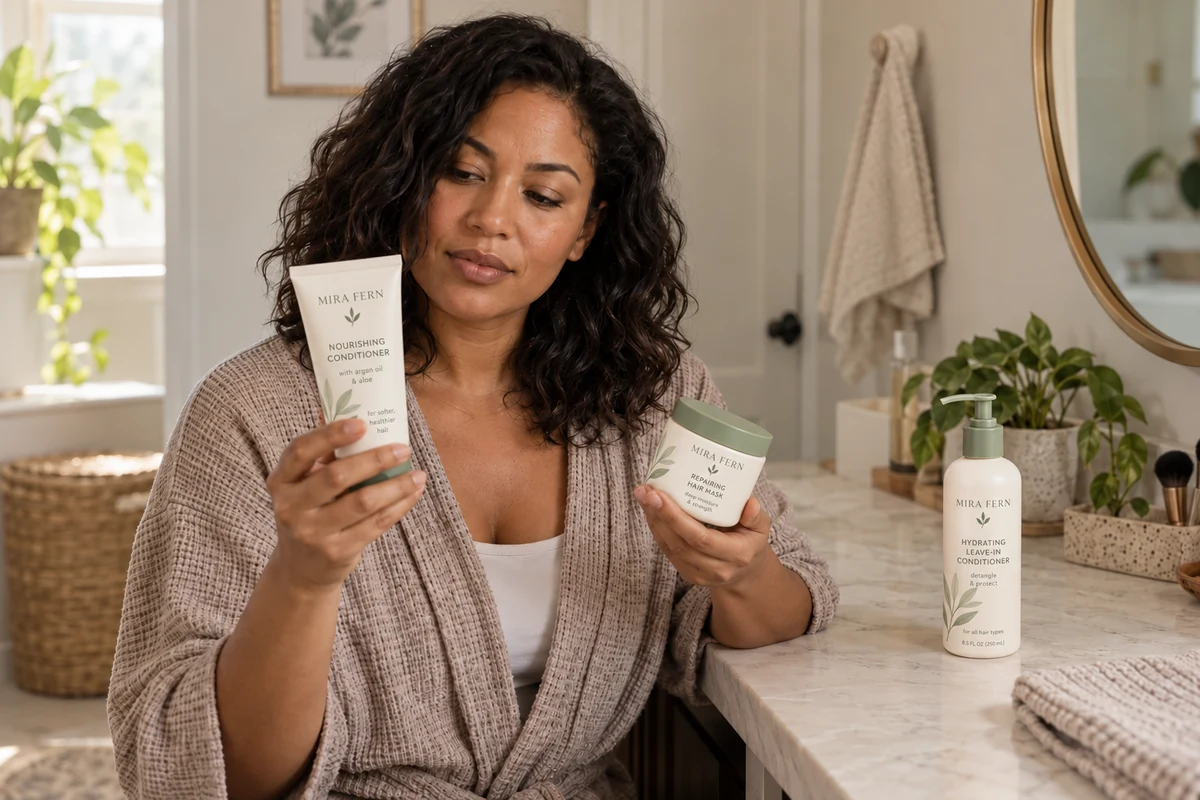
A woman compares a conditioner tube and hair mask jar beside a leave-in bottle.

Distinguish rinse-out and leave-in products

Keep rinse-out conditioner and leave-in under different markers, with their directions saved separately. Check the name or marker before dispensing, then use the saved directions to confirm whether to rinse it out.

Browse rinse-out conditioners. Tell the consultation what you want from a conditioner and what you disliked about previous ones.

Sectioning by touch

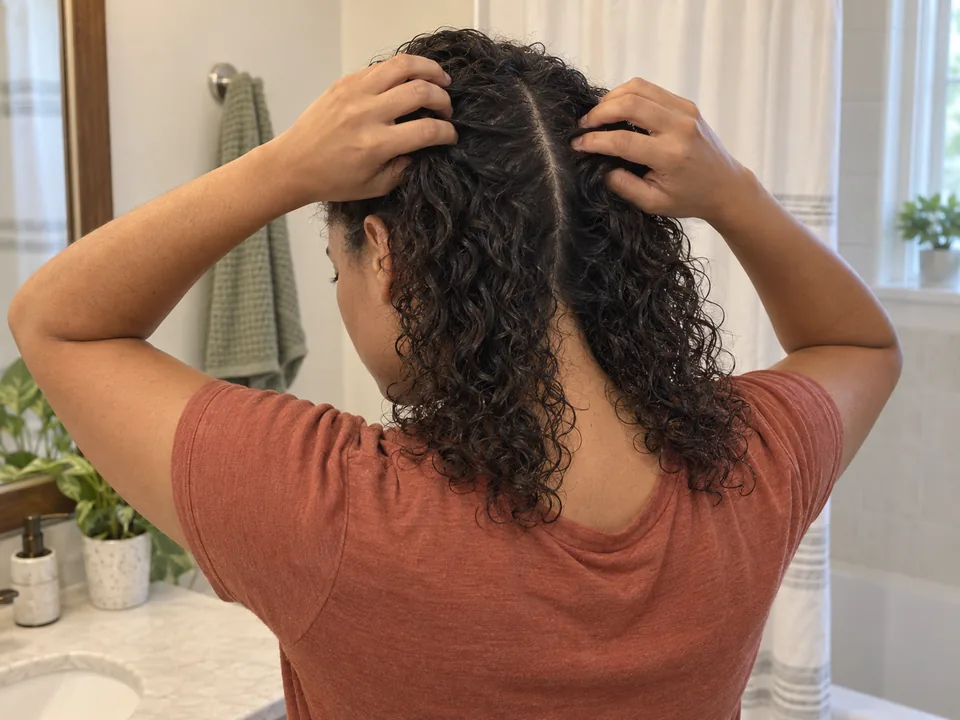
A woman uses both hands to separate her own damp curls along a rough part toward the back of her head.

Work in an order you can follow

Use fingertips to separate hair that comes apart without pulling; a neat part is unnecessary. For example, work from front to back on one side, then the other. Put removed clips in one place and check that none remain when finished.

Guide: Section your hair for washing and styling

When to get help

A woman and a medical professional seated together, looking at a calendar.

Signs that need more than routine care

  • A vision rehabilitation professional can help adapt tasks and labels to how you use your vision. If you want help with a visual check, agree on what to check and describe, such as product remaining in the hair or an irritated scalp area.
  • Persistent scalp pain, sores or irritation, or a new patch of hair loss, are reasons to see a medical professional. Describe how it feels even if you can’t see or photograph a change.

Illustrated care examples: before & after

Bands you can feel

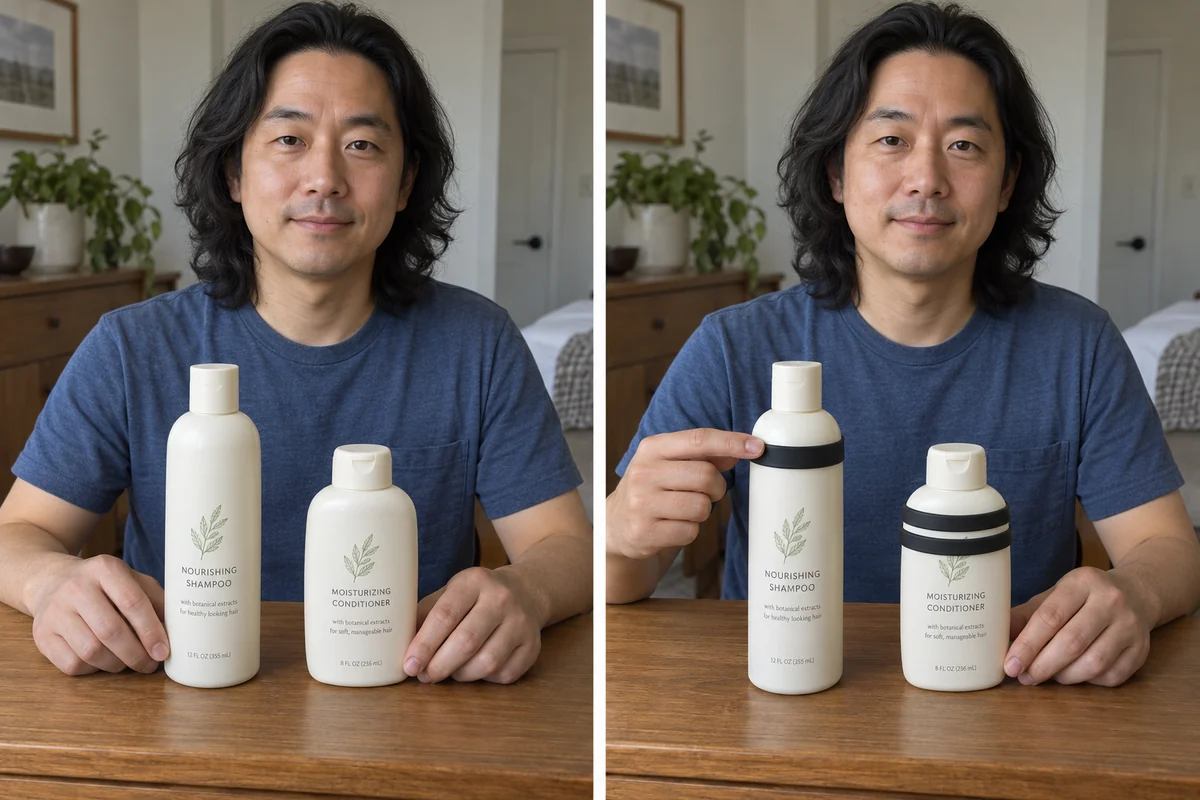
Two views of the same man and bottles: first without added markers, then touching a bottle marked with one tactile band beside another with two.
Before · matching bottles, no markersAfter labelling · one band and two bands
One band and two bands are one way to distinguish bottles. Confirm each product first, save what your markers mean and replace any marker you can no longer identify.

Tools on a contrasting tray

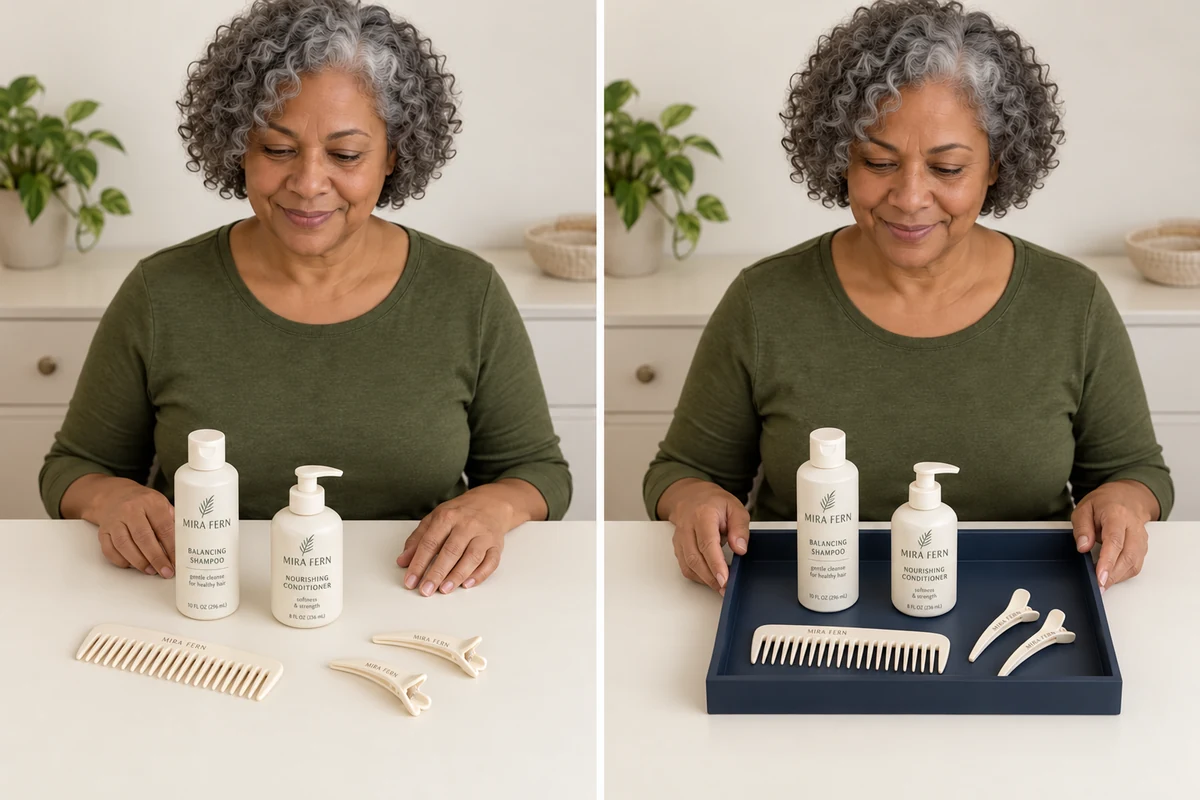
Two views of the same woman and hair-care items: first separate on a pale surface, then organized together on a dark tray.
Before · pale items, pale surfaceAfter organizing · together on a contrasting tray
The same items, now together on a tray that stands out from the counter. Pick a layout you can find easily, and ask others to put things back.
A woman gently squeezing damp hair with a towel.

Help with your hair-care routine

Bring your hair-care questions to the consultation. You can also read building a simpler hair-care routine.

  • What’s the easiest way to tell my bottles apart?
  • How do I keep my setup the same when other people use the bathroom?
  • Which steps do I want to do myself, and which with help?

Tell us which labels and directions you can use, which steps are difficult, and what help you want. The consultation can consider those details alongside your scalp, hair pattern, length and treatments when suggesting products and routines.

The Hair Care Consultation gives you a personal plan with product recommendations, routines and guidance on your hair-care questions.

$49 with 60 days of follow-ups, or $99 with 12 months. Pay once; the year renews only if you choose.