Hair Care Guides

Your hair is changing, and that’s normal.
Your routine can change with it.

In your teens your scalp can start getting oily faster, while the rest of your hair still needs the same care. It can feel like your old routine stopped working. It just needs adjusting, and needing help with that is nothing to be embarrassed about.

Your personal hair-care planProduct choices, routines and answers shaped around your hair.$49one-timeStart my consultation
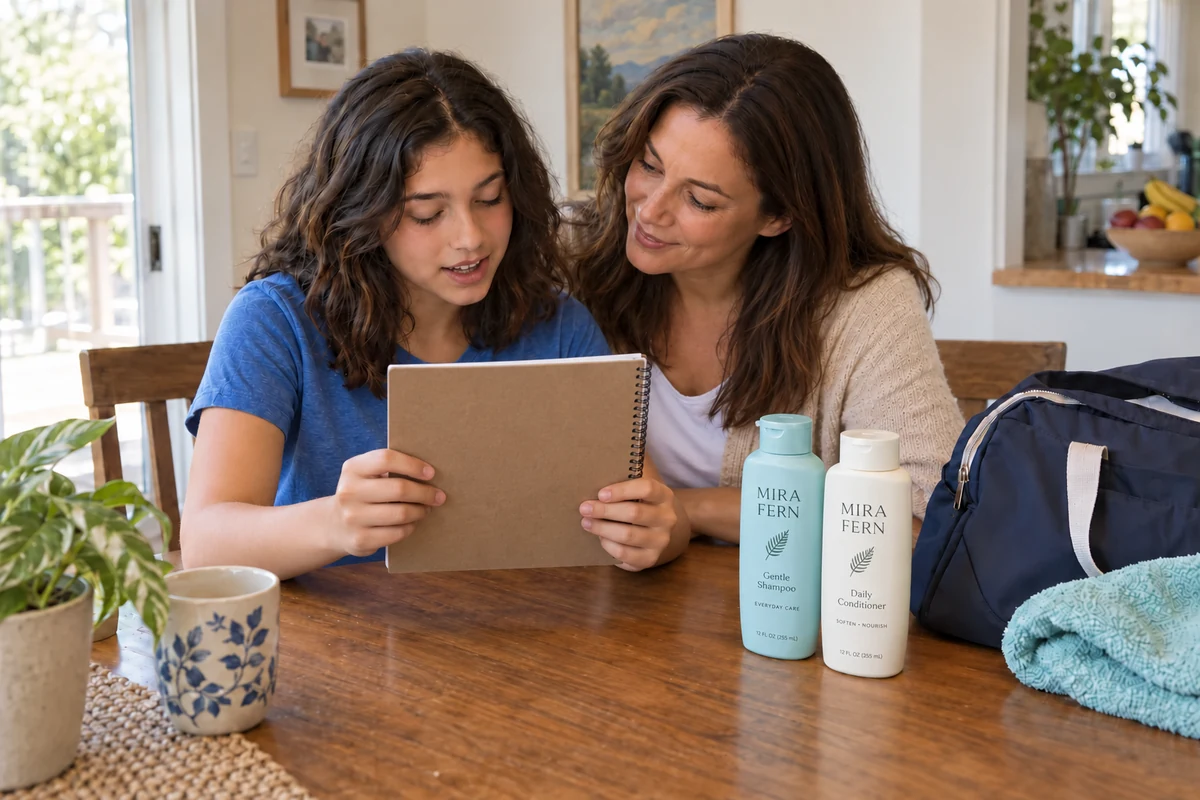
A teenager and adult look together at a routine notebook held toward them.
Your routine can change with it.

What is going on

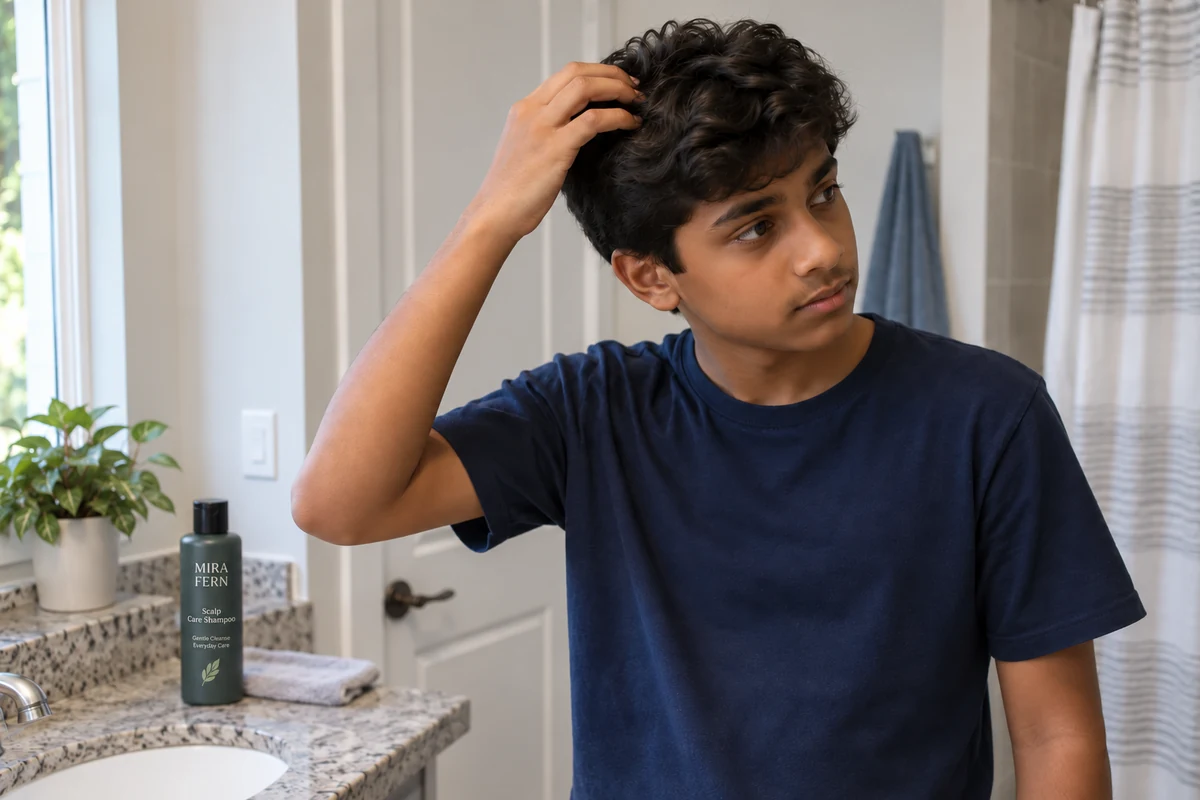
A teen gently touches their own ordinary roots in a dry bathroom.

Go by what you notice

Pay attention to how soon after a wash your roots feel oily, whether sports change that and how your lengths feel. Puberty doesn’t give everyone the same hair or the same washing needs, so adjust from what you see rather than copying a friend’s schedule.

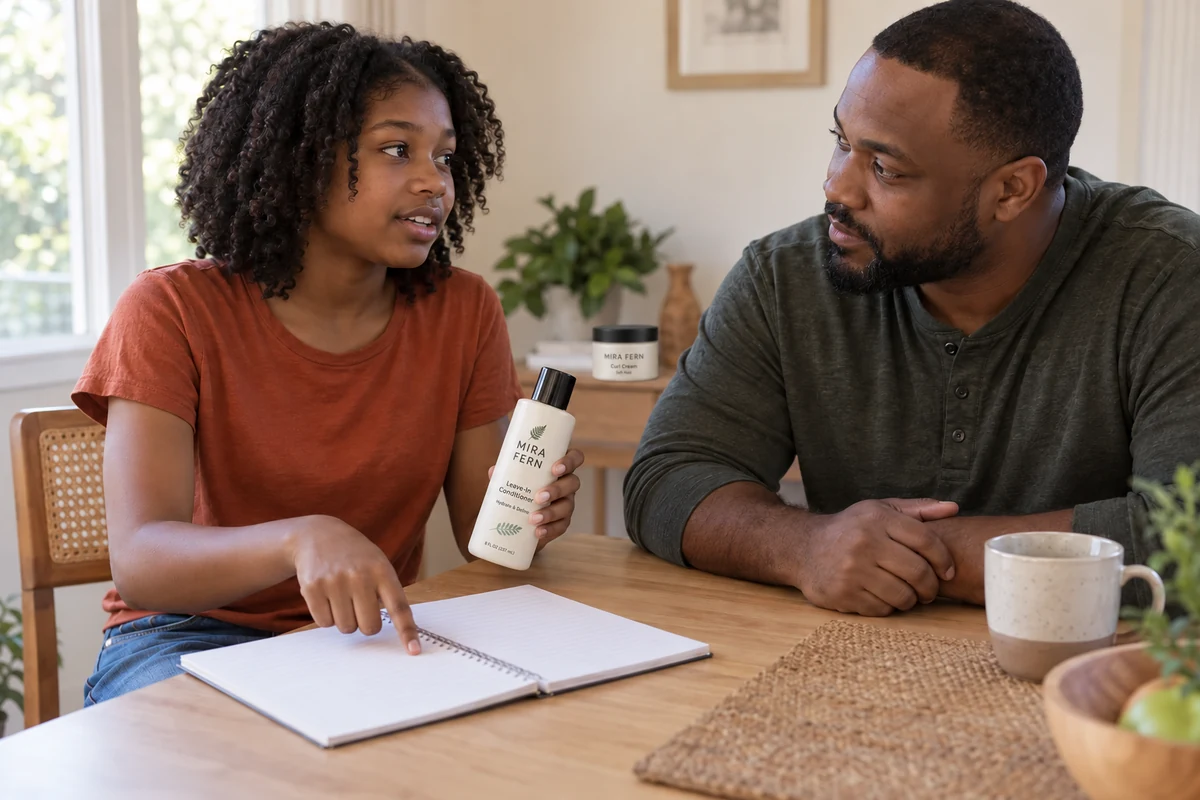
A teen points to their care notebook and holds a closed bottle while a caregiver listens.

Decide which parts you’ll handle

Agree which steps you do yourself and where you want help, like reading the bottle or reaching the back. You get a say in privacy and how much help there is. A reminder or a rinse check helps without turning every wash into a lesson.

What helps, day to day

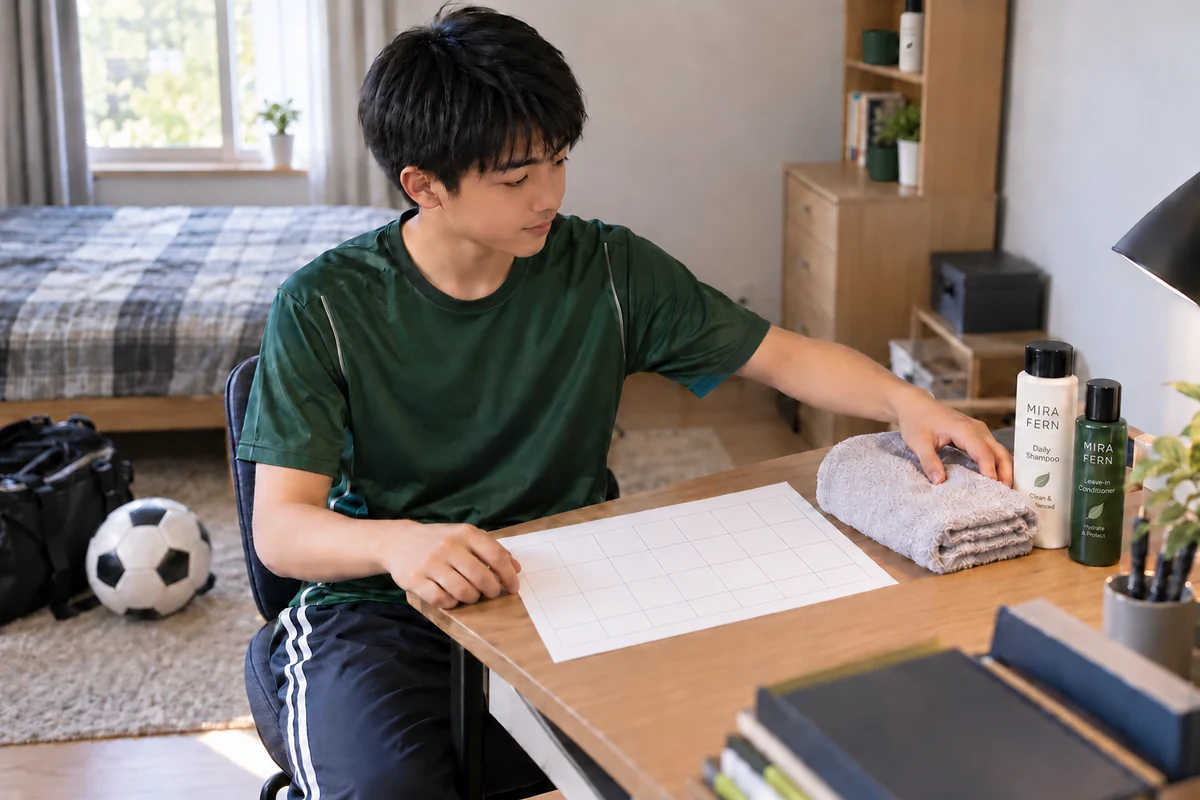
A teen checks a weekly calendar beside a towel, closed bottles and sports bag.

Sports take over the week

  • Leave room to wash and dry after the practices that leave you sweaty or itchy.
  • Your hair’s pattern and how dry it gets still count too.
  • When the week changes, change the plan.
  • Needing another wash isn’t a failure, and it doesn’t mean you need a stronger shampoo.
A teen compares removable colorful hair accessories while a caregiver listens.

A new style means more steps

  • Before you try it, check the age directions, how it comes out and whether you’ve got time to finish.
  • Keep your plain routine in your back pocket.
  • You can enjoy a clip-in or an accessory without buying three styling products, and you can quit a plan that gets uncomfortable.
A teen puts a closed shampoo bottle and comb in a personal tray, keeping its label visible.

Friends want to borrow your stuff

  • Keep your products for yourself, in their own bottles with the directions readable.
  • If you need your own bottle of something, ask for it.
  • Label your comb and brush so they’re easy to spot.
  • And don’t water a product down to make it last.

Products, by the job they do

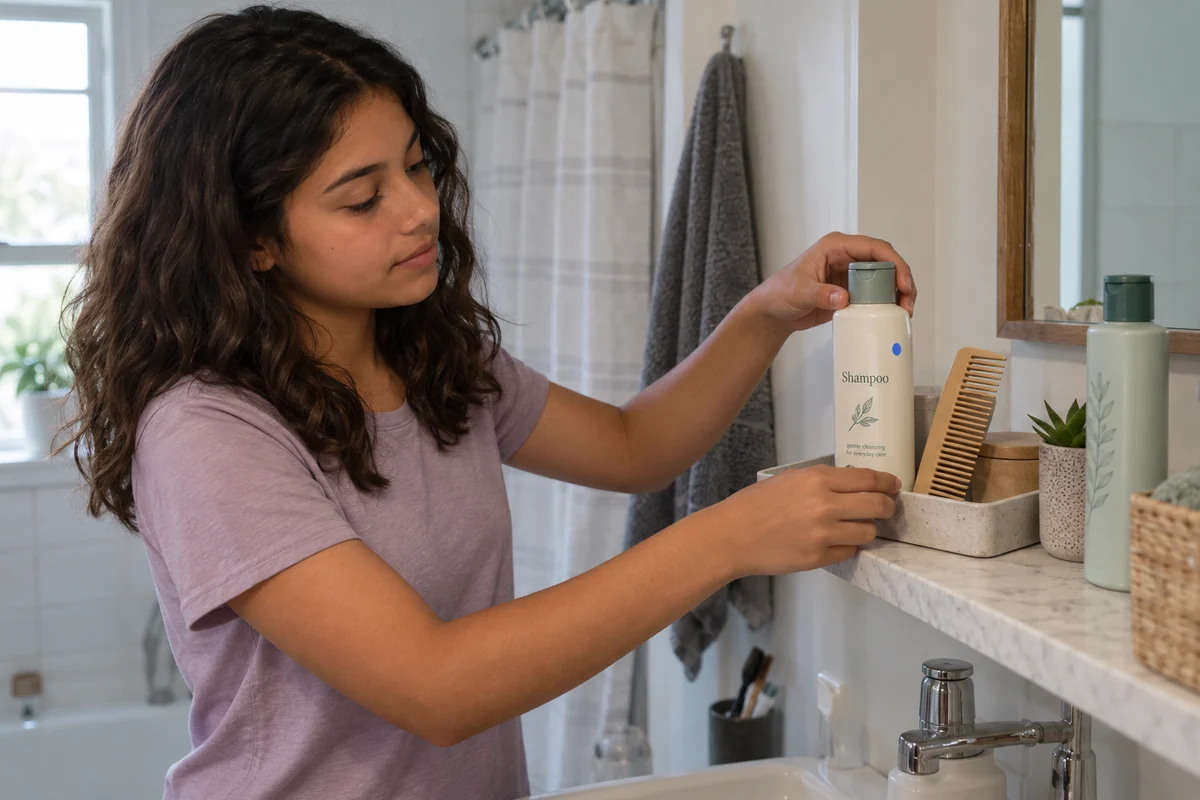
A teen reads a shampoo bottle while a caregiver holds product instructions beside a bathroom sink.

Pick shampoo for the scalp you’ve got now

Choose an age-appropriate shampoo and use the amount and rinse the bottle describes. Puberty doesn’t mean everyone needs a stronger cleanser or the same wash schedule.

Browse cleansing products. Your current shampoo, wash schedule and past treatments help guide a personal recommendation.

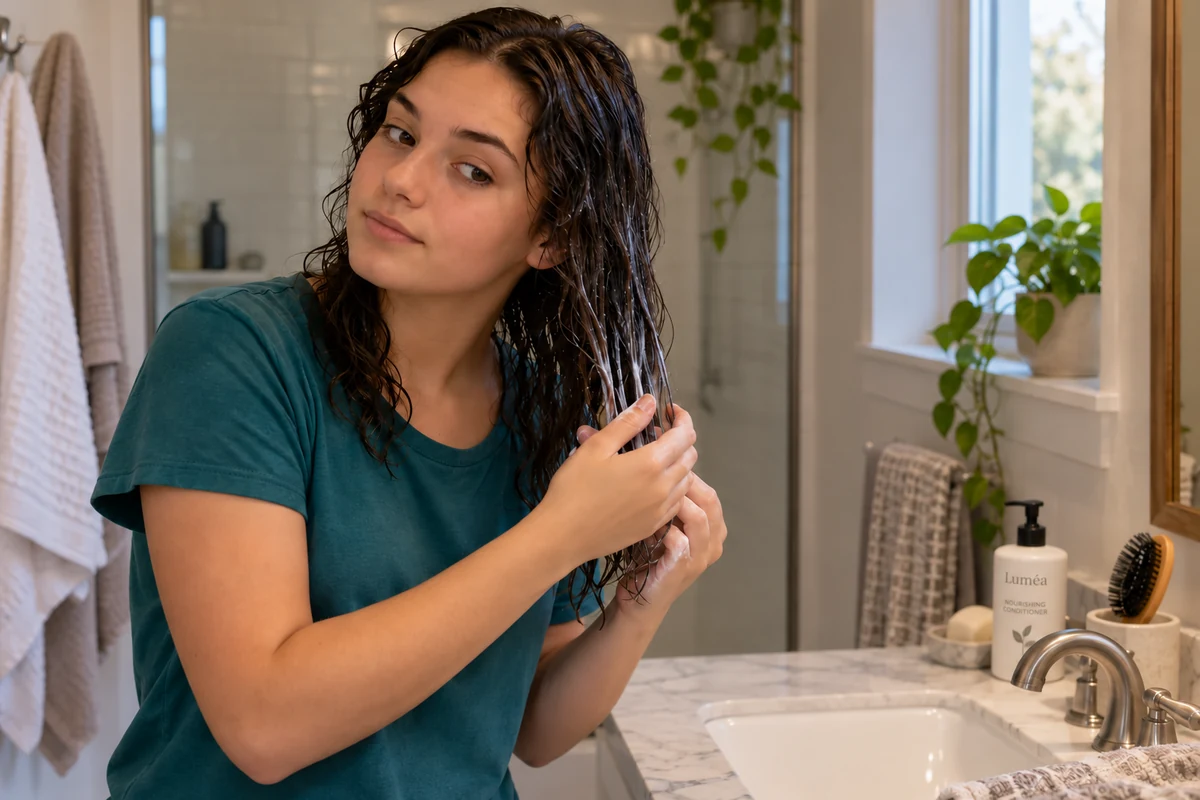
A teen in an opaque shirt gently distributes conditioner through supported damp lower lengths at a sink.

Don’t skip conditioner because the roots are oily

An oily scalp says nothing about what your lengths need. Use an age-appropriate conditioner where hair is dry or hard to comb, following its directions. A teen label on the front can’t tell you how much conditioning your hair wants. Tangles, pattern and weight do.

Browse rinse-out conditioners. The consultation uses your hair details and treatment history to compare conditioner options.

Build a routine you’ll actually keep

A teen checks a calendar beside removable hair accessories and a closed carton.

Plan time for the whole thing

When you try a style, count the time to take it out and wash afterwards, not just the time to put it in. Keep school, practice and bedtime in view. On a day with only time for the basics, the fancy finish can wait.

A teen gives a calm stop gesture while a caregiver holds a removed accessory away from the hair.

Say what needs to change

Be specific. Please show me the bottle directions. I want help rinsing, then privacy to finish. If the water, the smell or the handling bothers you, say which part. Asking for a change is useful, not a sign you haven’t learned.

When to get help

A teen speaks with a clinician while a trusted adult listens beside them.

Signs that need more than routine care

  • If a product stings or gives you a rash, rinse it off and stop using it. Itching, flaking or soreness that keeps going despite ordinary washing is worth showing a medical professional, because an oilier scalp doesn’t explain everything, and it’s easier to sort out early. Ask a trusted adult to help set that up if you need to.

Illustrated care examples: before & after

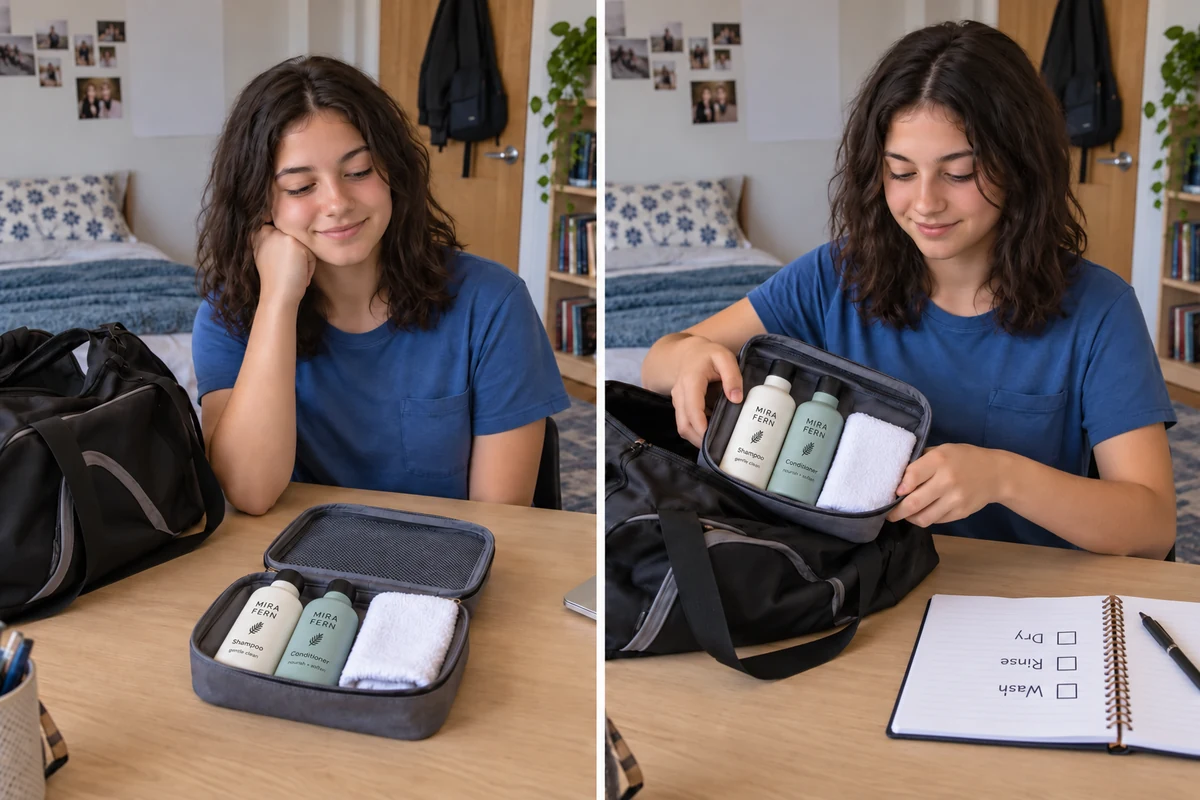
Wash, rinse, dry, planned

The same teen brings a familiar care kit beside a wash, rinse and dry checklist before packing it.
Before · care kit and bag apartAfter planning the task · kit beside a checklist
The same kit, now next to a checklist that includes washing, rinsing and drying in the time there is. Planning only, the teen’s hair is untouched.

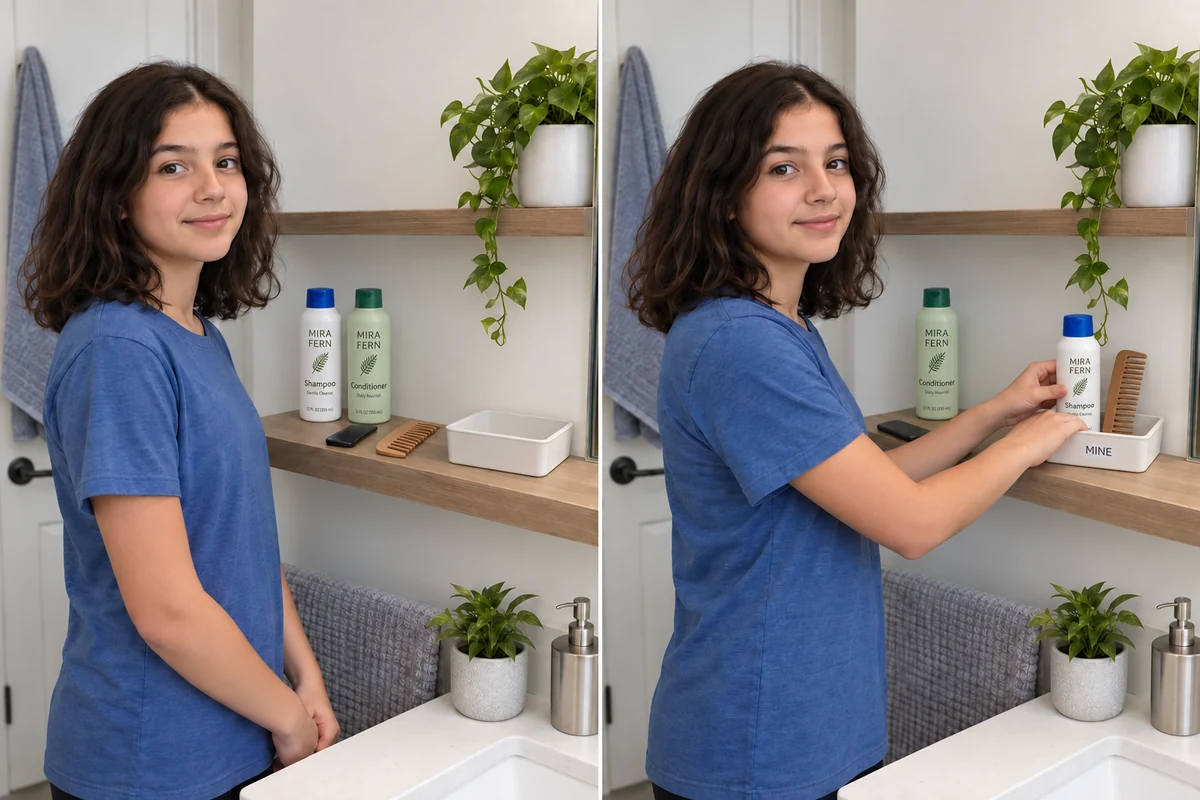
A tray of their own

The same teen places their own closed bottle and comb in a separate marked tray, leaving other items on the shelf.
Before · items beside an empty trayAfter organizing personal items · teen’s bottle and comb together
The teen’s own bottle and comb now sit together on a tray where they are easy to spot, labels still readable. Nothing here says the items were shared.
A teen points to a side section of their own hair while a caregiver listens with hands away.

Help with your hair-care routine

Bring your hair-care questions to the consultation. You can also read understanding oily roots and useful cleansing.

  • Why did my old routine stop working?
  • Which bits can I do myself, and where do I want help?
  • How do I fit washing around practice without rushing?

Share your pattern, length, how fast your roots get oily, your sports, the products you use and how much help you want. The consultation can turn that into ordinary product choices and a routine that fits. You don’t have to measure yourself against anyone else.

The Hair Care Consultation gives you a personal plan with product recommendations, routines and guidance on your hair-care questions.

$49 with 60 days of follow-ups, or $99 with 12 months. Pay once; the year renews only if you choose.