Hair Care Guides

Your roots and your lengths need different care.
New hair at the roots, treated hair below.

Between appointments the silver comes in at the roots while the colored lengths slowly fade, and it can feel like two different heads of hair. Caring for each on its own terms gets you to the next visit with softer ends and less fuss.

Your personal hair-care planProduct choices, routines and answers shaped around your hair.$49one-timeStart my consultation
A woman with silver roots and dyed lengths checking a salon appointment on her phone.
New hair at the roots, treated hair below.

What is going on

A woman examining rough, uneven ends in a section of highlighted hair.

Regrowth and fading are two different things

The silver at your roots is brand-new hair that has never been colored. The faded lengths have already been colored, sometimes more than once. Running permanent color from scalp to ends every time puts the old lengths through another round they may not need.

A woman with curls writing a routine note beside her hair-care products.

Tell your colorist the whole story

Keep a note of home color, salon services and any straightening treatments, with rough dates. Before the next appointment, talk through how much coverage you want and which parts of your hair feel fragile. Your colorist can only work with what they know.

What helps, day to day

A woman gently separating her hair to check a wider central part.

Your part makes the regrowth stand out

  • Moving the part a little can soften the contrast without any color at all.
  • If you use a root touch-up powder or spray, follow its directions and wash it out as it says.
  • Keep it off skin that’s sore or irritated.
Wavy hair with tangles concentrated near the ends.

The colored lengths keep catching

  • Give the ends more slip with conditioner and handle them gently.
  • If the splits keep coming back, ask your stylist about them before the next service.
  • Color can hide roughness for a while, but it can’t smooth it.
A woman gently feeling a section of her loose hair with her fingers, with no visible product.

Every touch-up seems to reach the old color

  • Talk with your colorist about keeping the next service to the new growth where that’s possible.
  • Lengths that get reprocessed over and over get more fragile each time.
  • Do the allergy test the dye asks for every time, and if a product burns, rinse it off and stop.
  • Never retry a dye that reacted once to see whether you tolerate it now.

Products, by the job they do

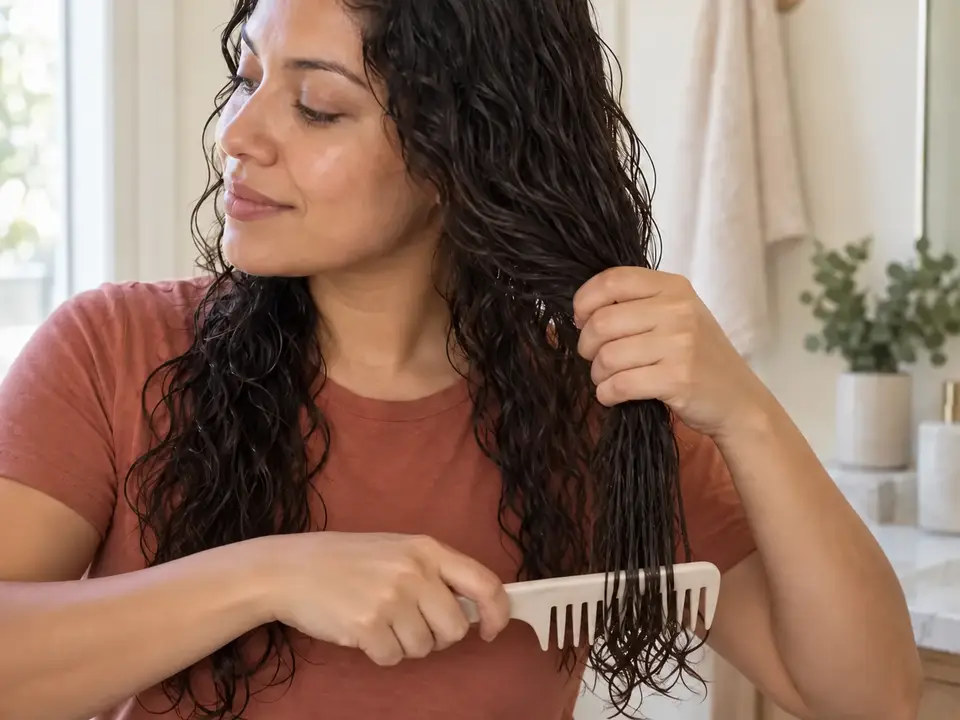
A woman detangling conditioned hair with a wide-tooth comb.

Condition for the lengths that have been through the most

The conditioner is for your older, colored lengths, so choose it for the slip and softness they need. Silver roots don’t mean every part of your hair wants a richer mask.

Browse rinse-out conditioners. The consultation uses your hair details and treatment history to compare conditioner options.

A woman massaging shampoo lather onto her scalp with her fingertips.

Wash for your scalp, not just the color

Wash when your scalp is oily or has product on it, and follow whatever aftercare your color service came with. Protecting the color is never worth living with a sore, unwashed scalp.

Browse cleansing products. The consultation uses your wash frequency and scalp concerns to recommend a shampoo.

How to do it

A woman uses both hands to gently work shampoo at the back and sides of her scalp, with the lengths hanging loose.

1. Wash the scalp gently

Work the shampoo into the scalp and let the suds run down the lengths. Rubbing the fragile ends together is how they get rougher.

Guide: Shampoo your scalp
Woman supports a damp wavy-curly section while a wide-tooth comb begins at the lowest hair tips.

3. Comb through the change in texture carefully

Start at the ends and work up. Where silver regrowth meets colored hair the texture changes, so go slowly there rather than yanking through it.

Guide: Detangle with a wide-tooth comb
Checking appointment preparation instructions on a phone.

4. Plan the next appointment

Bring the full history, including any reaction you’ve ever had to a dye, so your colorist can decide what’s safe to repeat.

Guide: Prepare for a color appointment

When to get help

A medical professional examining the scalp where a woman points.

Signs that need more than routine care

  • If a dye reaction keeps going or gets worse after you’ve rinsed it off, or you notice new hair loss along with a sore or itchy scalp, see a medical professional. It’s worth getting looked at before your next color service rather than waiting it out.
  • Trouble breathing or swelling of the lips, mouth or throat after dye is an emergency. Call emergency services straight away.

Illustrated care examples: before & after

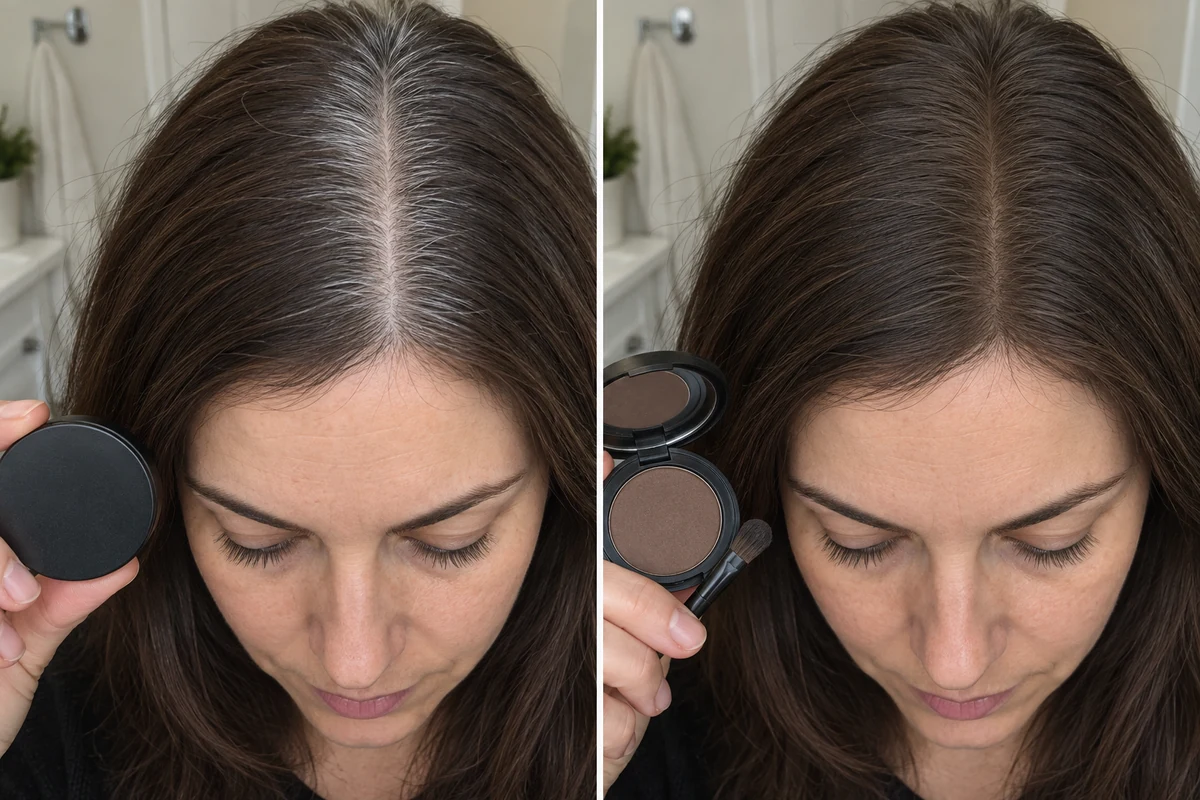
Temporary cover, if you like

Illustrated care comparison: Silver regrowth contrasts with the colored lengths. A temporary root powder softens the contrast on the same part.
Before · silver roots at the partAfter temporary cover · powder softening the contrast
A temporary powder softens the contrast along the part until it is removed. It is optional, so follow its directions and keep it off irritated skin.

Same roots, softer ends

Illustrative care comparison: rough dyed ends beside conditioned dyed ends.
Before · rough, dyed endsAfter care · softened dyed ends
The silver at the roots is the same in both pictures. Conditioner has changed how the older dyed lengths look and feel, nothing more.
A woman gently squeezing damp hair with a towel.

Help with your hair-care routine

Bring your hair-care questions to the consultation. You can also read this related guide.

  • How do I look after gray roots and dyed lengths at the same time?
  • Which products help my ends without weighing down the roots?
  • What should I be doing between color appointments?

The plan uses the hair and scalp details you share, past treatments, current products, preferences and the time and budget you have.

The Hair Care Consultation gives you a personal plan with product recommendations, routines and guidance on your hair-care questions.

$49 with 60 days of follow-ups, or $99 with 12 months. Pay once; the year renews only if you choose.