
Hair Care Guides

Give the back of your head its own turn.
Work a section, then put the mirror up.

The back is the part you can’t see and barely reach, so it ends up patchy, flat or missed. Before you fix anything, find out which it is. Then give yourself a section order you can repeat and a check with both hands free.
Your personal hair-care planProduct choices, routines and answers shaped around your hair.$49one-timeStart my consultation
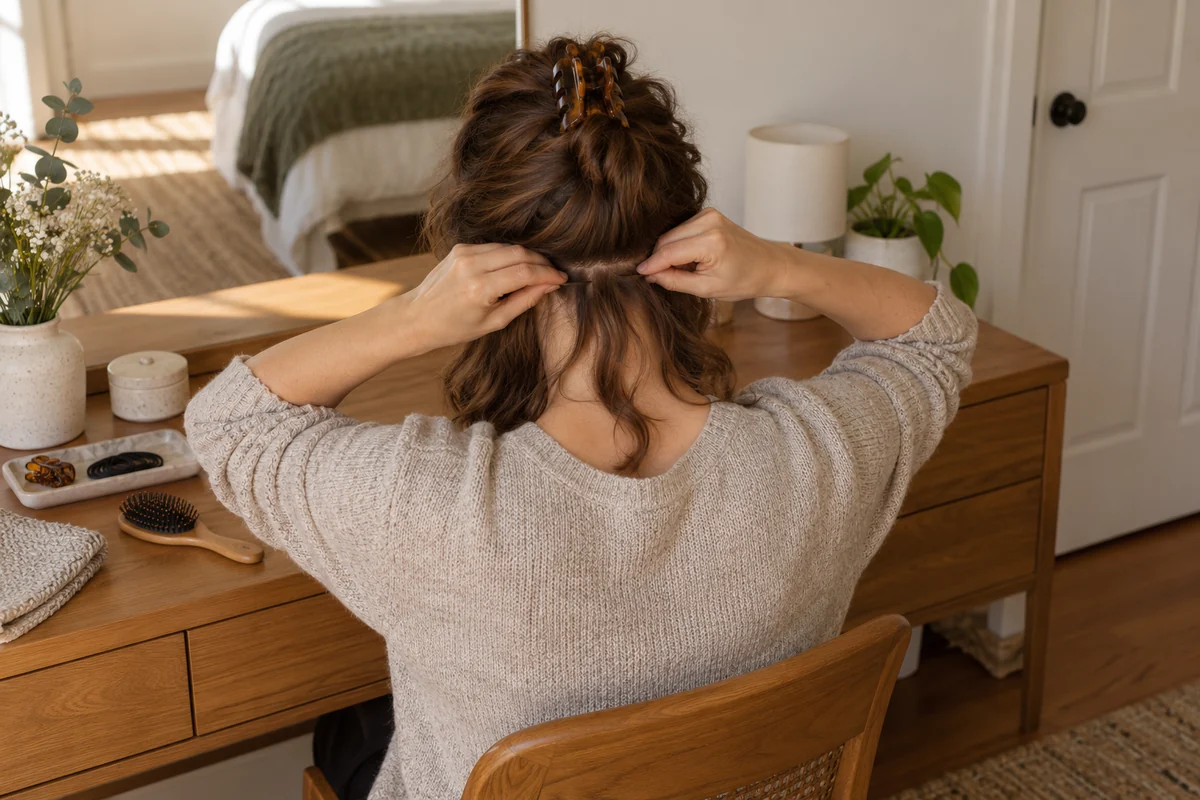
Rear view of a seated woman using both hands to locate a nape section while the upper portion of her brown wavy hair is clipped up.
Work a section, then put the mirror up.

What is going on

Facing a stable wall mirror while holding a hand mirror behind and to one side so the back target is visible.

Find the actual spot first

Set up a second mirror so you can see the back without holding anything. Look, then put the hand mirror down before you pick up a brush or a tool. Nobody can hold a mirror, a brush and a section of hair at once.

A woman checks her curly front and straighter top layer in a mirror.

Does it actually need to match?

The back and front often have different patterns, and that’s normal. Ask yourself whether you missed product or drying back there, or whether you’re trying to erase a difference that’s natural. A little variation can look better than a back you’ve reworked three times.


What helps, day to day

A woman separates a manageable section of abundant fine hair while the rest is loosely clipped aside.

You lose track of which bits you’ve done

  • Pick a starting point and a simple route around your head, the same one every time.
  • Keep the finished hair clipped away from the hair you haven’t touched, if the style allows it.
  • Take every clip out before the final look so a hidden section doesn’t stay hidden.
A man with fine layered hair keeps the top layer clipped while applying product to the underlayer.

The outside layer gets all the product

  • Lift just enough hair to reach the layer underneath.
  • Spread the amount you meant to use across that section rather than adding another full dose on top.
  • If the strands catch as you separate them, stop and ease them apart instead of tearing through.
A man seated at a dry dressing table with both forearms resting on a folded towel beside a mirror, comb and bottles.

Your arms are tired and the reach hurts

  • Drop your arms between sections and let them rest.
  • Bring the longer back sections forward over a shoulder, but only while it feels comfortable.
  • If one area is simply out of reach, choose a simpler finish there or ask someone for help rather than straining again and again.

Products, by the job they do

A woman smoothing leave-in product through her lower lengths.

Check where the product went before swapping it

If the parts you can reach feel soft and the back doesn’t, the back probably just never got its share. Look at how you spread conditioner before buying a different one.

Browse leave-in conditioners. The consultation considers your current conditioner and styling products before recommending a leave-in.

A woman cupping a damp curl section with styling gel on her hands.

Decide where you want hold

A small section at the back should get its share of the styler, not a second full dose over the top. A second dose mostly hides whether the first one ever reached it. Apply as the label says and compare once everything is dry.

Browse styling products. Bring your styling questions and current products to the consultation for personal recommendations.
How to do it

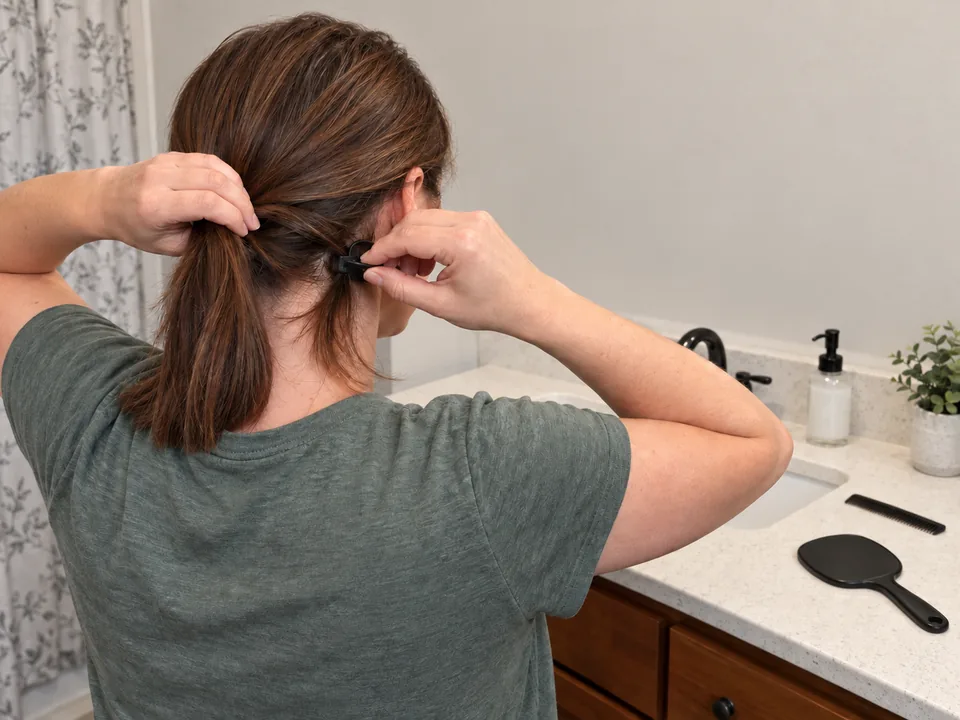
Both hands separating one reachable back section by touch while the hand mirror rests on the counter.

1. Look, then put the mirror down

Check the back in the two mirrors first, then set the hand mirror down. Work with both hands and all tools on the counter before you look again. This method isn’t for hot tools.

Guide: Style the back of your head with two mirrors
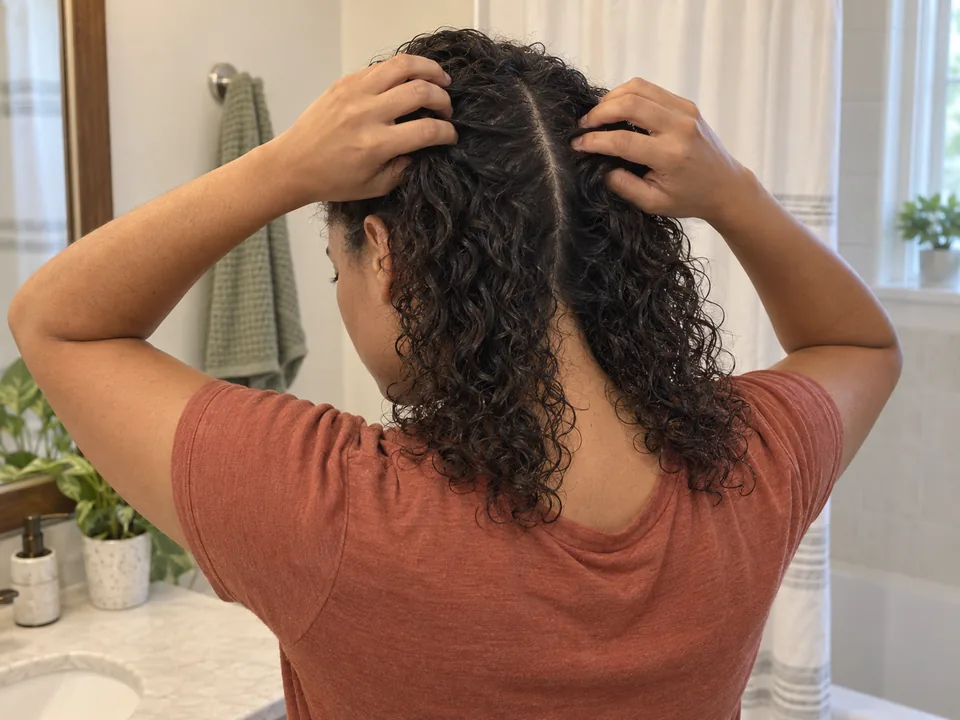
A woman uses both hands to separate her own damp curls along a rough part toward the back of her head.

2. Keep the next section within reach

Use loose divisions and clips that don’t pinch. Work by feel where you can, lower your arms when you need a break, and open each clip fully before you pull it out.

Guide: Section your hair for washing and styling
Illustrated care examples: before & after

The nape gets its turn

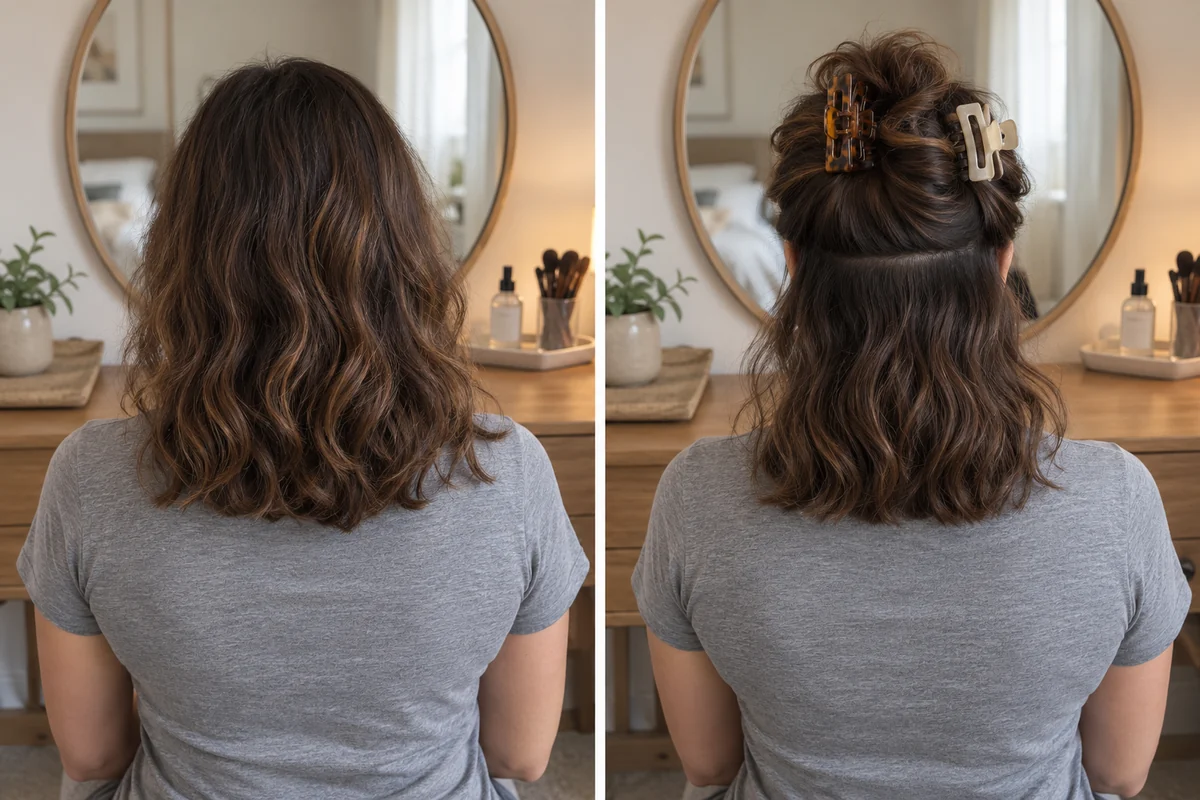
Rear views of shoulder-length wavy hair loose, then with the upper layers held in two clips to expose the nape.
Before · upper layers over the napeAfter this choice · clips lifting the upper layers
Clipping the upper layers up uncovers a lower portion at the nape to work on. The patterns there need not match the rest.

Arms down for a breather

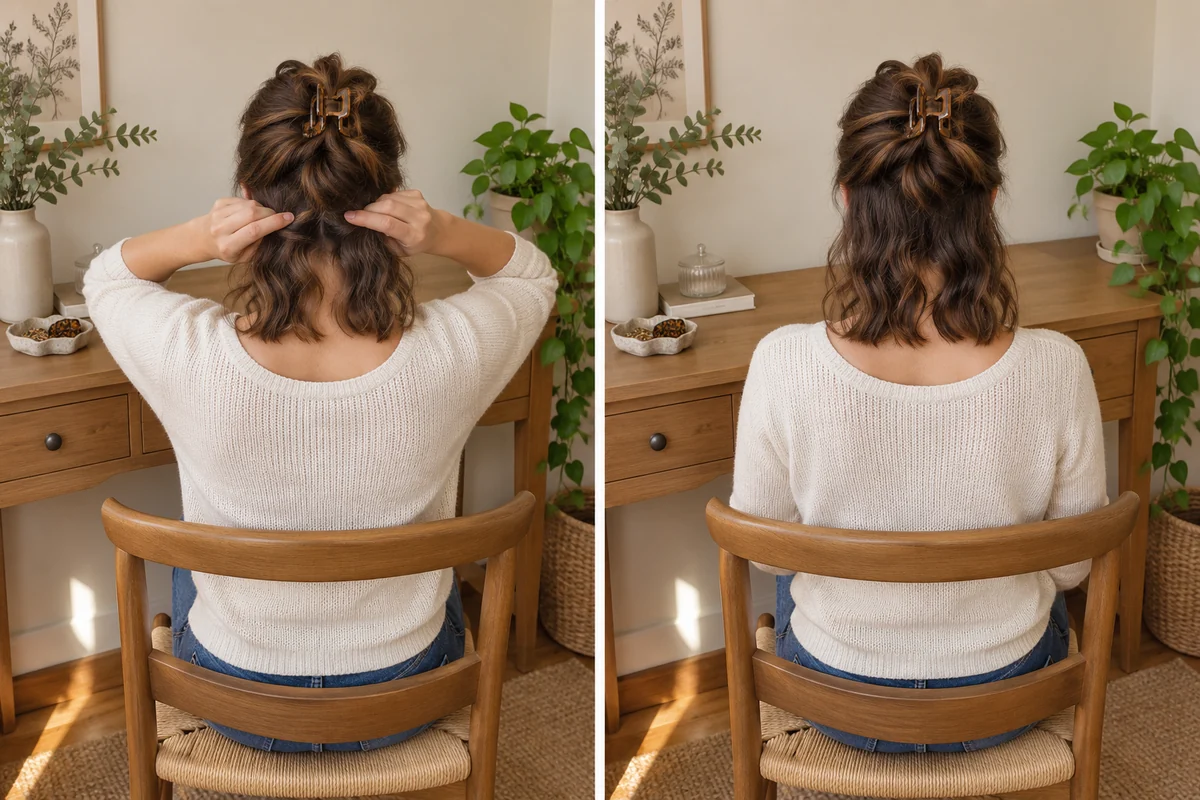
Rear views of the same seated woman working on a nape section, then pausing with arms lowered while the upper clip and loose nape section remain in place.
Before · hands working at the napeAfter this choice · arms lowered, taking a break
The section at the nape stays exactly where it was. Dropping your arms between portions is allowed, there is no pace to keep up.
A woman with curls writing a routine note beside her hair-care products.

Help with your hair-care routine

Bring your hair-care questions to the consultation. You can also read care for heat-styled lengths.

  • Am I missing a section, or asking two different textures to look the same?
  • What order should I work in so I can actually reach everything?
  • Would a simpler finish mean I don’t have to redo the back?

The plan uses the hair and scalp details you share, past treatments, current products, preferences and the time and budget you have.

The Hair Care Consultation gives you a personal plan with product recommendations, routines and guidance on your hair-care questions.

$49 with 60 days of follow-ups, or $99 with 12 months. Pay once; the year renews only if you choose.