Hair Care Guides

Decide how much to trim before the chair.
Agree on the length you’re keeping.

Most of us have left a trim shorter than we meant to. Talk about comfort, shape and the length you want to keep. Show how your hair sits, point to the ends that bother you, and agree the change before the scissors come out.

Your personal hair-care planProduct choices, routines and answers shaped around your hair.$49one-timeStart my consultation
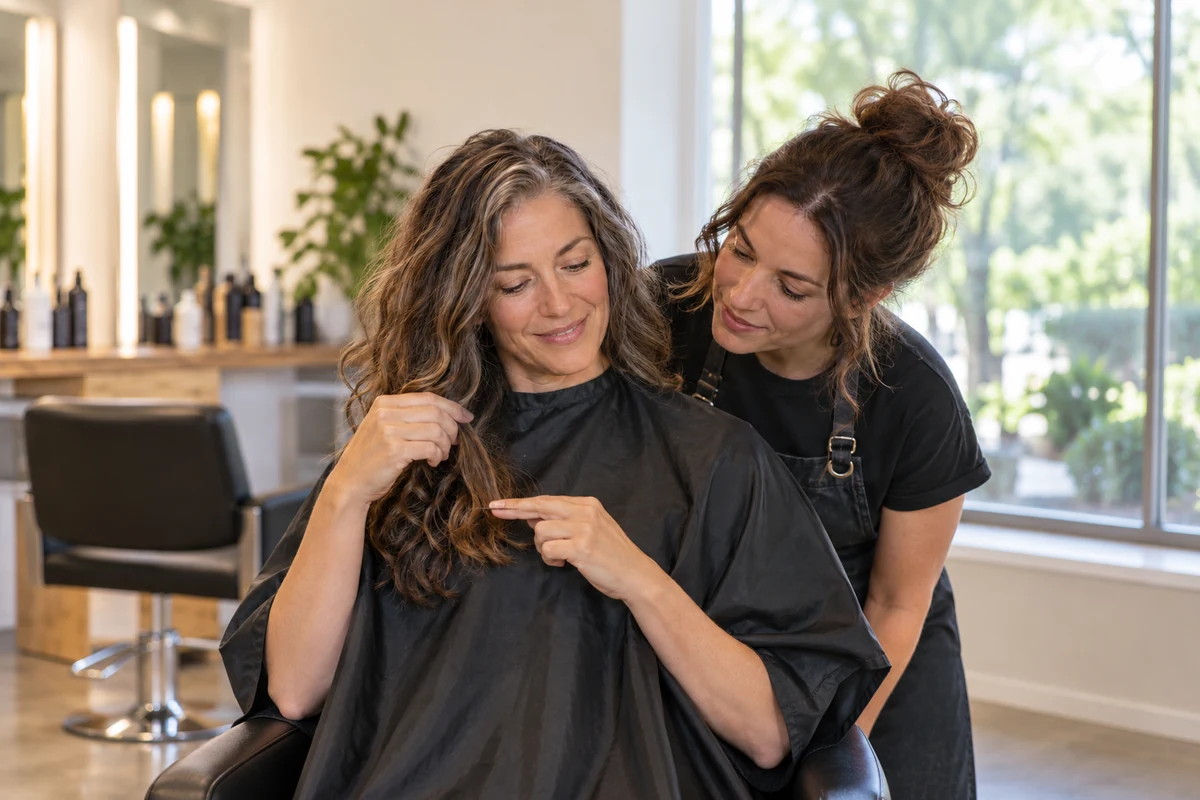
A client marks a proposed trim length on a held lock while a nearby stylist watches.
Agree on the length you’re keeping.

What is going on

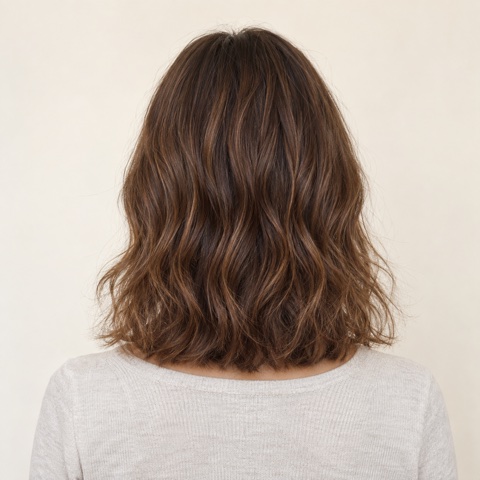
A rear three-quarter view shows the dry nape and side perimeter of a wavy bob.

Say what the appointment is for

Taking off ends that keep catching is one job. Changing the outline is another. Shortening the whole cut is a third. Tell your stylist which one matters most, then ask what a smaller trim would get you and what you’d be left with.

A woman supports an outward-turning end of her silver bob on an open palm.

Show the length you mean

Point to a spot on your dry hair or your clothes rather than just saying a little. With curls, talk about where the hair rests when it’s dry, and ask how the stylist will check that. A stretched strand tells a different story.

What helps, day to day

Wavy hair with tangles concentrated near the ends.

The ends keep catching

  • Tell the stylist which bits tangle and what you’ve already tried.
  • Ask to see how much would come off before you say yes.
  • A good conditioner can make the ends easier to handle in the meantime, but it won’t remove the ones you decide to cut.
A rear view of wavy hair with flyaways near the ends.

You’re growing it and don’t want to lose ground

  • Say the shortest finished length you’d be happy with.
  • Mention if it still needs to reach a ponytail or a clip.
  • Ask what keeping that length means for the shape or the scrappy ends.
A woman and a medical professional seated together, looking at a calendar.

Your reference photo is a different texture

  • Use the picture to explain the outline you like, not to order an identical result.
  • Talk about how much styling you normally do and how the cut will sit without it.
  • If you and the stylist mean different things by a trim, sort that out before the first snip.

Products, by the job they do

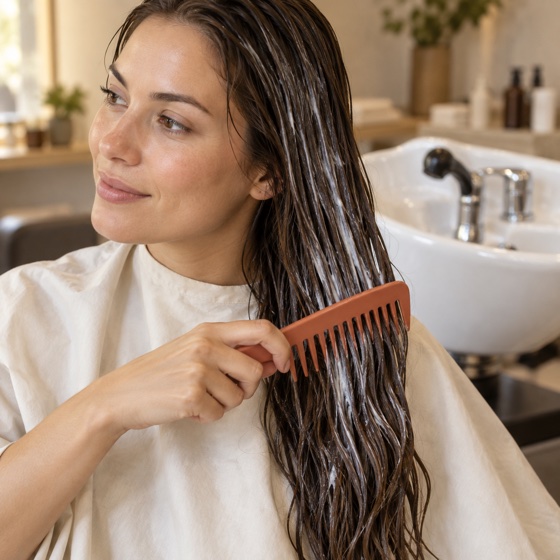
A woman detangling conditioned hair with a wide-tooth comb.

Keep the ends easy to handle

A conditioner with good slip makes the run-up to the appointment less of a fight. Follow whatever the salon asks you to do beforehand and tell them what’s already on your hair. Easier detangling doesn’t change how much needs to come off, though.

Browse rinse-out conditioners. The consultation uses your hair details and treatment history to compare conditioner options.

A woman smoothing leave-in product through her lower lengths.

Don’t let a finish make the decision

A smoothing product can make tips look and feel better for a day. Mention it to the stylist, because the real question is how the ends behave without it.

Browse leave-in conditioners. Tell the consultation which leave-ins felt useful or heavy, and how much you used.

How to do it

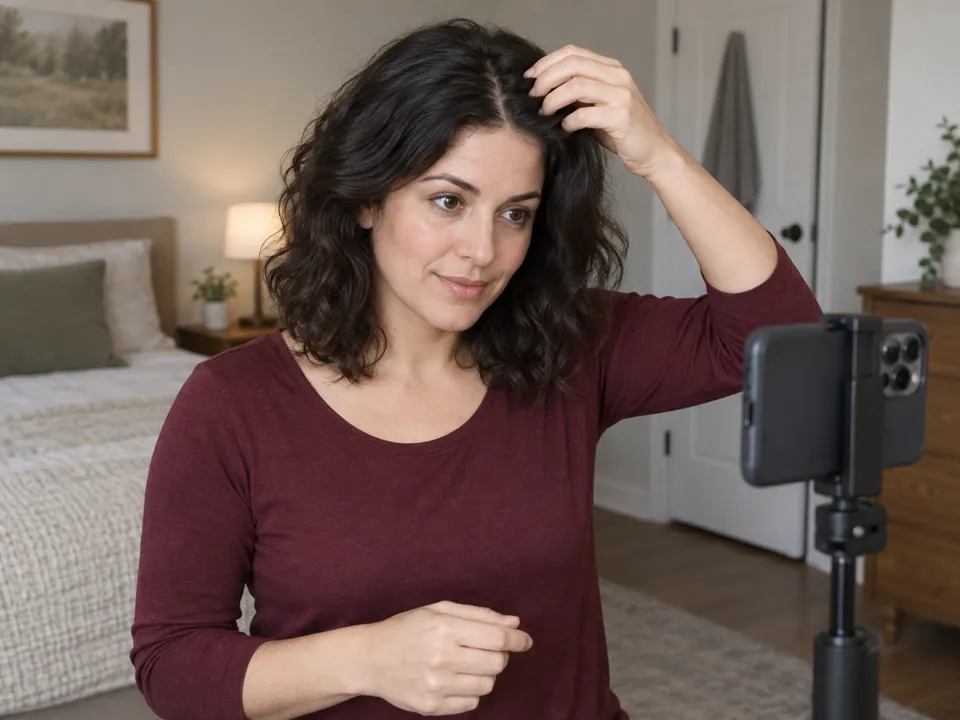
Showing a reachable part to the supported phone camera.

1. Photograph how it normally sits

Take a photo of your dry hair in ordinary light, with your usual part and no filters. It gives your stylist a clear picture of what you want to keep and what you don’t, which is easier than describing it.

Guide: Photograph your hair and scalp

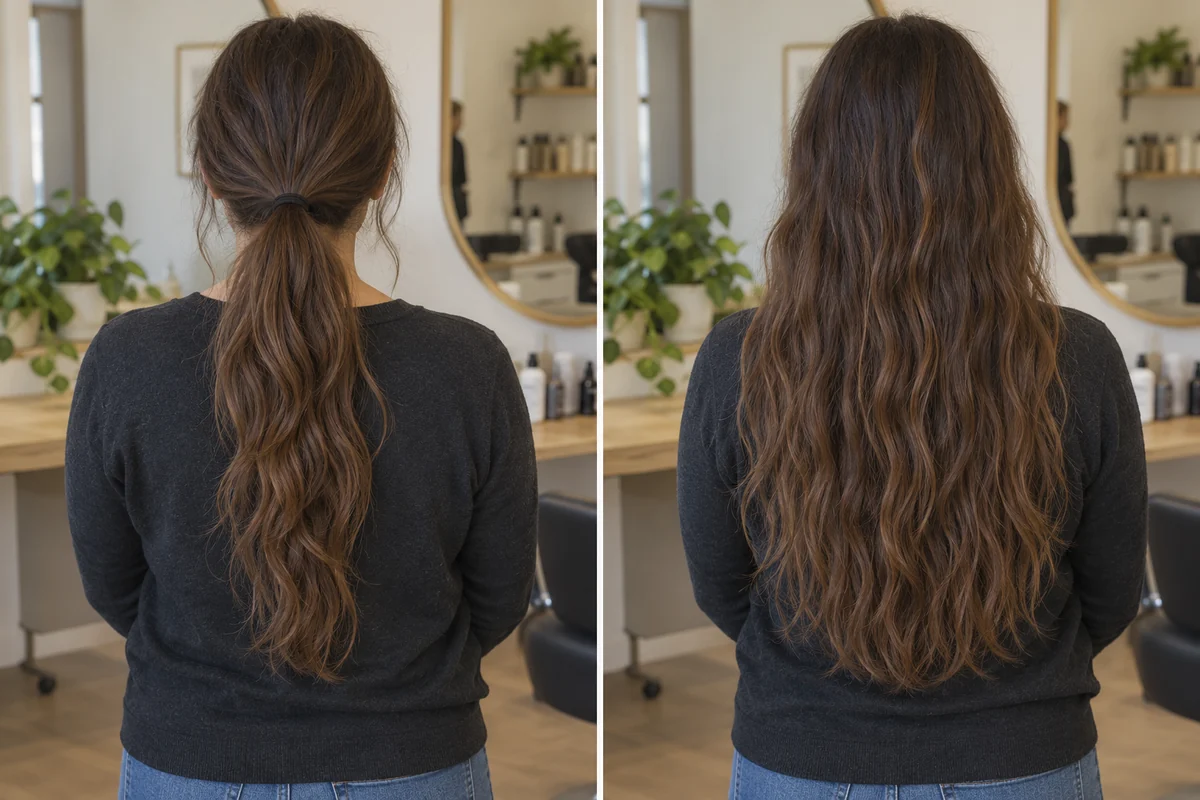
Illustrated care examples: before & after

Let the ends hang loose

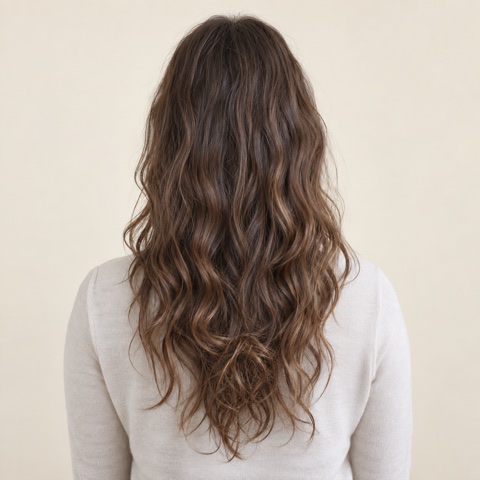
Rear views of the same long wavy hair in a low ponytail and then loose, revealing the lower outline without a visible haircut.
Before · outline gathered in a ponytailAfter this step · the loose perimeter showing
With the tie out, the ends hang where they naturally fall, which makes the trim easier to talk about. No hair has been cut in either picture.

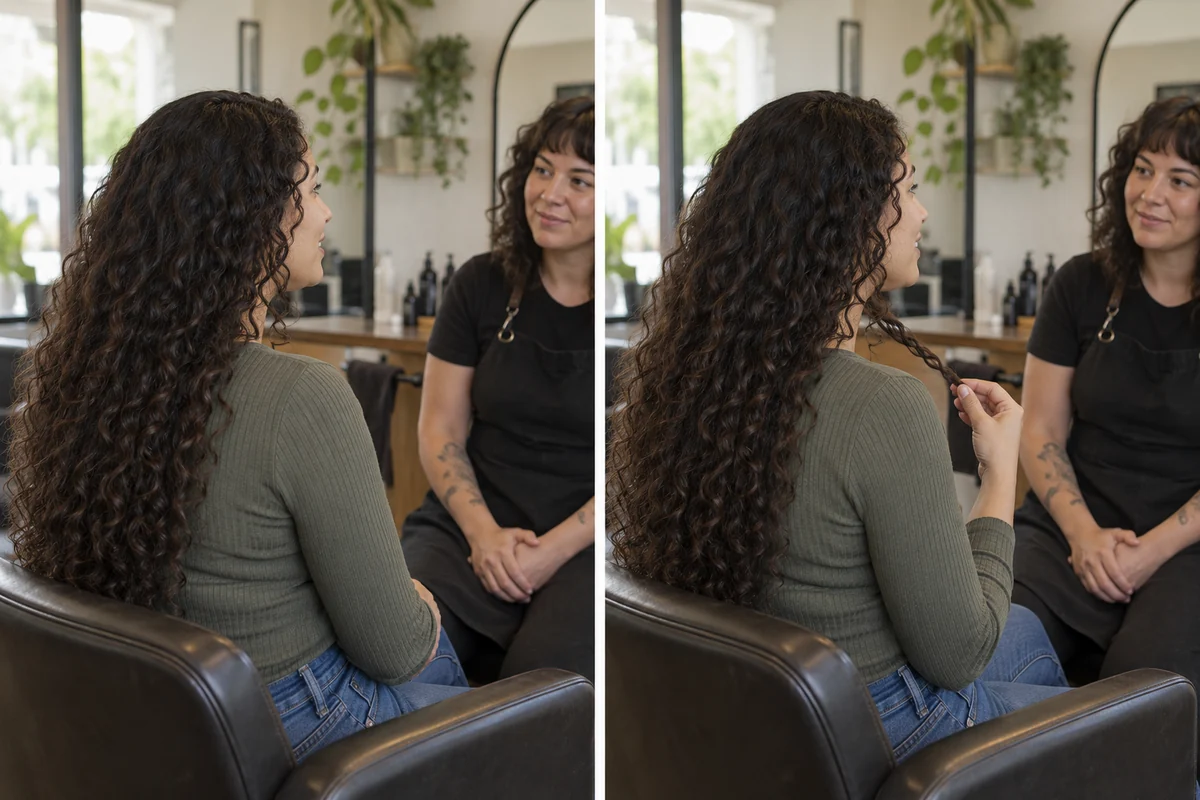
Show where the length sits

A seated woman with long curls faces a stylist, then brings a front curl forward and supports it while the stylist listens.
Before · curls resting behind the shoulderAfter this step · one curl held to discuss
Holding one curl out shows the stylist where it rests and where you would like it to end, before anything is cut.
A woman with curls writing a routine note beside her hair-care products.

Help with your hair-care routine

Bring your hair-care questions to the consultation. You can also read caring for breakage and split ends.

  • How much am I actually willing to lose?
  • What would a smaller trim leave as it is?
  • How will this shape sit with the way I usually style it?

The plan uses the hair and scalp details you share, past treatments, current products, preferences and the time and budget you have.

The Hair Care Consultation gives you a personal plan with product recommendations, routines and guidance on your hair-care questions.

$49 with 60 days of follow-ups, or $99 with 12 months. Pay once; the year renews only if you choose.