Side by side
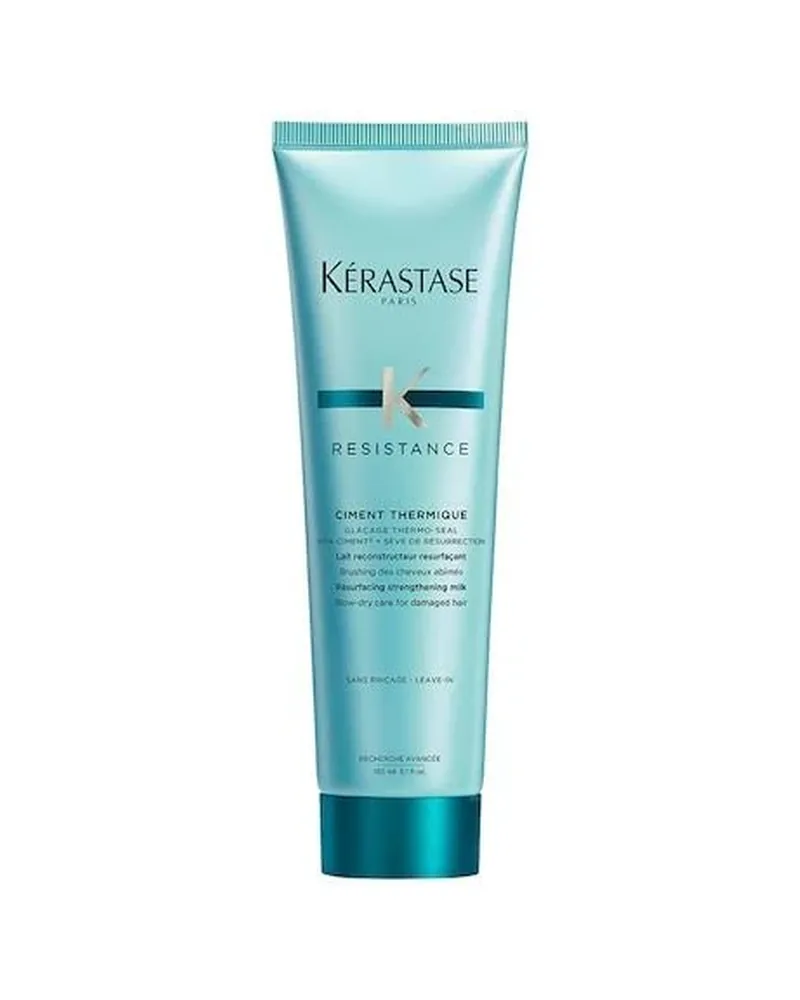
Kerastase Resistance Ciment Thermique vs Kerastase Resistance Heat Protecting Leave-In Treatment for Split Ends
67% function match · 5 of the 10 functions we compared match Formula overlap 23%. Kerastase Resistance Ciment Thermique and Kerastase Resistance Heat Protecting Leave-In Treatment for Split Ends share 4 ingredients among each other's most prominent.
Which of these fits your hair?
We check your pattern, moisture need, scalp, fragrance tolerance, weight sensitivity and more against each formula — and say which one lines up.
Your profile at a glance
- Your answers appear here
- Your answers appear here
- Your answers appear here
- Your answers appear here
When each one is the right call
What each formula is built for, from its own ingredient list.
- Resistance Ciment Thermique — dry, thirsty hair
- Resistance Heat Protecting Leave-In Treatment for Split Ends — heat styling
Side by side
Every trait, aligned
One row per trait, read from each product’s own ingredient list and record. A dash means we have not researched that field for that product — it is not a “no”.
Resistance Heat Protecting Leave-In Treatment for Split Ends
- Heat protectant
- Prestige
- Sulfate-free
- Protein-free
- Dry, thirsty hairhumectants and emollients both sit up front
- Fine hairthat flattens under most products
- Porous, damaged hairceramides are in the list
- Very dry hairno fast-drying alcohol in the list
- Heat stylingthe brand states protection to 450°F
- Protein-sensitive hairthat stiffens when protein is added
- Maximum slipfor hair that tangles the moment it is wet
- Porous, damaged hairceramides are in the list
- Scents bother youthis product carries a scent
- Curly-method routinesthese silicones need a detergent to remove
- Dry or very humid airwhere heavy humectants work against you
- Scents bother youthis product carries a scent
- Curly-method routinesthese silicones need a detergent to remove
- Very dry or damaged hairit contains fast-drying alcohol
More facts about each one
- sulfate-free
- sulfate-free
- protein-free
Facts as we recorded them. A dash means we have not researched that field for that product — it is not a "no".
The bottom line
The bottom line depends on your hair
Which of these two suits you is a question about your hair, not about them. The consultation answers it — and tells you what your routine needs around it.
$49.00 once, for your consultation and hair profile. No subscription, no required purchases.
The detail behind the table
Where the readings above come from: the ingredient lists themselves, each brand’s claims checked against them, what owners report, and cost per ounce in context.
Shared and distinct ingredients
Shared and distinct ingredients
Computed from the ingredient lists as printed. "Shared" means both lists carry it; where it sits on each label is stated, because position is what tells you how much.
What both formulas carry
What only one of them carries
Resistance Ciment Thermique
Resistance Heat Protecting Leave-In Treatment for Split Ends
Full ingredient list — Resistance Ciment Thermique (31)
-
1
Water
- solvent
-
2
Cyclopentasiloxane
- silicone
- emollient
-
3
Propylene Glycol
- humectant
- solvent
-
4
Dimethiconol
- silicone
- emollient
- Below about this point, order stops being meaningful — these are typically used at 1% or less.
-
5
Triethanolamine
- pH adjuster
-
6
Phenoxyethanol
- preservative
-
7
PEG/PPG-17/18 Dimethicone
- emulsifier
- silicone
- water-soluble silicone
-
8
Carbomer
- thickener
- polymer
- film former
-
9
Behentrimonium Chloride
- conditioning agent
- cleanser
-
10
Polyquaternium-4
- conditioning agent
- film former
- polymer
-
11
Potato Starch Modified
- starch
- absorbent
-
12
Hydroxypropyl Guar
- gum
- thickener
- polymer
-
13
Methylparaben
- paraben
- preservative
-
14
Limonene
- fragrance
- named fragrance allergen
-
15
Amodimethicone
- silicone
- conditioning agent
- film former
-
16
Cetyl Alcohol
- fatty alcohol
- emollient
- thickener
-
17
Quaternium-87
- conditioning agent
-
18
Behentrimonium Methosulfate
- conditioning agent
- emulsifier
-
19
Quaternium-33
- conditioning agent
- protein
-
20
Trideceth-6
- emulsifier
- solubilizer
-
21
2-Oleamido-1,3-Octadecanediol
- ceramide
- emollient
-
22
Geraniol
- fragrance
- named fragrance allergen
-
23
Linalool
- fragrance
- named fragrance allergen
-
24
Glycerin
- humectant
-
25
Citronellol
- fragrance
- named fragrance allergen
-
26
Citral
- fragrance
- named fragrance allergen
-
27
Cetrimonium Chloride
- conditioning agent
- cleanser
-
28
Trehalose
- humectant
-
29
Tamarindus Indica Seed Polysaccharide
- botanical extract
-
30
Myrothamnus Flabellifolia Leaf Extract
- botanical extract
-
31
Fragrance
- fragrance
- declared fragrance
Full ingredient list — Resistance Heat Protecting Leave-In Treatment for Split Ends (27)
-
1
Water
- solvent
-
2
Isopropyl Myristate
- light ester
- emollient
-
3
Dimethicone
- silicone
- emollient
- conditioning agent
- Below about this point, order stops being meaningful — these are typically used at 1% or less.
-
4
Triethanolamine
- pH adjuster
-
5
Amodimethicone
- silicone
- conditioning agent
- film former
-
6
Phenoxyethanol
- preservative
-
7
Carbomer
- thickener
- polymer
- film former
-
8
Polyquaternium-4
- conditioning agent
- film former
- polymer
-
9
Potato Starch Modified
- starch
- absorbent
-
10
Hydroxypropyl Guar
- gum
- thickener
- polymer
-
11
Behentrimonium Chloride
- conditioning agent
- cleanser
-
12
Trideceth-6
- emulsifier
- solubilizer
-
13
Amyl Cinnamal
- fragrance
- named fragrance allergen
-
14
Hexyl Cinnamal
- fragrance
- named fragrance allergen
-
15
Isopropyl Alcohol
- drying alcohol
- solvent
-
16
Benzyl Alcohol
- preservative
- solvent
-
17
Linalool
- fragrance
- named fragrance allergen
-
18
Hydroxycitronellal
- fragrance
- named fragrance allergen
-
19
Cetrimonium Chloride
- conditioning agent
- cleanser
-
20
Citronellol
- fragrance
- named fragrance allergen
-
21
Limonene
- fragrance
- named fragrance allergen
-
22
Benzyl Cinnamate
- fragrance
- named fragrance allergen
-
23
Creatine
- amino acid
- conditioning agent
-
24
2-Oleamido-1,3-Octadecanediol
- ceramide
- emollient
-
25
Taurine
- amino acid
- humectant
-
26
Fragrance
- fragrance
- declared fragrance
-
27
Fragrance
- fragrance
- declared fragrance
Claims check
What each brand says, against what each formula shows
Claims are quoted from each brand. We only mark one supported, partly supported, or conflicting when that product’s ingredient list actually speaks to it.
Resistance Ciment Thermique
Strengthening Blow-Dry Cream for Damaged Hair
Partly supportedSupports the surface, not a treatment.instantly reconstructs, reinforces and resurfaces the hair fiber
Stated by brandCan’t be confirmed from label.recreates the hair's natural external protective layer
Stated by brandCan’t be confirmed from label.makes the blow-dry two times faster
Stated by brandCan’t be confirmed from label.
Resistance Heat Protecting Leave-In Treatment for Split Ends
Seals split ends, strengthens, and prevents damage
Partly supportedSupports the surface, not a treatment.Prevents breakage and seals split ends
Partly supportedSupports the surface, not a treatment.Its creamy formula is designed to reduce breakage, seal split ends, and protect against heat
Partly supportedSupports the surface, not a treatment.Protects from heat damage up to 450F
Partly supportedSold for hot tools; untestable here.Apply onto mid-lengths and ends for seamless detangling and frizz reduction
Stated by brandHow to use it, not a claim.
What owners say
What people report
Recurring themes our researchers wrote in their own words from sourced reviews. We do not store or scrape star ratings, and we never balance one product’s themes against another’s by inventing them.
Both praised for moisture.
Resistance Ciment Thermique
Reviewers describe hair that is soft, shiny and smooth after a blow-dry and call it their go-to heat protectant, with fine-but-thick hair saying a quarter-sized amount is enough.
frequent heat stylers, fine and medium hairA minority say it did nothing for smoothing or protection on very fine hair, and a few report hair feeling stiff or 'like straw', several of them questioning whether the unit was genuine.
very fine hair, curly hair; the critical-review tailSalon-quality users rate it good rather than miraculous: it works, but some who were influenced to buy it found it no better than what they already used.
reviewers who use only salon productsThe fruity scent is loved by some as tropical passion fruit and pear and disliked by others as childish or grapefruit-like, and a repeat buyer says the fragrance was recently changed.
general reviewers, one long-term repeat buyerResistance Heat Protecting Leave-In Treatment for Split Ends
Protects from heat and supports smooth, frizz-free blowouts
Kérastase official and Walmart reviewersLightweight treatment softens and hydrates dry ends
Kérastase official reviewersScent and softness are frequently praised
Kérastase official reviewersPrice check
Cost per ounce, in context
Cost per ounce against every product of this type we have priced, each at the size it is most often sold in. Value labels are computed from that percentile and from how many products that do the same job cost less; they are comparisons, not judgements about a brand.
$9.80/oz vs $10.20/oz — within about the same cost per ounce.
Every mark sits on one distribution because these are compared against the same set: 223 heat protectants with a computable unit price.
Computed from cost per ounce against every product of this type we have priced, and from how many products that do the same job cost less. It is a comparison, not a judgement about the brand.
Compare with something else
Close formulas to each of these, as their own comparison pages.
Resistance Ciment Thermique · Resistance Heat Protecting Leave-In Treatment for Split Ends · All heat protectants in the library
How this page was made
- This page is assembled from the same researched records the individual product pages render: identity, each ingredient list as printed, each brand's own claims, dated price observations, and review themes written in our researchers' own words. Nothing on it is written per comparison.
- We do not rank these against each other. Which of them suits you depends on your hair, and that is what the consultation works out.
- The formula similarity percentage is a stored, precomputed number: position-weighted overlap of the two ingredient lists blended with agreement on the attributes we derive. It measures how alike two formulas are, not how well either works.
- The value band is a fixed label over two stored numbers: this product’s cost per ounce as a percentile of every product of this type we have priced, each at the size it is most often sold in, and how many products we score as doing the same job cost at least a quarter less per ounce.
- The "Is this right for you?" panel reads only your own consultation answers, and it applies exactly the filters our recommendation engine applies. It is computed when you load the page and is never stored on it.
- 10 sources were consulted across the products on this page.
- Ingredient order tells you relative amount only above roughly 1%. Prices are observations on the dates shown and change without notice. We do not sell these products and take no placement fees.
- This is cosmetic information, not medical advice, and nothing here diagnoses or treats a health condition.
Still unsure? Take your consultation or browse more products.
Your personalized hair plan
Tell us what’s going on with your hair, see what we understand, and get a plan built around it — with the reason behind every recommendation.
Free to start · $49.00 for your consultation and hair profile · No subscription · Nothing you must buy
Start your consultation