Hair Care Guides

Bring the routine within reach.
Washing and grooming are two separate plans.

Doing your hair seated starts with a comfortable dry space and everything you need within reach. Washing is a different job and may need its own setup or someone to help. Build around how you already move, with breaks and simpler finishes where they help.

Your personal hair-care planProduct choices, routines and answers shaped around your hair.$49one-timeStart my consultation
A woman with gray curls sits at a dry dressing table and gently holds a side portion of hair, with a towel and grooming tools nearby.
Washing and grooming are two separate plans.

What is going on

A man seated at a dry dressing table with both forearms resting on a folded towel beside a mirror, comb and bottles.

Set up a dry grooming spot

Use a seat and surface that are steady for you. Put everything you’ll use within easy reach before you start. Rest your arms when it helps, and keep each section small enough to work on without twisting or reaching for long.

A woman and a medical professional seated together, looking at a calendar.

Washing needs its own plan

A good dry setup is one thing. The shower is another. If reaching, balance, transfers or rinsing are hard, ask an occupational therapist or your care team about equipment and help rather than improvising a shower seat.

What helps, day to day

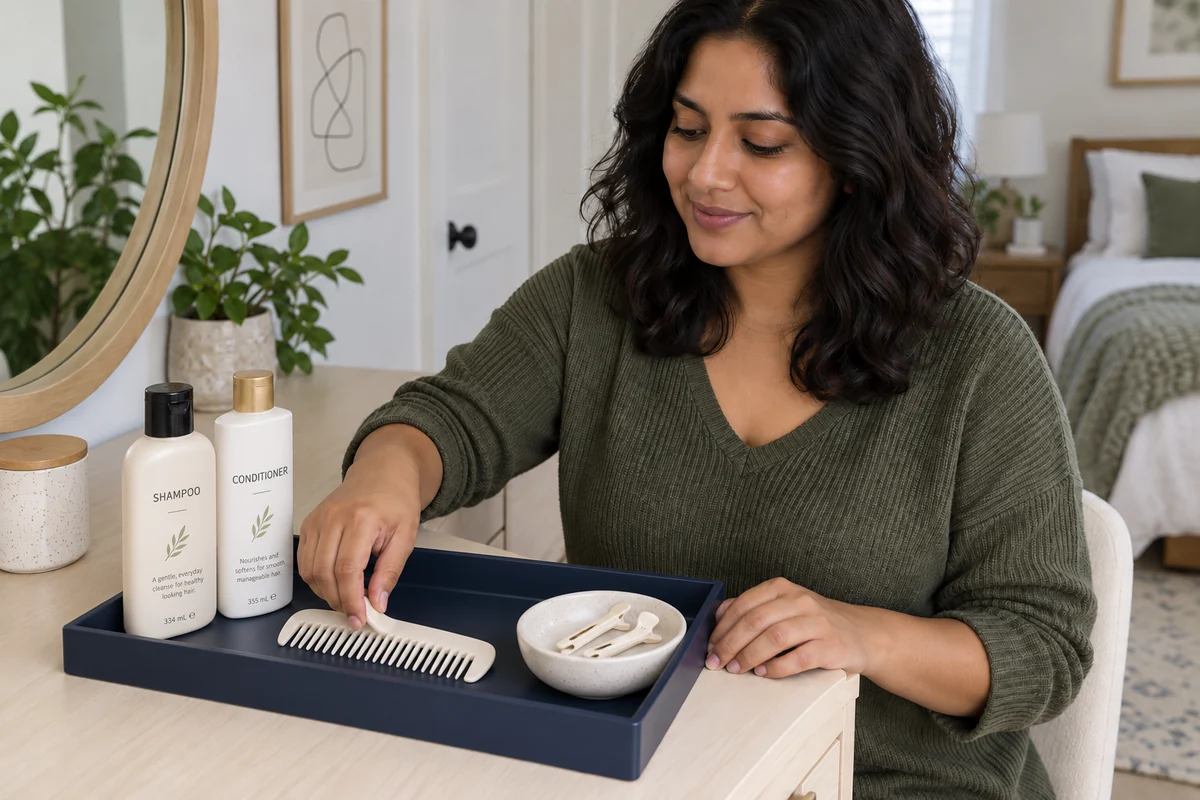
A woman returns a pale comb to a dark tray containing capped shampoo and conditioner bottles and a bowl of clips.

Lay everything out before your hands are full

  • Set out a towel, clips and the products you plan to use.
  • Leave a dry spot to put things down once your hands are busy.
  • Keep the floor and your route clear, and ask for help with anything you can’t reach comfortably.
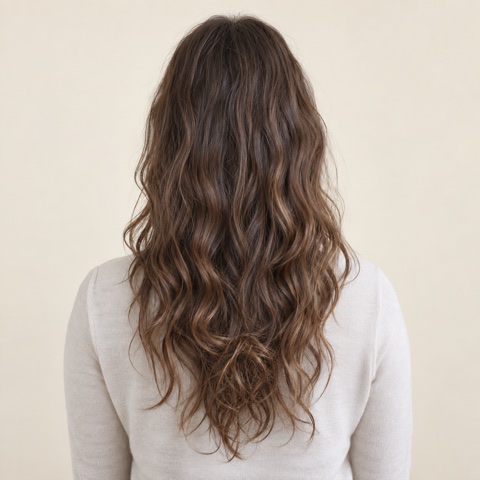
Wavy hair with tangles concentrated near the ends.

Bring one section round to the front

  • With longer hair, bring one loose section forward where you can see and reach it.
  • Short hair at the back is the hardest part seated, so consider help there or a simpler finish.
  • Hold the hair as you work, and stop if your scalp hurts or your arms get tired.
A helper in a blue shirt supports the wet hair ends while rinsing out conditioner with a handheld sprayer.

Say what kind of help you want

  • Tell the person which part you’d like help with and which parts you want to do yourself.
  • Agree a stop signal before washing or detangling starts.
  • Make sure they know the product directions, including what has to be rinsed out.

Products, by the job they do

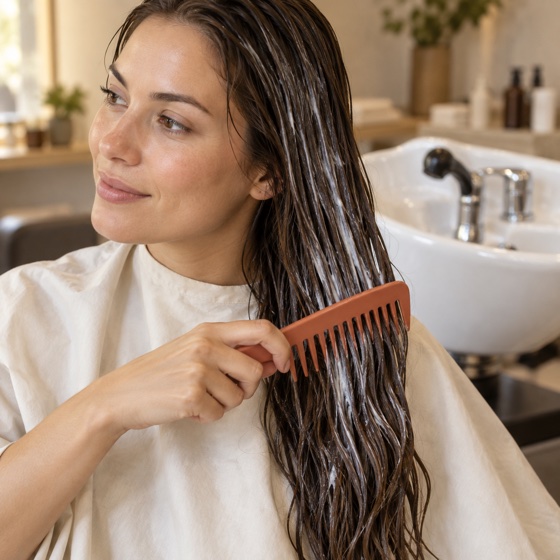
A woman detangling conditioned hair with a wide-tooth comb.

Choose for the bottle as well as the slip

Think about how a conditioner helps you detangle and how you’ll rinse it all out. The pump, cap or tube has to be one you can open and use. No single closure is easiest for everyone.

Browse rinse-out conditioners. Tell the consultation what you want from a conditioner and what you disliked about previous ones.

A woman smoothing leave-in product through her lower lengths.

A leave-in, if it fits the routine

A leave-in for the lengths can be worth it when its directions fit how you work. It doesn’t stand in for washing your scalp.

Browse leave-in conditioners. Your drying routine and preferred finish help guide a leave-in recommendation.

How to do it

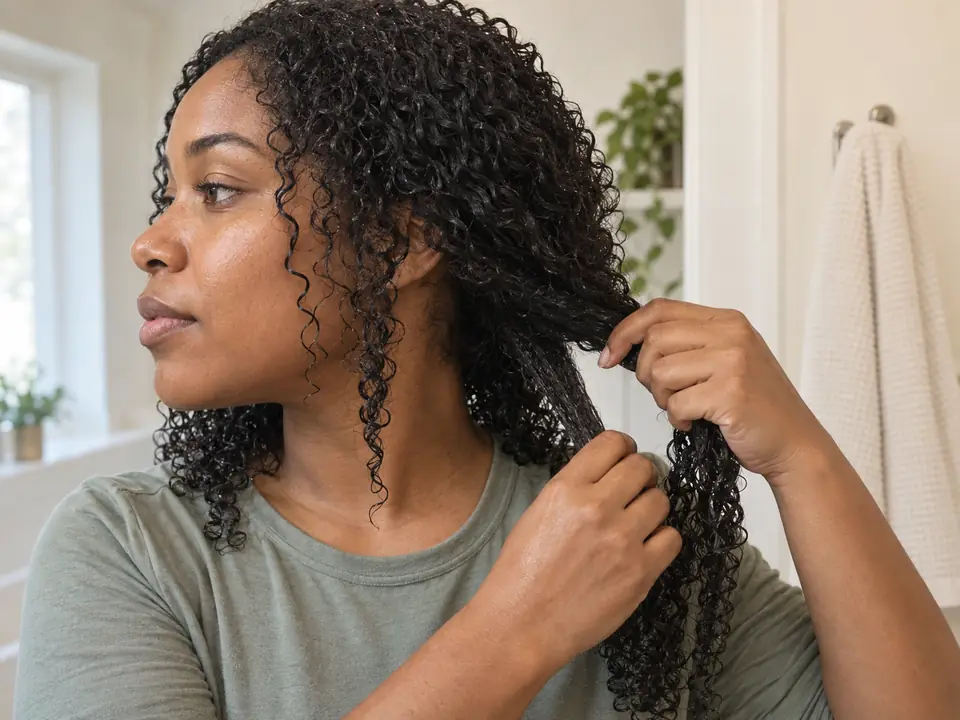
Woman with wet coily-curly hair using both hands to separate one reachable side section for finger detangling.

2. Detangle gently, holding the hair

Pick the wetness and conditioning that suit your pattern and the product. Work through one held section at a time, and never pull through a knot that resists.

Guide: Detangle with your fingers
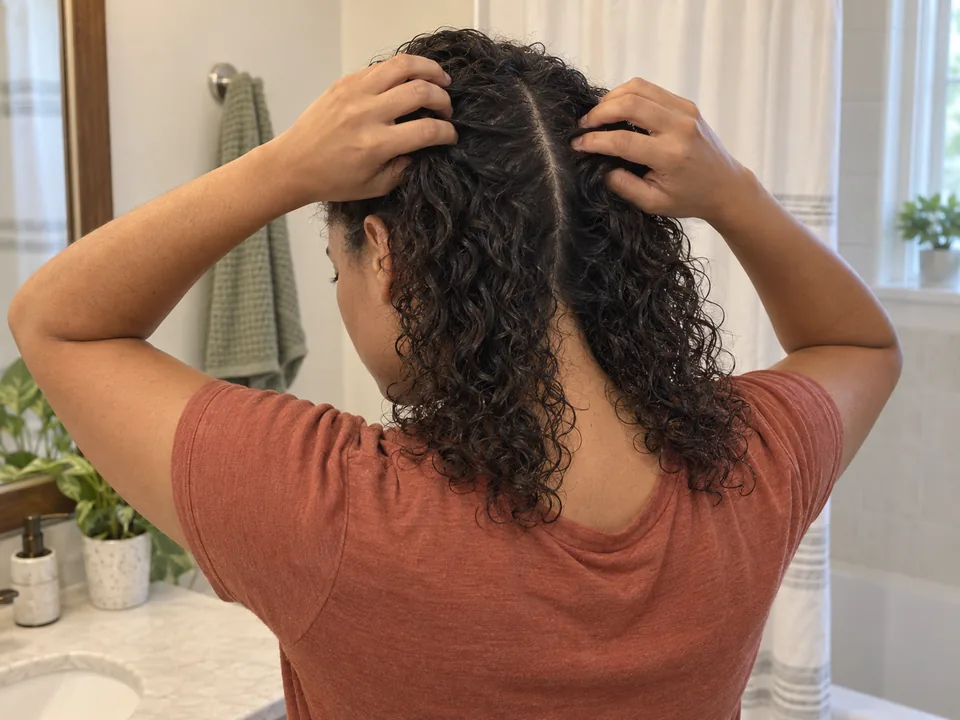
A woman places her fingertips on either side of the part in her damp hair, with the lengths hanging loose.

3. Give drying some space too

Arrange loose hair where you can reach it and check the inner parts as it dries. Air drying is an option when the time and setup suit you, not a rule.

Guide: Air-dry your hair

Illustrated care examples: before & after

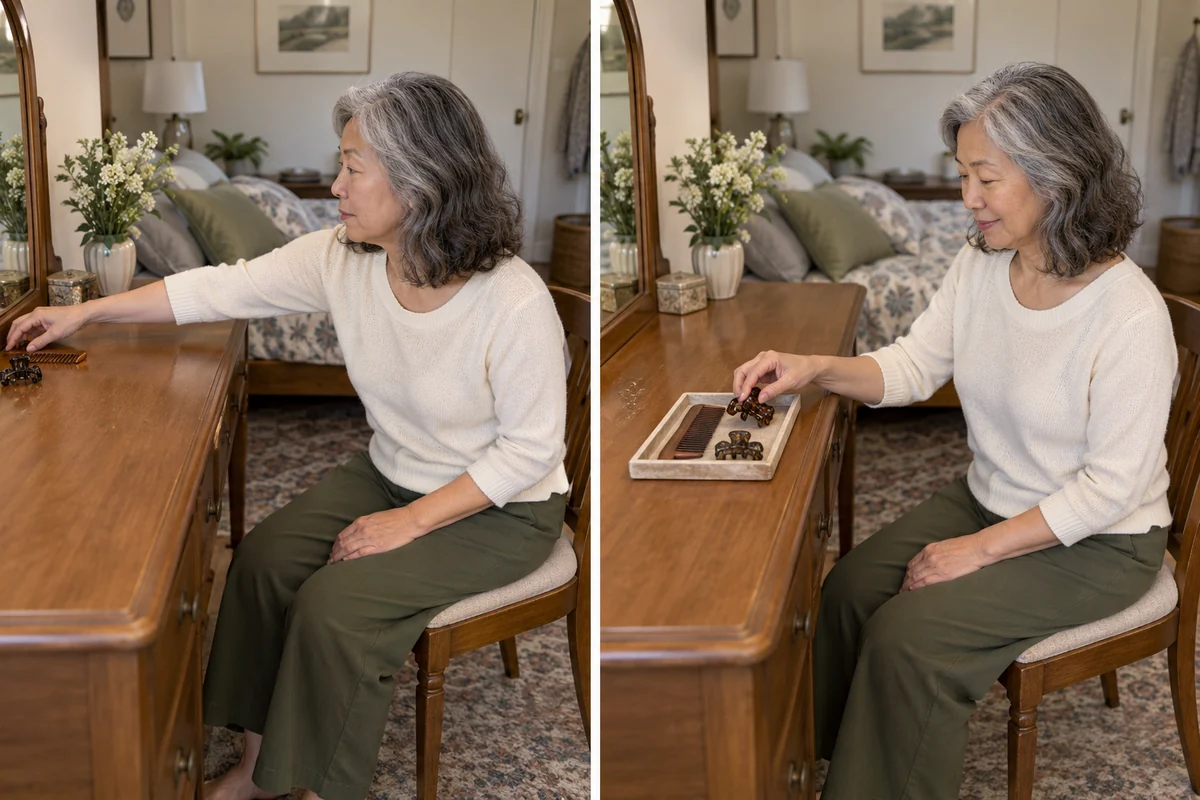
Supplies brought closer

The same seated woman reaches across a dressing table for a clip, then uses a tray of clips and a comb placed closer to her.
Before · a clip across the tableAfter arranging · a tray within reach
The clip and the other tools have moved to a tray beside you. This is dry grooming at a table, not a shower seat or a transfer.

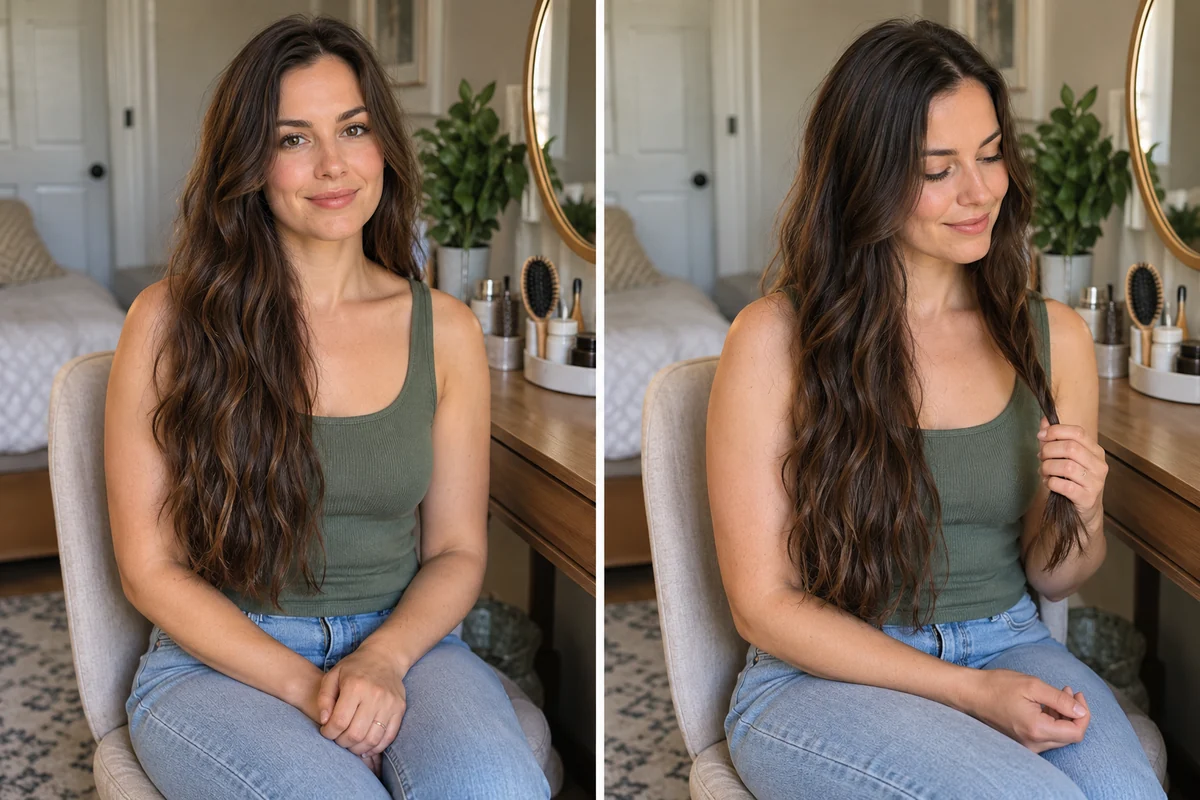
One portion at a time

A seated woman has long wavy hair loose in front, then gently holds one narrow portion at chest level while the rest remains loose.
Before · loose lengths in frontAfter arranging · one portion held gently
Sitting down, one reachable portion is held while the rest hangs loose. Work a piece at a time and stop whenever you need to.
A woman with curls writing a routine note beside her hair-care products.

Help with your hair-care routine

Bring your hair-care questions to the consultation. You can also read building a simpler everyday routine.

  • Which parts can I comfortably do sitting down?
  • Where would a bit of help make the biggest difference?
  • What finish suits my reach, my energy and how I wash?

The plan uses the hair and scalp details you share, past treatments, current products, preferences and the time and budget you have.

The Hair Care Consultation gives you a personal plan with product recommendations, routines and guidance on your hair-care questions.

$49 with 60 days of follow-ups, or $99 with 12 months. Pay once; the year renews only if you choose.