Hair Care Guides

Send the care plan with the kid.
Plan for the nights they’ll actually be away.

Camp or a sleepover means strange bathrooms, late nights and grown-ups who don’t know your child’s hair. It’s normal to worry about that. Agree what help is on offer, pack the familiar things and let your child practice the parts they can do.

Your personal hair-care planProduct choices, routines and answers shaped around your hair.$49one-timeStart my consultation
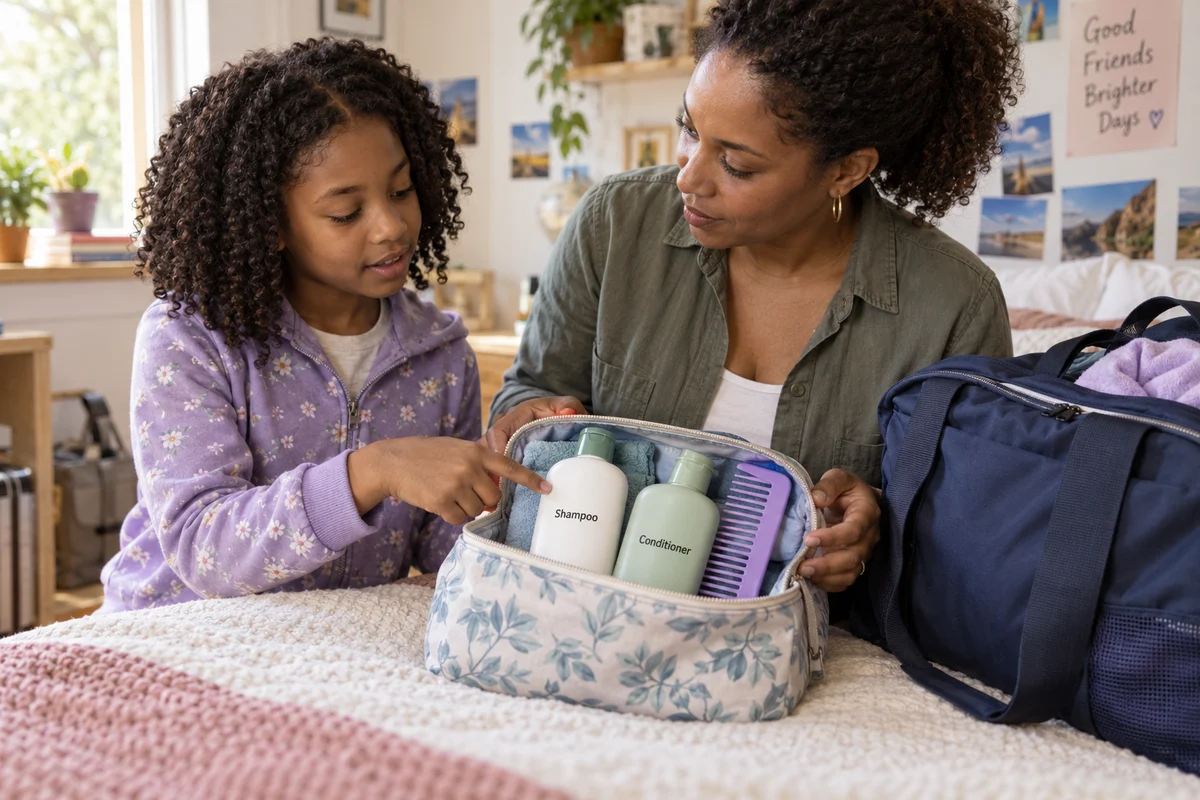
A child with coily hair and caregiver pack a wash kit beside an overnight bag.
Plan for the nights they’ll actually be away.

What is going on

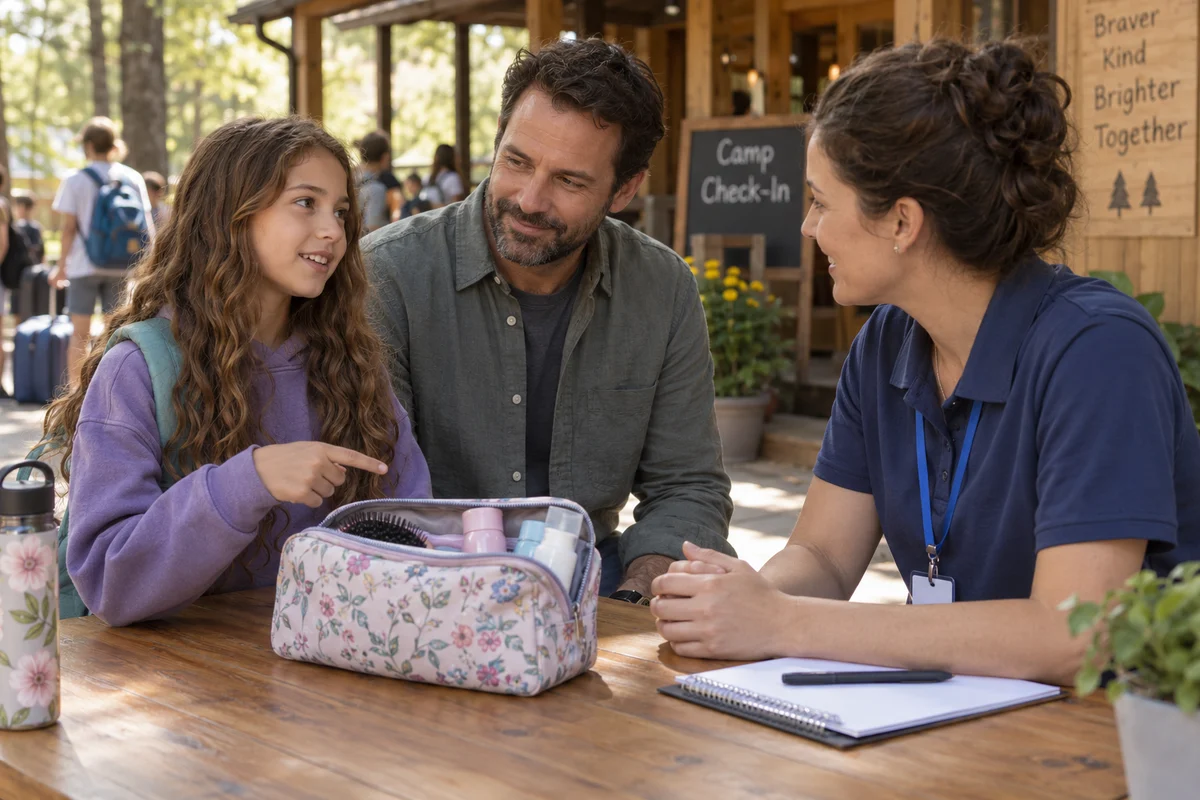
A child and caregiver discuss a wash kit with a camp staff member before the stay.

Find out who can help

Ask the camp or the host family what hands-on help the adults can give, when washing happens and how your child can ask quietly. Be specific, like undoing a tie or checking conditioner is rinsed out. Don’t assume a counselor can manage an unfamiliar style.

A child points to the back of their dry hair while an adult watches during a practice session in a living room.

Rehearse the real thing at home

Before they go, let your child run through the parts of their routine they can do, with you nearby. Notice where they still need a reminder or a hand. Pack for what they can do today, not what a week away is meant to teach.

What helps, day to day

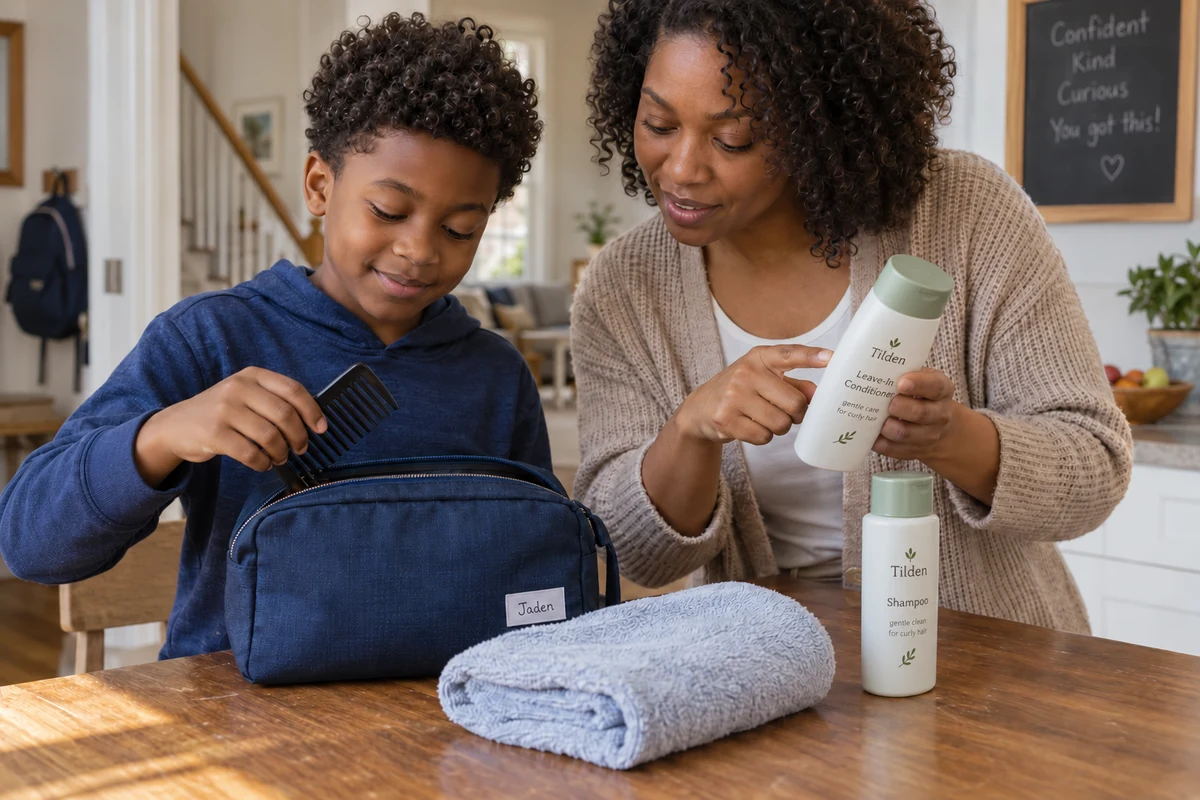
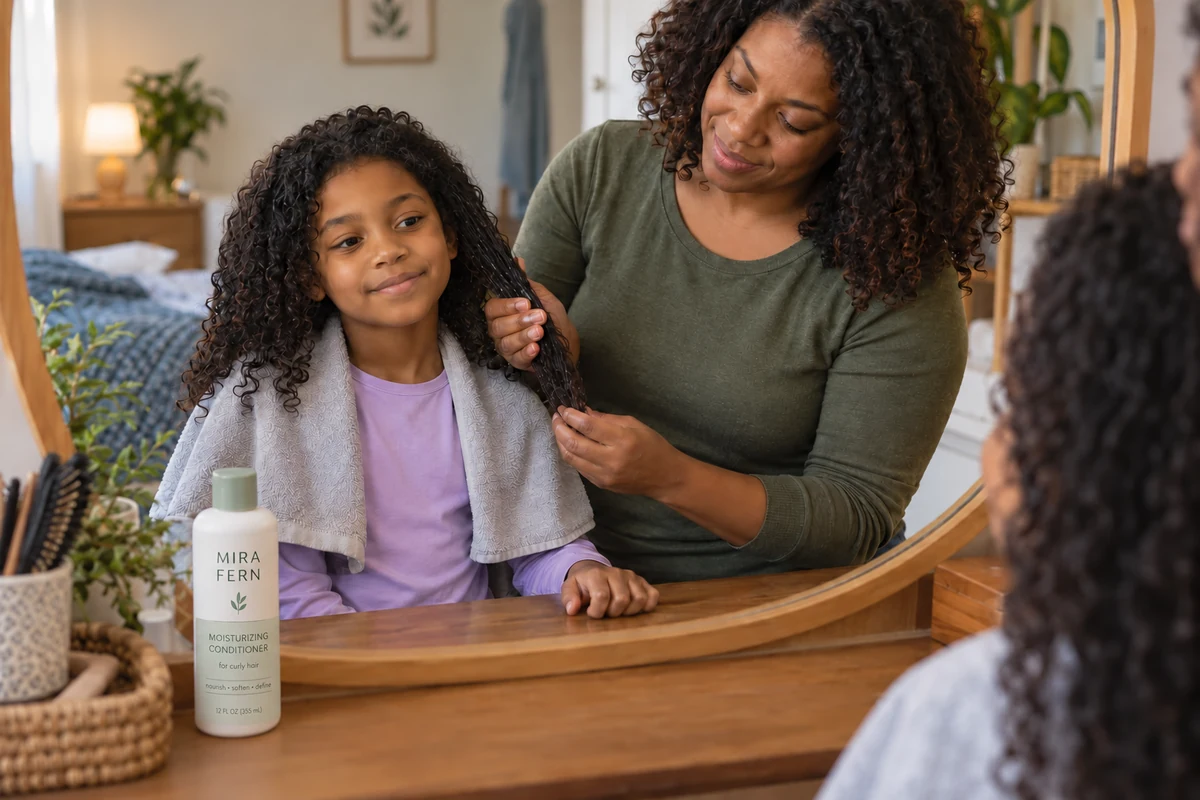
A child and caregiver check a named original bottle and personal comb beside a wash pouch.

They can’t find the shampoo

  • Pack a small wash kit they can recognize, within the camp’s packing rules.
  • Keep products in their original bottles with the directions readable.
  • Put their name on the comb and towel, so nobody ends up sharing someone else’s.
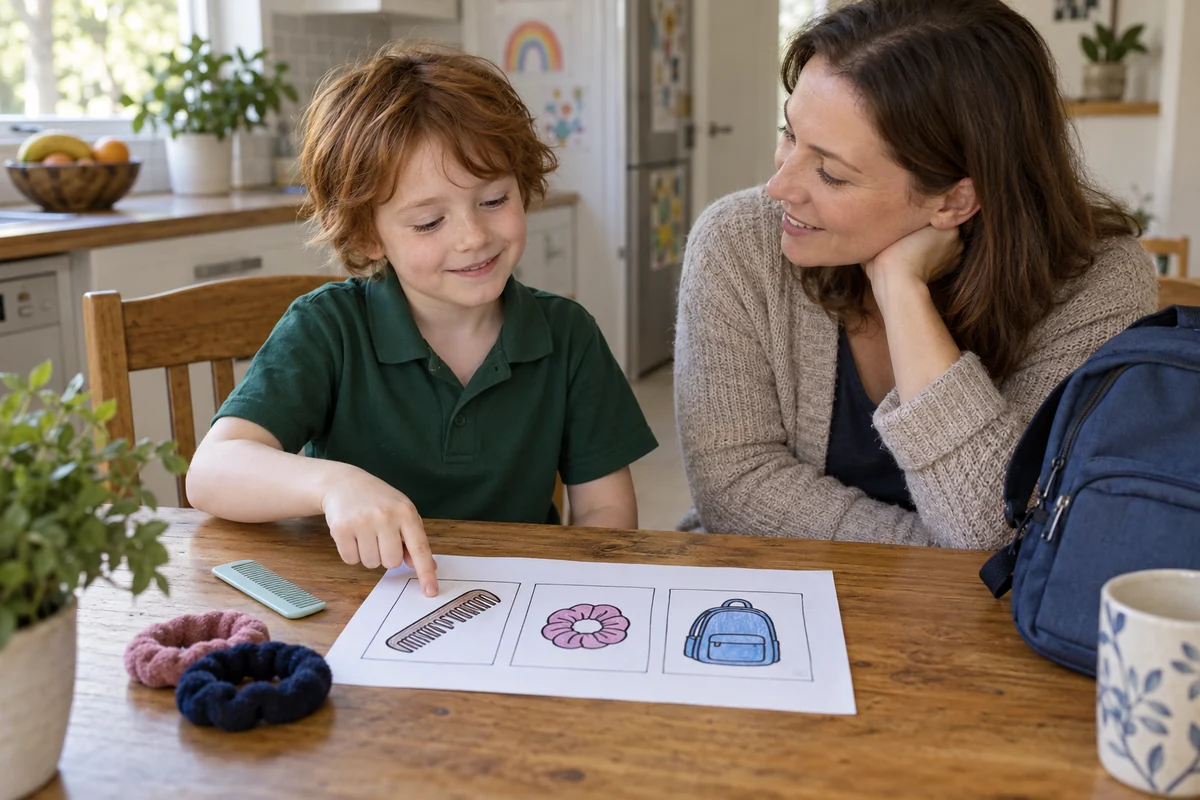
A child with short auburn hair points to a picture checklist while an adult listens beside a school bag.

Bedtime looks nothing like home

  • Agree a short evening sequence your child understands and a quiet way to ask for help.
  • Decide who checks that conditioner is actually rinsed out.
  • A nice style can wait.
  • Nobody should rush the rinse or send a child to bed with wet, set hair to save time.
An adult supports a damp section of a child’s curly hair while smoothing conditioner through its lower lengths.

Swimming adds a second job

  • Ask about showers and how your child already handles hair after swimming before you pack.
  • Leave time and a helper for rinsing, gentle detangling and drying.
  • Send the steps they already know rather than inventing a new treatment for the first night away.

Products, by the job they do

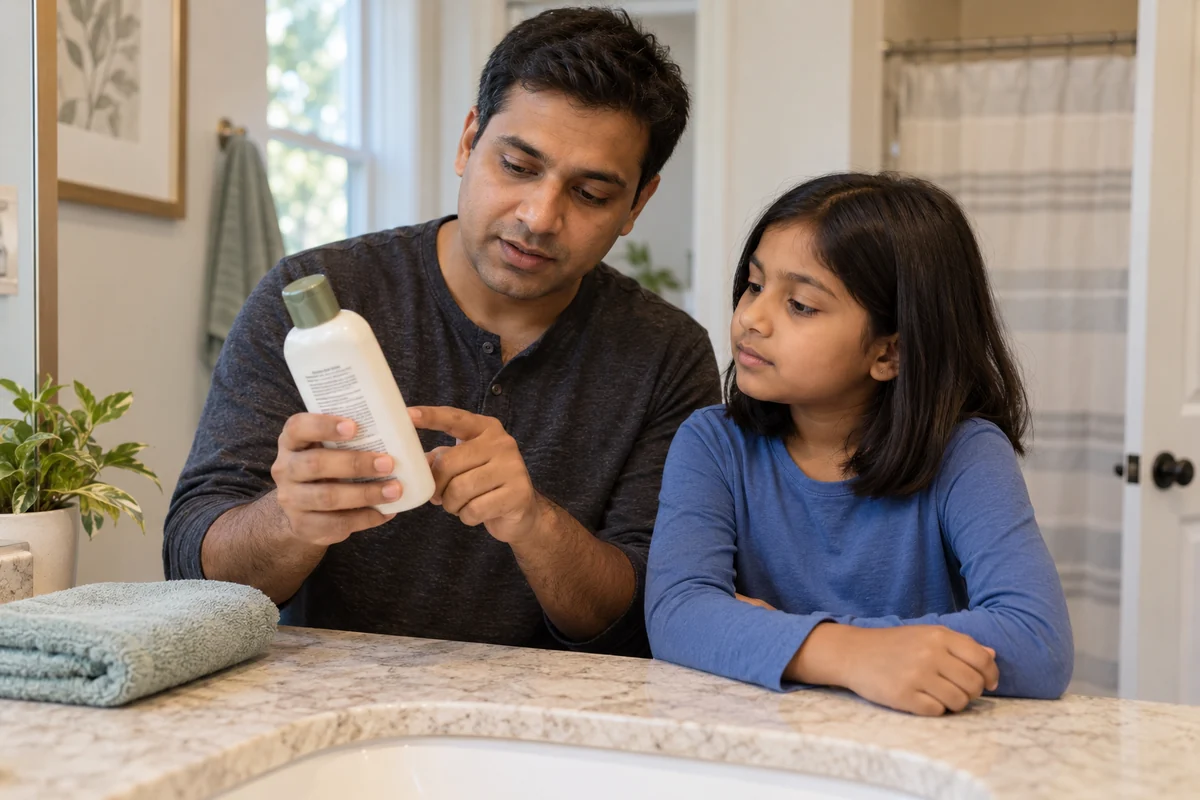
An adult and child look at the back label of a hair-care bottle together at a dry vanity.

Pack the shampoo they know

Send the familiar, age-appropriate shampoo with its directions still readable. If you decant it into something smaller, make sure the adult on the other end can still tell what it is and read the warnings.

Browse cleansing products. For shampoo recommendations, share how your roots feel between washes and what you use now.

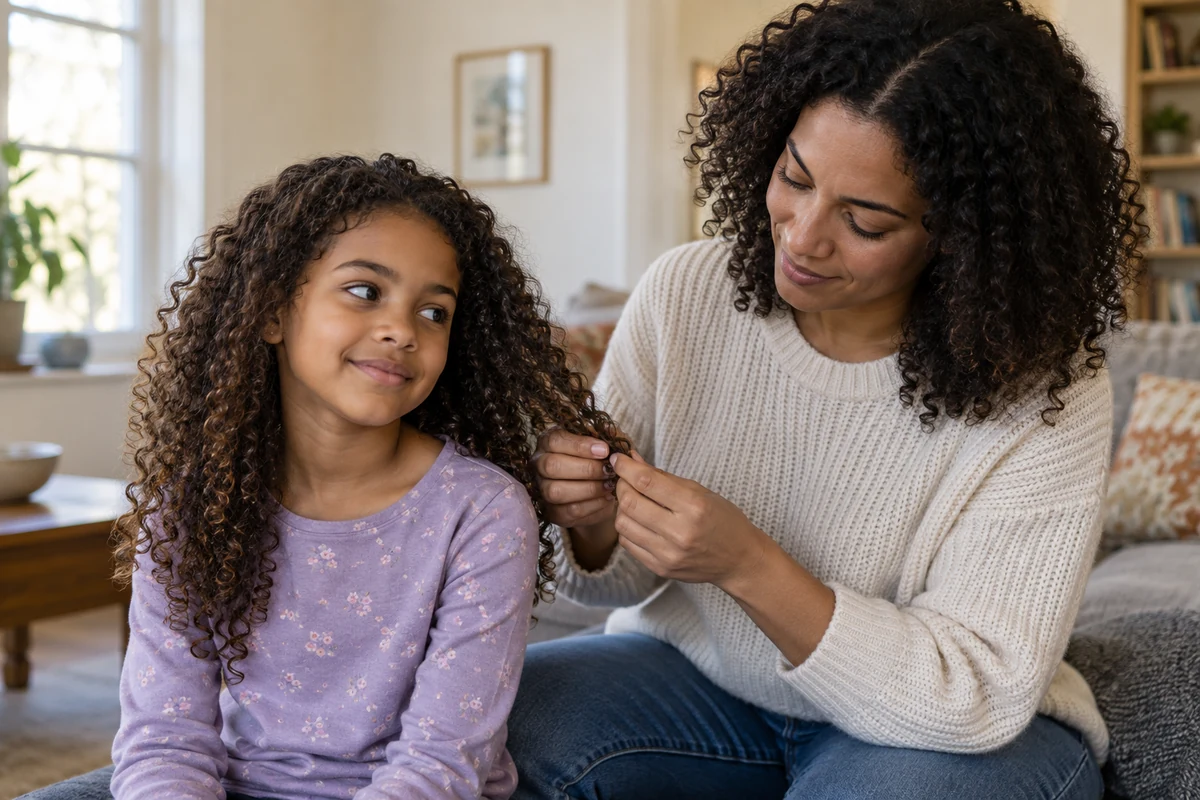
A caregiver supporting a small section of a child’s curly hair during gentle detangling.

Keep the conditioner that makes brushing bearable

Pack the conditioner that makes brushing bearable, with a note on where it goes and when to rinse. A child shouldn’t have to swap in an unfamiliar mask or leave-in.

Browse rinse-out conditioners. Tell the consultation what you want from a conditioner and what you disliked about previous ones.

Make the plan easy to follow

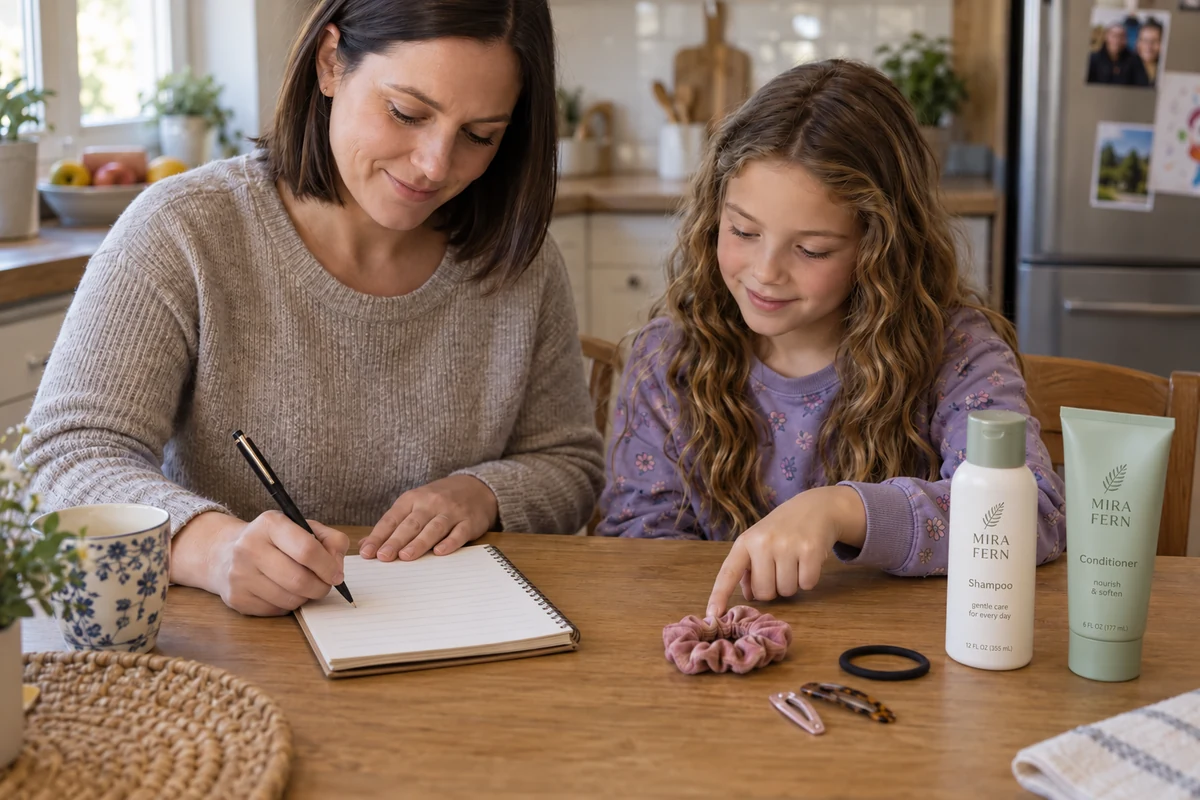
A caregiver begins a hair-care note while a child points to a preferred soft tie.

Write one short handover

List the current products, when the last wash was, what handling they’re comfortable with, anything they can’t have, and the next thing likely to come up. Give it straight to the adult in charge. Share only what that person needs for the stay.

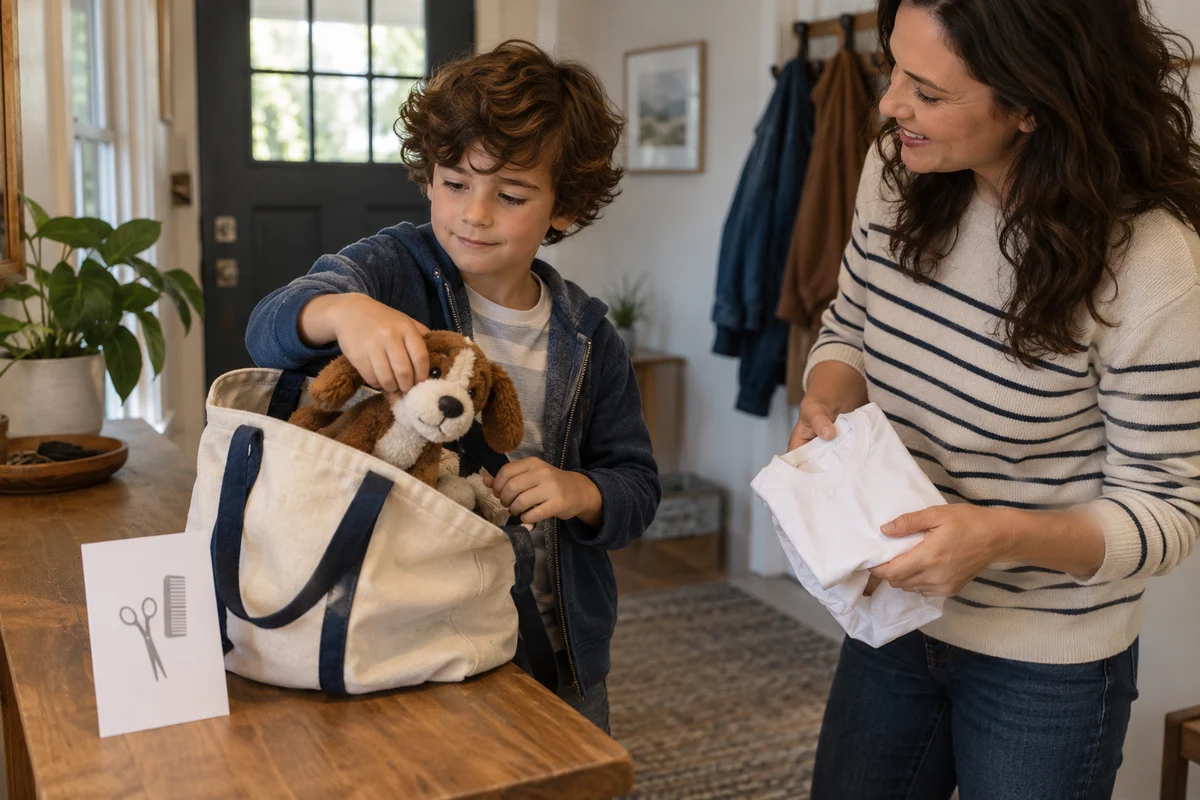
A child and caregiver pack a plush toy and spare shirt for a salon visit.

Check the kit together

Pack a familiar comfort item next to the wash kit if it’s allowed. Have your child find everything before you leave, and agree where wet things go afterwards. When they’re back, talk about what was hard without making it their fault.

Illustrated care examples: before & after

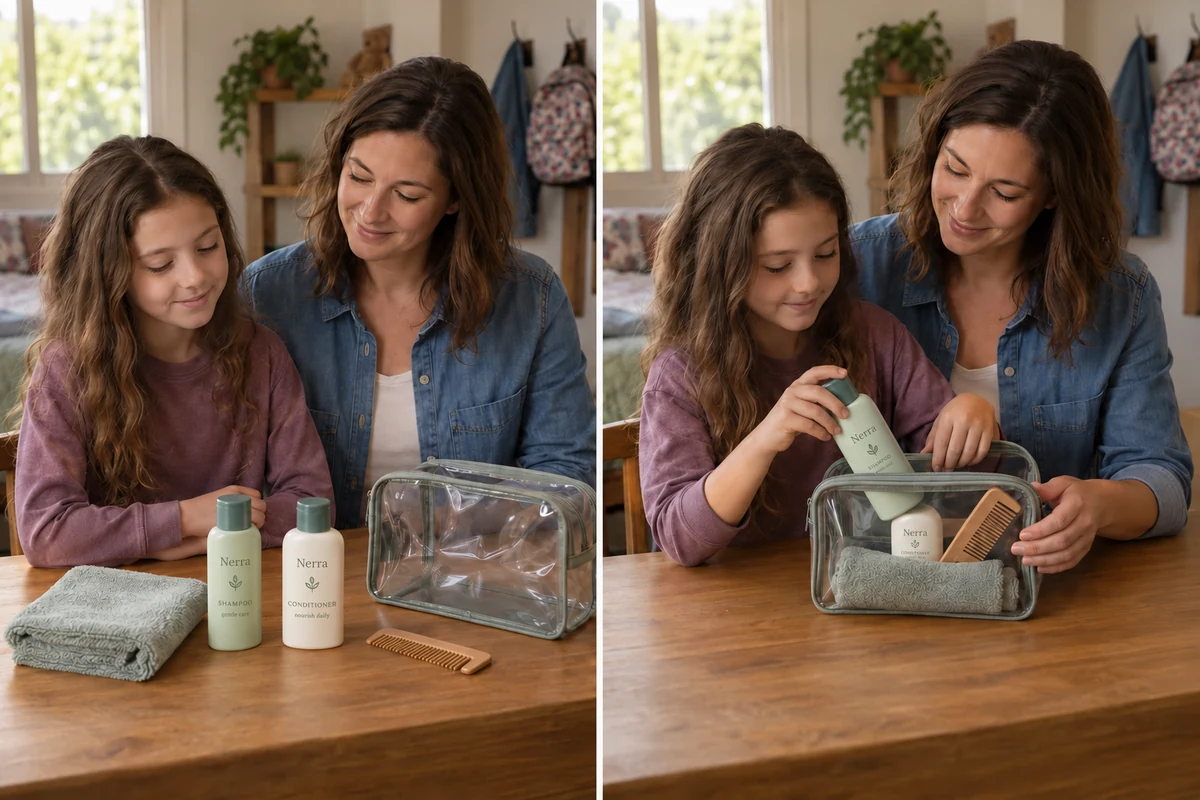
The familiar kit, packed

The same child and caregiver gather scattered care items into a wash pouch.
Before · items spread across the tableAfter care · the wash kit gathered
The same familiar items go into one kit, packed together with the child. This is the packing, not the washing on their own.

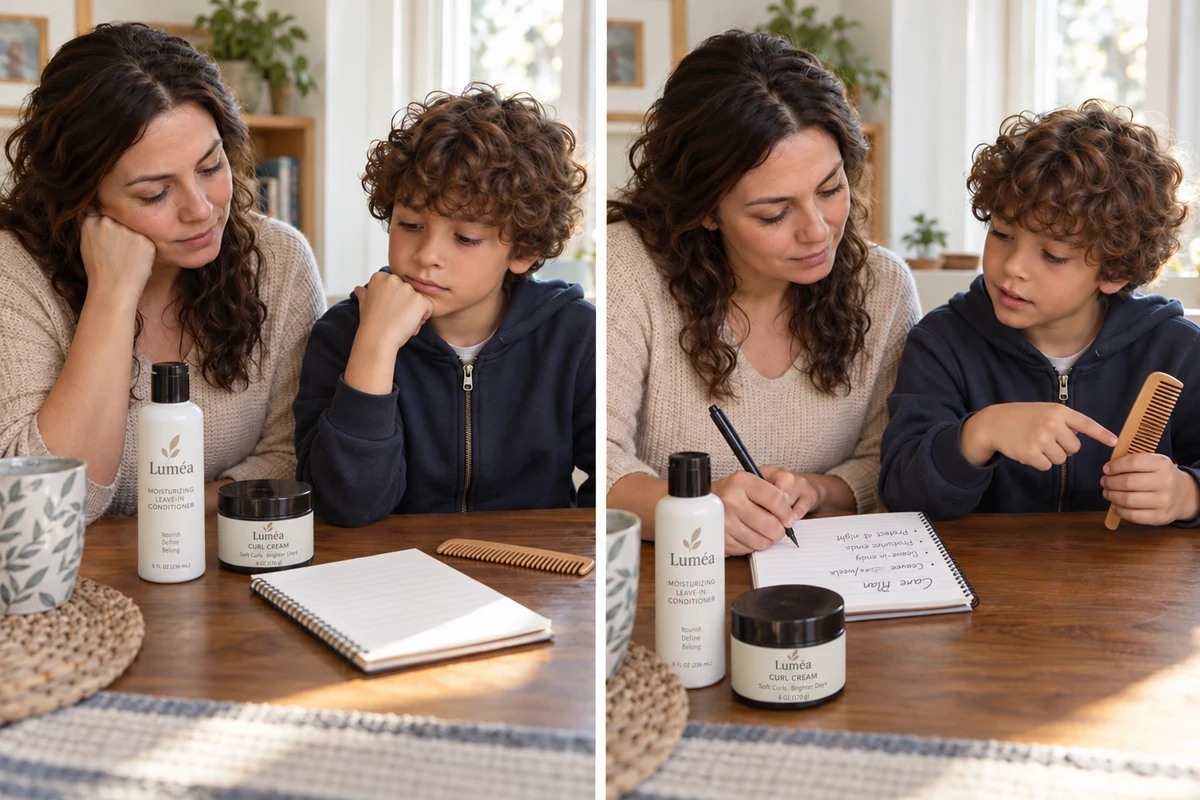
Start the handover note

The same child and caregiver discuss products, then begin a care-plan note together.
Before · care choices not written downAfter care · a short note begun
The care steps and the help you have agreed on get written down before the stay. What the host can actually do is a conversation, not a note.
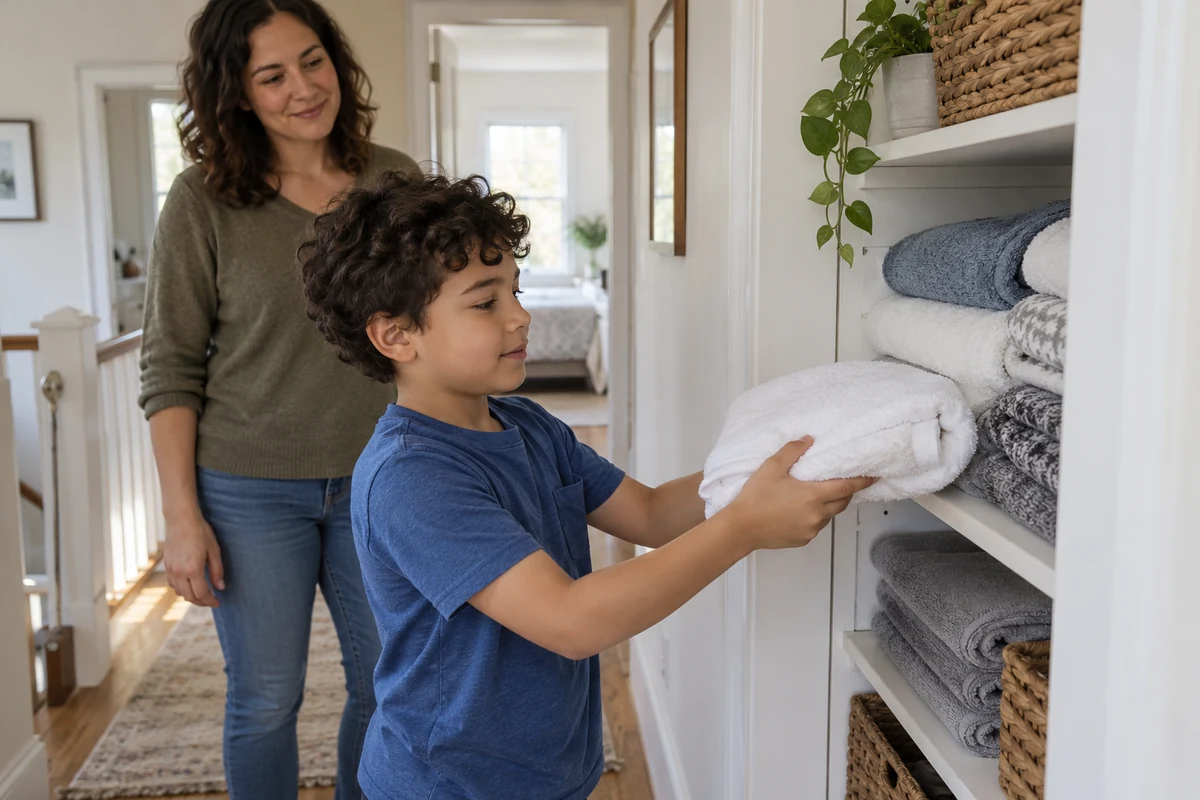
A child takes a folded towel from a low linen shelf while a caregiver watches nearby.

Help with your hair-care routine

Bring your hair-care questions to the consultation. You can also read keeping care information clear between caregivers.

  • What can my child manage on their own away from home?
  • Who’s going to help with the rest?
  • What if swimming or a late night pushes the wash to another day?

Share your child’s usual routine, what they can genuinely do themselves, their length, pattern and products, and who’ll be around to help. That’s enough to sketch a temporary plan that doesn’t lean on the host for more than they offered.

The Hair Care Consultation gives you a personal plan with product recommendations, routines and guidance on your hair-care questions.

$49 with 60 days of follow-ups, or $99 with 12 months. Pay once; the year renews only if you choose.