Hair Care Guides

A baby’s hair needs very little.
Comfort and a watchful adult come first.

With a baby or toddler, hair care is mostly about a calm child, a prepared adult and warm water. The goal is clean and dry, not styled. If you’re anxious about doing it right, that’s normal. Keep it small and gentle.

Your personal hair-care planProduct choices, routines and answers shaped around your hair.$49one-timeStart my consultation
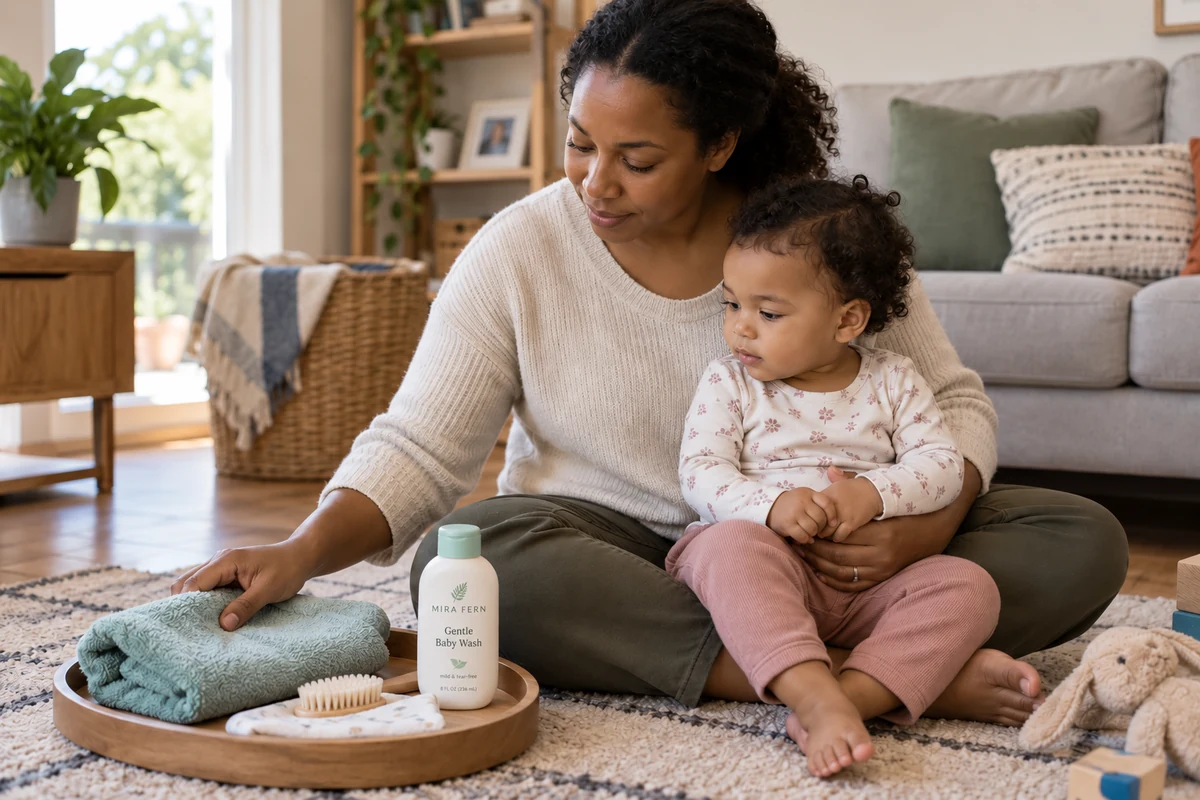
A caregiver seated on the floor supports a toddler while checking a soft towel and closed wash bottle on a low tray.
Comfort and a watchful adult come first.

What is going on

A caregiver gathers a towel, clean clothing and closed baby wash while another adult supports a clothed toddler.

Set everything out before the water

Have the towel, clean clothes and any baby-suitable wash within arm’s reach before you start. Keep one hand on the child whenever they’re near water. If you have to step away, take them with you. A bath seat or an older sibling isn’t supervision.

A caregiver pauses and listens while a supported clothed toddler points toward a folded towel.

Pick a good moment

Choose a time when your child is awake and settled rather than hungry or overtired. Tell them what’s coming next in a calm voice. If they get upset, pause and try another way. Finishing a hairstyle is never a reason to hold a child still.

What helps, day to day

A seated caregiver supports an awake clothed baby with sparse short hair; no grooming or product application is underway.

There’s barely any hair to wash

  • Use warm water, not hot, with the faucet off.
  • For a baby, plain water is often enough, with a baby-suitable wash when it’s needed.
  • If you have newborn bathing instructions, including care while the cord stump heals, keep following them.
An adult reads an original product label while another caregiver supports their clothed toddler nearby.

There’s a family shampoo on the shelf already

  • Check the age guidance and directions before it goes anywhere near the baby.
  • An adult shampoo, an essential oil or a scalp treatment isn’t automatically fine for an infant.
  • Keep bottles out of reach, including while you tidy up afterwards.
A caregiver lightly pats short damp hair with a soft towel while supporting a clothed toddler on her lap.

The drying part is the bit they hate

  • Pat gently with a soft towel while keeping them held and warm.
  • No rubbing, no tight wrapping, no pulling tiny hairs into a style.
  • Leave short pieces as they are.
  • A sleek grown-up finish isn’t the point.

Products, by the job they do

A caregiver compares the directions on two closed baby-wash bottles.

Use a baby wash, and only when needed

Read the age, amount and rinse directions on the exact bottle. It can’t make an adult shampoo into a baby one.

Browse cleansing products. For shampoo recommendations, share how your roots feel between washes and what you use now.

A caregiver reads a closed conditioner tube while supporting a clothed curly-haired toddler on their lap.

Add conditioner only if the hair really needs it

Sparse or very short hair may not need conditioner at all. Once there’s length that tangles, check the age guidance and follow the label. Masks, oils and styling products don’t need to join in just because the hair is growing.

Browse rinse-out conditioners. For conditioner recommendations, share where your hair tangles and which products you have tried.

Keep the first routine simple and repeatable

One caregiver writes a brief care note while another supports a clothed toddler on their lap.

Leave a note for the next caregiver

Write down the exact product, anything the child can’t have, what calms them and where the clean supplies are. Keep it short. Whoever takes over needs to know the supervision rules before they start. That’s an adult’s job, never the child’s.

A caregiver securely supports a clothed infant and observes the short-haired scalp without touching it.

Keep grooming and scalp worries separate

Don’t scrape or pick at crusts to make the hair look clean, and don’t cycle through oils or adult dandruff products. Note what you see and what you’ve used. A scalp change that persists or bothers them is a different conversation from washing.

When to get help

A woman and a medical professional seated together, looking at a calendar.

Signs that need more than routine care

  • If your baby’s scalp looks sore, bleeds, weeps fluid or swells, or something about it keeps worrying you, show a medical professional rather than trying another product. Ask before using any medicated scalp product on a child this age, and stop any wash that seems to cause a reaction. A baby’s scalp can’t be sorted out by guessing from a photo.

Illustrated care examples: before & after

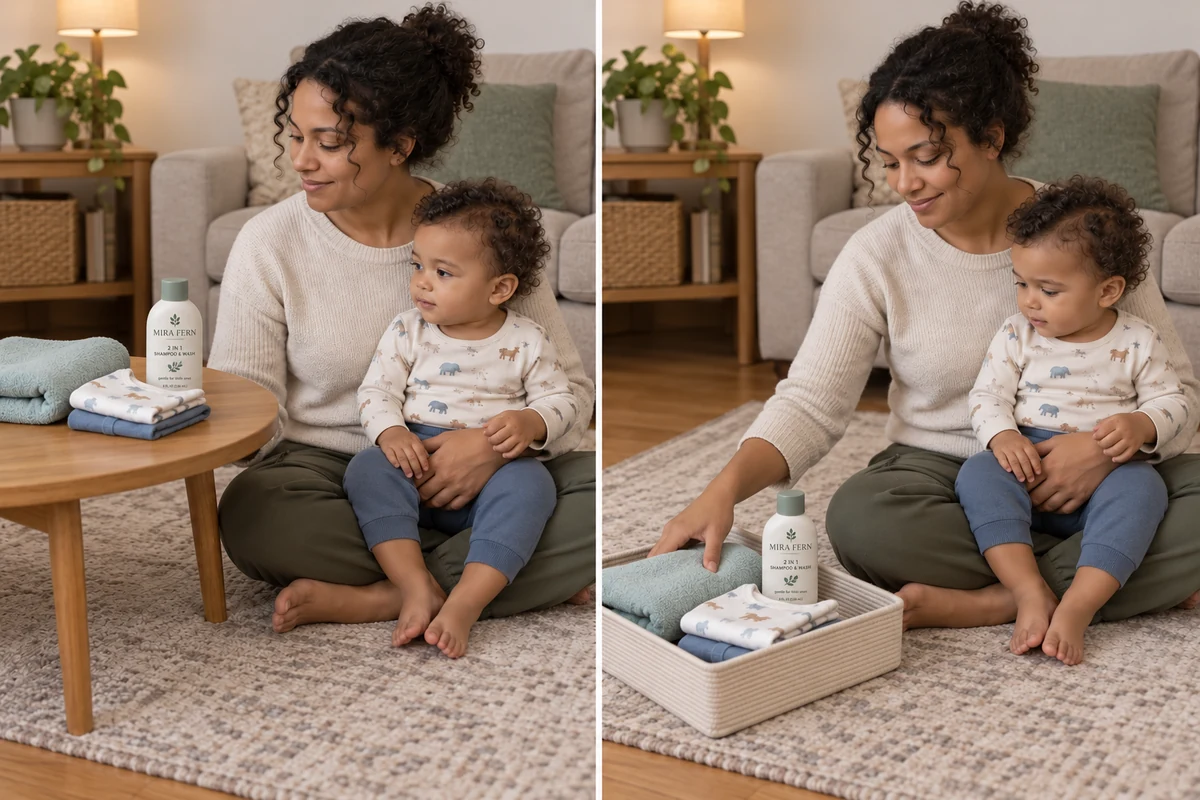
Supplies within arm’s reach

The same caregiver supports a toddler while moving the towel, clothes and closed wash bottle into a nearby tray.
Before · clean supplies laid out nearbyAfter arranging supplies · the same supplies gathered close
The same clean supplies pulled in close before care starts, in a dry spot, so your child stays supported the whole time. This is setup, not bath time.

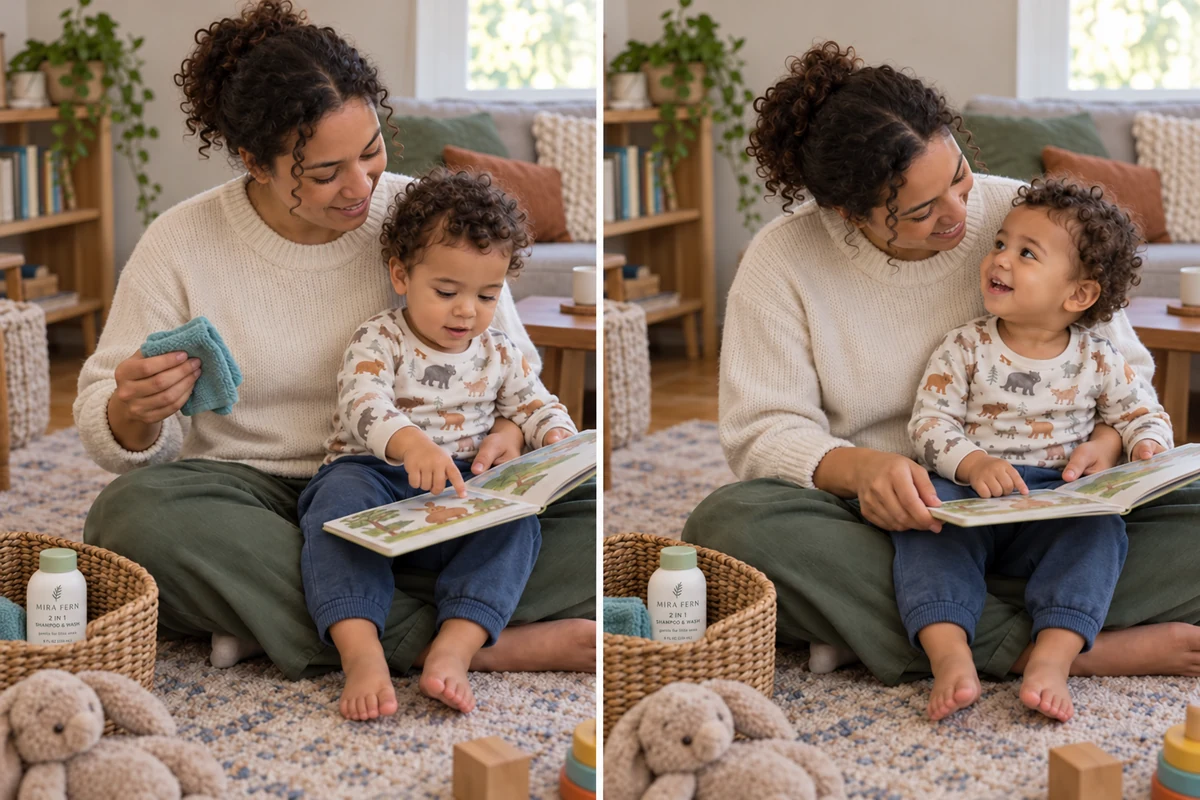
Cloth down, child first

The same caregiver puts a soft cloth back in a basket and pauses with the toddler over a picture book.
Before · cloth in hand, child readingAfter pausing · cloth set down, routine paused
The cloth goes down and the routine waits while you turn to your child. Pausing is the whole change, no finished style or calm is promised.
A parent writes a short routine note while securely cradling an infant beside prepared dry supplies.

Help with your hair-care routine

Bring your hair-care questions to the consultation. You can also read care when longer childhood tangles become the main task.

  • What do I need ready so I never have to leave the bath?
  • Is this bottle actually right for a baby this age?
  • What should every caregiver know about keeping my child comfortable?

Share your child’s age, how much hair they have, what their scalp looks like, what you’re using and what keeps them calm. The consultation can keep the routine small and age-appropriate, and work around any instructions you’ve already been given.

The Hair Care Consultation gives you a personal plan with product recommendations, routines and guidance on your hair-care questions.

$49 with 60 days of follow-ups, or $99 with 12 months. Pay once; the year renews only if you choose.