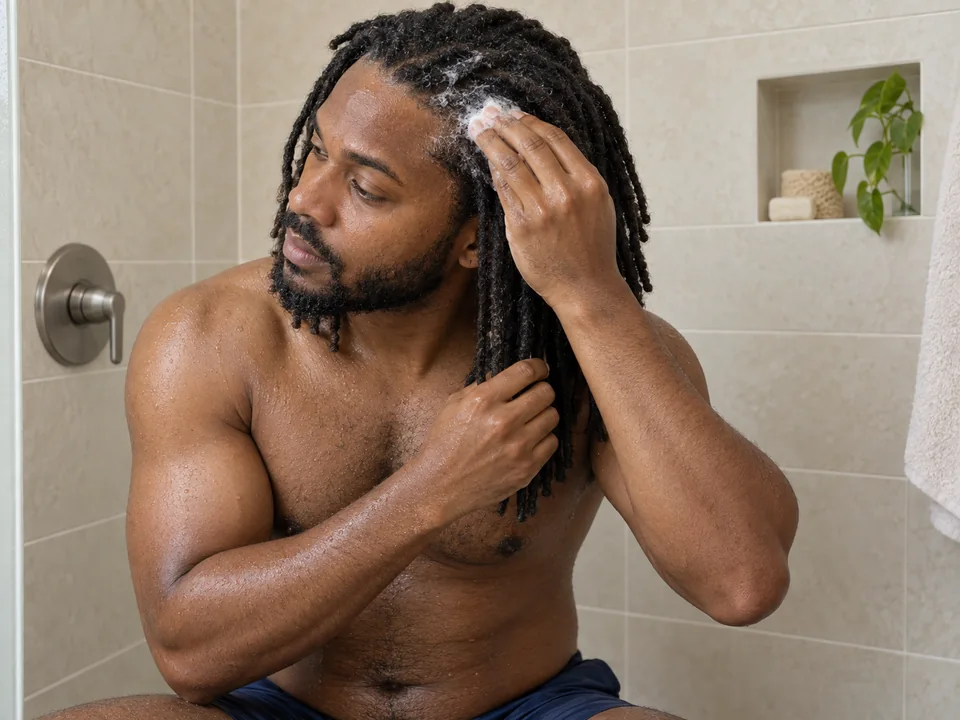
Wash and dry starter microlocs with braid and band
An installer-approved braid-and-band wash keeps interlocked starter microlocs in loose temporary bundles while you clean and rinse. This version releases the braids before air drying, so use it only when your installer has taught and approved that method for your current stage.
Step by step
 STEP 1 OF 12
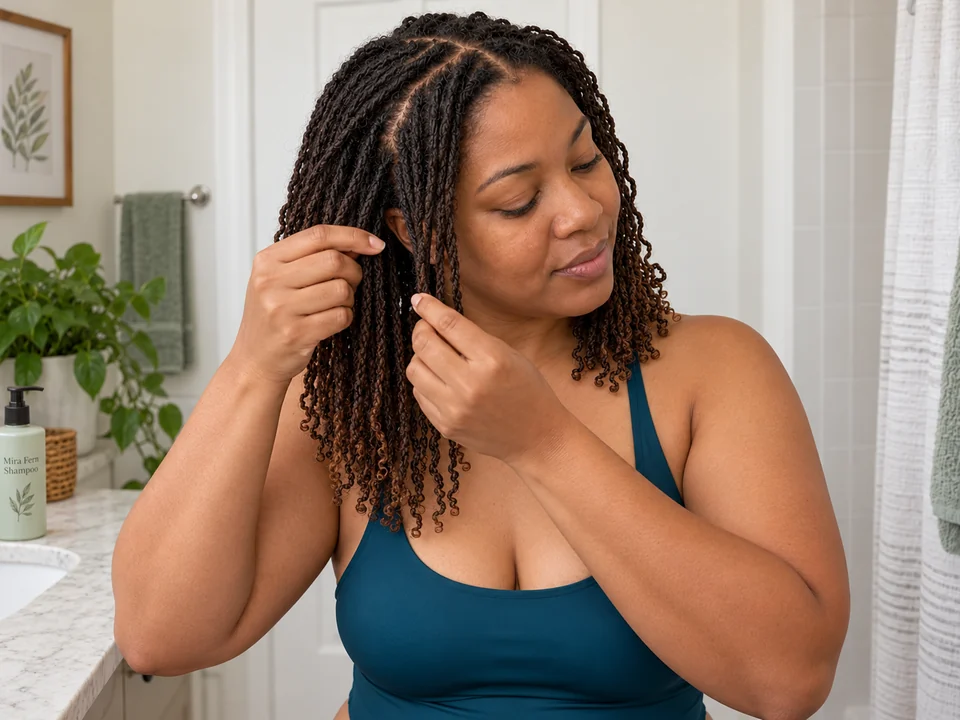
Choose one small group of locs
- Set the shampoo, bands and towel within reach. Check the shampoo label and your installer’s directions for amount and any dilution.
- With dry locs, use the existing parts to choose one manageable group. Leave neighboring groups loose; do not pull apart joined roots.
 STEP 2 OF 12
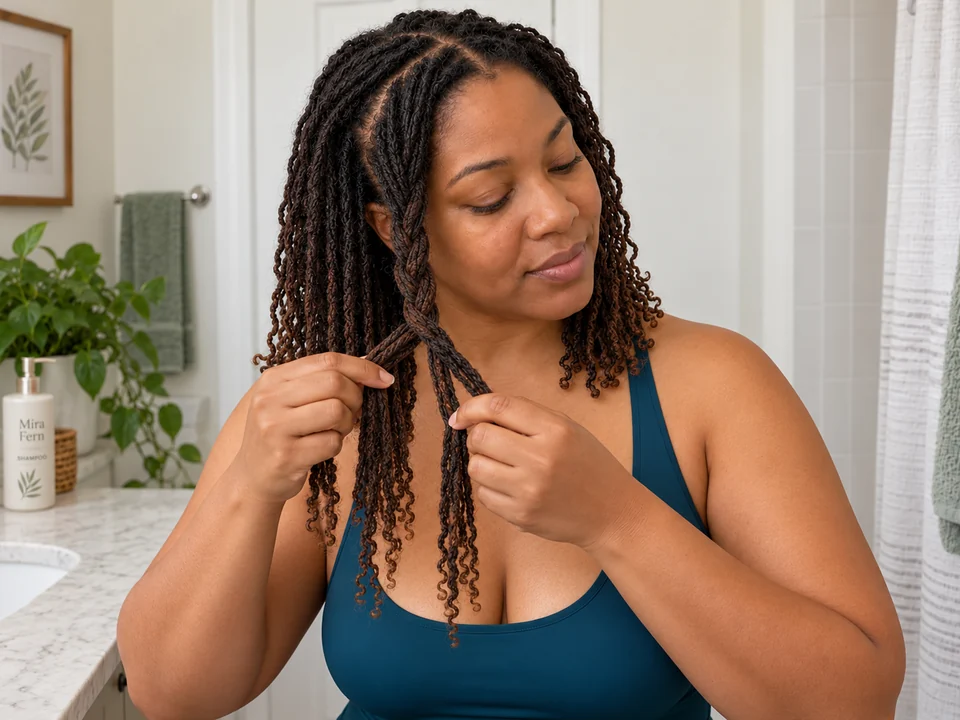
Braid the group loosely
- Divide that group into three smaller groups of locs. Leave space above the braid for your finger pads to reach the scalp.
- Cross one outside group over the middle, then the other outside group over the new middle. Repeat loosely, without tightening at the roots.
- Stop before the loose ends. Keep the three groups in your hands for the next step; do not braid right to the tips.
 STEP 3 OF 12
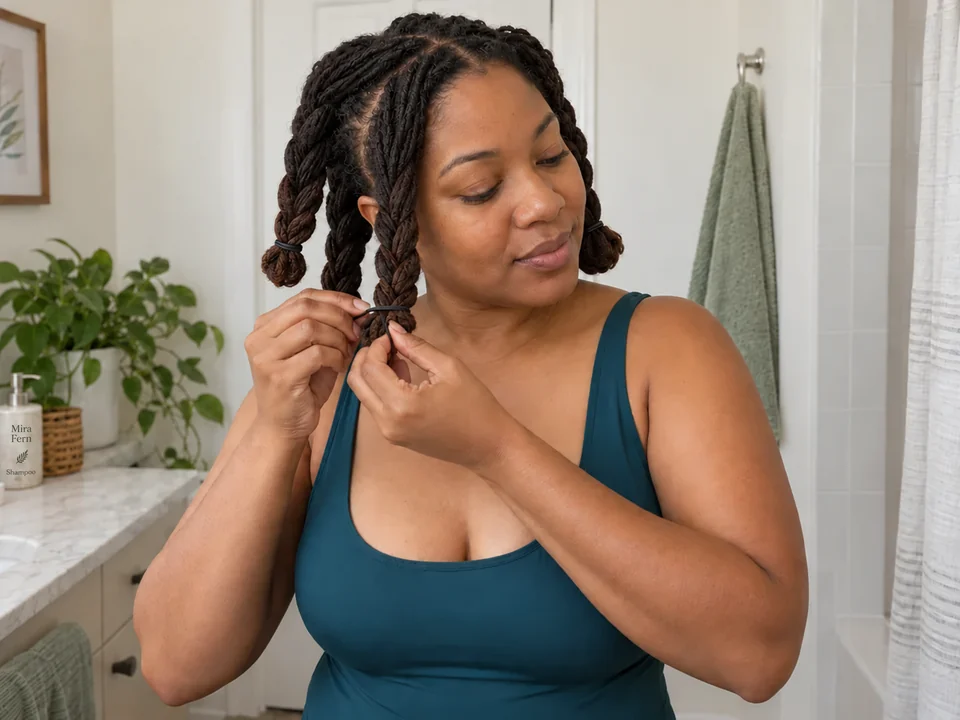
Secure the folded ends
- Fold the loose tips upward against the bottom of the braid. Hold them there with one hand.
- With the other hand, loop a smooth elastic around the folded ends just enough to hold them. Do not cinch it against the scalp.
- Repeat for the remaining groups. Check that every braid stays loose and that you can reach the scalp between them.
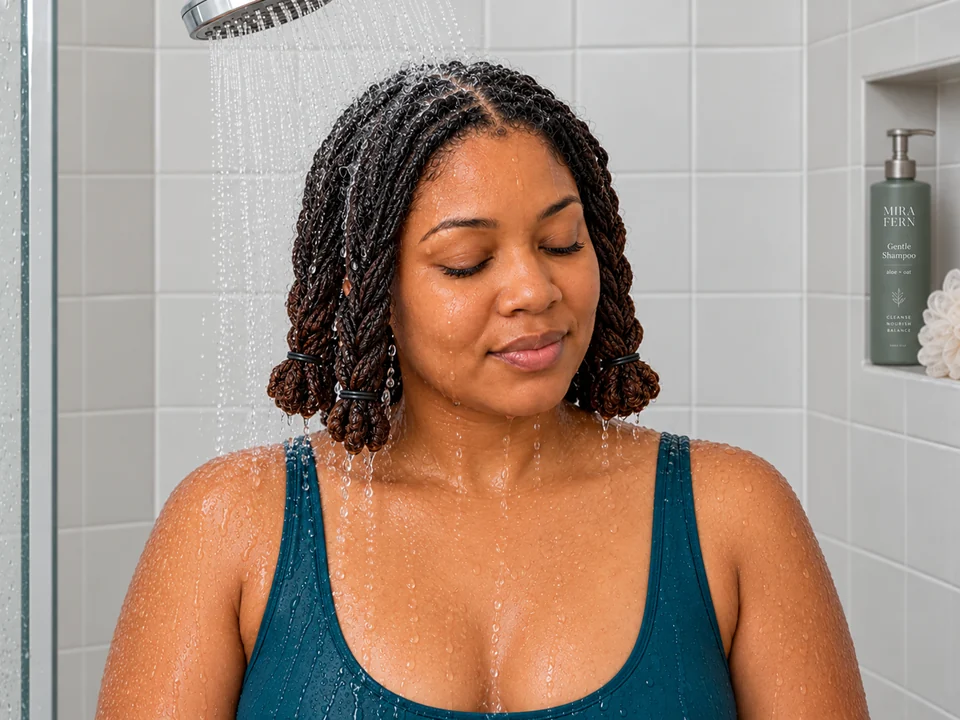 STEP 4 OF 12
Wet the scalp and bundles
- Use comfortably warm running water and a steady stance. A fixed shower leaves both hands free.
- Turn slowly so water reaches the crown, sides and nape, then runs through every bundle. Keep your neck comfortable and support heavier lengths.
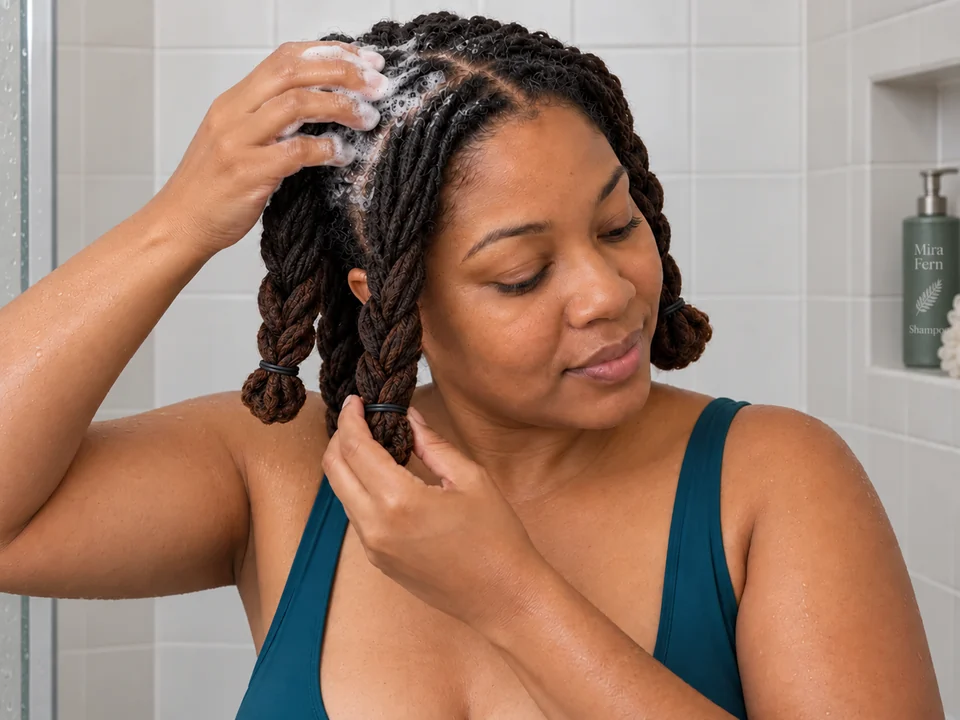 STEP 5 OF 12
Clean the scalp between the braids
- Apply your installation’s specified shampoo as its label and aftercare instructions say. Put the bottle down before using both hands.
- Work gently over the scalp with finger pads between the bundles. Support a bundle if needed; do not scratch or rub the locs against one another.
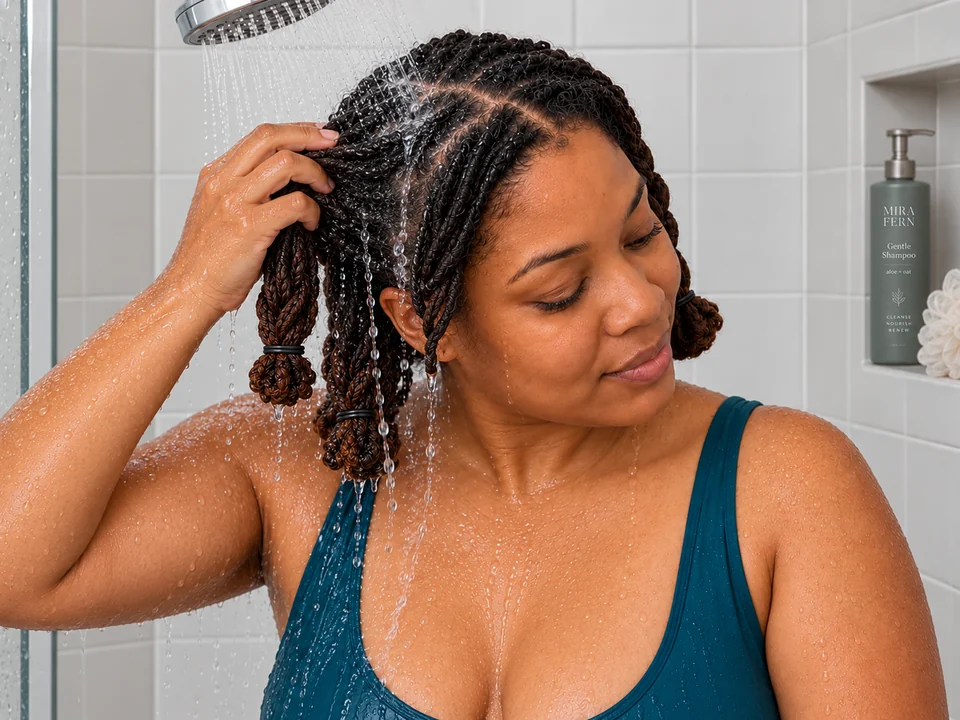 STEP 6 OF 12
Rinse the scalp
- Turn under the water so it reaches each scalp area, including the back and behind the ears.
- Gently move a bundle aside where it blocks the flow, without pulling its roots. Keep rinsing until the shampoo has washed away.
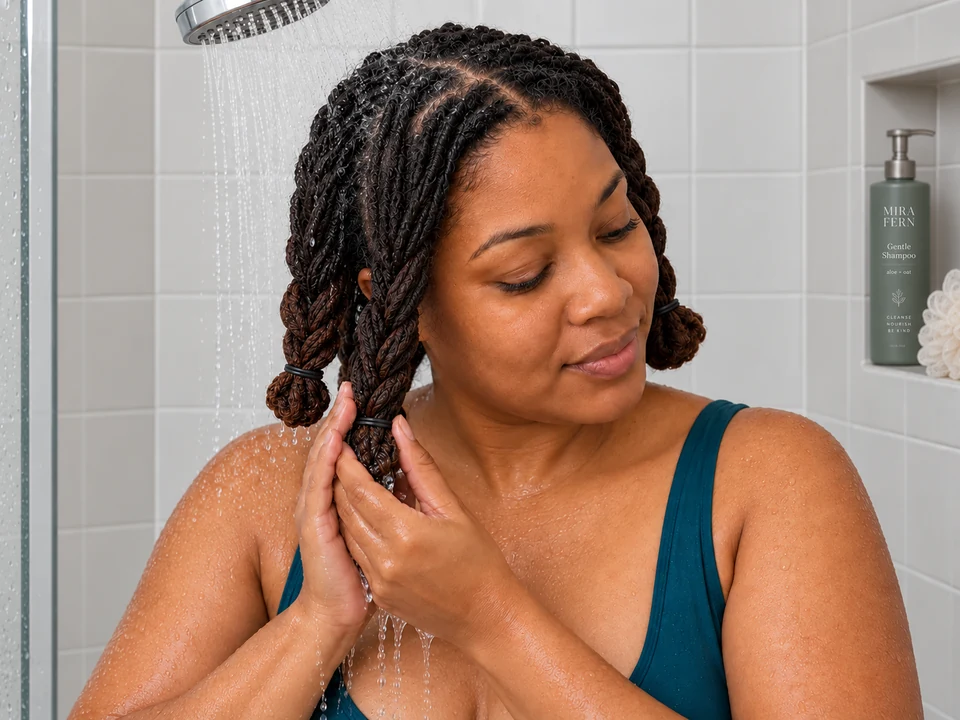 STEP 7 OF 12
Rinse through each braid
- Let running water pass through one loose braid at a time. Support it between your palms and gently press, then release.
- Repeat if pressing brings out more suds. Rinse the folded ends too, even when the outside of the braid looks clear.
- Keep the bands in place. Do not wring the braids or drag the bands down them.
 STEP 8 OF 12
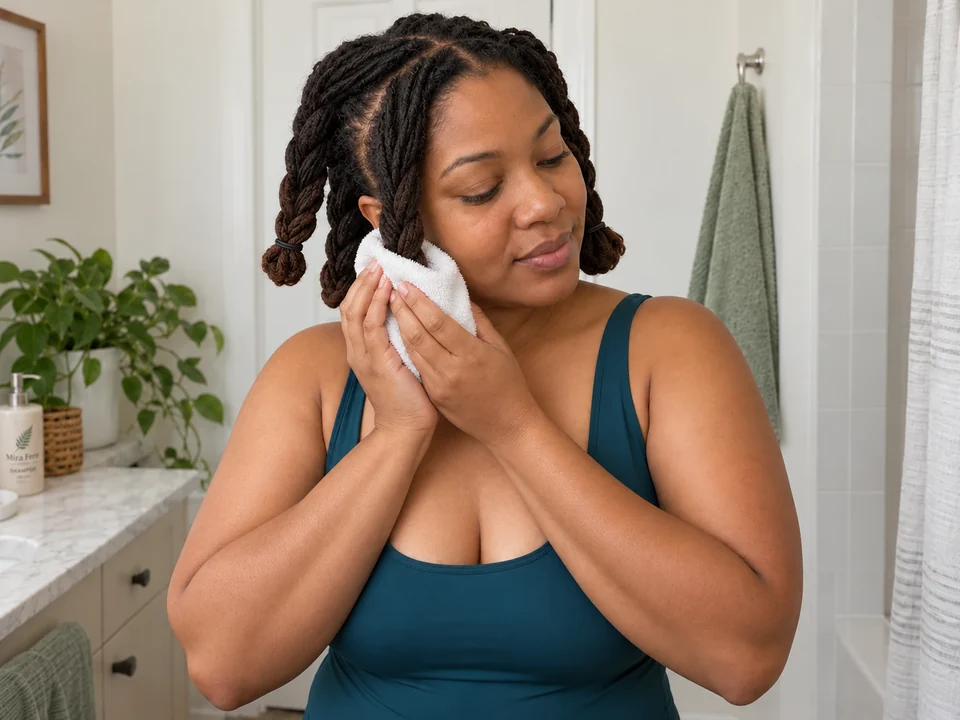
Press out water with a towel
- Turn off the water. Wrap a clean absorbent towel around one supported bundle and gently press, then release.
- Repeat along the other bundles without rubbing or twisting. Remove the towel afterward; leave the bands in place for now.
 STEP 9 OF 12
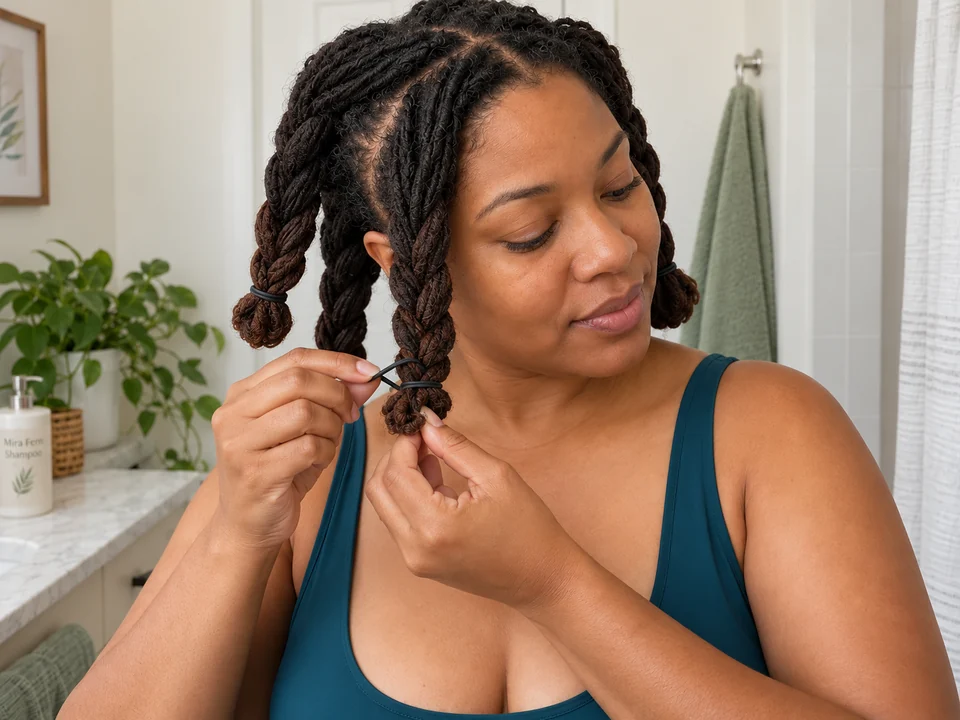
Unwind one elastic
- Out of the shower, support the folded end of one braid. Use the other hand to unwind the elastic one loop at a time.
- Lift the loosened band clear and let the folded tips unfold. Do not slide a tight band down the locs; stop if it catches.
 STEP 10 OF 12
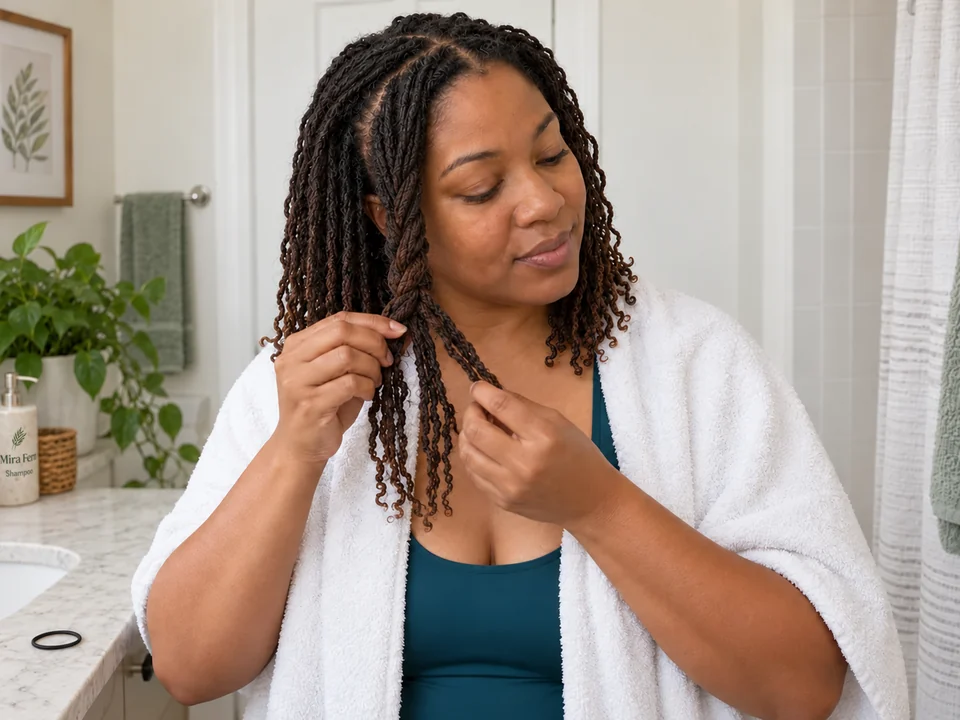
Undo the temporary braid
- Hold above the part you are undoing. Gently reverse the crossings from the bottom upward, releasing the groups of locs.
- Leave each individual loc intact. If the ends have joined, stop instead of pulling them apart.
- Remove the band and undo the braid on each remaining bundle, one at a time. Put the bands away and rinse and dry the wash area.
 STEP 11 OF 12
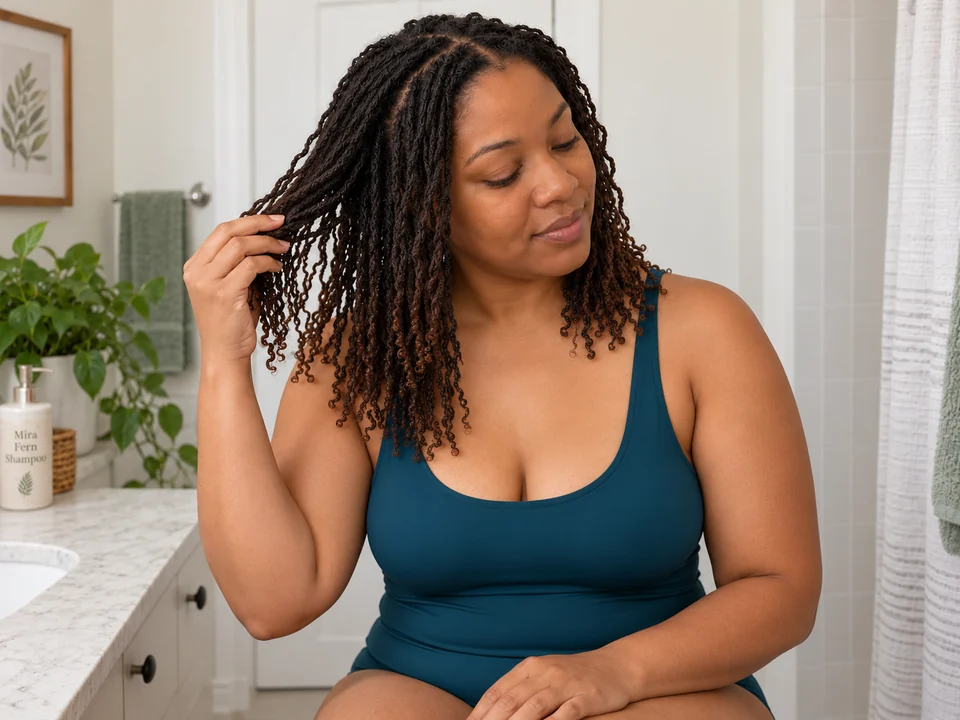
Leave the released locs open to the air
- Let the locs hang loose without a towel wrap, cap or tight tie. Gently move groups aside occasionally so air reaches hidden lengths.
- Allow enough drying time before bed or a head covering. Avoid rubbing, twisting or repeatedly handling the individual locs.
 STEP 12 OF 12
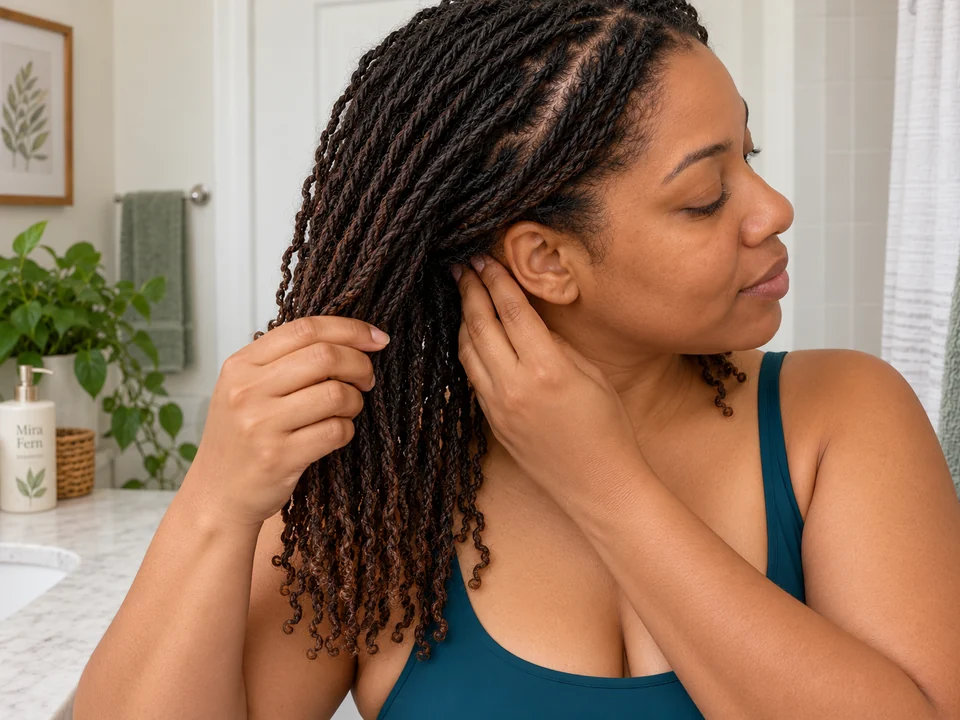
Check the roots and hidden lengths
- With dry hands, feel the roots behind the ears and at the nape, then the lengths and ends that were folded inside the bands.
- If any area feels damp, leave it uncovered and keep drying. Check again before covering or sleeping; touch cannot measure moisture inside a loc.
The estimate includes preparation, a full-head bundle/wash/rinse, towel pressing, band removal, unbraiding and cleanup. Air drying is additional; allow longer if this is unfamiliar.
You’re done when…
The shampoo is rinsed out, all temporary bands and braids are removed, and the roots, lengths and folded ends no longer feel damp. Keep drying any area that still feels damp.
Related techniques
Connected steps for your routine.