Observe short-hair tips
When short hairs catch your attention, a calm look and a note can make a later conversation more specific. A tip’s shape alone does not establish breakage, regrowth or a health condition.
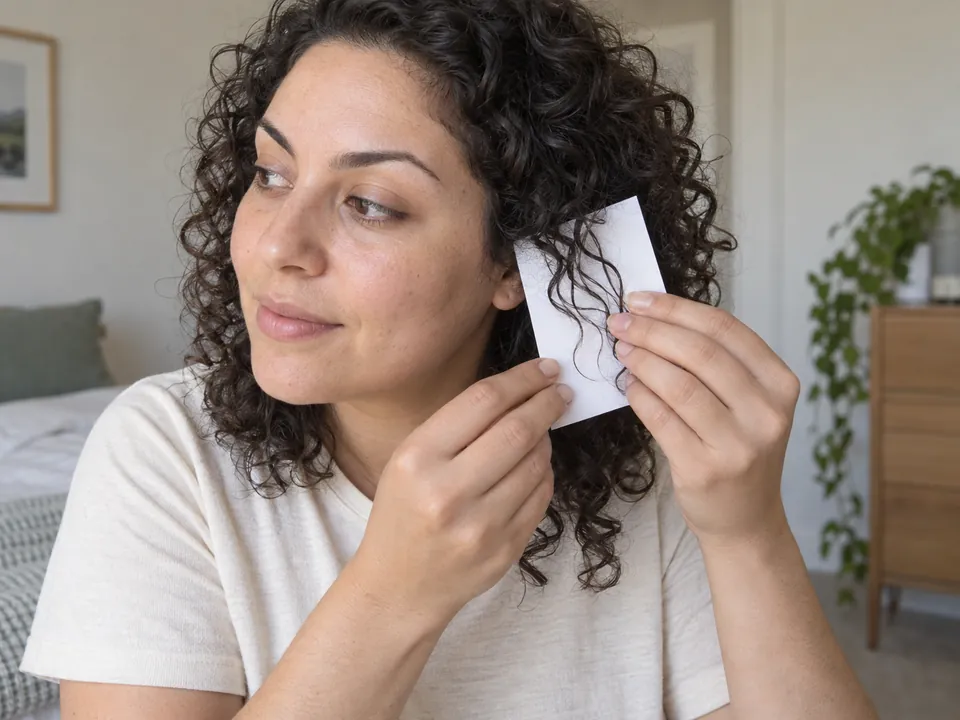
Step by step
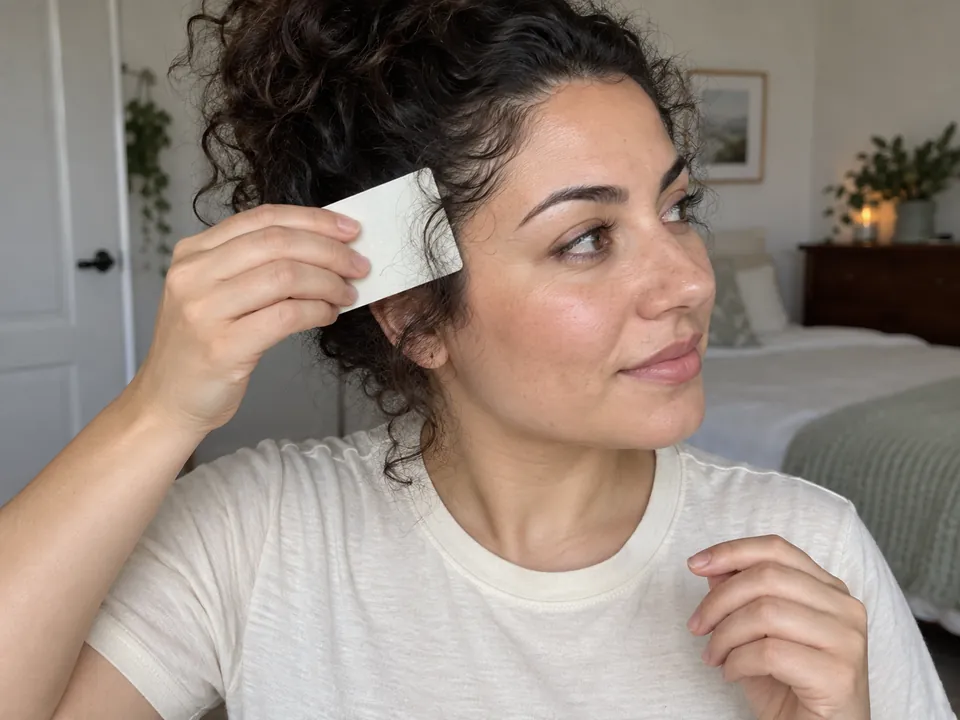 STEP 1 OF 3
Choose a visible area
- Sit in good light and choose a reachable front or side area. Hold a plain contrasting card behind a few dry short hairs without pulling them.
- Keep the hair attached and relaxed. If the tips are too small to see, record that rather than making a guess.
- STEP 2 OF 3
Describe only what you see
- Look for ends you can clearly describe as pointed, flat, frayed or unclear. Note the location and any recent haircut or styling history.
- Do not use a single hair or its tip as a verdict about the cause; different hairs can look different in the same area.
 STEP 3 OF 3
Record and leave it alone
- Put the card down and write your observation and date. If useful, take a clear photo for your own record.
- Return to gentle care. Ask a dermatologist about sudden, persistent or concerning changes rather than repeating a pulling test.
About 1–3 min hands-on for viewing one reachable area, writing a short note and optionally taking a photo. There is no waiting step.
You’re done when…
You have a description of what was visible—including uncertainty—and the hair is released without a cause label.