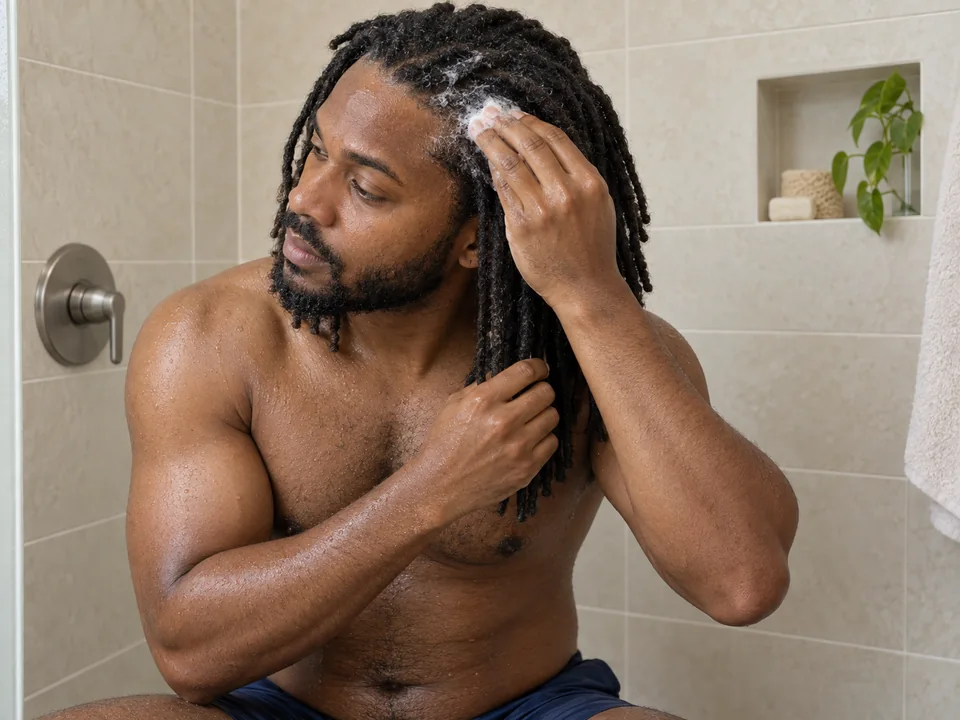
Dry mature locs after washing
Press out water, blot the roots and lengths, then leave mature locs loose to dry. Optional unheated airflow can help; check hidden roots and thick lengths before covering or going to bed.
Step by step
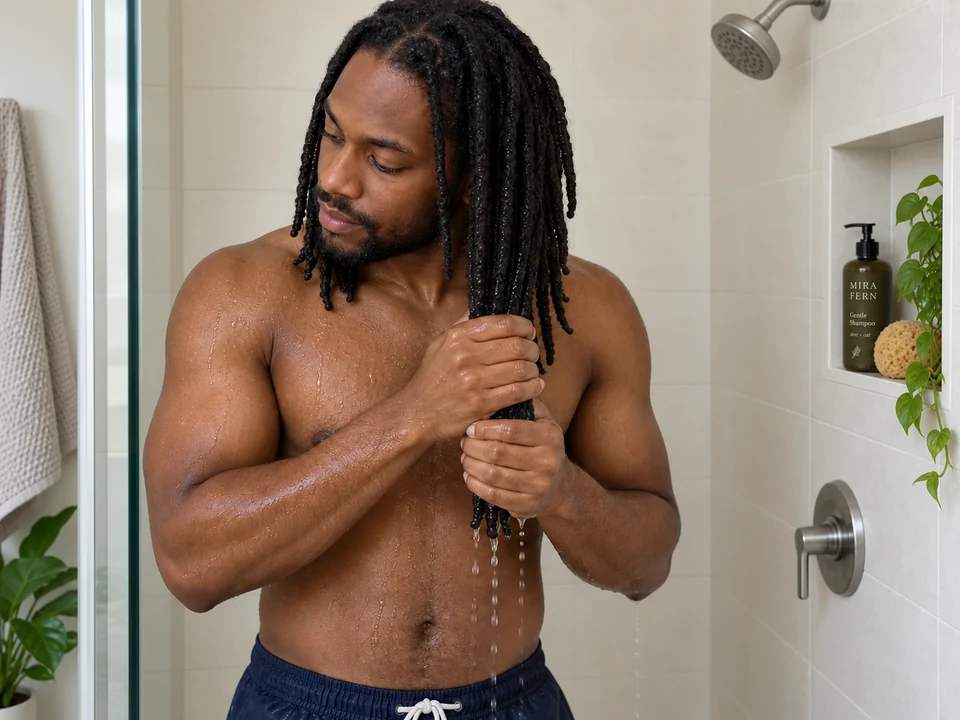 STEP 1 OF 8
Press out dripping water
- After rinsing, support a small group at chest or shoulder height, keeping roots relaxed. If locs are only damp after exercise, start with blotting instead.
- Gently press between your palms and release, moving toward the ends. Repeat with other groups until dripping slows. Pat short lengths in place; do not wring.
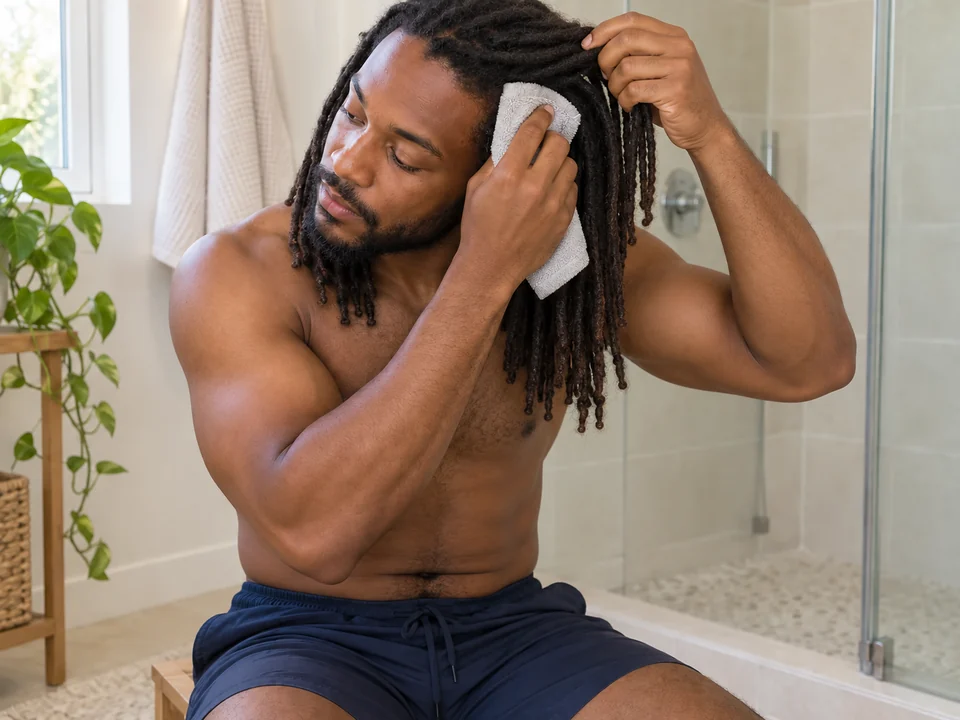 STEP 2 OF 8
Blot the roots with a smooth towel
- Step onto a dry surface and sit down if that is more comfortable. Lift a small group just enough to reach the roots with a clean, smooth towel.
- Press the towel gently against the roots, then release. Repeat around the head, including the nape, without scrubbing or pulling.
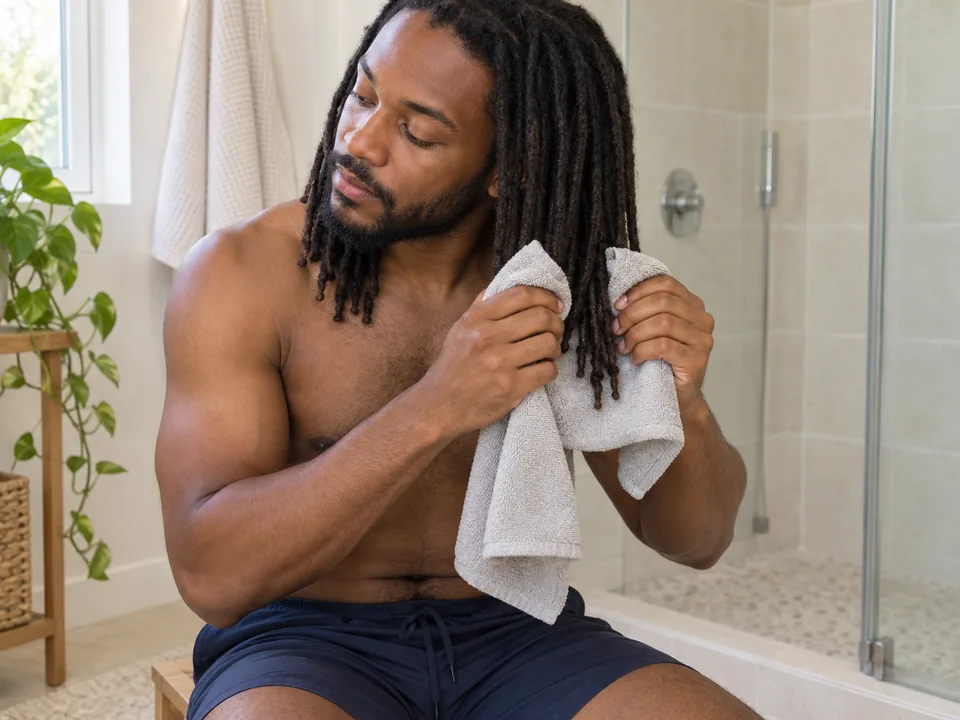 STEP 3 OF 8
Press the towel around the lengths
- Bring a small group into the towel and press gently from both sides. Work down toward the ends, supporting the locs rather than pulling them straight.
- Use a dry part of the towel as it becomes wet. Repeat across the lengths, then remove the towel and hang it to dry. Leave locs loose instead of wrapped up.
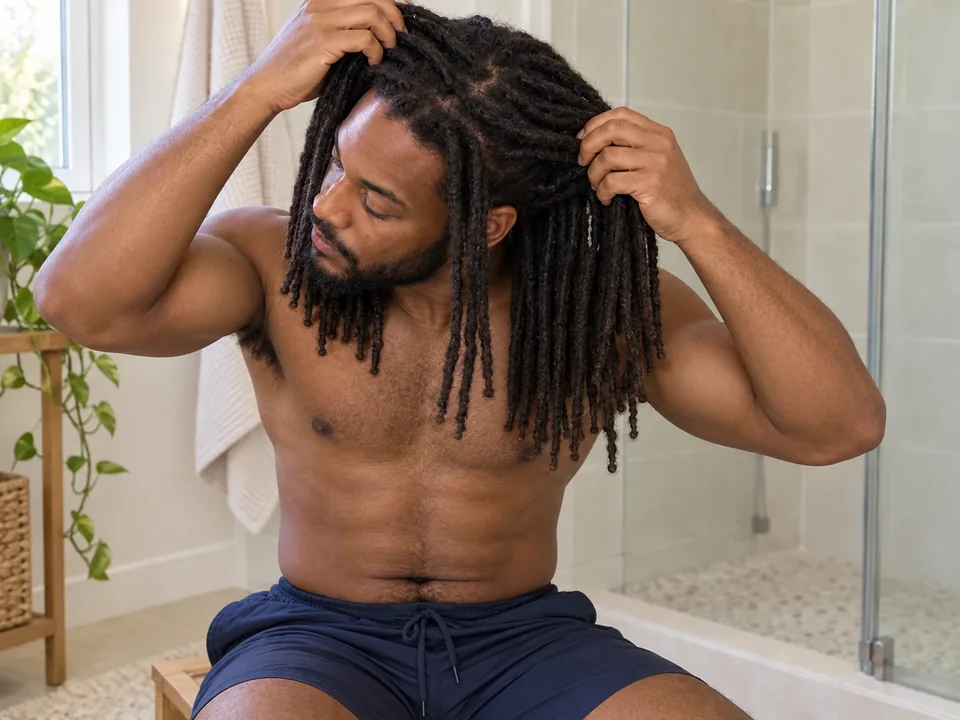 STEP 4 OF 8
Leave space between loose groups
- Sit in a well-ventilated place with locs hanging loosely. Move small groups occasionally so roots and undersides are exposed to air.
- Allow drying time rather than tying the locs into a bundle. If using air alone, skip the next two dryer steps and continue to the checks.
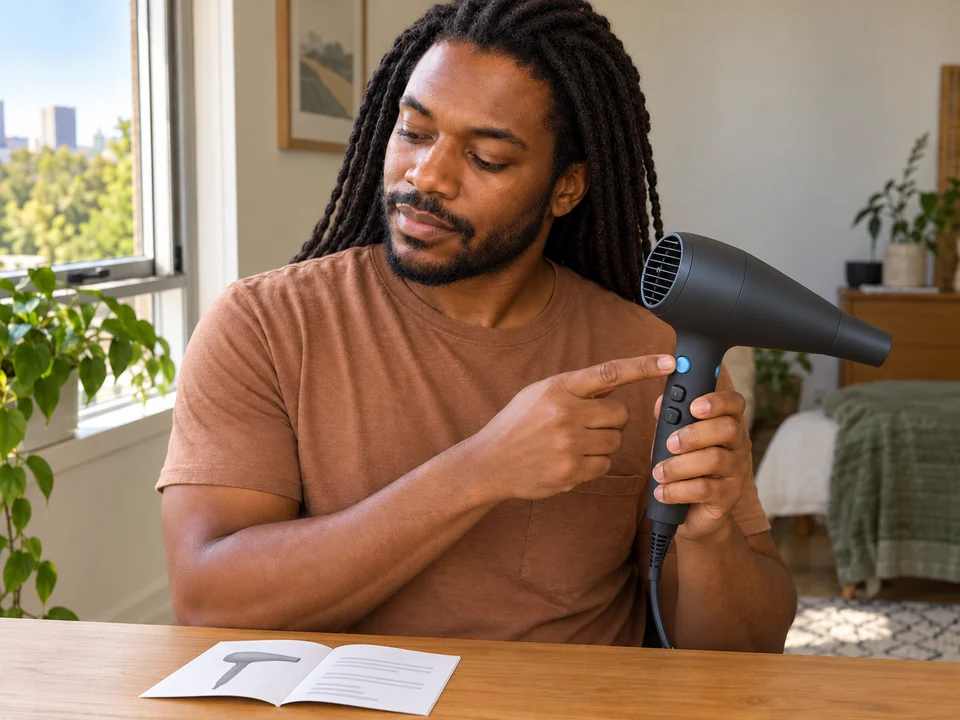 STEP 5 OF 8
Optional: prepare the dryer for unheated airflow
- Move to a dry room away from water and dry your hands. Check the dryer and cord and follow the manual’s startup checks before use.
- Find the unheated setting in your manual. A cool-shot button may need to be held down. Use air drying if your dryer cannot provide unheated airflow.
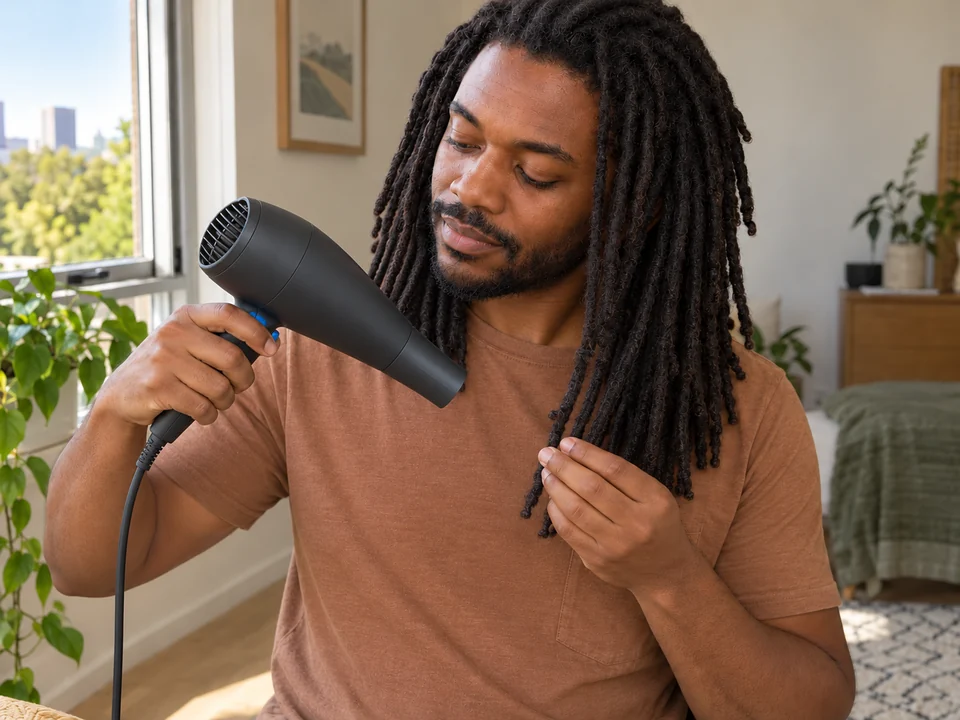 STEP 6 OF 8
Optional: move cool airflow across small groups
- With the dryer on its confirmed unheated setting, use one hand to expose a small group and the other to move airflow over its roots and lengths.
- Keep the rear intake away from hair and the outlet at the distance your manual specifies. Keep moving; stop if airflow feels hot or uncomfortable.
- Work around the head without pulling roots or holding one position until your arm strains. Switch off before setting the dryer down, then unplug it.
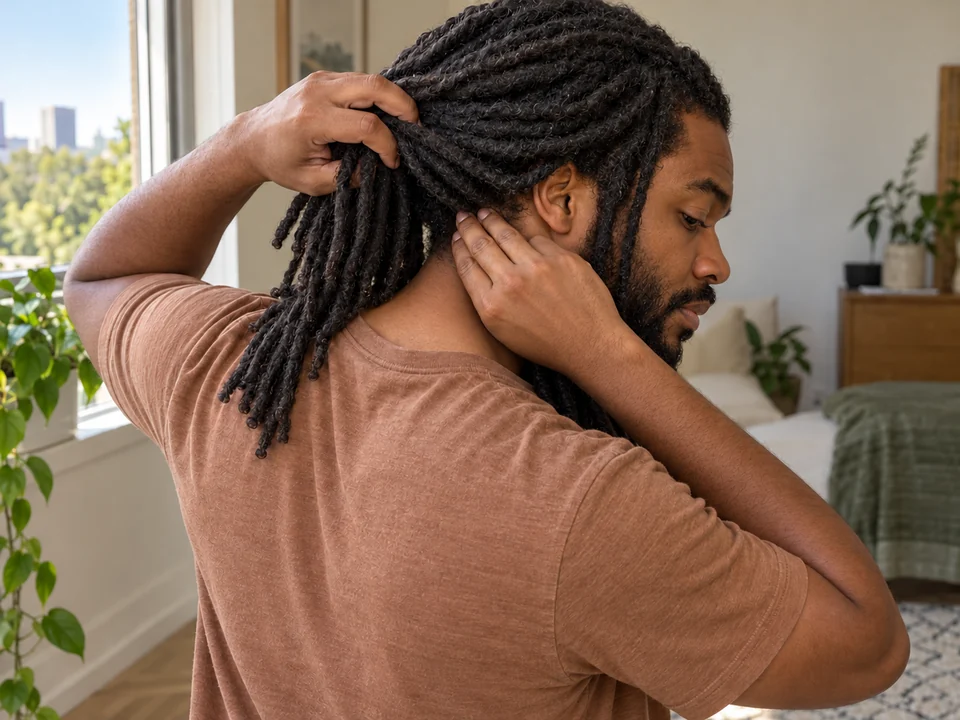 STEP 7 OF 8
Feel the hidden roots with dry hands
- With dry hands, move small groups aside and feel the roots at the crown, behind the ears and at the nape.
- If you find dampness, continue drying that area and check again later. Lower your arms between areas; do not pull the locs to make the roots easier to reach.
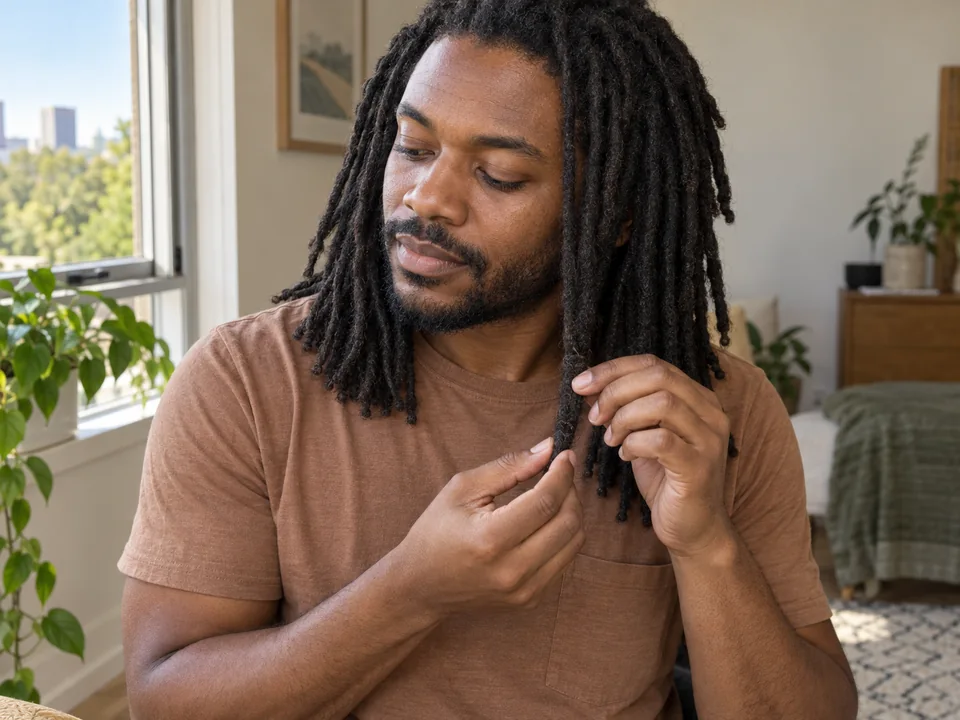 STEP 8 OF 8
Check thick lengths and ends
- Support several thicker locs and feel along their lengths and ends, including groups that rested underneath others. Continue drying wherever you find dampness.
- A dry outer surface cannot confirm that a thick loc is dry inside. If unsure, allow more time before tying, close covering or bed.
About 5–10 min hands-on for pressing and blotting locs, separating loose groups and checking for dampness. Add complete air-drying. Any optional handheld cool-air drying is additional active time.
You’re done when…
You have checked roots, hidden lengths and ends and continued drying wherever dampness remained. If thick locs may still hold water inside, leave more drying time before tying, close covering or bed.
Related techniques
Connected steps for your routine.