Document wash-day shedding
When a wash leaves more loose hair than you expected, a simple record can help you describe the change. What you collect is a sample from your routine, not a total daily shedding count.
Step by step
 STEP 1 OF 3
Keep the ordinary wash context
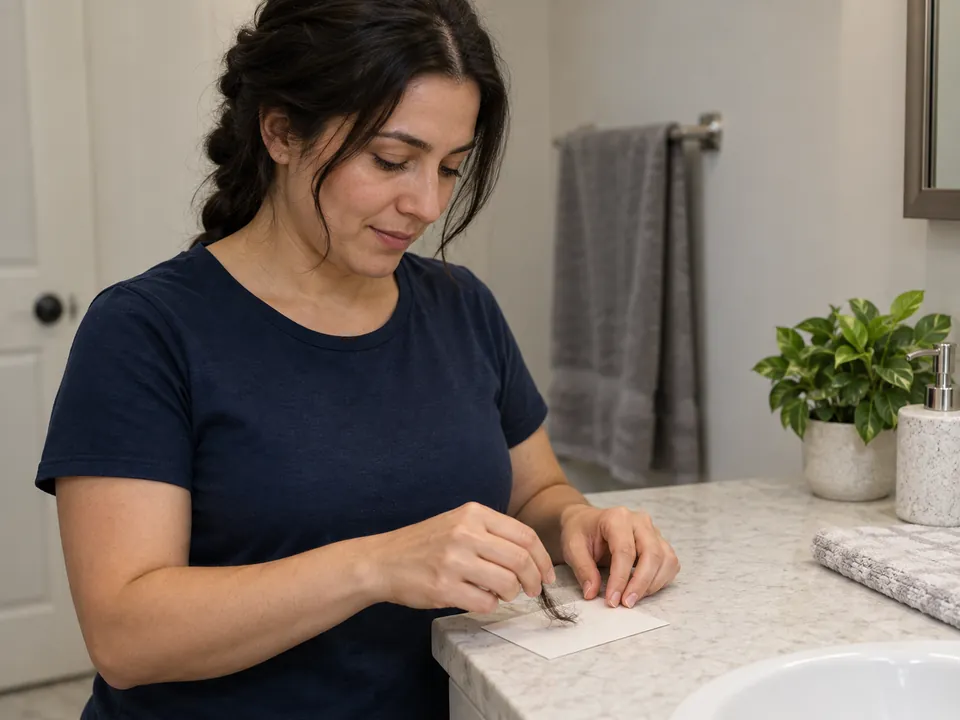
- Wash and detangle as usual without extra brushing or pulling for a sample. Gather only the loose hairs you happen to collect safely from your hands or clean catcher.
- Keep drain debris separate and wash your hands. Note days since the last wash and any installed style that was just removed.
- STEP 2 OF 3
Make one clear record
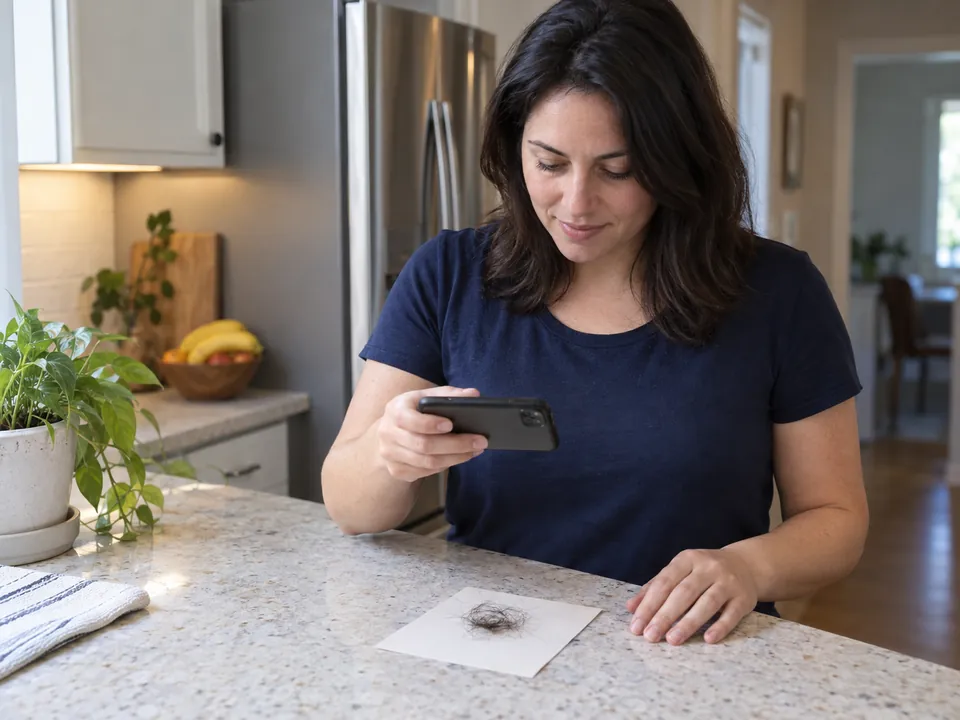
- Place the collected sample on a plain card and take a clear photo in good light. Do not spread or compact it to make the amount look larger or smaller.
- Record the date, wash interval and collection method. Label it a partial sample, not your total shed hair.
 STEP 3 OF 3
Stop collecting and use the context
- Dispose of the sample and clean the surface. If you repeat the record, keep the collection conditions similar and note differences.
- Bring concerns to a dermatologist with your notes; visible patches, scalp symptoms or an abrupt change do not need to wait for more photos.
About 1–3 min hands-on for gathering an incidental sample, photographing it, making a brief note and cleanup. Your ordinary wash and detangling routine are separate.
You’re done when…
The sample is disposed of and its date, wash interval and collection limits are recorded.