Describe strands and scalp visibility
When “fine” and “thin” feel hard to separate, note an individual shed strand and a usual part separately. These home descriptions do not measure strand diameter or count hairs.
Step by step
 STEP 1 OF 3
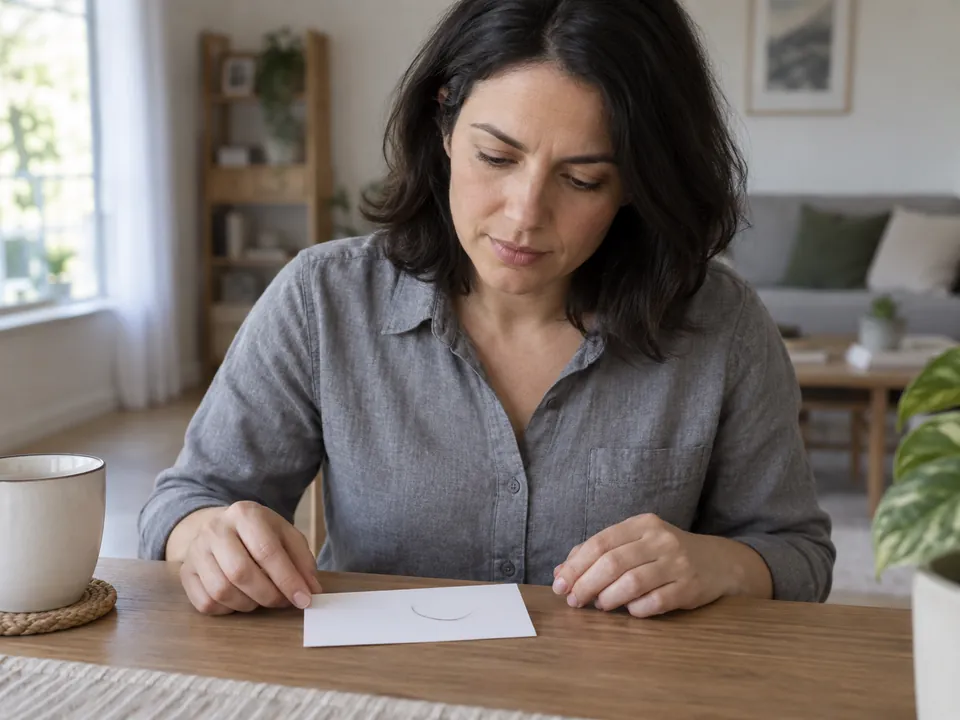
Look at one shed strand
- Place a clean, naturally shed dry strand on a plain contrasting card. In good light, describe whether you can see and handle it easily or find it hard to distinguish.
- Do not classify it against sewing thread or turn its feel into a measured diameter. Set it aside when finished.
- STEP 2 OF 3
Observe your usual part separately
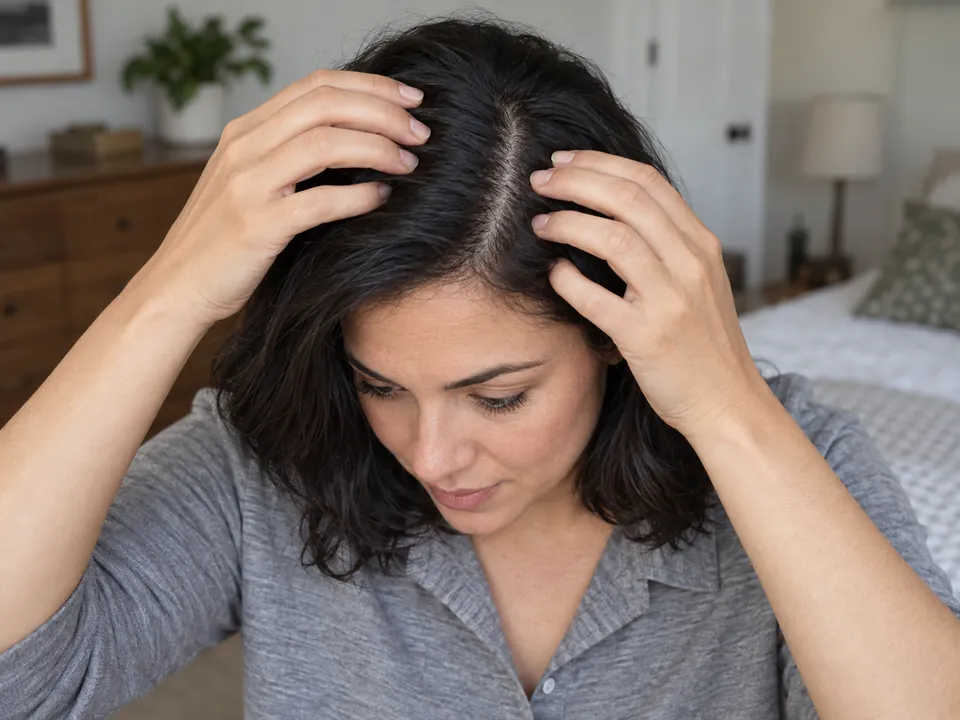
- With dry hair in its usual loose arrangement, look at a reachable part in a fixed mirror. Note where scalp is visible and the lighting you used.
- Do not widen the part by pulling hair aside or interpret this one view as a hair count.
 STEP 3 OF 3
Keep the two notes distinct
- Write a strand note and a separate part-visibility note with the date, dryness and styling products used. Dispose of the shed sample and clean the card.
- For later comparisons, use similar conditions. Discuss a concerning change with a dermatologist rather than diagnosing it from your notes.
About 2–4 min hands-on for looking at one shed strand, observing the usual part and writing two brief notes. Use an available shed strand and normal lighting; no waiting step.
You’re done when…
The strand and scalp-visibility observations are recorded separately, with conditions and uncertainty retained.