silicone-free
We have not recorded the silicone status of this formula.
—
Stated by brand
Can’t be confirmed from label.
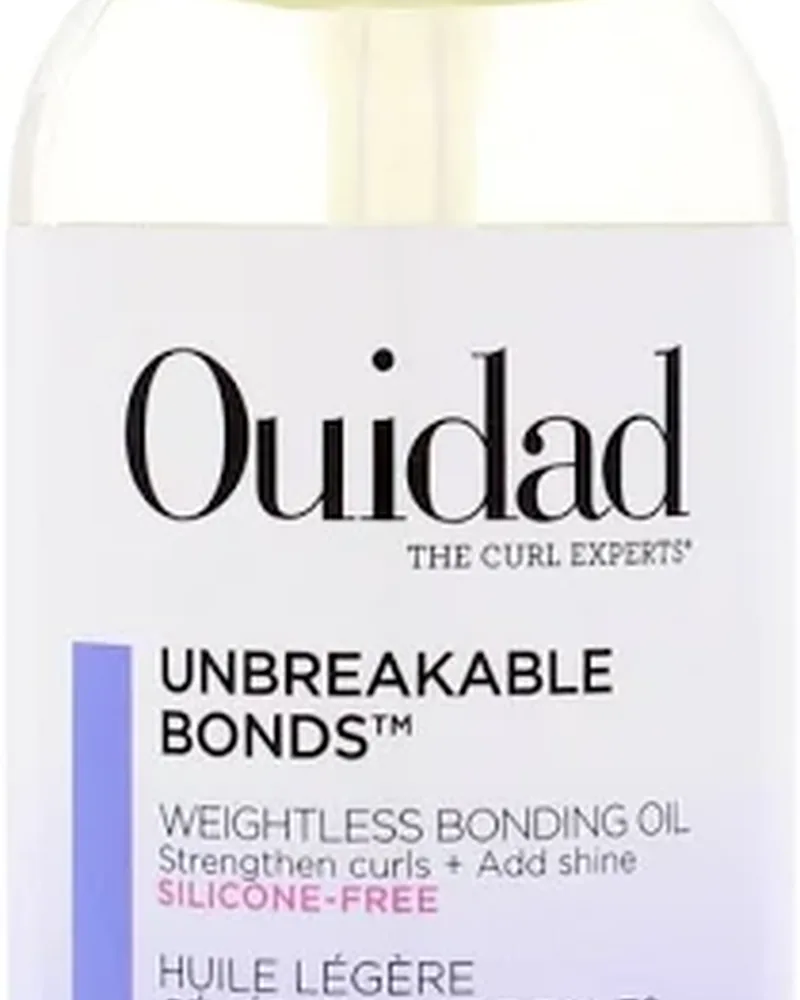
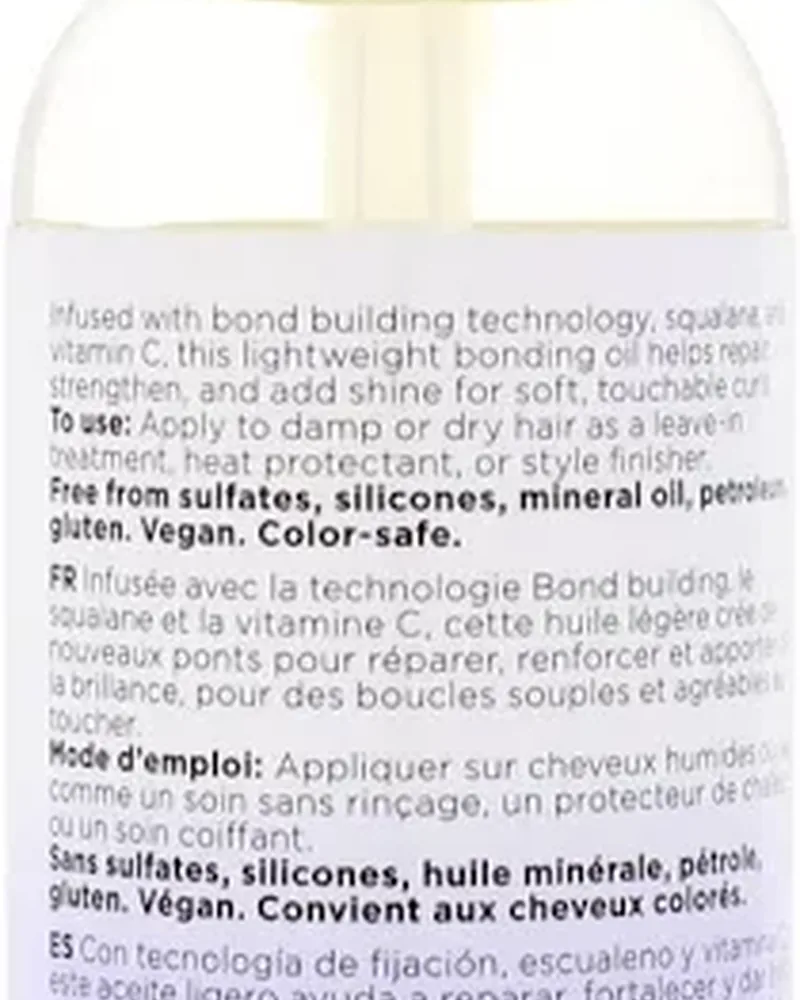
Finisher / Hair oil, glossing
Manufacturer page: ouidad.com
Personal fit
Complete the consultation to see exactly how well this product fits your hair and your goals. With 2,400+ products in our library we can match exactly the right products to you.
$49.00 one-time consultation, no subscription
Add the optional $49/year membership for unlimited adjustments for changes in weather and lifestyle.
The rest of what your plan weighs on this product.
The consultation builds your hair profile, then reads every factor in this table against it — and tells you where this product fits, or what to use instead.
Start your consultation$49.00 once, for your consultation and hair profile. No subscription, no required purchases.
Your avoid-list
Same job for less elsewhere
$19.00/oz at 2 oz — more than 81% of the 175 hair oils , which mostly run $4.52–16.49/oz.
Great for
Maybe skip if
What the formula actually does
Each row says where it comes from: F means we derived it from this product’s own ingredient list, S means it is a claim the brand makes that the formula neither confirms nor contradicts.
A silicone or oil blend does the shine work here.
Heavy butters and waxes in the first eight ingredients.
Oils sit high in the list — a softening, coating formula.
Water-insoluble silicones or waxes: a detergent wash is what removes them.
Ingredients that matter
The workhorse ingredients plus anything lower down that changes a decision. These chips name what an ingredient does — they are not safety scores, and no ingredient here is rated good or bad on its own.
| Ingredient | What it does | Why it matters | Chip |
|---|---|---|---|
| C15-19 Alkane | emollient | Softens and smooths the strand | Shine |
| Helianthus Annuus (Sunflower) Seed Oil | oil | The shine and softening system | Shine |
| Butyrospermum Parkii (Shea) Oil | oil | The shine and softening system | Shine |
| Crambe Abyssinica Seed Oil | oil | The shine and softening system | Shine |
| Hydrogenated Castor Oil/Sebacic Acid Copolymer | wax | Holds shape and adds weight | Buildup |
| Aleurites Moluccanus (Kukui) Seed OilAleurites Moluccana Seed Oil | oil | The shine and softening system | Shine |
| Bidens Pilosa Extract | — | — | Neutral |
| Camellia Japonica Seed Oil | oil | The shine and softening system | Shine |
US labelling rules put ingredients above 1% in descending order of amount; below 1% they may be listed in any order. Annotations keep three readings separate: the ingredient's general function, its role in this product type, and what its position can support.
A plant-derived light alkane used as a clean-feeling silicone alternative.
Listed in the first three ingredients, it is likely a structural part of this formula.
Emollients fill and smooth the surface of the strand, which lowers the friction that lifts the cuticle and reads as roughness.
A light, widely used oil that softens without much weight.
Listed in the first three ingredients, it is likely a structural part of this formula.
Coats the surface and slows water leaving the strand, which is usually what coarse hair that dries out fast is missing.
A thin oil layer lowers friction between strands and flattens the raised cuticle that scatters light and catches on its neighbours.
Near the top of a list an oil is weight before it is anything else, and fine hair shows that first at the roots.
The liquid fraction of shea, lighter than the butter but with the same softening effect.
Listed in the first three ingredients, it is likely a structural part of this formula.
Coats the surface and slows water leaving the strand, which is usually what coarse hair that dries out fast is missing.
A thin oil layer lowers friction between strands and flattens the raised cuticle that scatters light and catches on its neighbours.
Near the top of a list an oil is weight before it is anything else, and fine hair shows that first at the roots.
A light oil with very long fatty-acid chains, used as a plant alternative to silicone shine.
Listed in positions 4–8, it likely makes a meaningful contribution alongside the formula's main ingredients.
Coats the surface and slows water leaving the strand, which is usually what coarse hair that dries out fast is missing.
A thin oil layer lowers friction between strands and flattens the raised cuticle that scatters light and catches on its neighbours.
Near the top of a list an oil is weight before it is anything else, and fine hair shows that first at the roots.
A castor-derived wax polymer that thickens balms and helps a style hold.
Listed in positions 4–8, it likely makes a meaningful contribution alongside the formula's main ingredients.
Emollients fill and smooth the surface of the strand, which lowers the friction that lifts the cuticle and reads as roughness.
A wax holds by staying solid on the strand, which gives grip and separation rather than a set film that cracks.
Waxes do not dissolve in water. They need a detergent wash to come off, and they are the classic cause of a coated feel.
Kukui nut oil - a light oil used for softness on fine textured hair.
Listed in positions 4–8, it likely makes a meaningful contribution alongside the formula's main ingredients.
Coats the surface and slows water leaving the strand, which is usually what coarse hair that dries out fast is missing.
A thin oil layer lowers friction between strands and flattens the raised cuticle that scatters light and catches on its neighbours.
Near the top of a list an oil is weight before it is anything else, and fine hair shows that first at the roots.
Camellia oil, light and fast-absorbing, used for shine on fine hair.
Listed in positions 4–8, it likely makes a meaningful contribution alongside the formula's main ingredients.
Coats the surface and slows water leaving the strand, which is usually what coarse hair that dries out fast is missing.
A thin oil layer lowers friction between strands and flattens the raised cuticle that scatters light and catches on its neighbours.
Near the top of a list an oil is weight before it is anything else, and fine hair shows that first at the roots.
The oil pressed from Caryocar Brasiliense. How much weight a plant oil leaves depends on the hair it lands on; coarse hair tends to take more of it than fine hair.
Lower in the ordered portion of the list, it is more likely playing a supporting role than defining the formula.
Coats the surface and slows water leaving the strand, which is usually what coarse hair that dries out fast is missing.
A thin oil layer lowers friction between strands and flattens the raised cuticle that scatters light and catches on its neighbours.
One of the few oils small enough to move into the strand, which is why it is used for pre-wash treatments. It can feel heavy or stiff on protein-sensitive hair.
Lower in the ordered portion of the list, it is more likely playing a supporting role than defining the formula.
Because it penetrates rather than sits on top, it works on hair that loses water through a worn cuticle instead of only slowing evaporation from the surface the way a non-penetrating oil does.
A thin oil layer lowers friction between strands and flattens the raised cuticle that scatters light and catches on its neighbours.
The exception to the class read: lauric acid is small and linear enough to enter the shaft rather than only coat it, and in comparison testing coconut oil was the one that reduced protein loss from washing on both undamaged and damaged hair.
The oil pressed from Palm (Elaeis Guineensis). It is one of the heavier plant oils — rich on coarse or dry hair, and enough to flatten fine hair.
Lower in the ordered portion of the list, it is more likely playing a supporting role than defining the formula.
Coats the surface and slows water leaving the strand, which is usually what coarse hair that dries out fast is missing.
A thin oil layer lowers friction between strands and flattens the raised cuticle that scatters light and catches on its neighbours.
Flaxseed oil, used for softness; the seed extract is used instead for natural hold.
Lower in the ordered portion of the list, it is more likely playing a supporting role than defining the formula.
Coats the surface and slows water leaving the strand, which is usually what coarse hair that dries out fast is missing.
A thin oil layer lowers friction between strands and flattens the raised cuticle that scatters light and catches on its neighbours.
Babassu oil - solid at cool temperatures, lighter than coconut oil in feel.
Lower in the ordered portion of the list, it is more likely playing a supporting role than defining the formula.
Coats the surface and slows water leaving the strand, which is usually what coarse hair that dries out fast is missing.
A thin oil layer lowers friction between strands and flattens the raised cuticle that scatters light and catches on its neighbours.
A rich oil used in masks and heavier creams for softness on coarse or dry hair.
Lower in the ordered portion of the list, it is more likely playing a supporting role than defining the formula.
Coats the surface and slows water leaving the strand, which is usually what coarse hair that dries out fast is missing.
A thin oil layer lowers friction between strands and flattens the raised cuticle that scatters light and catches on its neighbours.
A thick, tacky oil used for sealing ends and for slick, held-down styles.
Lower in the ordered portion of the list, it is more likely playing a supporting role than defining the formula.
Coats the surface and slows water leaving the strand, which is usually what coarse hair that dries out fast is missing.
A thin oil layer lowers friction between strands and flattens the raised cuticle that scatters light and catches on its neighbours.
The fully hydrogenated form of squalene, now made from olive or sugarcane rather than shark liver. Hydrogenation is what makes it so slow to oxidise; it spreads very lightly and absorbs without a greasy film.
Lower in the ordered portion of the list, it is more likely playing a supporting role than defining the formula.
Deposits a lubricating layer that makes combing easier, which is most of what stops mechanical damage adding to frizz.
Used to bring the product to a slightly acidic pH, which helps the cuticle lie flat. It is almost always near the end of the list.
It appears around or below the estimated 1% line, where label order no longer indicates relative amount; its role may be minor or technical.
Holds hard-water minerals in solution so they rinse away instead of depositing on the hair.
The acid side of pH adjustment, and the reason it matters is measured: alkaline formulas raise the fibre's surface negative charge, increase friction between strands and lift the scales, while lower-pH ones do the reverse.
Where a warm cast comes from water minerals rather than from the hair itself, holding those metals in solution is what removes it.
A fatty ester. Esters give slip and a smooth after-feel; lighter ones read dry and silky, heavier ones read rich.
It appears around or below the estimated 1% line, where label order no longer indicates relative amount; its role may be minor or technical.
A light emollient: it softens the surface with noticeably less weight than an oil or a butter.
Spreads thin and lowers friction between strands without the heaviness of a fixed oil.
A corn-derived humectant and solvent, often chosen as a lighter-feeling alternative to propylene glycol.
It appears around or below the estimated 1% line, where label order no longer indicates relative amount; its role may be minor or technical.
Light and water-binding rather than oily, so it hydrates without contributing weight.
A small water-binding solvent. It holds moisture and helps the rest of the formula spread evenly over the strand.
A humectant follows the air: it holds water in humid conditions and can give it up in very dry ones. Climate decides what it does more than the label does.
Ingredient list captured 2026-09-14. Formulas change — check the package in your hand when an ingredient matters to you.
Price · 2 oz
Priced above the products that do the same job. Stores sell it above the $6 line; products that do this job typically go for about $19 at this size.
Sorted by price per ounce. Dated observations from our research, not live prices. Direct store pages, no affiliate links. We don’t sell this product.
Formula
The formula carries what a hair oil is built around, and 3 products we score as close matches cost at least a quarter less per ounce. The difference is buying the label, not a different formula.
The formula score is completeness for the job: the share of the systems this product type is normally built around that we can find in this list, weighted. It is not efficacy, not quality, and it never compares across product types.
Does the same job, for less
Same derived functions — what it cleans, conditions, coats or holds — at a lower cost per ounce. Scent, texture and where you buy it can still differ.
See more alternatives in the product library
These are functional neighbours, not personal recommendations — they are close on formula, not chosen for anyone. Get the one that fits your hair, routine, and budget

Final decision
Coarse, dry, or high-porosity hair — for a formula with real substance and shine
Not ideal for oily scalps and fine hair, anyone stretching time between washes, or people shopping on a budget
We do not sell products or take placement fees. This page states what the formula and the prices show; the consultation is what matches it to a person.
Claims check
Claims are quoted from the brand. We only mark one supported, partly supported, or conflicting when the ingredient list actually speaks to it; everything else stays "stated by the brand", which is not a criticism — most claims simply cannot be read off a label.
silicone-free
We have not recorded the silicone status of this formula.
—
Can’t be confirmed from label.
dermatologist-tested
A brand-run study. We report it as stated and do not repeat the number as fact.
—
Only the brand’s testing shows this.
bond-building technology
No protein or bond ingredient appears in the list.
—
Can’t be confirmed from label.
lightweight
Heavy emollients sit high in the list.
Expect it to sit on the strand.
does not weigh hair down
This is a marketing claim; an ingredient list cannot speak to it.
—
Can’t be confirmed from label.
We look at the first 10–15 ingredients and what they do in a formula — not marketing. If the list doesn't speak to a claim, we don't assume.
Reviewers
Recurring themes our researchers wrote in their own words from sourced reviews. We do not store or scrape star ratings.
Several reviewers note a little product goes a long way, with just one pump enough per use.
Many reviewers say it is lightweight and non-greasy, adding shine and softness without weighing curls down.
Some reviewers with fine hair found it too heavy, leaving hair looking greasy the day after application.
Several reviewers specifically value that it is fragrance-free and does not irritate sensitive skin.