Supports length retention with every drop
This is a marketing claim; an ingredient list cannot speak to it.
—
Stated by brand
Can’t be confirmed from label.
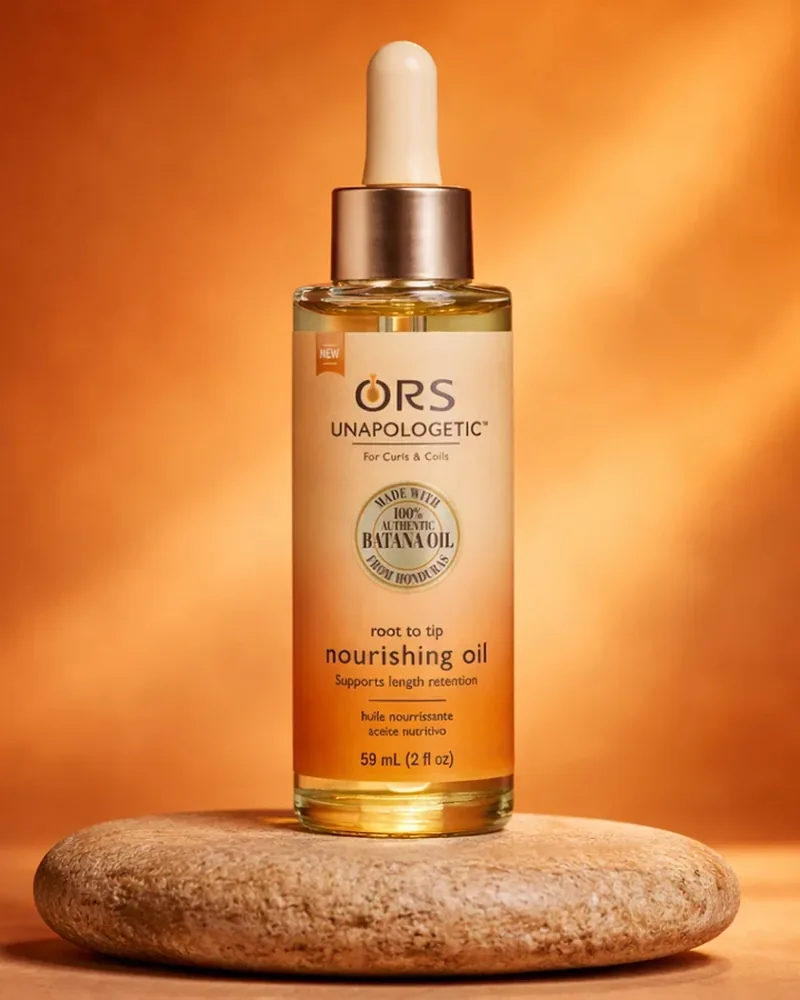
Finisher / Hair oil, glossing
Scent:
The ingredient list declares fragrance. What it smells of is not stated, and we do not guess.
“Comforting, indulgent blend of caramel and cocoa that unfolds into a delicious mixture of vanilla bean, caramel cream, and coffee before settling into a base of brown sugar and smooth sandalwood. Warm. Cozy. Addictive.” — Brand page
Manufacturer page: orshaircare.com
Personal fit
Complete the consultation to see exactly how well this product fits your hair and your goals. With 2,400+ products in our library we can match exactly the right products to you.
$49.00 one-time consultation, no subscription
Add the optional $49/year membership for unlimited adjustments for changes in weather and lifestyle.
The rest of what your plan weighs on this product.
The consultation builds your hair profile, then reads every factor in this table against it — and tells you where this product fits, or what to use instead.
Start your consultation$49.00 once, for your consultation and hair profile. No subscription, no required purchases.
Your avoid-list
Priced with its peers
$6.00/oz at 2 oz — less than 69% of the 175 hair oils , which mostly run $4.52–16.49/oz. The cost less.
Great for
Maybe skip if
What the formula actually does
Each row says where it comes from: F means we derived it from this product’s own ingredient list, S means it is a claim the brand makes that the formula neither confirms nor contradicts.
A silicone or oil blend does the shine work here.
Heavy butters and waxes in the first eight ingredients.
Oils sit high in the list — a softening, coating formula.
Nothing here needs a detergent wash to remove.
No fast-drying alcohol in the list.
Fragrance sits in the first eight ingredients — a larger share of the formula.
Ingredients that matter
The workhorse ingredients plus anything lower down that changes a decision. These chips name what an ingredient does — they are not safety scores, and no ingredient here is rated good or bad on its own.
| Ingredient | What it does | Why it matters | Chip |
|---|---|---|---|
| Glycine Soja (Soybean) Oil | oil | The shine and softening system | Shine |
| C12-15 Alkyl Benzoate | light ester | Light slip without much weight | Shine |
| Prunus Amygdalus Dulcis (Sweet Almond) Oil | oil | The shine and softening system | Shine |
| Ricinus Communis (Castor) Seed Oil | oil | The shine and softening system | Shine |
| Persea Gratissima (Avocado) Oil | oil | The shine and softening system | Shine |
| Vegetable OilVegetable (Olus) Oil | oil | The shine and softening system | Shine |
| Emblica Officinalis (Amla) Seed Oil | oil | The shine and softening system | Shine |
| FragranceFragrance (Parfum) | fragrance | The scent | Fragrance |
| Thuja Occidentalis (Thujawood) Leaf Oil | fragrance | The scent | Fragrance |
| Mentha Piperita (Peppermint) Oil | botanical extract | A trace plant extract | Fragrance |
| Benzyl Benzoate | fragrance | The scent | Fragrance |
| Linalyl Acetate | fragrance | The scent | Fragrance |
US labelling rules put ingredients above 1% in descending order of amount; below 1% they may be listed in any order. Annotations keep three readings separate: the ingredient's general function, its role in this product type, and what its position can support.
A light plant oil used to soften and carry other oil-based ingredients.
Listed in the first three ingredients, it is likely a structural part of this formula.
Coats the surface and slows water leaving the strand, which is usually what coarse hair that dries out fast is missing.
A thin oil layer lowers friction between strands and flattens the raised cuticle that scatters light and catches on its neighbours.
Near the top of a list an oil is weight before it is anything else, and fine hair shows that first at the roots.
A dry-feeling ester used for a silky, non-greasy finish - a common silicone substitute.
Listed in the first three ingredients, it is likely a structural part of this formula.
A light emollient: it softens the surface with noticeably less weight than an oil or a butter.
Spreads thin and lowers friction between strands without the heaviness of a fixed oil.
A medium-weight oil used for softness and slip.
Listed in the first three ingredients, it is likely a structural part of this formula.
Coats the surface and slows water leaving the strand, which is usually what coarse hair that dries out fast is missing.
A thin oil layer lowers friction between strands and flattens the raised cuticle that scatters light and catches on its neighbours.
Near the top of a list an oil is weight before it is anything else, and fine hair shows that first at the roots.
A thick, tacky oil used for sealing ends and for slick, held-down styles.
Listed in positions 4–8, it likely makes a meaningful contribution alongside the formula's main ingredients.
Coats the surface and slows water leaving the strand, which is usually what coarse hair that dries out fast is missing.
A thin oil layer lowers friction between strands and flattens the raised cuticle that scatters light and catches on its neighbours.
Near the top of a list an oil is weight before it is anything else, and fine hair shows that first at the roots.
A rich oil used in masks and heavier creams for softness on coarse or dry hair.
Listed in positions 4–8, it likely makes a meaningful contribution alongside the formula's main ingredients.
Coats the surface and slows water leaving the strand, which is usually what coarse hair that dries out fast is missing.
A thin oil layer lowers friction between strands and flattens the raised cuticle that scatters light and catches on its neighbours.
Near the top of a list an oil is weight before it is anything else, and fine hair shows that first at the roots.
An unspecified blend of plant oils. Because the label does not say which, its weight and feel cannot be read from the name.
Listed in positions 4–8, it likely makes a meaningful contribution alongside the formula's main ingredients.
Coats the surface and slows water leaving the strand, which is usually what coarse hair that dries out fast is missing.
A thin oil layer lowers friction between strands and flattens the raised cuticle that scatters light and catches on its neighbours.
Near the top of a list an oil is weight before it is anything else, and fine hair shows that first at the roots.
The oil pressed from Amla (Emblica Officinalis). How much weight a plant oil leaves depends on the hair it lands on; coarse hair tends to take more of it than fine hair.
Listed in positions 4–8, it likely makes a meaningful contribution alongside the formula's main ingredients.
An undisclosed blend of scent ingredients. Regulations let it stay unlisted, so a fragrance-free product is the only way to be certain what is not in it.
It appears around or below the estimated 1% line, where label order no longer indicates relative amount; its role may be minor or technical.
Declared fragrance. On a fragrance-sensitive routine this is the line that decides it, wherever it sits on the label.
The oil pressed from Daucus Carota. How much weight a plant oil leaves depends on the hair it lands on; coarse hair tends to take more of it than fine hair.
It appears around or below the estimated 1% line, where label order no longer indicates relative amount; its role may be minor or technical.
Coats the surface and slows water leaving the strand, which is usually what coarse hair that dries out fast is missing.
A thin oil layer lowers friction between strands and flattens the raised cuticle that scatters light and catches on its neighbours.
The oil pressed from Black Cumin (Nigella Sativa). How much weight a plant oil leaves depends on the hair it lands on; coarse hair tends to take more of it than fine hair.
It appears around or below the estimated 1% line, where label order no longer indicates relative amount; its role may be minor or technical.
Coats the surface and slows water leaving the strand, which is usually what coarse hair that dries out fast is missing.
A thin oil layer lowers friction between strands and flattens the raised cuticle that scatters light and catches on its neighbours.
The oil pressed from Coffee (Coffea Arabica). How much weight a plant oil leaves depends on the hair it lands on; coarse hair tends to take more of it than fine hair.
It appears around or below the estimated 1% line, where label order no longer indicates relative amount; its role may be minor or technical.
Coats the surface and slows water leaving the strand, which is usually what coarse hair that dries out fast is missing.
A thin oil layer lowers friction between strands and flattens the raised cuticle that scatters light and catches on its neighbours.
Peppermint essential oil, used for scent and the cooling feeling on the scalp.
It appears around or below the estimated 1% line, where label order no longer indicates relative amount; its role may be minor or technical.
Essential oils are fragrance. Several carry constituents on the EU list of declared fragrance allergens, so a label with no fragrance line can still be a scented product.
A fragrance component with a faint balsamic scent, named separately on the label because it is a recognised contact allergen.
It appears around or below the estimated 1% line, where label order no longer indicates relative amount; its role may be minor or technical.
One of the 26 scent components the EU requires to be named individually above a threshold. It is named because it is a known contact allergen, not because it is unusual.
A lavender-like fragrance component, related to linalool and listed for the same allergen reason.
It appears around or below the estimated 1% line, where label order no longer indicates relative amount; its role may be minor or technical.
One of the 26 scent components the EU requires to be named individually above a threshold. It is named because it is a known contact allergen, not because it is unusual.
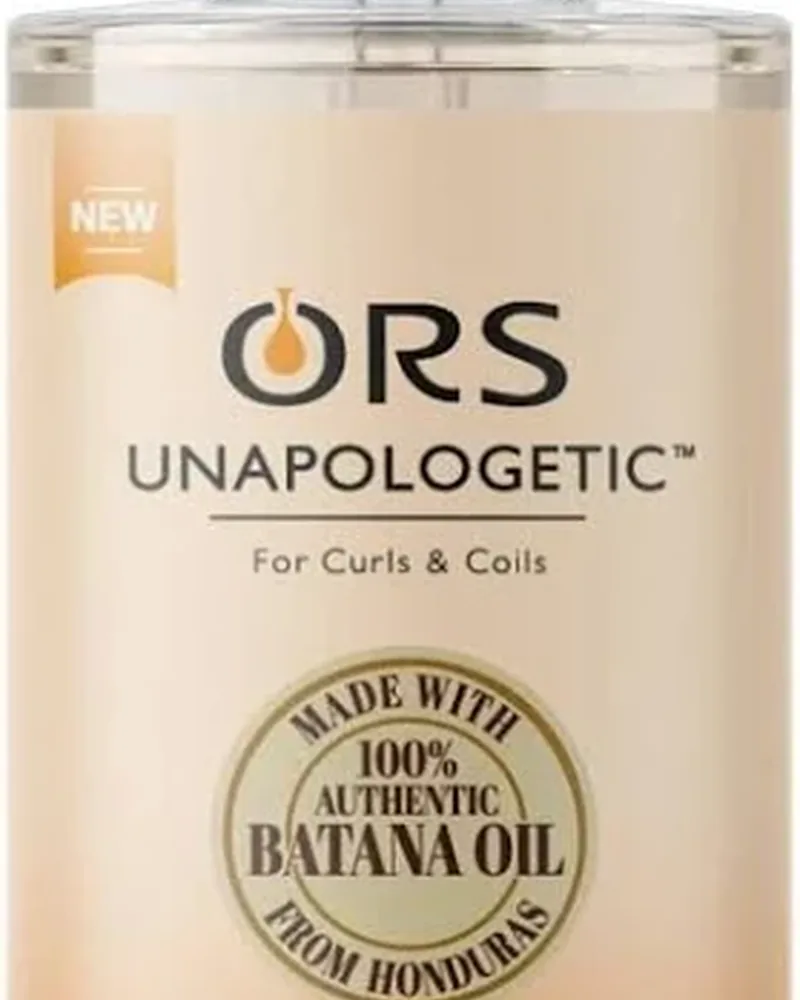
The oil pressed from Batana (Elaeis Oleifera). How much weight a plant oil leaves depends on the hair it lands on; coarse hair tends to take more of it than fine hair.
It appears around or below the estimated 1% line, where label order no longer indicates relative amount; its role may be minor or technical.
Coats the surface and slows water leaving the strand, which is usually what coarse hair that dries out fast is missing.
A thin oil layer lowers friction between strands and flattens the raised cuticle that scatters light and catches on its neighbours.
A synthetic musk used as a long-lasting fragrance base note.
It appears around or below the estimated 1% line, where label order no longer indicates relative amount; its role may be minor or technical.
Declared fragrance. On a fragrance-sensitive routine this is the line that decides it, wherever it sits on the label.
A citrus-smelling fragrance component that EU rules require to be named separately because some people react to it.
It appears around or below the estimated 1% line, where label order no longer indicates relative amount; its role may be minor or technical.
One of the 26 scent components the EU requires to be named individually above a threshold. It is named because it is a known contact allergen, not because it is unusual.
The essential oil of Citrus Aurantium. Essential oils are aromatic — they are in the formula for scent, and they are a common source of declared fragrance allergens.
It appears around or below the estimated 1% line, where label order no longer indicates relative amount; its role may be minor or technical.
Essential oils are fragrance. Several carry constituents on the EU list of declared fragrance allergens, so a label with no fragrance line can still be a scented product.
The main scent compound in vanilla, used as a fragrance note.
It appears around or below the estimated 1% line, where label order no longer indicates relative amount; its role may be minor or technical.
Declared fragrance. On a fragrance-sensitive routine this is the line that decides it, wherever it sits on the label.
A floral fragrance component listed separately as a recognised contact allergen.
It appears around or below the estimated 1% line, where label order no longer indicates relative amount; its role may be minor or technical.
One of the 26 scent components the EU requires to be named individually above a threshold. It is named because it is a known contact allergen, not because it is unusual.
A light humectant and carrier that helps extracts dissolve.
It appears around or below the estimated 1% line, where label order no longer indicates relative amount; its role may be minor or technical.
Light and water-binding rather than oily, so it hydrates without contributing weight.
A small water-binding solvent. It holds moisture and helps the rest of the formula spread evenly over the strand.
A humectant follows the air: it holds water in humid conditions and can give it up in very dry ones. Climate decides what it does more than the label does.
Biotin bonded to a short peptide, included in thinning-positioned products. Evidence for applied biotin changing hair growth is limited.
It appears around or below the estimated 1% line, where label order no longer indicates relative amount; its role may be minor or technical.
Unhydrolysed protein is too large to enter the strand. It sits on the surface, which is a coating effect rather than internal reinforcement.
Ingredient list captured 2026-09-14. Formulas change — check the package in your hand when an ingredient matters to you.
Price · 2 oz
Priced above the products that do the same job. Stores sell it above the $9 line; products that do this job typically go for about $29 at this size.
Sorted by price per ounce. Dated observations from our research, not live prices. Direct store pages, no affiliate links. We don’t sell this product.
Formula
Nothing separates this from the middle of the range for hair oils, on formula or on cost per ounce.
The formula score is completeness for the job: the share of the systems this product type is normally built around that we can find in this list, weighted. It is not efficacy, not quality, and it never compares across product types.
Does the same job, for less
Same derived functions — what it cleans, conditions, coats or holds — at a lower cost per ounce. Scent, texture and where you buy it can still differ.
See more alternatives in the product library
These are functional neighbours, not personal recommendations — they are close on formula, not chosen for anyone. Get the one that fits your hair, routine, and budget

Final decision
Coarse, dry, or high-porosity hair who want a formula with real substance and a silicone-free formula
Not ideal for anyone sensitive to fragrance, oily scalps and fine hair, or frizz on humid days
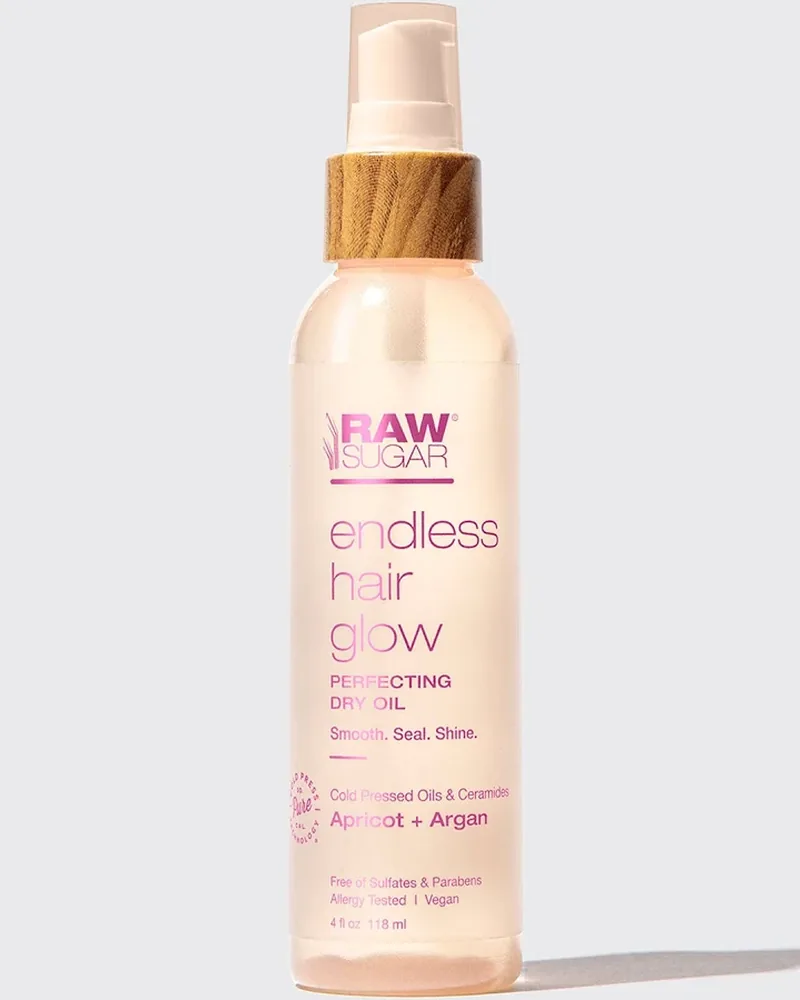
Raw Sugar Living Endless Hair Glow Dry Oil, for similar results at a lower price
We do not sell products or take placement fees. This page states what the formula and the prices show; the consultation is what matches it to a person.
Claims check
Claims are quoted from the brand. We only mark one supported, partly supported, or conflicting when the ingredient list actually speaks to it; everything else stays "stated by the brand", which is not a criticism — most claims simply cannot be read off a label.
Supports length retention with every drop
This is a marketing claim; an ingredient list cannot speak to it.
—
Can’t be confirmed from label.
Deeply nourishes and moisturizes without weighing hair down
Humectants or rich emollients sit in the first eight ingredients.
Helps hair feel hydrated.
Strengthens to prevent breakage
Protein or ceramides are present, but low enough that this reads as support, not treatment.
—
Supports the surface, not a treatment.
Exceptionally lightweight formula
Heavy emollients sit high in the list.
—
Expect it to sit on the strand.
We look at the first 10–15 ingredients and what they do in a formula — not marketing. If the list doesn't speak to a claim, we don't assume.
Reviewers
Recurring themes our researchers wrote in their own words from sourced reviews. We do not store or scrape star ratings.
Reviewers describe the oil as lightweight and effective at moisturizing the scalp and hair without greasiness, supporting a healthier look and feel over time.
customers applying it as a scalp and hair oil, including a parent using it on a daughter's curly hairReviewers note a strong, pleasant fragrance and say only a few drops are needed per use.
customers noting the scent intensity relative to the small amount neededOne reviewer's complaint was about fulfillment rather than the formula: an item was missing from an opened package and the brand did not resend it or respond to their email.
a buyer whose direct-from-brand-site order arrived with a product missing