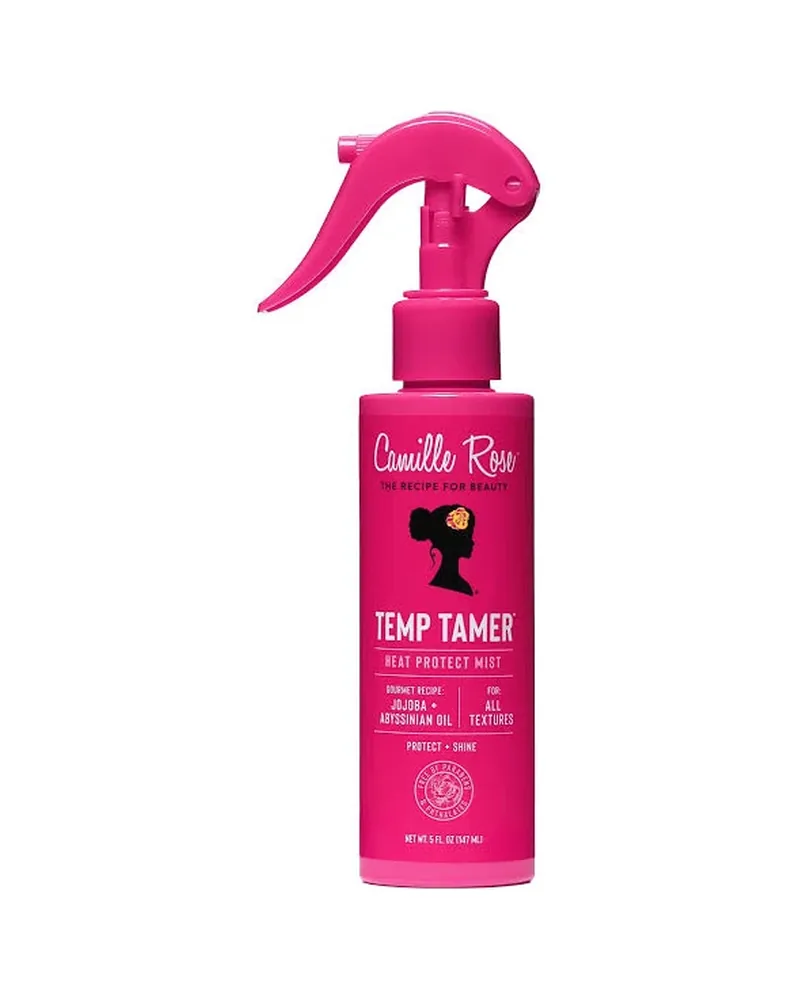
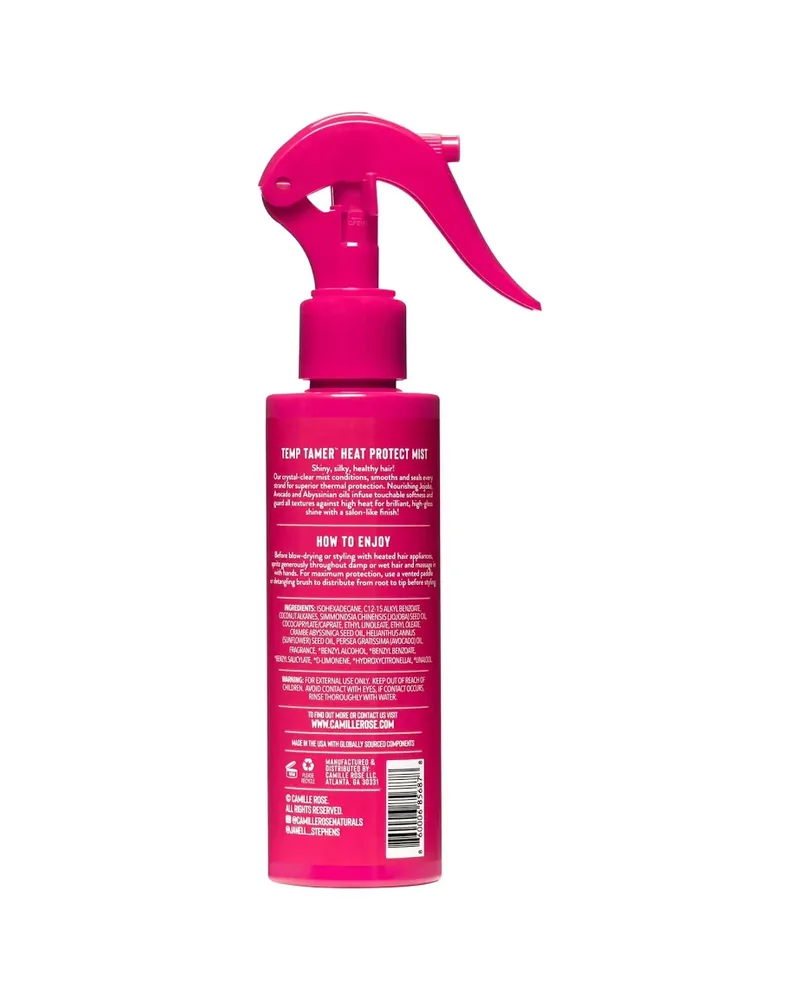
Shiny, silky, healthy hair
The formula carries a recognised shine system — silicone, oil, or light ester.
- C12-15 Alkyl Benzoate
- Simmondsia Chinensis (Jojoba) Seed Oil
- Coco Caprylate/Caprate
Reflects light for visible shine.
Heat protectant / Cream, heat-protecting
Scent:
Notes: floral, herbal.
Manufacturer page: camillerose.com
Personal fit
Complete the consultation to see exactly how well this product fits your hair and your goals. With 2,400+ products in our library we can match exactly the right products to you.
$49.00 one-time consultation, no subscription
Add the optional $49/year membership for unlimited adjustments for changes in weather and lifestyle.
The rest of what your plan weighs on this product.
The consultation builds your hair profile, then reads every factor in this table against it — and tells you where this product fits, or what to use instead.
Start your consultation$49.00 once, for your consultation and hair profile. No subscription, no required purchases.
Your avoid-list
Upper-mid price for a heat protectant
$2.99/oz at 5 oz — more than 54% of the 549 heat protectants , which mostly run $1.25–5.69/oz.
Great for
Maybe skip if
What the formula actually does
Each row says where it comes from: F means we derived it from this product’s own ingredient list, S means it is a claim the brand makes that the formula neither confirms nor contradicts.
Sold as a heat protectant; no temperature is stated.
Heavy butters and waxes in the first eight ingredients.
Some slip, mostly from esters or silicones rather than conditioners.
Water-insoluble silicones or waxes: a detergent wash is what removes them.
No humectants found — nothing here pulls water into the hair.
No fast-drying alcohol in the list.
Fragrance is listed; it sits below the working ingredients.
Ingredients that matter
The workhorse ingredients plus anything lower down that changes a decision. These chips name what an ingredient does — they are not safety scores, and no ingredient here is rated good or bad on its own.
| Ingredient | What it does | Why it matters | Chip |
|---|---|---|---|
| Isohexadecane | solvent | The base everything else is dissolved in | Softens |
| C12-15 Alkyl Benzoate | light ester | Light slip without much weight | Softens |
| Coconut Alkanes | emollient | Softens and smooths the strand | Softens |
| Simmondsia Chinensis (Jojoba) Seed Oil | emollient | Softens and smooths the strand | Buildup |
| Coco Caprylate/Caprate | light ester | Light slip without much weight | Softens |
| Ethyl Linoleate | light ester | Light slip without much weight | Softens |
| Ethyl Oleate | light ester | Light slip without much weight | Softens |
| Crambe Abyssinica Seed Oil | oil | Coats and softens the strand | Softens |
| Fragrance | fragrance | The scent | Fragrance |
| Benzyl Benzoate | fragrance | The scent | Fragrance |
| Benzyl Salicylate | fragrance | The scent | Fragrance |
| LimoneneD-Limonene | fragrance | The scent | Fragrance |
US labelling rules put ingredients above 1% in descending order of amount; below 1% they may be listed in any order. Annotations keep three readings separate: the ingredient's general function, its role in this product type, and what its position can support.
A light, quickly evaporating carrier that spreads silicones and oils thinly, then leaves.
Listed in the first three ingredients, it is likely a structural part of this formula.
Emollients fill and smooth the surface of the strand, which lowers the friction that lifts the cuticle and reads as roughness.
A dry-feeling ester used for a silky, non-greasy finish - a common silicone substitute.
Listed in the first three ingredients, it is likely a structural part of this formula.
A light emollient: it softens the surface with noticeably less weight than an oil or a butter.
Spreads thin and lowers friction between strands without the heaviness of a fixed oil.
A coconut-derived light emollient used as a plant alternative to silicone.
Listed in the first three ingredients, it is likely a structural part of this formula.
Emollients fill and smooth the surface of the strand, which lowers the friction that lifts the cuticle and reads as roughness.
Not chemically an oil: about 97% of it is liquid wax esters, which is why it resists going rancid and sits close to the scalp's own sebum. It smooths without a heavy finish.
Listed in positions 4–8, it likely makes a meaningful contribution alongside the formula's main ingredients.
Coats the surface and slows water leaving the strand, which is usually what coarse hair that dries out fast is missing.
A thin oil layer lowers friction between strands and flattens the raised cuticle that scatters light and catches on its neighbours.
A wax holds by staying solid on the strand, which gives grip and separation rather than a set film that cracks.
A fatty ester. Esters give slip and a smooth after-feel; lighter ones read dry and silky, heavier ones read rich.
Listed in positions 4–8, it likely makes a meaningful contribution alongside the formula's main ingredients.
A light fatty ester used to soften and carry other oil-based ingredients.
Listed in positions 4–8, it likely makes a meaningful contribution alongside the formula's main ingredients.
A light emollient: it softens the surface with noticeably less weight than an oil or a butter.
Spreads thin and lowers friction between strands without the heaviness of a fixed oil.
A light ester used as a spreading agent for oils and fragrance.
Listed in positions 4–8, it likely makes a meaningful contribution alongside the formula's main ingredients.
A light emollient: it softens the surface with noticeably less weight than an oil or a butter.
Spreads thin and lowers friction between strands without the heaviness of a fixed oil.
A light oil with very long fatty-acid chains, used as a plant alternative to silicone shine.
Listed in positions 4–8, it likely makes a meaningful contribution alongside the formula's main ingredients.
Coats the surface and slows water leaving the strand, which is usually what coarse hair that dries out fast is missing.
A thin oil layer lowers friction between strands and flattens the raised cuticle that scatters light and catches on its neighbours.
Near the top of a list an oil is weight before it is anything else, and fine hair shows that first at the roots.
A light, widely used oil that softens without much weight.
Lower in the ordered portion of the list, it is more likely playing a supporting role than defining the formula.
Coats the surface and slows water leaving the strand, which is usually what coarse hair that dries out fast is missing.
A thin oil layer lowers friction between strands and flattens the raised cuticle that scatters light and catches on its neighbours.
It works on the surface. In the comparison that established coconut oil's penetration, sunflower oil did not reduce protein loss from washing — its fatty acids are bulkier and less linear. It softens and smooths; it does not reinforce the fibre.
A rich oil used in masks and heavier creams for softness on coarse or dry hair.
Lower in the ordered portion of the list, it is more likely playing a supporting role than defining the formula.
Coats the surface and slows water leaving the strand, which is usually what coarse hair that dries out fast is missing.
A thin oil layer lowers friction between strands and flattens the raised cuticle that scatters light and catches on its neighbours.
An undisclosed blend of scent ingredients. Regulations let it stay unlisted, so a fragrance-free product is the only way to be certain what is not in it.
It appears around or below the estimated 1% line, where label order no longer indicates relative amount; its role may be minor or technical.
Declared fragrance. On a fragrance-sensitive routine this is the line that decides it, wherever it sits on the label.
A fragrance component with a faint balsamic scent, named separately on the label because it is a recognised contact allergen.
It appears around or below the estimated 1% line, where label order no longer indicates relative amount; its role may be minor or technical.
One of the 26 scent components the EU requires to be named individually above a threshold. It is named because it is a known contact allergen, not because it is unusual.
A soft floral fragrance component listed separately as a recognised allergen.
It appears around or below the estimated 1% line, where label order no longer indicates relative amount; its role may be minor or technical.
One of the 26 scent components the EU requires to be named individually above a threshold. It is named because it is a known contact allergen, not because it is unusual.
A citrus-smelling fragrance component that EU rules require to be named separately because some people react to it.
It appears around or below the estimated 1% line, where label order no longer indicates relative amount; its role may be minor or technical.
One of the 26 scent components the EU requires to be named individually above a threshold. It is named because it is a known contact allergen, not because it is unusual.
A soft floral fragrance component named separately as a recognised allergen.
It appears around or below the estimated 1% line, where label order no longer indicates relative amount; its role may be minor or technical.
One of the 26 scent components the EU requires to be named individually above a threshold. It is named because it is a known contact allergen, not because it is unusual.
A floral fragrance component listed separately as a recognised contact allergen.
It appears around or below the estimated 1% line, where label order no longer indicates relative amount; its role may be minor or technical.
One of the 26 scent components the EU requires to be named individually above a threshold. It is named because it is a known contact allergen, not because it is unusual.
Ingredient list captured 2026-08-22. Formulas change — check the package in your hand when an ingredient matters to you.
Price · 5 oz
Good value on sale. Some stores sell it under the $15 line; products that do this job typically go for about $19 at this size.
Sorted by price per ounce. Dated observations from our research, not live prices. Direct store pages, no affiliate links. We don’t sell this product.
Formula
Both the formula and the price land mid-range: it covers the core of what a heat protectant does and costs about what heat protectants cost per ounce.
The formula score is completeness for the job: the share of the systems this product type is normally built around that we can find in this list, weighted. It is not efficacy, not quality, and it never compares across product types.
Does the same job, for less
Same derived functions — what it cleans, conditions, coats or holds — at a lower cost per ounce. Scent, texture and where you buy it can still differ.
See more alternatives in the product library
These are functional neighbours, not personal recommendations — they are close on formula, not chosen for anyone. Get the one that fits your hair, routine, and budget

Final decision
People who blow-dry or flat-iron, looking for heat protection and a protein-free formula
Not ideal for anyone sensitive to fragrance, oily scalps and fine hair, or anyone stretching time between washes
We do not sell products or take placement fees. This page states what the formula and the prices show; the consultation is what matches it to a person.
Claims check
Claims are quoted from the brand. We only mark one supported, partly supported, or conflicting when the ingredient list actually speaks to it; everything else stays "stated by the brand", which is not a criticism — most claims simply cannot be read off a label.
Shiny, silky, healthy hair
The formula carries a recognised shine system — silicone, oil, or light ester.
Reflects light for visible shine.
Crystal-clear, silicone-free blowout spray detangles, conditions, smooths and seals every strand for superior thermal protection
No silicones appear in the ingredient list.
—
Nothing that needs a strong wash.
Nourishing Jojoba, Avocado and Abyssinian oils guard all textures against high heat
Humectants or rich emollients sit in the first eight ingredients.
Helps hair feel hydrated.
We look at the first 10–15 ingredients and what they do in a formula — not marketing. If the list doesn't speak to a claim, we don't assume.
Reviewers
Recurring themes our researchers wrote in their own words from sourced reviews. We do not store or scrape star ratings.
A curly-haired reviewer reports a successful blowout and pleasant scent lasting into the next day.
Unnamed most-helpful Ulta reviewer, coily hairPraised as great value and requested to never be discontinued; scent compared favorably to Kenra blow-dry spray
Used by a parent on both her own and her kids' hair before blow-drying; described as noticeably different from other heat protectants
Several curly or coily reviewers report a greasy, heavy, oily, or separated finish and needing to wash it out.
Ava, Claudia, Bea, and Noel, Ulta reviewersOfficial page has only two written reviews while Ulta provides the larger exact-product review corpus; formula evidence is current as of capture.
Camille Rose official and Ulta pages; Aug 2026 captureA reviewer reports soft shiny hair but dislikes a butter-popcorn scent.
B, Ulta reviewer; Boise