Hair Care Guides

Planning your life around transplant recovery.
Sort the everyday details before you need them.

A hair transplant comes with a list of things you can’t do for a while. It’s easier to arrange your life around that list before the procedure than after. This guide turns your treating team’s instructions into plans for washing, rest, work, transport and help.

Your personal hair-care planProduct choices, routines and answers shaped around your hair.$49one-timeStart my consultation
A couple look together at a planner held open toward them.
Sort the everyday details before you need them.

What is going on

A woman holds a notebook while a clinician reviews a folder with her across a desk.

Get instructions you can actually follow

Ask for everything in writing, and for a demonstration of any care task you haven’t done before. Know how to reach them with questions. If your bathroom, your reach or the help you have at home makes a step awkward, say so beforehand.

An adult with short silver hair writes on a weekly calendar beside closed hair-care bottles and a towel.

Describe your real day

Tell the team what your work and travel really involve. Lifting, heat, sweating, driving, a helmet or a hat. Mention caring responsibilities and exercise too. Write their restrictions and check-in points beside each activity rather than assuming one return-to-work date covers everything.

What helps, day to day

A woman reads the backs of two cosmetic bottles beside a printed care sheet.

Get ready for the washing they’ve prescribed

  • Ask when, how and with what you should wash, rinse and dry, and which areas you can touch.
  • Check you’ll have the supplies they name and water you can use the way they describe.
  • Keep ordinary wash-day advice well away from the post-procedure instructions.
A man seated at a dry dressing table with both forearms resting on a folded towel beside a mirror, comb and bottles.

Ask about sleeping and anything that touches your head

  • Confirm how they want you to sleep and whether you need any support.
  • Ask about hats, helmets, coverings and anything else that might press on the treated areas.
  • Set up the room around their answer rather than copying a pillow arrangement from a photo.
Two adults compare a bottle's directions and a hair-care shopping note, with separate closed products in front of them.

Line up the help you’ll actually need

  • Ask whether you’ll need a lift, someone to stay or help with a particular task.
  • Show your helper the real instructions and agree what they’re doing.
  • Write down what can wait or be handed to someone else, errands and dependents included.

Get the practical things ready

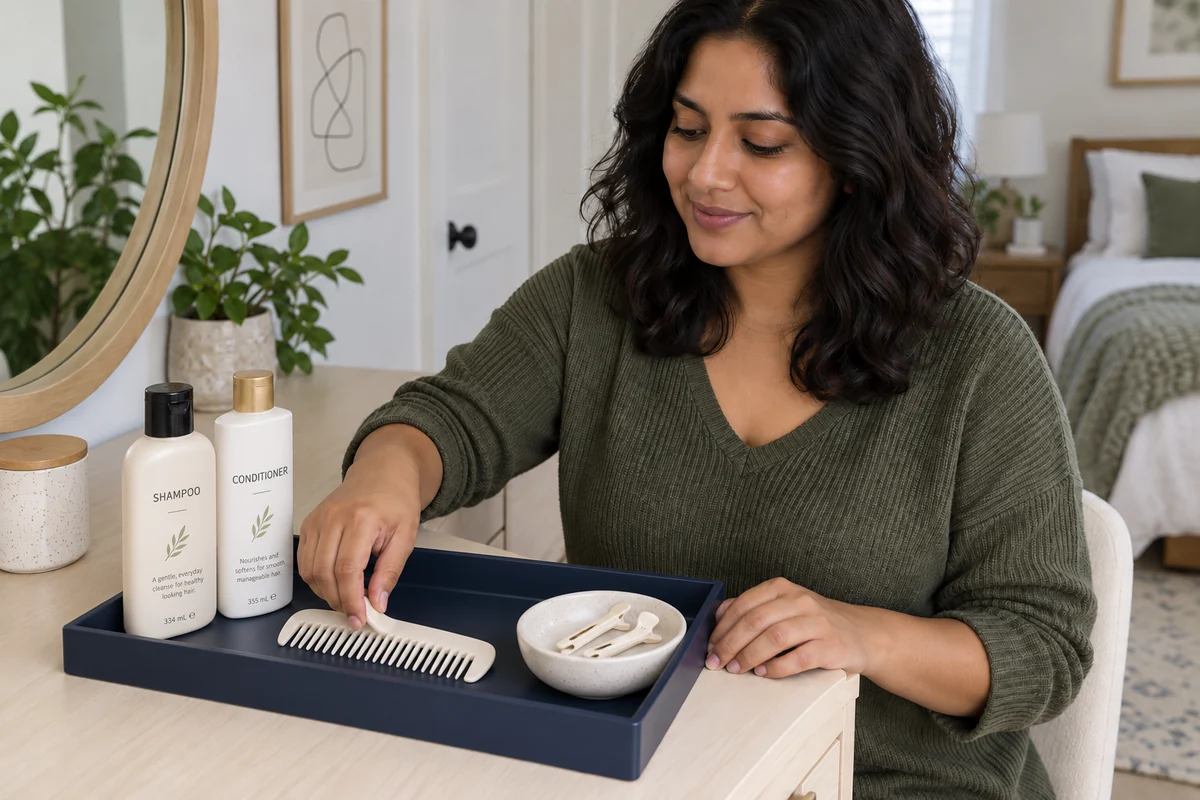
A woman returns a pale comb to a dark tray containing capped shampoo and conditioner bottles and a bowl of clips.

Keep the recovery supplies together

Put everything the clinic specified, and the instructions, in one place you can reach easily. Leave the labels showing and the original containers as they are. Move your usual styling products out of sight so habit doesn’t take over.

Plan the later return to ordinary products.

An adult places small prints face down into a plain folder beside a resting phone.

Make follow-up easy to find

Keep the appointment details, the clinic’s contact information and their instructions for urgent concerns somewhere you can find them. If you’re travelling, ask how follow-up works once you’re home and who could look at you locally if needed.

Check the pre-booking follow-up questions.

Leave with a plan you can use

A man with a receding hairline writes in a notebook beside a folder at home.

Write down who does what

For each restriction, note the task it affects, what needs arranging and who’s handling it. Use the dates or check-in points your team gave you. Anything unresolved stays a question for them, not a date you guess at.

An adult with coils and glasses writes in a notebook beside two current hair-care bottles.

Check the plan before you leave

Say the care steps back in your own words and ask about anything that seems inconsistent or missing. Keep updated instructions with the originals. When you can go back to work, exercise and your usual care depends on your procedure and how you heal.

When to get help

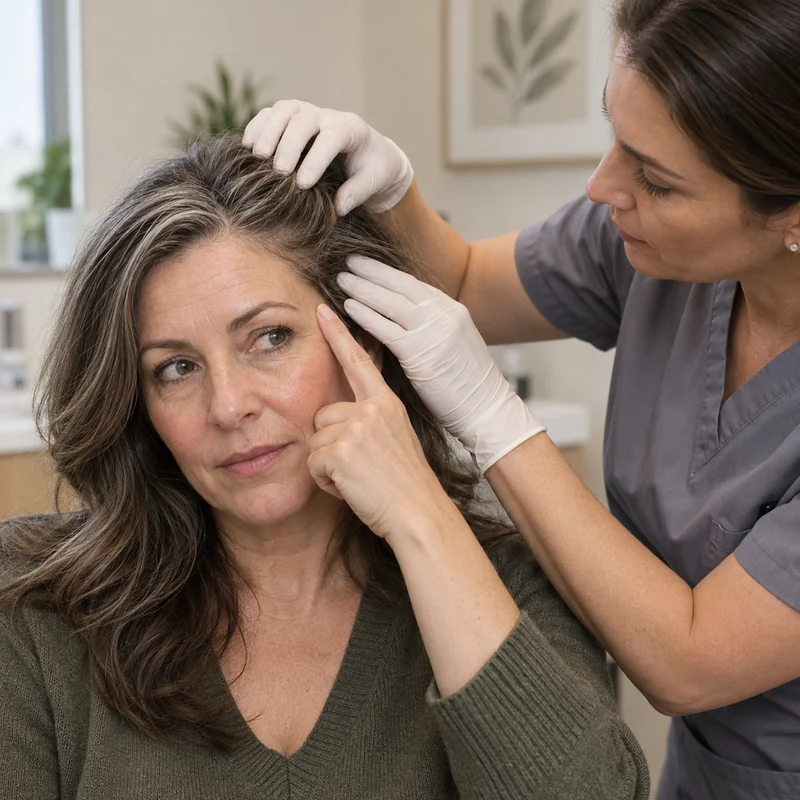
A medical professional examining the scalp where a woman points.

Signs that need more than routine care

  • If you have severe pain or anything unexpected happening at the treated areas, contact your treating clinic straight away using the urgent-care instructions they gave you. Don’t wait to see if it settles. If you can’t reach the clinic, see a medical professional through local urgent or emergency care.

Illustrated care examples: before & after

Instructions easy to find

The same man gathers loose papers into a care-plan folder beside a clinic contact card.
Before · care papers spread outAfter care · papers and contacts together
The care papers and contact details are gathered in one place. The instructions themselves come from your treating team, and nothing here sets a washing method or timetable.

Write in who helps when

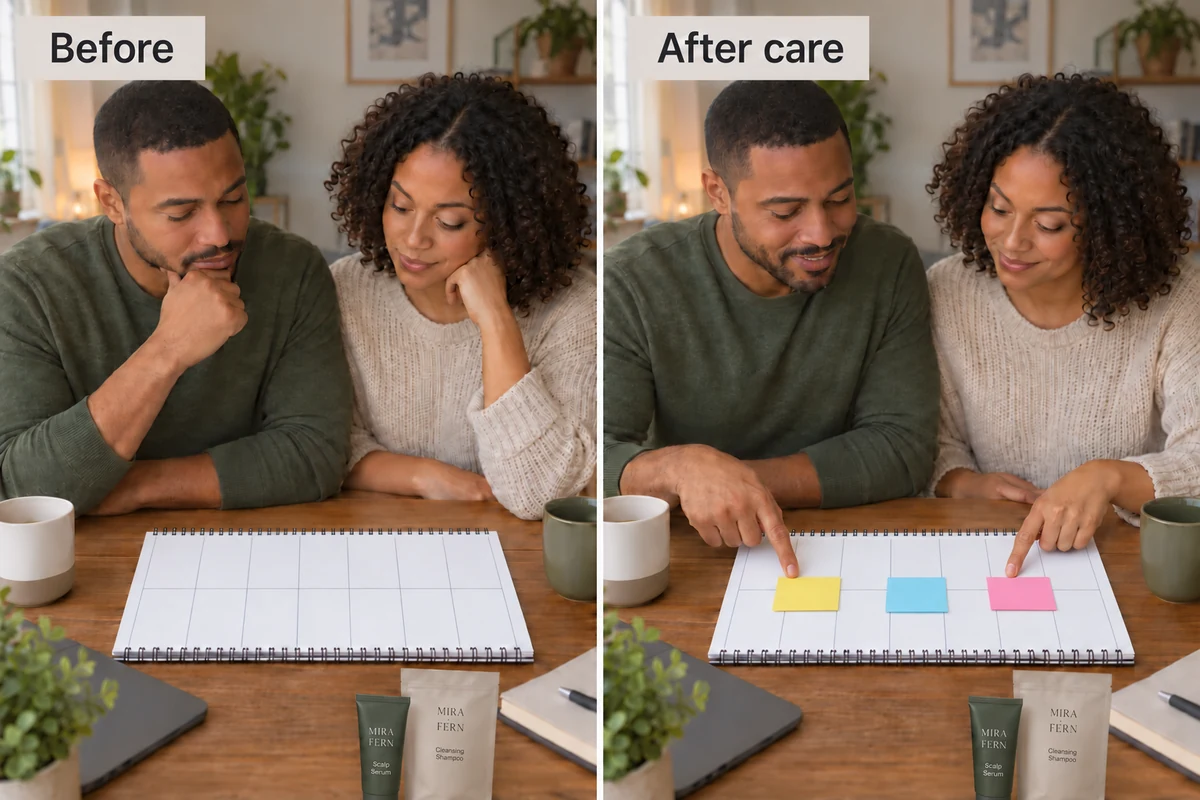
Two adults review an empty calendar, then add notes for a ride, home help and follow-up.
Before · an empty calendarAfter care · ride, home help, follow-up noted
The empty calendar gains a ride home, someone to help around the house and the follow-up visit. The real dates come from the plan agreed with your team.
An adult with shoulder-length dark hair writes in a small notebook beside two closed bottles.

Help with your hair-care routine

Bring your hair-care questions to the consultation. You can also read returning to your hair-care routine.

  • Which of my everyday routines need a different setup for a while?
  • How much help and time do I honestly have?
  • What can my hair routine look like once the team says it’s okay?

Your Hair Care Consultation can help make everyday care easier around the restrictions you share. Your treating team decides the post-procedure care, what any symptom means and when you can restart activities and products.

The Hair Care Consultation gives you a personal plan with product recommendations, routines and guidance on your hair-care questions.

$49 with 60 days of follow-ups, or $99 with 12 months. Pay once; the year renews only if you choose.