Hair Care Guides

Understand the decision before you book.
Start with your goals and surgery’s limits.

A hair transplant moves hair you already have to somewhere else on your head. It’s a big decision, and hope and worry arrive together. Before comparing packages, get clear on what you want changed, what upkeep you can manage and which questions need an examination.

Your personal hair-care planProduct choices, routines and answers shaped around your hair.$49one-timeStart my consultation
A man with a receding hairline writes in a notebook beside a folder at home.
Start with your goals and surgery’s limits.

What is going on

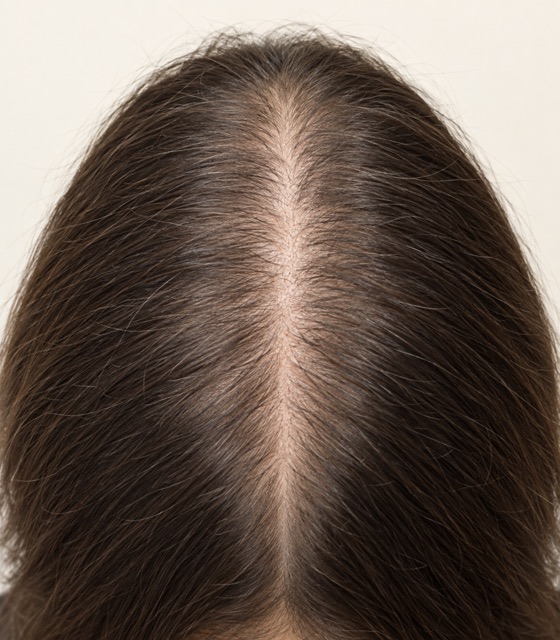
A crown view with the part and scalp visible between the hair.

Moving hair doesn’t make more of it

The donor area supplies the hairs that get moved. The recipient area receives them. There’s only so much donor hair, so ask how the coverage they’re proposing fits that supply and whether it leaves room for what you might want later.

A woman holds a notebook while a clinician reviews a folder with her across a desk.

A fuller look is a planning question

The hair around a transplant can keep thinning. So the hairline you want, the coverage you’re hoping for and the upkeep that follows all belong in one conversation. A result photographed on someone else can’t tell you what’s possible on your head.

What helps, day to day

A woman points to a feature on a printed bob reference beside a second view.

Say what you actually want to change

  • Pick a few reference pictures and say what you like about them, whether that’s the outline, the coverage or being able to style it differently.
  • Mention the length you like to wear and how long you’re willing to spend styling it.
  • Treat the pictures as a way to talk, not a result you’re ordering.
An adult with short gray hair sits near a window beside a phone secured on a tabletop tripod.

Keep track of what you’ve noticed

  • Note when you first saw a change and whether it’s still changing.
  • Bring any old photos you have. You don’t need to start checking every day.
  • Leave the question of cause, and whether surgery suits you, to the people who examine you, rather than diagnosing yourself from pictures.
An adult with short silver hair writes on a weekly calendar beside closed hair-care bottles and a towel.

Think past the procedure date

  • Add up time off, travel, help at home and follow-up visits alongside the price.
  • Weigh the effort and cost of any ongoing plan before you decide.
  • Ask what happens if you put it off, or decide not to go ahead.

Get the practical details straight

A client points to the lower outline in one of two back-view haircut references held by a stylist.

Ask about scarring and the haircut you like

Both strip harvesting and taking grafts one by one leave scars, just in different patterns. Ask how the donor area might look at the length you usually wear your hair. Don’t take an advertised method as scar-free.

Prepare questions about the proposed method.

An adult with short silver curls holds two closed hair-care bottles while comparing their labels.

Keep your current routine in the picture

Write down the products you use now and what each does. A separate clinical plan may cover the hair you already have. Medicines, supplements and whether surgery suits you stay with the treating team.

Plan the eventual return to everyday care.

Leave with something you can act on

A couple look together at a planner held open toward them.

Make a one-page decision sheet

Give it three headings. What I want to change, what I can realistically manage, and what I still don’t know. Put the most important point at the top. Add the whole commitment, including what comes after the procedure, before you decide.

An adult places small prints face down into a plain folder beside a resting phone.

Keep the explanation, not just the price

Save the provider’s name, the approach they proposed, the limits they described, the follow-up they offered and the written estimate, all together. Give yourself time to read it properly. If something wasn’t answered, leave it blank rather than filling the gap with an ad’s promise.

When to get help

A medical professional examining the scalp where a woman points.

Signs that need more than routine care

  • Before anyone recommends a procedure, a medical professional needs to look at your hair-loss pattern, your scalp and the donor area in person. Ask them plainly about risks, alternatives and what coverage is realistic for you. Hair You Love can help with everyday routines and products, but whether a transplant suits you is a question for your treating team.

Illustrated care examples: before & after

From a picture to a question

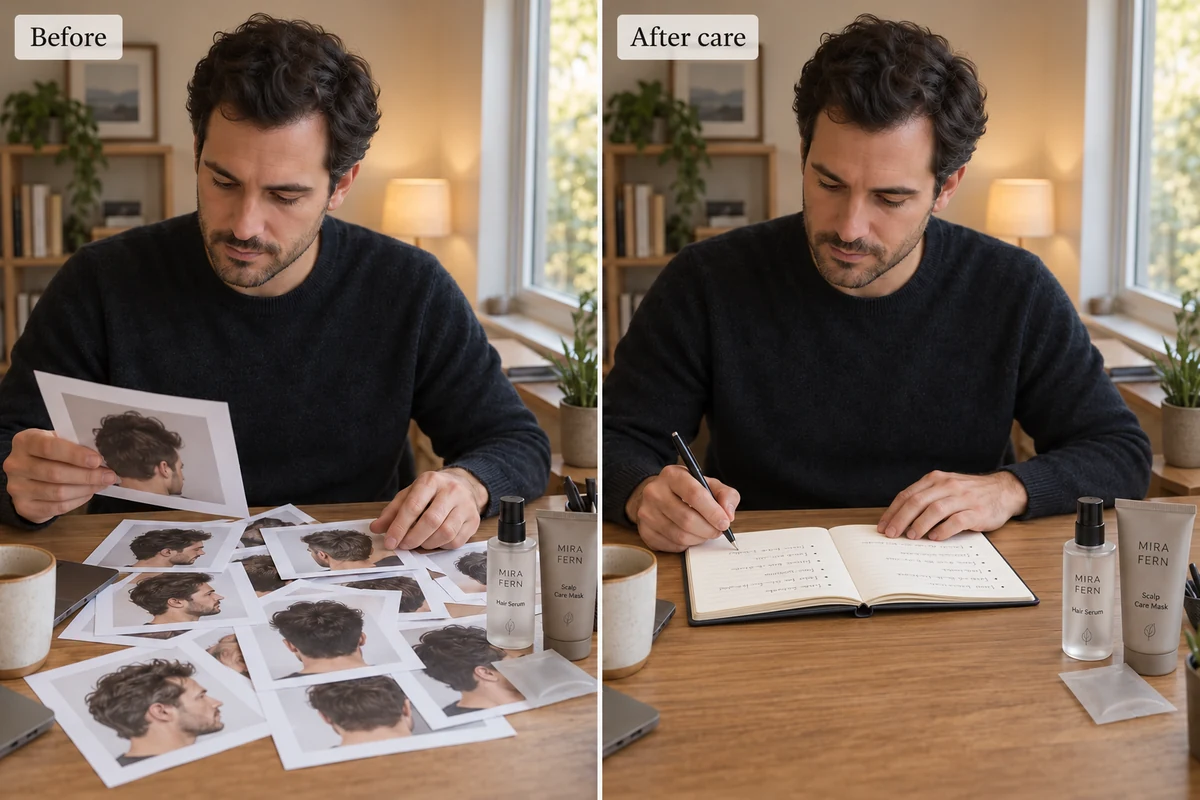
The same man reviews loose hairstyle prints, then writes goals and questions in a notebook.
Before · loose hairstyle referencesAfter care · goals and questions written down
The reference photos become a written list of goals and questions. A picture explains a preference, it can’t predict the result of surgery.

Add up the whole commitment

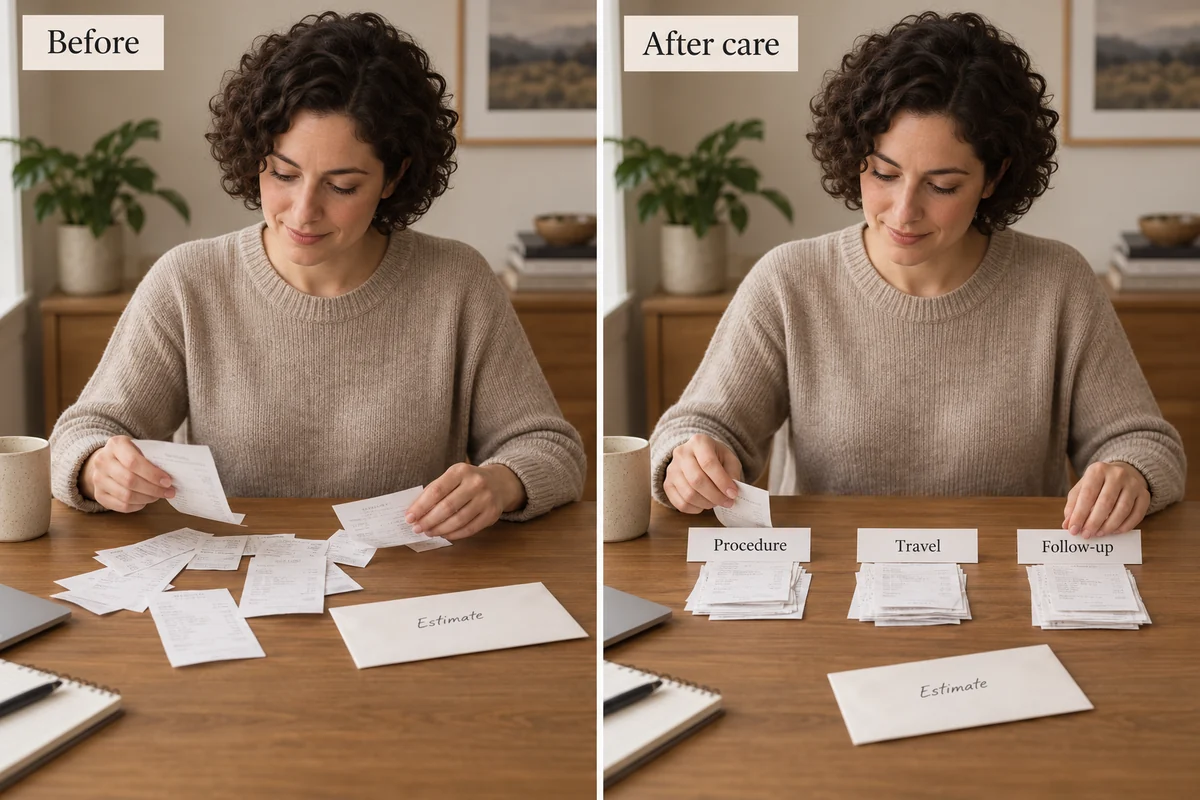
The same woman sorts loose receipts beside cards for Procedure, Travel and Follow-up.
Before · loose cost notesAfter care · procedure, travel, follow-up grouped
The scattered cost notes are grouped into the procedure, the travel and the follow-up visits. Your own numbers go in those boxes, the picture holds no quote.
An adult with shoulder-length dark hair writes in a small notebook beside two closed bottles.

Help with your hair-care routine

Bring your hair-care questions to the consultation. You can also read questions to ask before booking.

  • Which everyday hair-care jobs do I want to get easier?
  • How much styling effort and money can I keep up?
  • What routine questions are left once I’ve talked to the clinic?

The Hair Care Consultation can shape your everyday products and routine around your hair, what you already use, your preferences and any restrictions you tell us about. Planning the surgery, and clearing you for aftercare, stays with your treating team.

The Hair Care Consultation gives you a personal plan with product recommendations, routines and guidance on your hair-care questions.

$49 with 60 days of follow-ups, or $99 with 12 months. Pay once; the year renews only if you choose.