Hair Care Guides

Each hair is thick, but there aren’t many.
Soften the ends without flattening the shape.

Your hair feels substantial strand by strand, yet the ponytail is small and the style goes flat easily. That combination gets you thick-hair advice that buries what shape you have. The trick is softening the stiff ends without coating the whole head.

Your personal hair-care planProduct choices, routines and answers shaped around your hair.$49one-timeStart my consultation
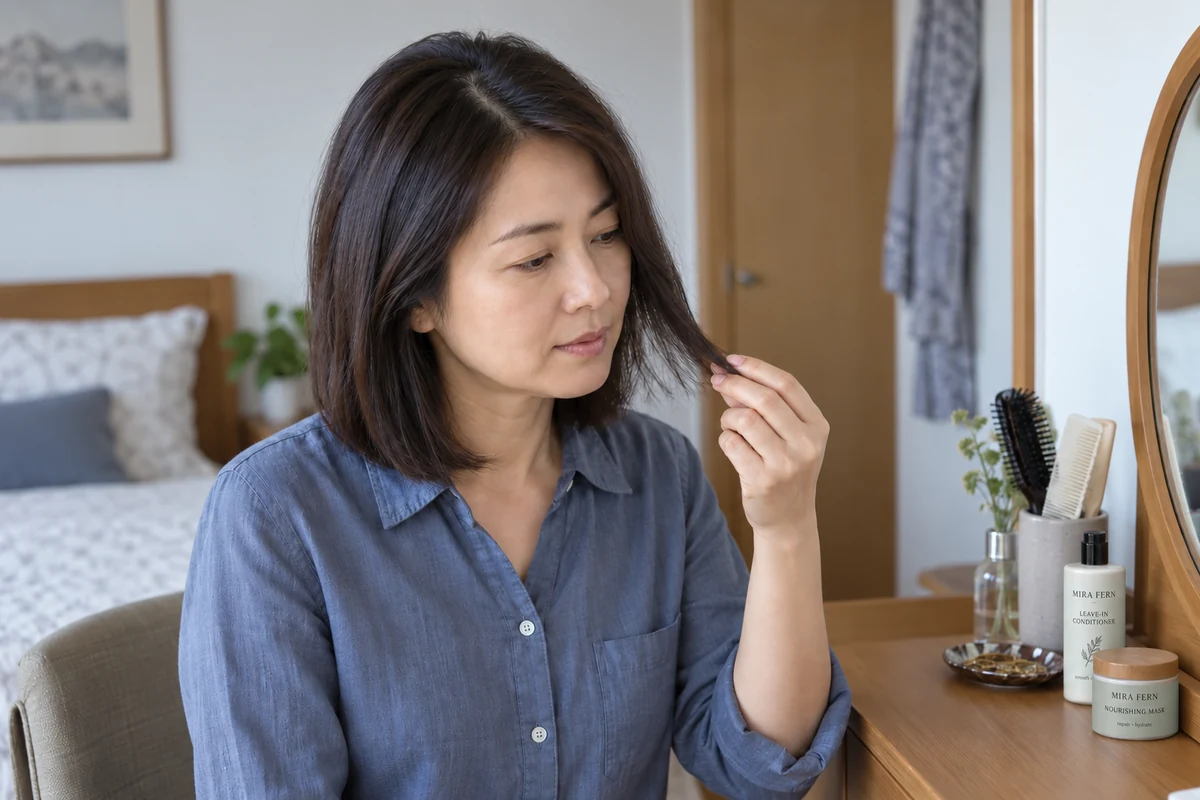
A woman loosely supports the ends of her shoulder-length hair.
Soften the ends without flattening the shape.

What is going on

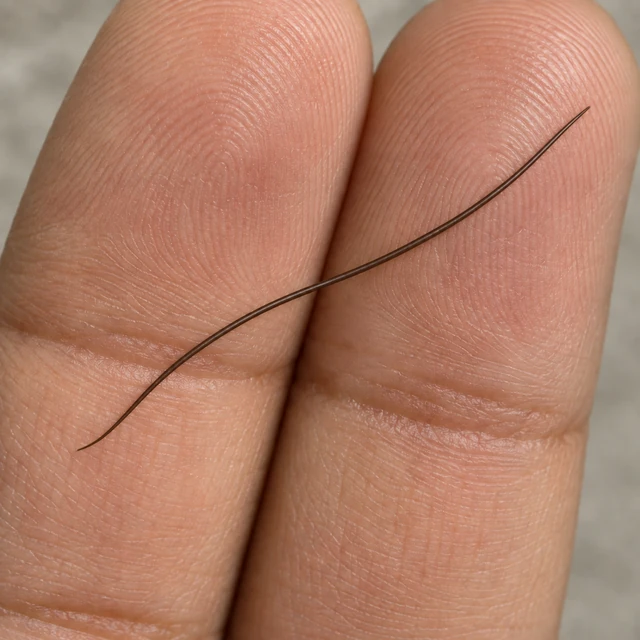
A single coarse hair strand resting across two finger pads

Thick strands don’t mean thick hair

Coarse is about each hair’s width. Density is about how many hairs you have. You can have wide strands and a thin ponytail at once, and that’s what you’re working with. Products sized for a dense head of hair will be too much for yours.

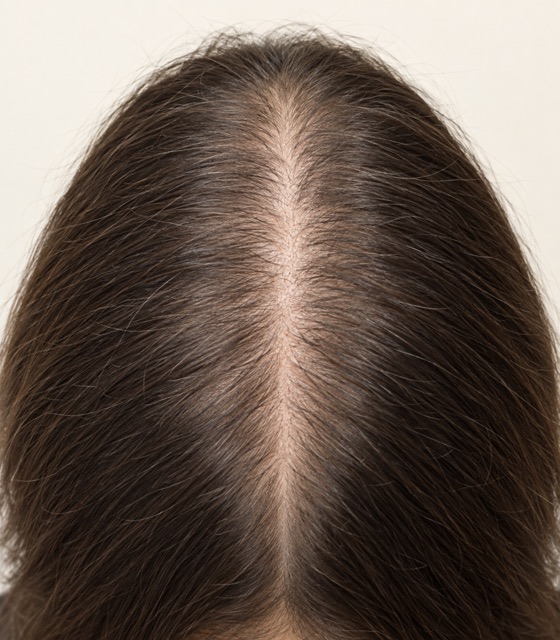
A crown view with the part and scalp visible between the hair.

Start from what’s normal for you

With less hair, some scalp shows at a normal part, and it always has. You don’t have to hide it or chase volume you never had. This guide is for a combination you know well. A part that’s suddenly wider is a different story.

What helps, day to day

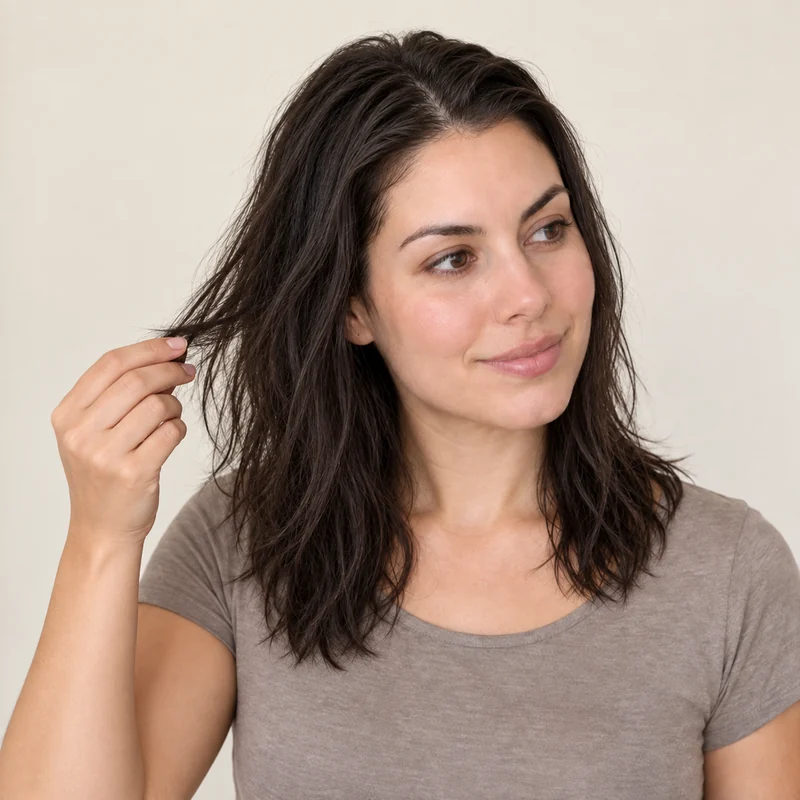
A woman gently feeling a section of her loose hair with her fingers, with no visible product.

The ends feel stiff but the shape goes flat

  • Put conditioner on the lower lengths that catch and rinse as the label says, before you add leave-in layers all over.
  • Then judge two things separately.
  • Do the ends comb through comfortably, and does the dry style still move the way you want?
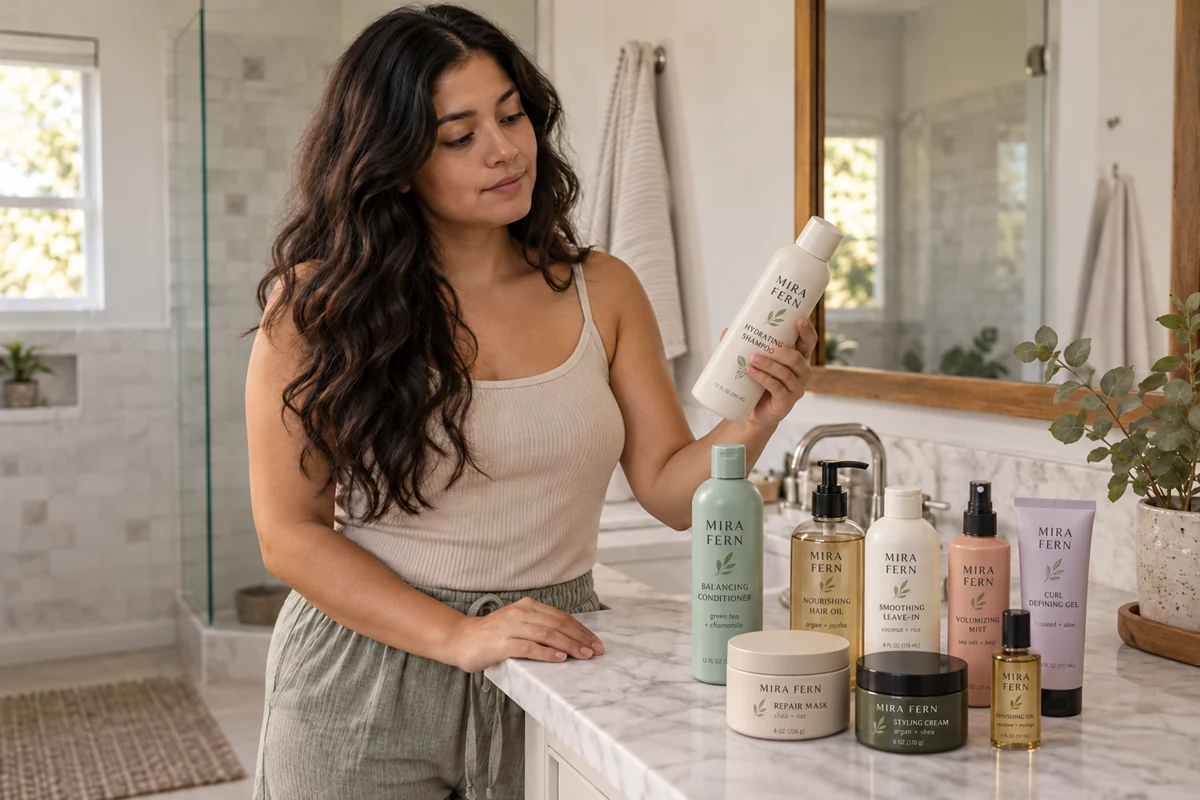
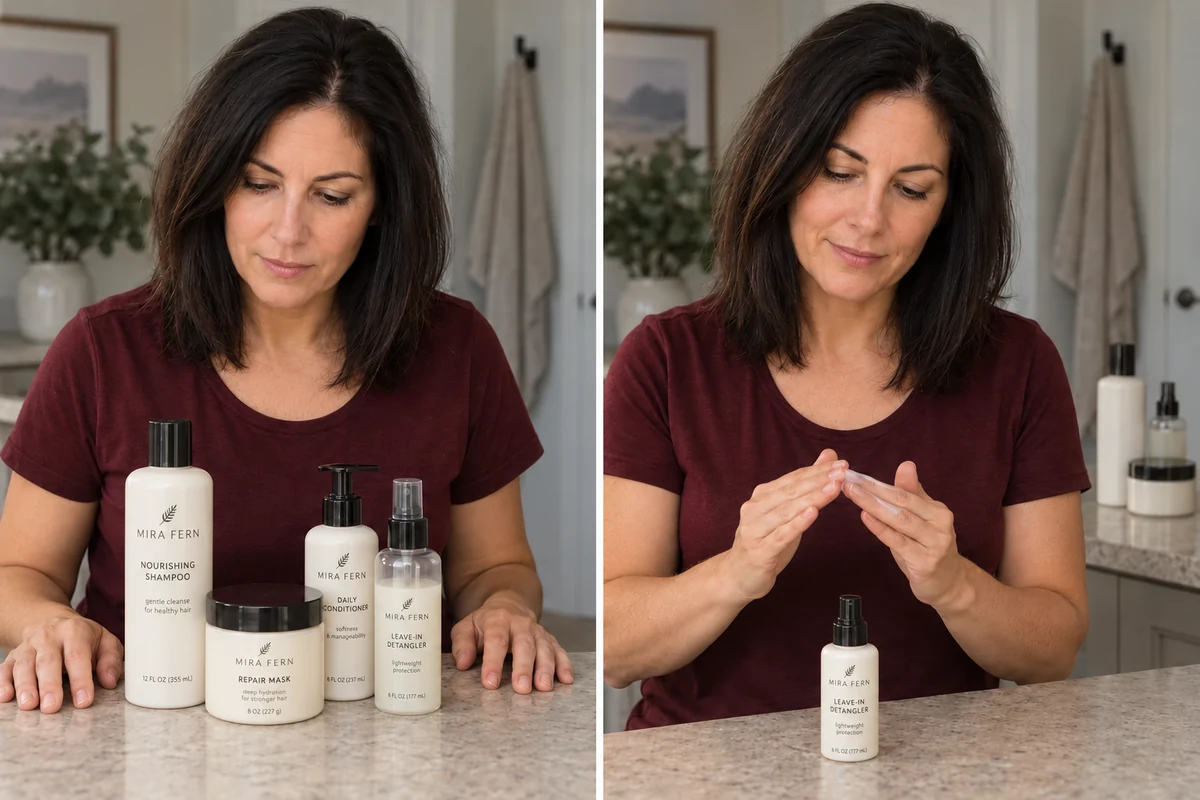
A woman considering several hair-care bottles and jars on her bathroom counter.

Your coarse-hair routine has too many layers

  • A shampoo, mask, leave-in, cream and oil often do the same job twice.
  • Work out which step gives you slip and which gives you hold, then drop the duplicates.
  • You can keep one richer product for the ends without adopting the whole routine from a thick-hair tutorial.
A woman with curls writing a routine note beside her hair-care products.

A tiny bit more product changes everything

  • With a flexible-dose styler, spread a small amount through one section you can reach before you think about more.
  • Let it dry or settle as the label says, then feel it.
  • Don’t give each small section a full-head amount.

Products, by the job they do

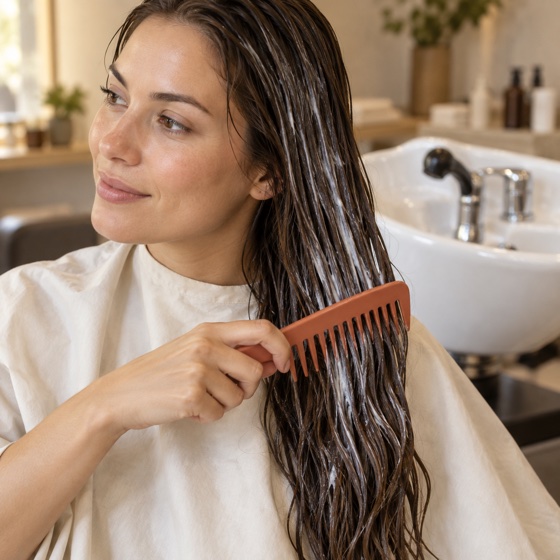
A woman detangling conditioned hair with a wide-tooth comb.

Choose conditioner by how much the ends resist

The slip you need might come from putting conditioner only where the hair catches, or from a different formula. A lightweight label doesn’t promise it will soften your particular ends.

Browse rinse-out conditioners. Your tangles, past treatments and preferred finish help guide a personal conditioner recommendation.

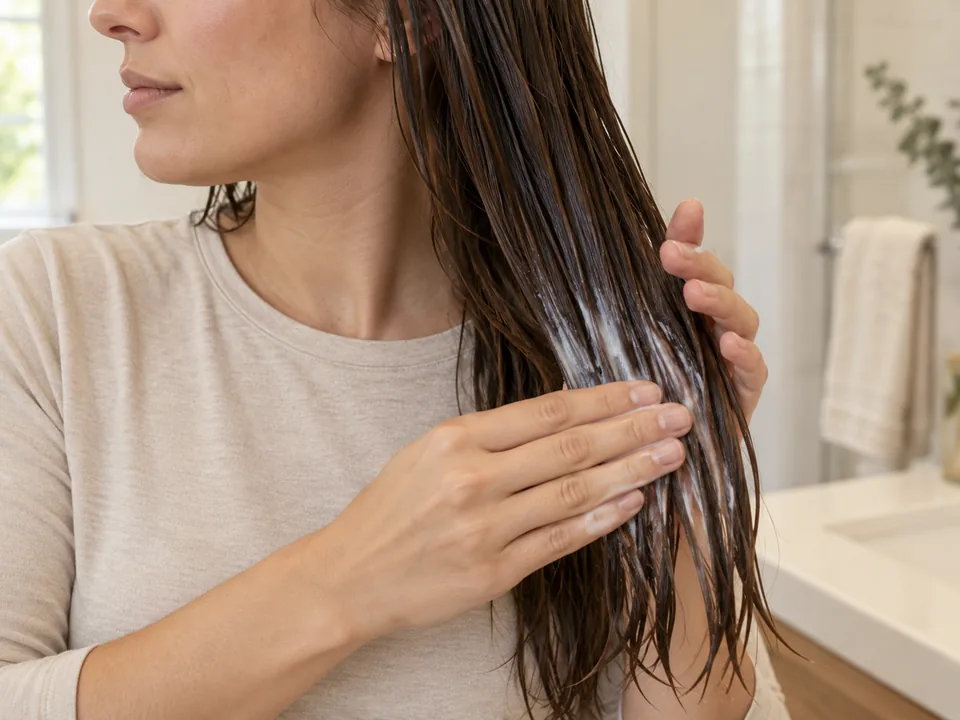
A woman smoothing leave-in product through her lower lengths.

Keep smoothing where it’s needed

A leave-in can look after rough lower lengths without touching roots that already feel fine. Put it where you want softness, use less than you think, and stop if the hair starts to feel coated.

Browse leave-in conditioners. Tell the consultation which leave-ins felt useful or heavy, and how much you used.

How to do it

Supporting dry ends while distributing a small amount of styler.

2. Find a starting amount you can repeat

This is for stylers that let you add more. Start with hair in the state the label asks for, spread a small amount first, and stop at the amount the label gives.

Guide: Adjust styling product amount

Illustrated care examples: before & after

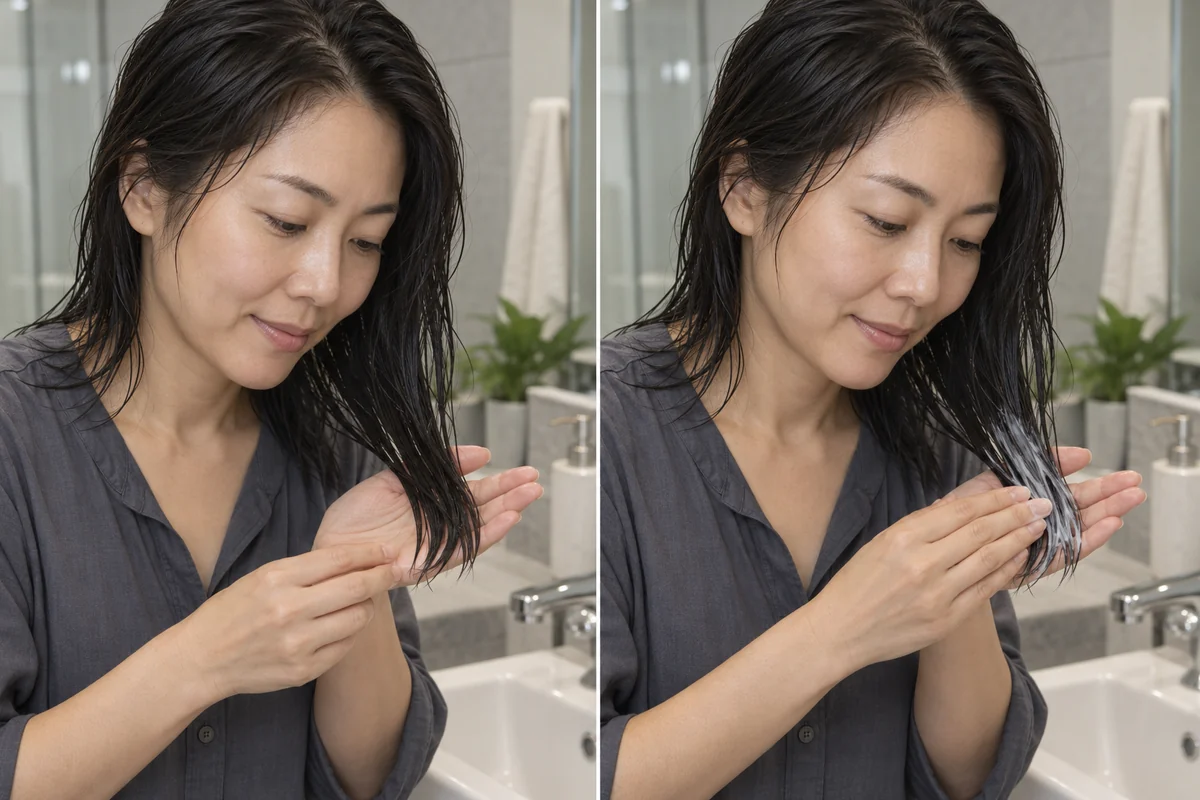
Conditioner just where needed

A supported wet lower section before and during targeted conditioner application.
Before · lower section, no productAfter care · conditioner on the lower lengths
Conditioner smoothed along the lower lengths only, following the product’s own placement and rinse directions. Same hair, same amount, just conditioner where you want it.

One leave-on with a job

A woman considers several products, then sets most aside and prepares a thin layer from one.
Before · several finishing products togetherAfter care · one chosen, the rest aside
Give each leave-on a job before it goes on, and skip the ones without one. Use the label’s amount, and keep washing and conditioning as usual.
A woman gently squeezing damp hair with a towel.

Help with your hair-care routine

Bring your hair-care questions to the consultation. You can also read choosing hair products.

  • How do I soften my coarse ends without flattening the whole style?
  • Is my routine doing the same conditioning job twice?
  • How much product does my actual amount of hair need?

The plan uses the hair and scalp details you share, past treatments, current products, preferences and the time and budget you have.

The Hair Care Consultation gives you a personal plan with product recommendations, routines and guidance on your hair-care questions.

$49 with 60 days of follow-ups, or $99 with 12 months. Pay once; the year renews only if you choose.