Hair Care Guides

Ask for a change you can actually use.
Say what happens and what your day allows.

You don’t need the right hair words to ask a good question. Say what happens, what you’d like to be easier and what your mornings allow. Add what you’ve tried and what you want to keep. That’s enough for a real answer.

Your personal hair-care planProduct choices, routines and answers shaped around your hair.$49one-timeStart my consultation
An adult with coils and glasses writes in a notebook beside two current hair-care bottles.
Say what happens and what your day allows.

What is going on

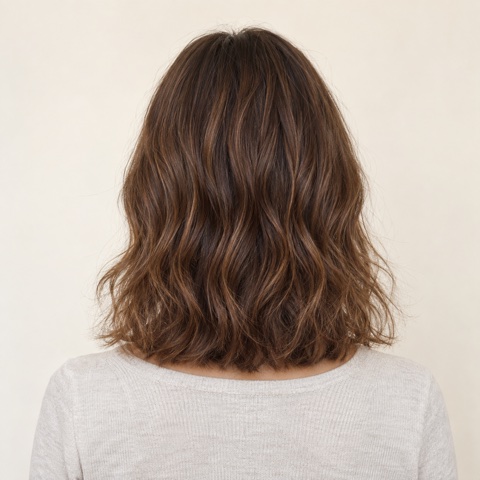
A rear view of wavy hair with flyaways near the ends.

Start with the moment that bothers you

“My ends catch when I detangle after washing” says far more than “my hair is bad.” Name where it happens, when, and what you were doing. It’s fine to say you don’t know your strand size or why things changed.

An adult with short silver hair writes on a weekly calendar beside closed hair-care bottles and a towel.

Add a real limit

Mention the time, reach, shower access, budget or number of steps you can manage. “I have ten minutes in the morning” gets a different answer from “I enjoy a long styling session.” Use your actual limit, not the routine you wish you had.


What helps, day to day

An adult with shoulder-length dark hair writes in a small notebook beside two closed bottles.

You’ve already tried several things

  • Say what you changed, how you used it and what happened.
  • Include one thing that helped and one you gave up on.
  • If you changed several things at once, say so rather than guessing which one did it.
Two adults compare a bottle's directions and a hair-care shopping note, with separate closed products in front of them.

You want to keep a favorite product

  • Say what you like about it and what job it does for you now.
  • Bring the exact name and how you use it, even if the result is mixed.
  • Ask whether a different amount, placement or an extra step could help before replacing it.
A man seated at a dry dressing table with both forearms resting on a folded towel beside a mirror, comb and bottles.

You have more than one question

  • List them, and put the most annoying one first.
  • Keep what you want separate from your theory about why it’s happening.
  • You can ask for a simpler routine, product picks and the reasons behind them without knowing a single ingredient name.

Products, by the job they do

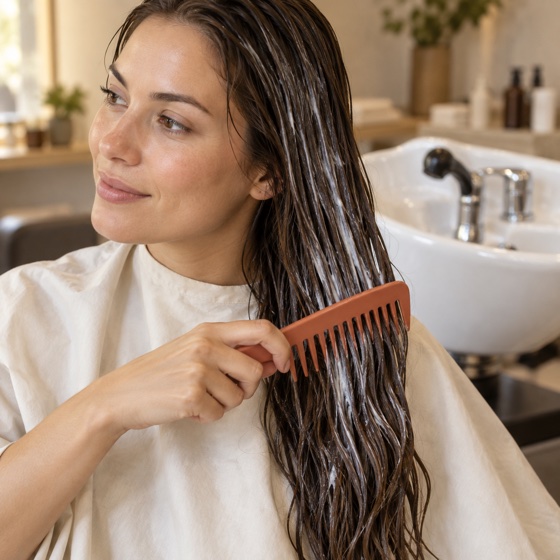
A woman detangling conditioned hair with a wide-tooth comb.

Ask about a product’s job

“What would make detangling easier without leaving my roots heavy?” ties the job you want to the effect you don’t.

Browse rinse-out conditioners. For conditioner recommendations, share where your hair tangles and which products you have tried.
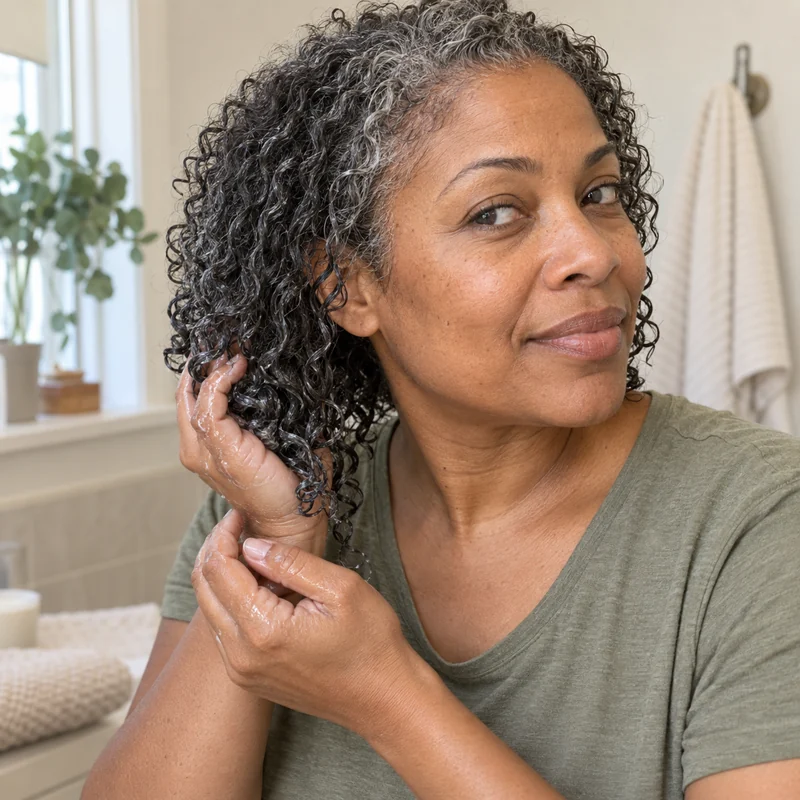
A woman cupping a damp curl section with styling gel on her hands.

Ask about a finish you can live with

“How do I keep this shape with the drying time I have?” gets you further than asking for the best styler in general. Say whether you like a firm or a soft finish.

Browse styling products. The consultation uses your hair details and styling habits to compare creams, mousses and gels.

Putting it into words

A woman points to a feature on a printed bob reference beside a second view.

Write one complete request

Something like this works. “After washing, my ends tangle. My conditioner helps a little, but I want an easier way that fits the time I have.” Swap in your own details, and leave the unknowns unknown.

A woman uses a tablet displaying product directions beside a capped hair-care bottle at a dry desk.

Have a short record handy

Keep your current product names, the order you use them and your main questions nearby. You don’t need to list every product you’ve ever owned or arrive with a theory. Answers you’ve saved before carry over into the consultation.
When to get help

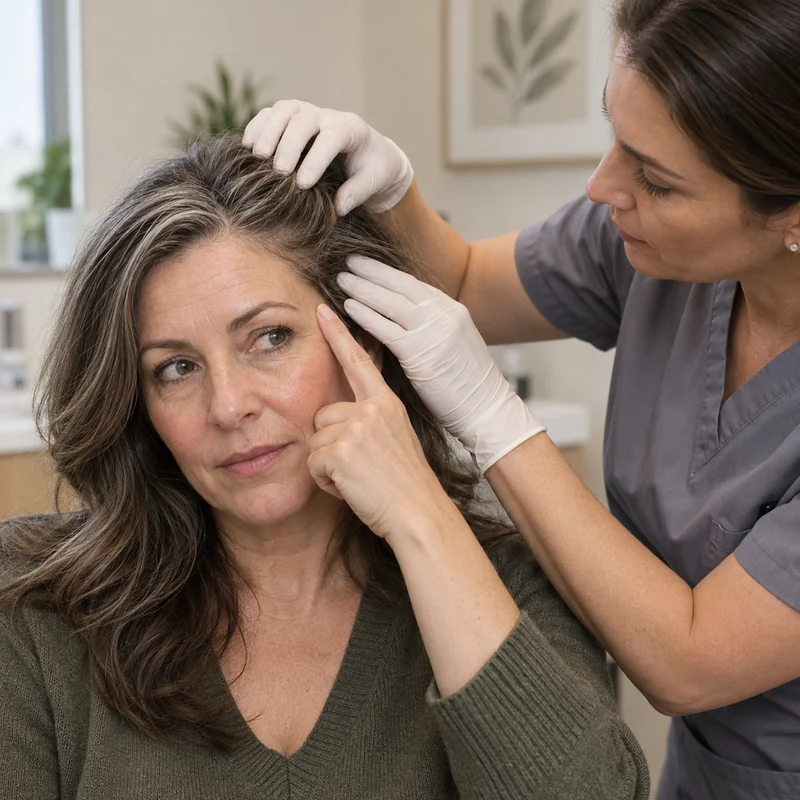
A medical professional examining the scalp where a woman points.

Signs that need more than routine care

  • Questions about diagnosing scalp symptoms, choosing medicines or whether a treatment is right for you belong with a medical professional, and they’re worth asking sooner rather than waiting. New or patchy loss, a scalp that keeps hurting and a product that caused a real reaction are the ones not to sit on. Everyday routine questions are what the consultation is for.

Illustrated care examples: before & after

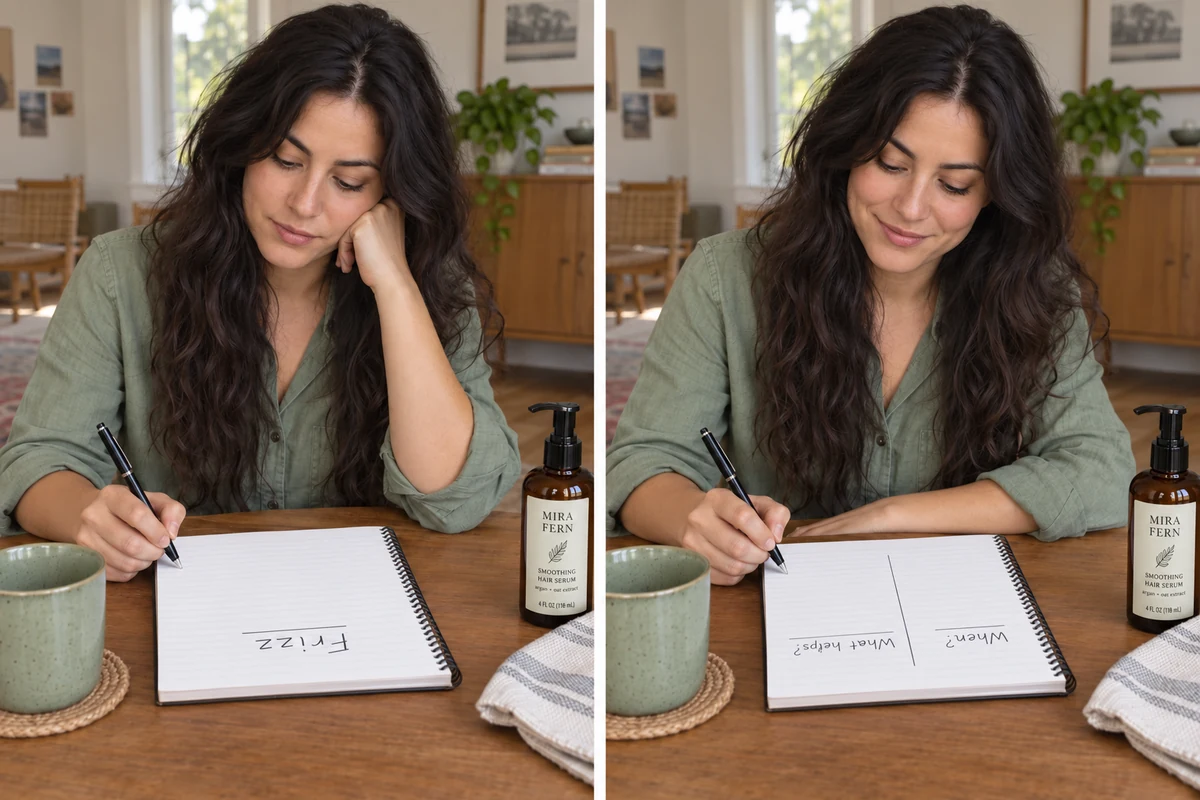
From frizz to a question

A notebook headed Frizz becomes a record with When? and What helps? headings beside the same bottle.
Before · just the word frizzAfter this step · timing and what helps
The one word frizz grows into when it happens and what has helped. You do not need to know the cause to ask about everyday care.

The context worth bringing

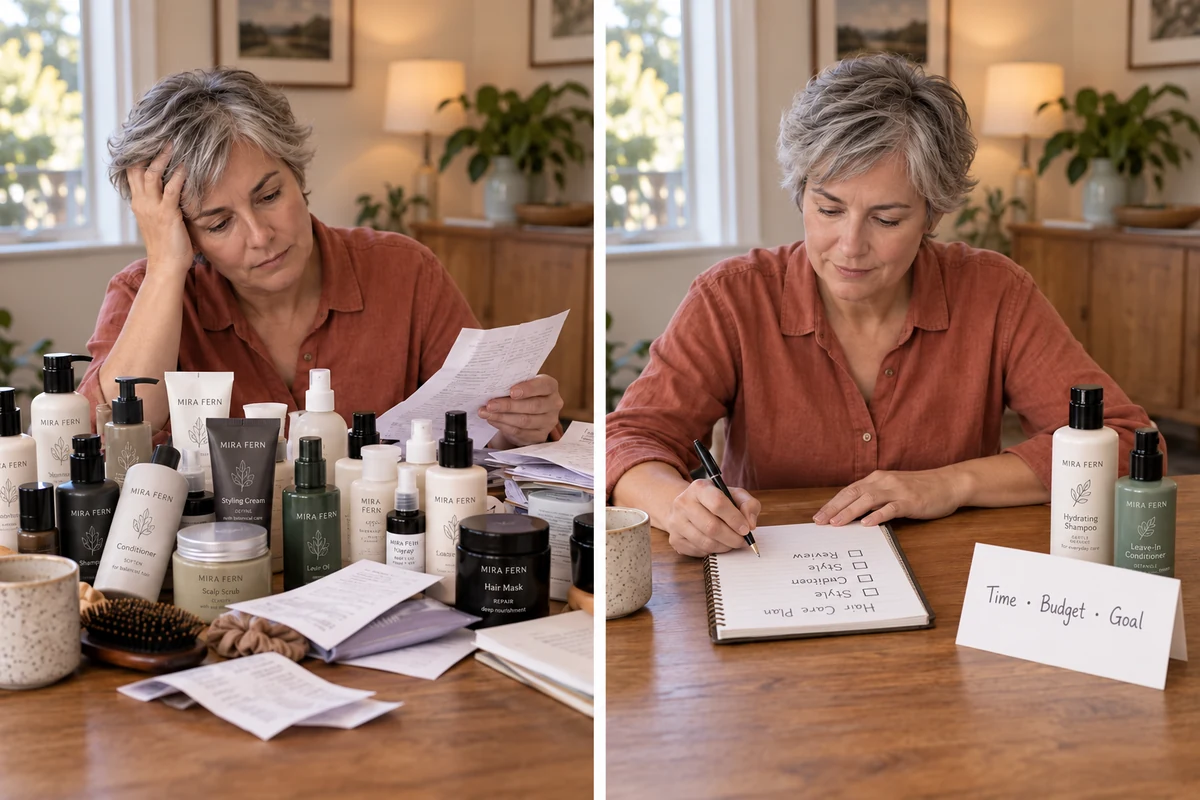
A crowded table of hair products and papers becomes a notebook, two bottles and a Time, Budget, Goal card.
Before · old products and papers piledAfter this step · current products, notes and limits
Everything you ever used is too much. What you use now, a few notes and your practical limits tell the story better.
A woman with curls writing a routine note beside her hair-care products.

Help with your hair-care routine

Bring your hair-care questions to the consultation. You can also read keeping a routine manageable.

  • What happens, and when does it happen?
  • What have I tried, and what do I want to keep?
  • What would make the answer fit my real life?

The plan uses the hair and scalp details you share, past treatments, current products, preferences and the time and budget you have.

The Hair Care Consultation gives you a personal plan with product recommendations, routines and guidance on your hair-care questions.

$49 with 60 days of follow-ups, or $99 with 12 months. Pay once; the year renews only if you choose.