Hair Care Guides

Keep your braid cared for and comfortable.
Plan washing and adjustments around what you want preserved.

When a braid has personal, family or cultural meaning, care needs to respect what you want kept. Washing your scalp, drying the lengths and easing a pulling tie may each need a different approach. Start with how your braid is made.

Your personal hair-care planProduct choices, routines and answers shaped around your hair.$49one-timeStart my consultation
A man supports his intact braid while discussing his preferences with a stylist.
Plan washing and adjustments around what you want preserved.

What is going on

An adult with two long braids discusses a care agreement with a chosen helper.

Say what can be undone

You may want the braid kept intact, or be happy to undo and remake it for washing. Tell anyone helping which option fits, who may handle your hair and whether ties, decorations or shed hair should be saved. They should ask before changing anything.

An adult observes an intact braid in a handheld mirror.

Match the care to the construction

A loose braid of your own hair can be undone for ordinary washing if you want. Installed braids, added hair and decorations may need different care. Check how they are attached and ask the maker which parts can get wet or be loosened.

What helps, day to day

An adult and a professional discuss care access while the long braid remains intact.

Make room to wash and rinse your scalp

  • If the braid can stay in for washing, gently move the lengths aside to reach the scalp.
  • Don’t force fingers or a nozzle under tight sections.
  • If you cannot reach or rinse an area, arrange help or discuss loosening that part before the wash.
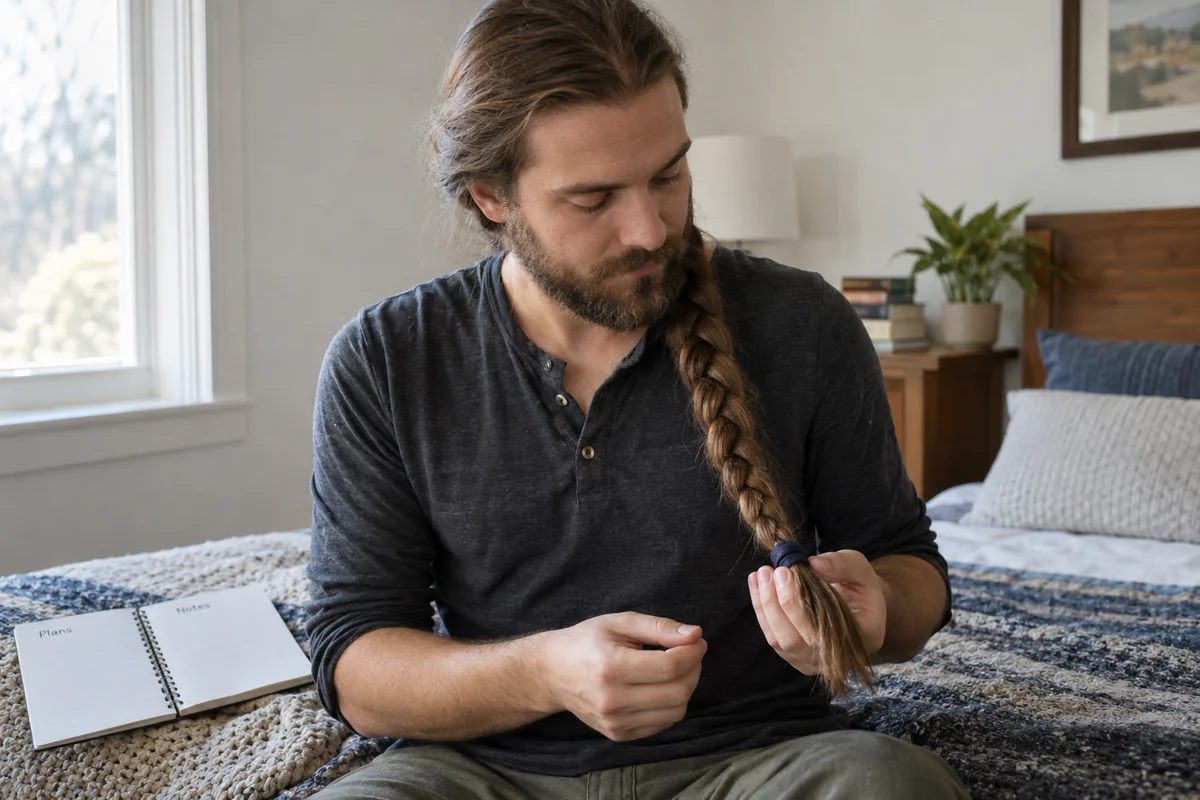
An adult supports an intact braid while examining its soft end tie.

Release a caught tie without dragging it

  • Stop pulling and support the braid close to the tie.
  • Open or unwind a familiar fastener, easing caught hairs free with your fingers.
  • If you cannot see how it opens, ask someone who knows the fastening.
  • Avoid cutting or dragging it through the hair.
An adult with two intact braids writes a care note beside unused supplies.

Leave time for the braid to dry

  • Before washing, allow time for drying afterward.
  • For a braid that can air-dry, leave the lengths loose instead of bundling them into a bun.
  • Check near the roots and inside thick sections for dampness before covering.
  • Ask about another drying method if needed.

Products, by the job they do

A woman uses a tablet displaying product directions beside a capped hair-care bottle at a dry desk.

Choose shampoo for the wash you can do

For a washable braid, use shampoo that suits your scalp and any added hair. Use the bottle’s amount, gently clean the accessible scalp with finger pads, then rinse thoroughly. Ask the maker about product restrictions if the braid contains added materials.

Browse cleansing products. The consultation uses your wash frequency and scalp concerns to recommend a shampoo.

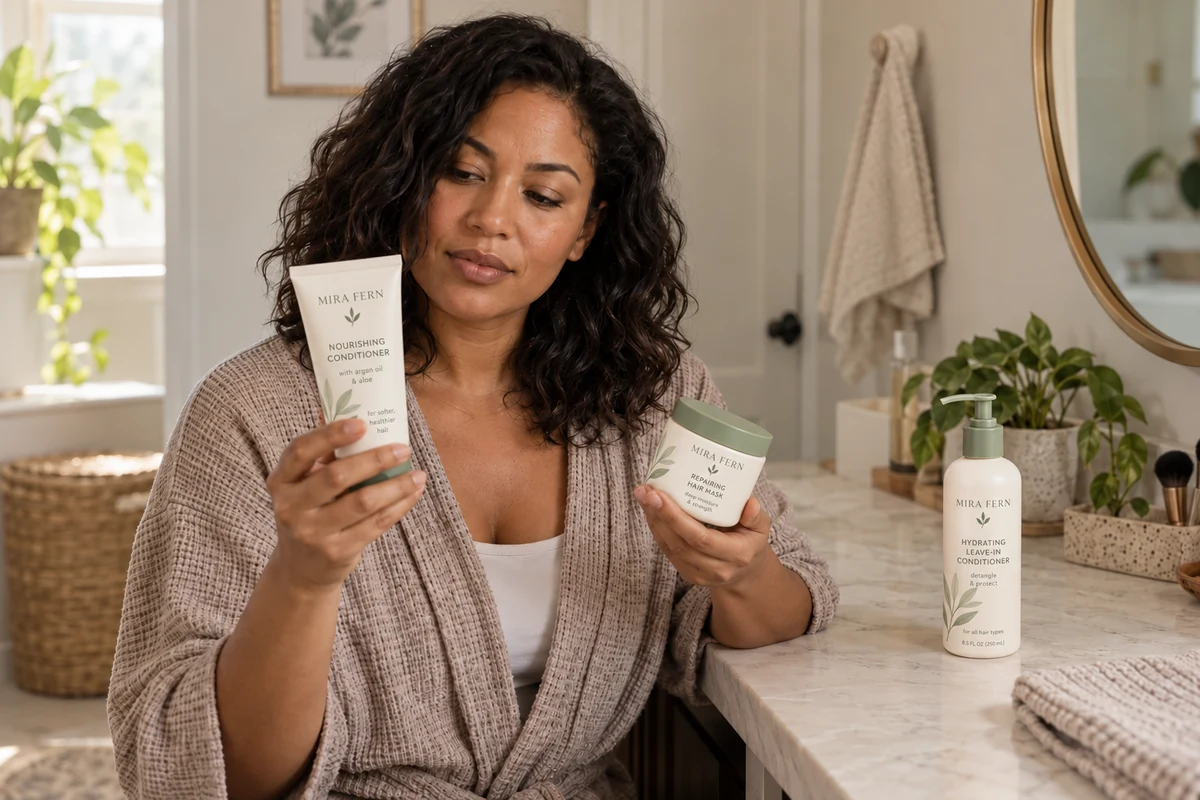
A woman compares a conditioner tube and hair mask jar beside a leave-in bottle.

Condition the lengths you can reach and rinse

If you undo the braid for washing, apply rinse-out conditioner to the lengths and ends that need it, then rinse. If it stays in, check whether conditioner suits the added hair and attachments. Use the recommended amount rather than packing product into the braid.

Browse rinse-out conditioners. Your tangles, past treatments and preferred finish help guide a personal conditioner recommendation.

How to do it

A covered client and a stylist review a care agreement beside an unused phone at a salon table.

Give helpers the same care instructions

If several people help, keep a short note with your supplies: what may be undone, who can do it and what should be saved. Include the washing and drying instructions. If a helper proposes taking everything down, ask why and discuss smaller changes first.

An adult holds braid lengths clear of a shoulder-bag strap before putting it on.

Keep the lengths clear as you move

Bring the braid clear of straps, collars and chair backs before they catch it. If an extra tie or updo pulls at the roots, release it. When the braid itself pulls, ask for prompt loosening or rebraiding that respects the choices you have explained.

When to get help

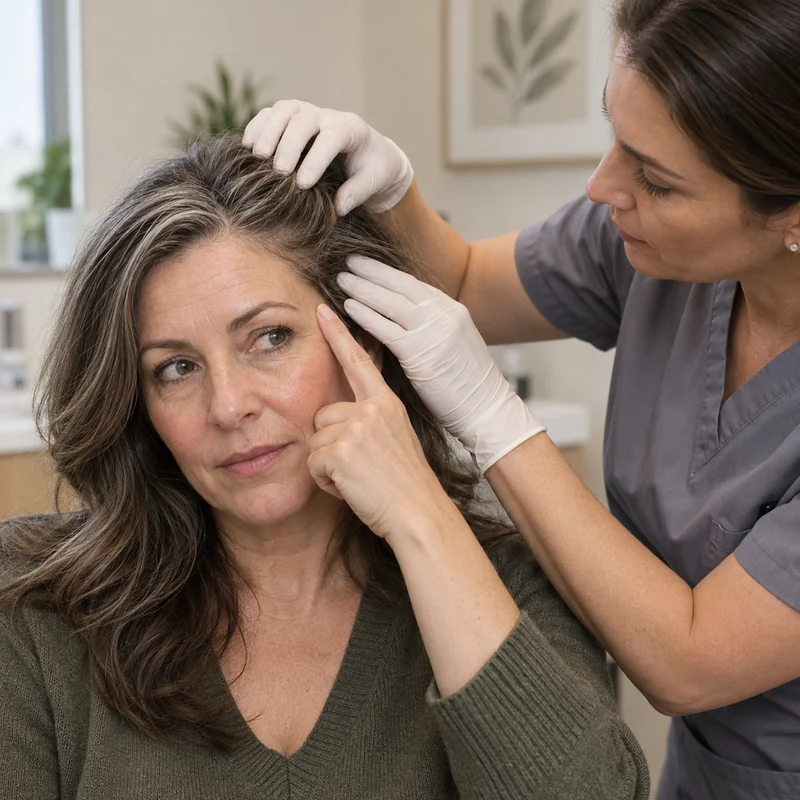
A medical professional examining the scalp where a woman points.

Signs that need more than routine care

  • A braid that hurts or stings needs the pulling eased promptly. If soreness continues, or you see sores or new bare areas, speak with a medical professional. Explain what you want preserved so the examination and care can be discussed with you.

Illustrated care examples: before & after

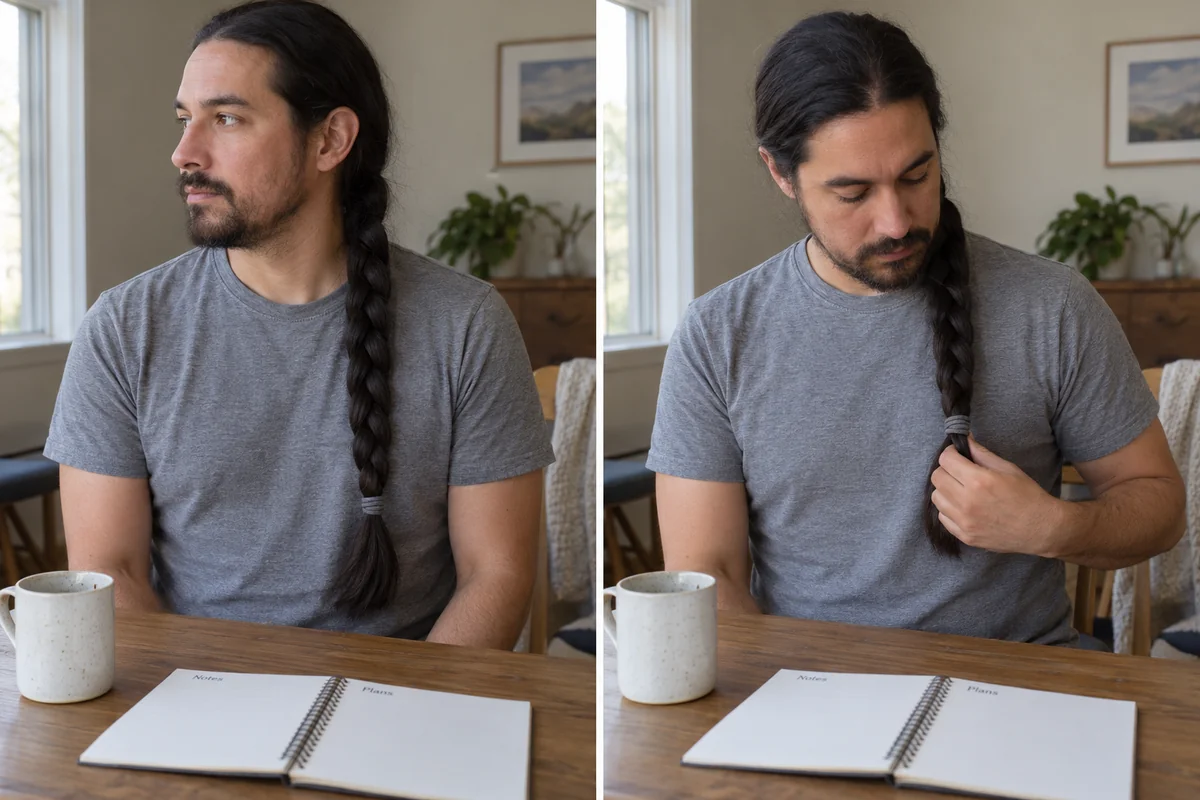
Support the braid before checking

The same adult first lets a braid hang, then supports its end while looking at the tie.
Before · braid resting freelyAfter care · hand supporting the braid
The braid rests in a hand while the wearer checks the tie. Support the length before handling a fastening to avoid tugging.

Discuss care before handling the braid

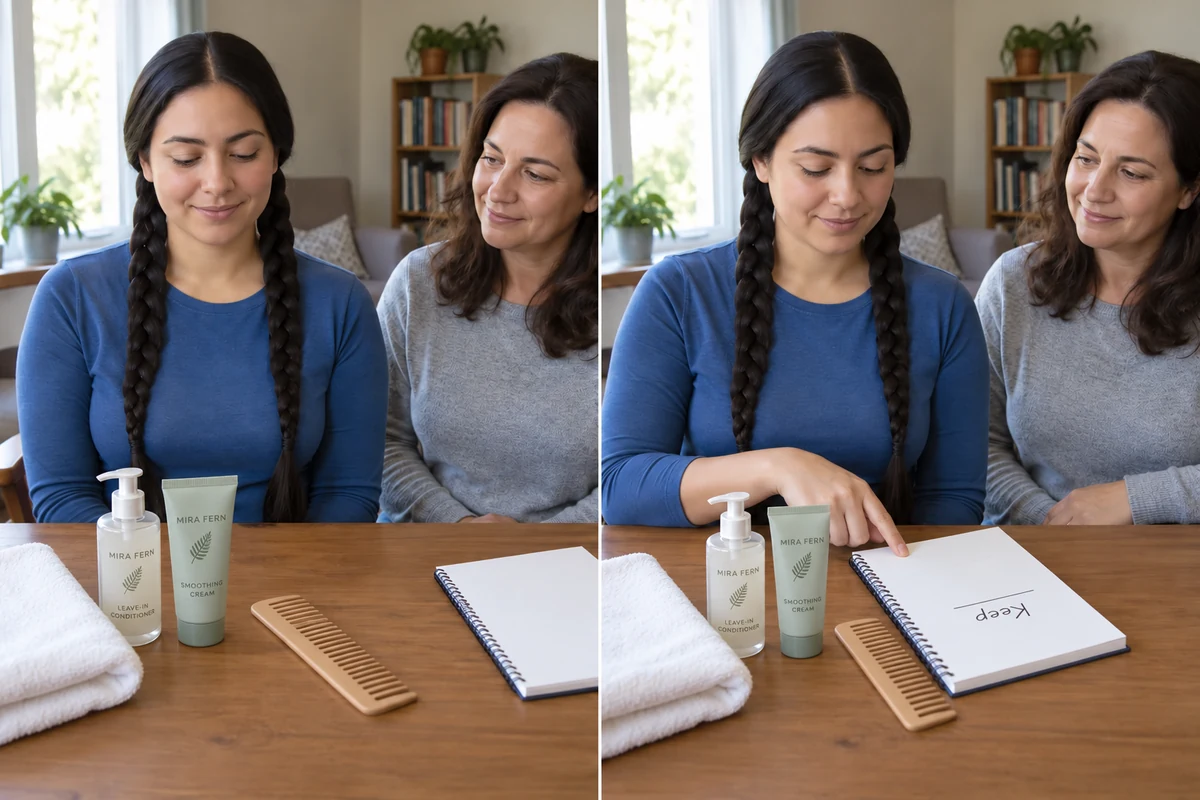
Matched panels show an adult with two braids and a seated helper, then the wearer pointing to a notebook beside the supplies.
Before · notebook set to one sideAfter planning · notebook beside the supplies
The notebook moves beside the supplies while the braids stay intact. Talk through what may be undone and who may help before touching the hair.
A man reads a shampoo bottle while making a note, with a second hair-care bottle beside the notebook.

Help with your hair-care routine

Bring your hair-care questions to the consultation. You can also read checking care for installed braids with added hair.

  • Can I wash my scalp without undoing this braid?
  • How can I stop the tie or lengths from pulling?
  • What should I tell someone who helps with my hair?

Share how your braid is made, what you want kept and where washing or daily wear becomes difficult. The consultation can help you choose products and organize care around those needs. A person familiar with the construction can help with unfamiliar fastenings or adjustments.

The Hair Care Consultation gives you a personal plan with product recommendations, routines and guidance on your hair-care questions.

$49 with 60 days of follow-ups, or $99 with 12 months. Pay once; the year renews only if you choose.