Prepare damp hair for bed when it cannot fully dry
Blot until hair is no longer dripping, prioritize drying the roots, and keep any remaining damp lengths loose on a clean absorbent surface.
Step by step
 STEP 1 OF 3
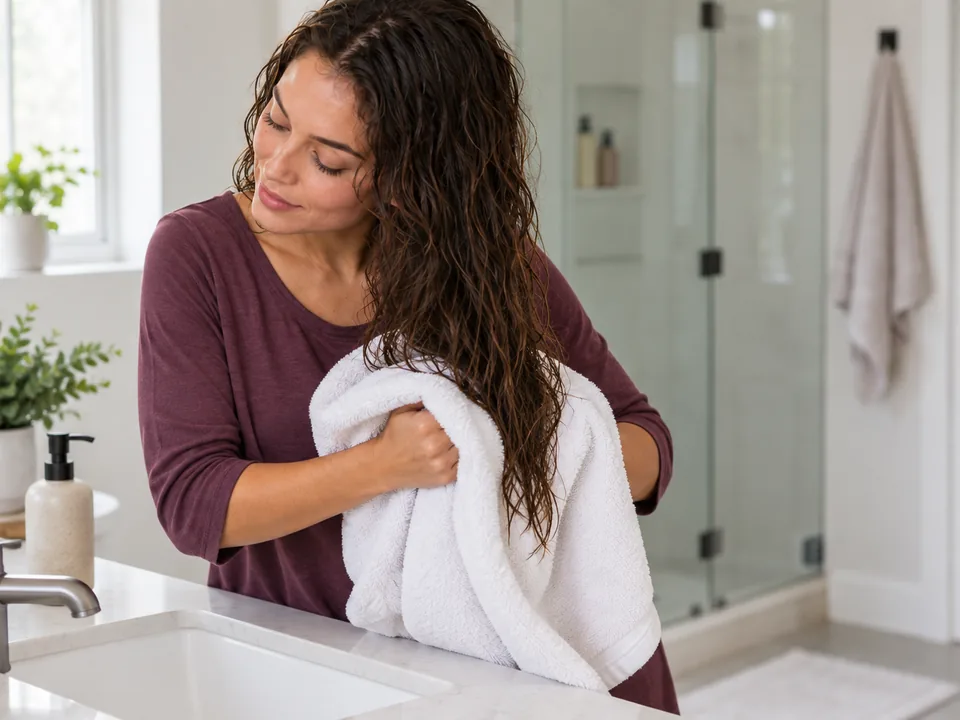
Blot until dripping stops
- Release tight sections and press hair in a clean absorbent towel or wrap without rubbing.
- Move to a dry area of the fabric as it absorbs water; replace it if saturated.
- Continue until no water drips when the lengths hang freely.
- STEP 2 OF 3
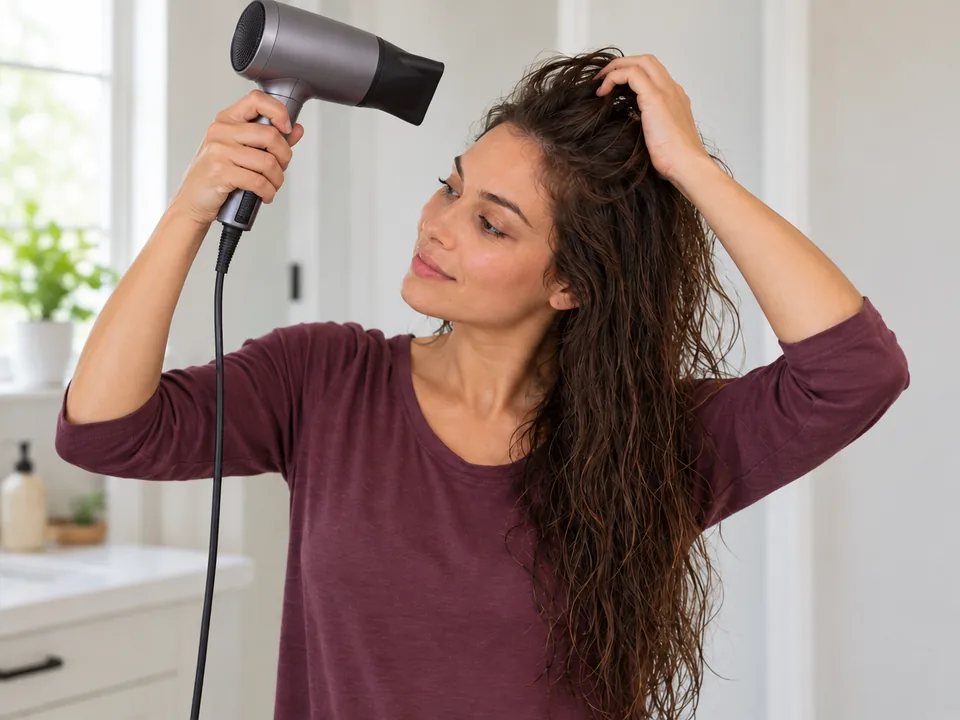
Prioritize roots and underneath
- Lift loose hair at the crown and nape so air reaches the scalp area.
- Air-dry in an open position, or move a dryer on its unheated cool-air setting around roots without holding it still.
- Set the dryer down and check until roots are no longer wet, even if ends remain damp.
 STEP 3 OF 3
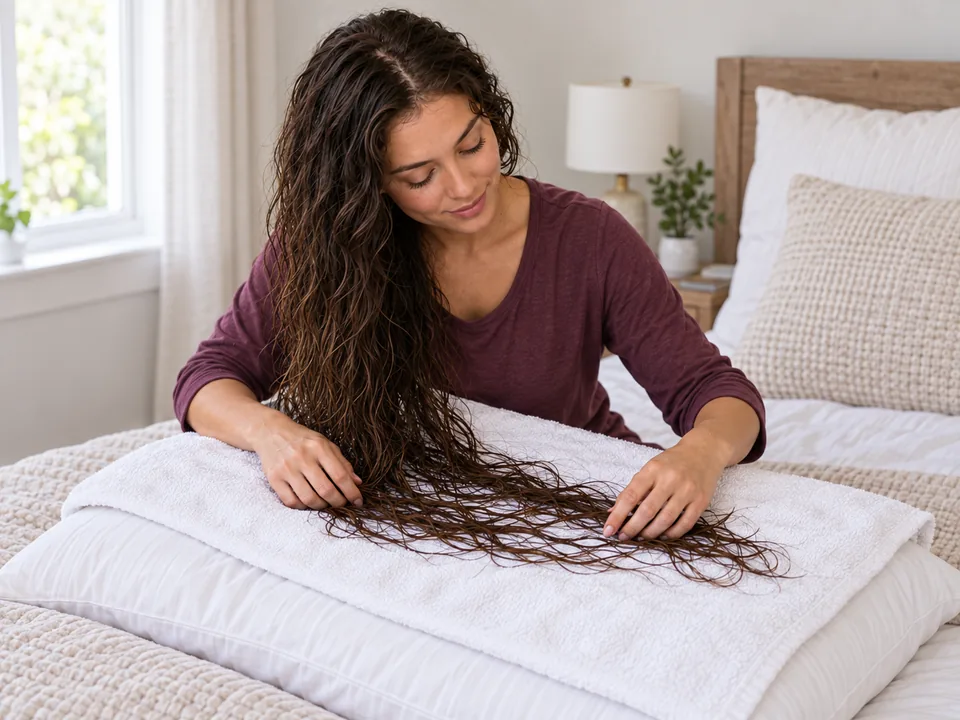
Keep remaining damp lengths loose
- Place a clean dry absorbent towel over the pillow.
- Spread damp lengths loosely above or beside the head without a tight tie, braid, bun or covering.
- In the morning, let hair finish drying before brushing or tightening it; launder the damp towel.
About 3–8 min hands-on for blotting, arranging loose hair, brief root checks and preparing the pillow towel. Add air-drying. Any handheld cool-air drying is additional active time; morning finishing and laundry are separate.
You’re done when…
Hair no longer drips, roots are no longer wet, remaining damp lengths lie loose, and the pillow has a clean dry absorbent layer.