medium hold
Synthetic hold polymers are present.
- Polyurethane-14
- Octylacrylamide/Acrylates/Butylaminoethyl Methacrylate Copolymer
- AMP-Acrylates Copolymer
Supported
Structure that lasts the day.
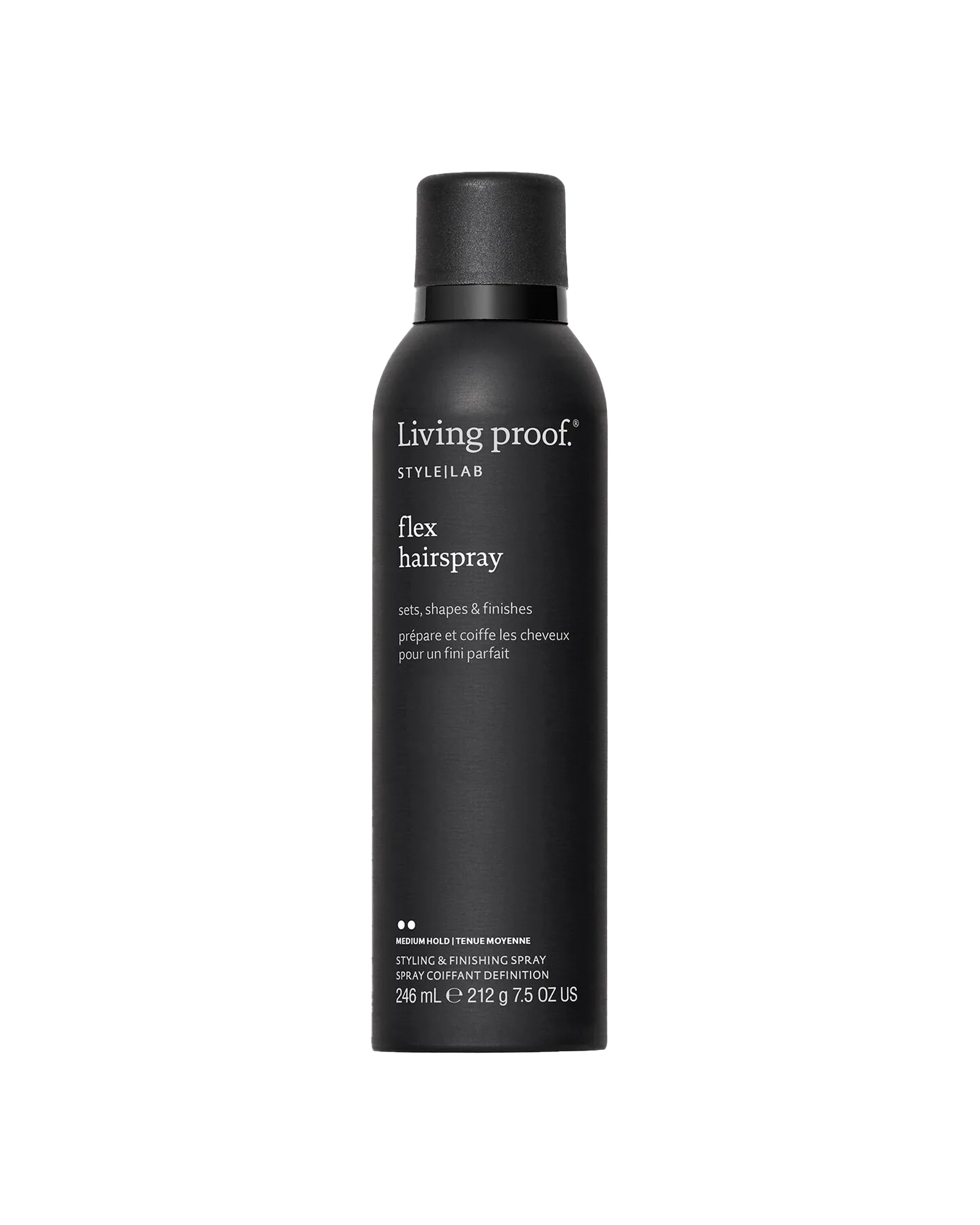
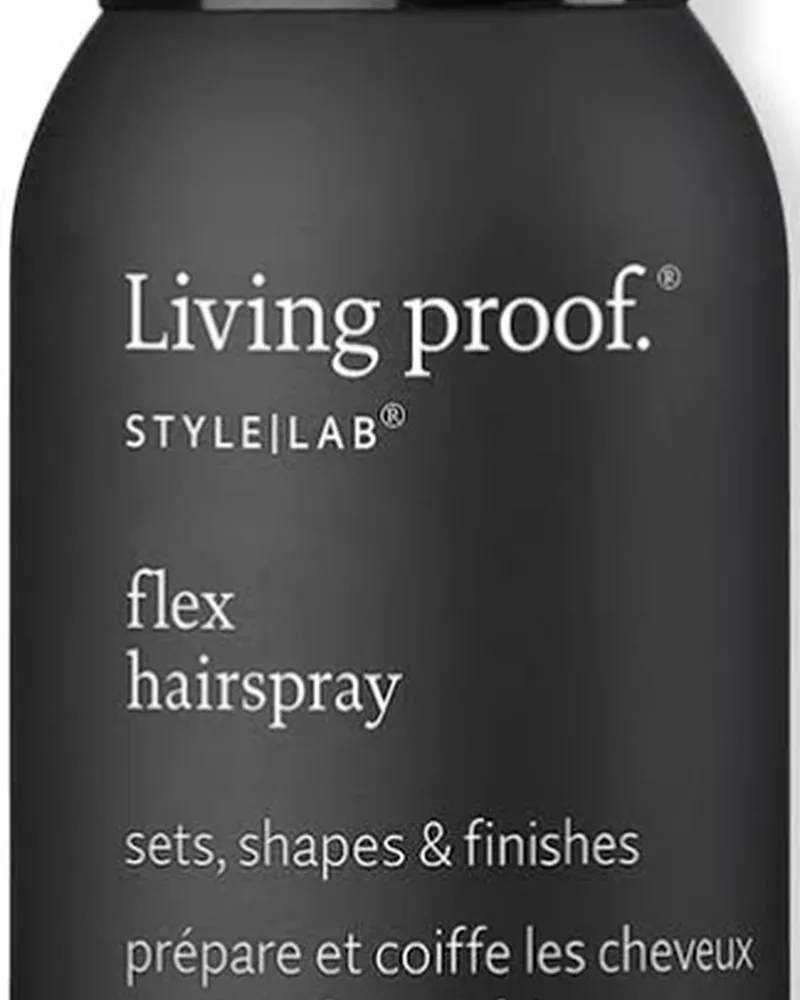
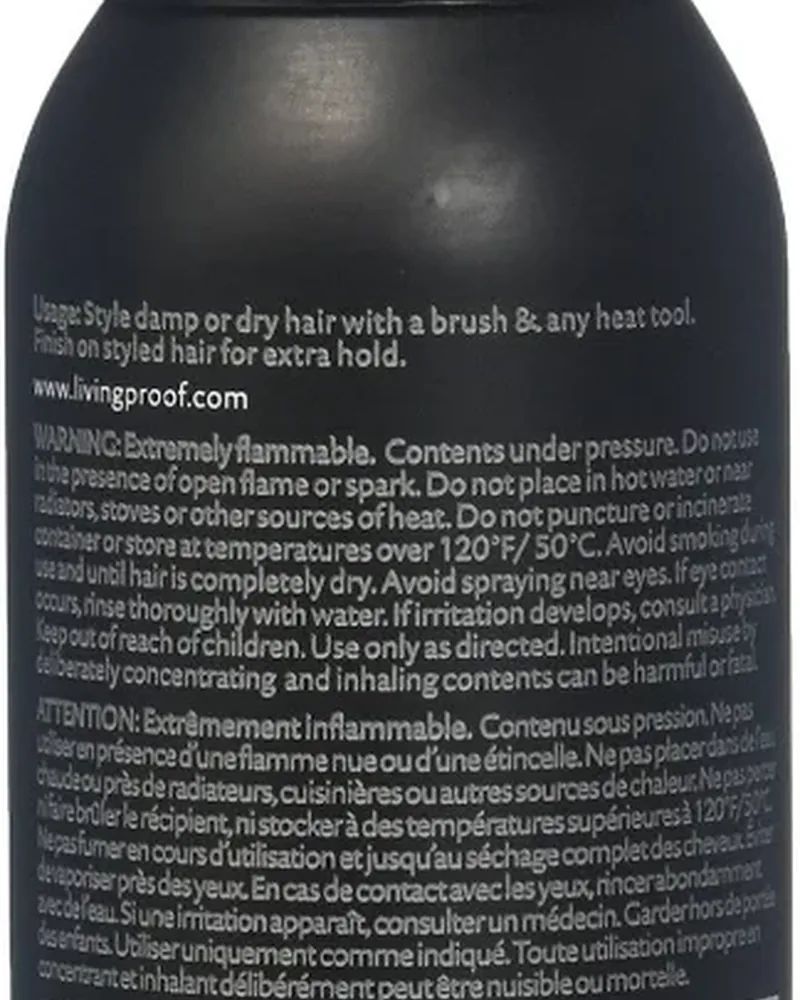
Styler / Hairspray, medium-hold
Scent:
The ingredient list declares fragrance. What it smells of is not stated, and we do not guess.
Manufacturer page: livingproof.com
Personal fit
Complete the consultation to see exactly how well this product fits your hair and your goals. With 2,400+ products in our library we can match exactly the right products to you.
$49.00 one-time consultation, no subscription
Add the optional $49/year membership for unlimited adjustments for changes in weather and lifestyle.
The rest of what your plan weighs on this product.
The consultation builds your hair profile, then reads every factor in this table against it — and tells you where this product fits, or what to use instead.
Start your consultation$49.00 once, for your consultation and hair profile. No subscription, no required purchases.
Your avoid-list
Same job for less elsewhere
$4.53/oz at 7.5 oz — more than 77% of the 95 hairsprays , which mostly run $1.75–4.31/oz.
Great for
Maybe skip if
What the formula actually does
Each row says where it comes from: F means we derived it from this product’s own ingredient list, S means it is a claim the brand makes that the formula neither confirms nor contradicts.
A medium hold, as stated by the brand.
Synthetic hold polymers — the firmest of the hold systems.
Film formers without much softening them — expect a cast to scrunch out.
Water-first and light: unlikely to flatten fine hair.
The brand claims humidity resistance; the ingredient list cannot confirm it.
No absorbent powders or starches.
No oils or butters in the list.
Fast-drying alcohol in the first three ingredients.
Nothing here needs a detergent wash to remove.
Fragrance is listed; it sits below the working ingredients.
Ingredients that matter
The workhorse ingredients plus anything lower down that changes a decision. These chips name what an ingredient does — they are not safety scores, and no ingredient here is rated good or bad on its own.
| Ingredient | What it does | Why it matters | Chip |
|---|---|---|---|
| Alcohol Denat. | drying alcohol | Sets the style fast — the same reason it can read dry | Drying |
| Dimethyl Ether | propellant | Pushes the product out of the can | Neutral |
| WaterWater/Eau/Aqua | solvent | The base everything else is dissolved in | Neutral |
| Polyurethane-14 | film former | Lays down the film that holds a shape | Holds |
| Octylacrylamide/Acrylates/Butylaminoethyl Methacrylate Copolymer | film former | Lays down the film that holds a shape | Holds |
| AMP-Acrylates Copolymer | film former | Lays down the film that holds a shape | Holds |
| Panthenol | humectant | Pulls water into the hair | Detangles |
| Polyglyceryl-10 Pentaoleate | emulsifier | Keeps oil and water mixed | Softens |
| FragranceFragrance/Parfum | fragrance | The scent | Fragrance |
| Citronellol | fragrance | The scent | Fragrance |
| Limonene | fragrance | The scent | Fragrance |
| Citral | fragrance | The scent | Fragrance |
US labelling rules put ingredients above 1% in descending order of amount; below 1% they may be listed in any order. Annotations keep three readings separate: the ingredient's general function, its role in this product type, and what its position can support.
Fast-drying alcohol used to make sprays set quickly. In leave-on products it can leave hair feeling dry, especially in high position on the list.
In hairspray, denatured alcohol acts as a fast-evaporating solvent that carries the styling polymers and helps distribute them in a fine spray. As it evaporates, the polymers remain on the hair to form the hold film.
Listed in the first three ingredients, it is likely a structural part of this formula.
May suit hair that needs a fast-drying, lightweight spray base rather than an oil- or wax-led finish.
Porous hair gives water up easily as it is; a fast-evaporating solvent high on the list accelerates that.
Consider if hair is very dry or highly damaged: when alcohol is this prominent, the fast-evaporating base may leave the hair feeling drier.
An aerosol propellant that also helps the formula spray as a fine, fast-drying mist.
Listed in the first three ingredients, it is likely a structural part of this formula.
The base of almost every rinse-off and cream hair product. It carries everything else and is normally the first ingredient on the label.
Listed in the first three ingredients, it is likely a structural part of this formula.
A flexible hold polymer that bends rather than cracks, used for touchable styling.
Listed in positions 4–8, it likely makes a meaningful contribution alongside the formula's main ingredients.
A set polymer film is a physical barrier to humidity, so a style keeps its shape longer in damp conditions.
Synthetic film formers dry into a continuous film, which is what holds a shape against movement and against humid air.
Some acrylate copolymers rinse with water and some need a detergent; the label alone does not say which one a formula used.
A firm hold polymer used in hairsprays and gels. It holds well in humidity and brushes out.
Listed in positions 4–8, it likely makes a meaningful contribution alongside the formula's main ingredients.
A set polymer film is a physical barrier to humidity, so a style keeps its shape longer in damp conditions.
Synthetic film formers dry into a continuous film, which is what holds a shape against movement and against humid air.
Some acrylate copolymers rinse with water and some need a detergent; the label alone does not say which one a formula used.
A neutralised acrylate hold polymer used in sprays for firm, humidity-resistant set.
Listed in positions 4–8, it likely makes a meaningful contribution alongside the formula's main ingredients.
A set polymer film is a physical barrier to humidity, so a style keeps its shape longer in damp conditions.
Synthetic film formers dry into a continuous film, which is what holds a shape against movement and against humid air.
Some acrylate copolymers rinse with water and some need a detergent; the label alone does not say which one a formula used.
Provitamin B5. It draws in water and penetrates the strand a little, which is why it is the standard ingredient for softness and shine claims.
Listed in positions 4–8, it likely makes a meaningful contribution alongside the formula's main ingredients.
It hydrates without adding oil or a film, which is the combination fine hair usually needs.
Deposits a lubricating layer that makes combing easier, which is most of what stops mechanical damage adding to frizz.
A humectant that also penetrates the cuticle, so it holds water inside the strand rather than only on the surface.
A plant-derived polyglycerol ester. It emulsifies without ethoxylation, which is why it turns up in formulas positioned as PEG-free, and leaves a soft feel.
Listed in positions 4–8, it likely makes a meaningful contribution alongside the formula's main ingredients.
Emollients fill and smooth the surface of the strand, which lowers the friction that lifts the cuticle and reads as roughness.
A citrate ester used to stabilise fragrance and support the preservative system.
It appears around or below the estimated 1% line, where label order no longer indicates relative amount; its role may be minor or technical.
pH adjusters are how a formula is brought to a chosen acidity, and an acidic formula keeps the cuticle lying flatter than an alkaline one. Which way this one moves the pH depends on the formula, and the finished pH is not on the label.
A base used in trace amounts to neutralise acidic hold polymers so they thicken and set properly.
It appears around or below the estimated 1% line, where label order no longer indicates relative amount; its role may be minor or technical.
pH adjusters are how a formula is brought to a chosen acidity, and an acidic formula keeps the cuticle lying flatter than an alkaline one. Which way this one moves the pH depends on the formula, and the finished pH is not on the label.
An undisclosed blend of scent ingredients. Regulations let it stay unlisted, so a fragrance-free product is the only way to be certain what is not in it.
It appears around or below the estimated 1% line, where label order no longer indicates relative amount; its role may be minor or technical.
Declared fragrance. On a fragrance-sensitive routine this is the line that decides it, wherever it sits on the label.
A rose-like fragrance component named separately as a recognised allergen.
It appears around or below the estimated 1% line, where label order no longer indicates relative amount; its role may be minor or technical.
One of the 26 scent components the EU requires to be named individually above a threshold. It is named because it is a known contact allergen, not because it is unusual.
A citrus-smelling fragrance component that EU rules require to be named separately because some people react to it.
It appears around or below the estimated 1% line, where label order no longer indicates relative amount; its role may be minor or technical.
One of the 26 scent components the EU requires to be named individually above a threshold. It is named because it is a known contact allergen, not because it is unusual.
A lemon-scented fragrance component listed separately as a recognised allergen.
It appears around or below the estimated 1% line, where label order no longer indicates relative amount; its role may be minor or technical.
One of the 26 scent components the EU requires to be named individually above a threshold. It is named because it is a known contact allergen, not because it is unusual.
An individual aroma chemical. It is part of the product's fragrance; brands that print these are disclosing more of the blend than the rules require.
It appears around or below the estimated 1% line, where label order no longer indicates relative amount; its role may be minor or technical.
Declared fragrance. On a fragrance-sensitive routine this is the line that decides it, wherever it sits on the label.
An individual aroma chemical. It is part of the product's fragrance; brands that print these are disclosing more of the blend than the rules require.
It appears around or below the estimated 1% line, where label order no longer indicates relative amount; its role may be minor or technical.
Declared fragrance. On a fragrance-sensitive routine this is the line that decides it, wherever it sits on the label.
A light humectant and solvent that helps fragrance and extracts dissolve evenly.
It appears around or below the estimated 1% line, where label order no longer indicates relative amount; its role may be minor or technical.
Light and water-binding rather than oily, so it hydrates without contributing weight.
A small water-binding solvent. It holds moisture and helps the rest of the formula spread evenly over the strand.
A humectant follows the air: it holds water in humid conditions and can give it up in very dry ones. Climate decides what it does more than the label does.
An individual aroma chemical. It is part of the product's fragrance; brands that print these are disclosing more of the blend than the rules require.
It appears around or below the estimated 1% line, where label order no longer indicates relative amount; its role may be minor or technical.
Declared fragrance. On a fragrance-sensitive routine this is the line that decides it, wherever it sits on the label.
A soft floral fragrance component named separately as a recognised allergen.
It appears around or below the estimated 1% line, where label order no longer indicates relative amount; its role may be minor or technical.
One of the 26 scent components the EU requires to be named individually above a threshold. It is named because it is a known contact allergen, not because it is unusual.
The main scent compound in vanilla, used as a fragrance note.
It appears around or below the estimated 1% line, where label order no longer indicates relative amount; its role may be minor or technical.
Declared fragrance. On a fragrance-sensitive routine this is the line that decides it, wherever it sits on the label.
Ingredient list captured 2026-08-26. Formulas change — check the package in your hand when an ingredient matters to you.
Price · 7.5 oz
Priced above the products that do the same job. Stores sell it above the $21 line; products that do this job typically go for about $31 at this size.
Sorted by price per ounce. Dated observations from our research, not live prices. Direct store pages, no affiliate links. We don’t sell this product.
Formula
This is a complete hairspray formula. It is also above the range for hairsprays per ounce, with 3 close matches selling for meaningfully less.
The formula score is completeness for the job: the share of the systems this product type is normally built around that we can find in this list, weighted. It is not efficacy, not quality, and it never compares across product types.
Does the same job, for less
Same derived functions — what it cleans, conditions, coats or holds — at a lower cost per ounce. Scent, texture and where you buy it can still differ.
See more alternatives in the product library
These are functional neighbours, not personal recommendations — they are close on formula, not chosen for anyone. Get the one that fits your hair, routine, and budget

Final decision
Hair that stiffens on protein who want a protein-free formula and moisture that stays in
Not ideal for anyone sensitive to fragrance, very dry or high-damage hair, or anyone who will not scrunch out a cast
We do not sell products or take placement fees. This page states what the formula and the prices show; the consultation is what matches it to a person.
Claims check
Claims are quoted from the brand. We only mark one supported, partly supported, or conflicting when the ingredient list actually speaks to it; everything else stays "stated by the brand", which is not a criticism — most claims simply cannot be read off a label.
medium hold
Synthetic hold polymers are present.
Structure that lasts the day.
flexible touchable control
Hold polymers appear without the emollients that usually keep a film from setting firm.
Expect a cast you have to scrunch out.
brushable and reworkable
Hold polymers appear without the emollients that usually keep a film from setting firm.
Expect a cast you have to scrunch out.
heat protection up to 410 F
Heat protection is a performance claim; an ingredient list cannot confirm it.
Only lab testing can show this.
humidity resistance
Humidity resistance is measured in a lab, not read off a label; film formers can help.
May help, but not measurable here.
We look at the first 10–15 ingredients and what they do in a formula — not marketing. If the list doesn't speak to a claim, we don't assume.
Reviewers
Recurring themes our researchers wrote in their own words from sourced reviews. We do not store or scrape star ratings.
A five-year user says the hold remains invisible and non-stiff through the day.
Living Proof customer review by Lisa M.A fine-haired customer says this is the first hairspray they have found that holds unruly hair without a heavy or sticky feel, and values its heat-protectant role.
Living Proof customer review by Maigyn.One reviewer says it mostly holds curls but leaves their hair heavy, dirty-feeling, and sticky enough that they want to wash it out quickly.
Living Proof customer review by Lindsey F.A customer reports a faulty nozzle that sends liquid out the back of the can rather than directing the spray normally.
Living Proof customer review by Hazel F.